avatarAllison Wiltz

Free AI web copilot to create summaries, insights and extended knowledge, download it at here

5431

Abstract

ef="https://x.com/KidBreakaway/status/1750594598672777421?s=20">scientific contribution</a>." Without her knowledge, Lacks' cells were "donated" at Hopkins in 1951, providing them with "the only human cell line able to reproduce indefinitely." They became known as <a href="https://www.hopkinsmedicine.org/henrietta-lacks/immortal-life-of-henrietta-lacks#:~:text=Henrietta%20Lacks%20was%20one%20of,line%20able%20to%20reproduce%20indefinitely.">HeLa cells</a> in the scientific community, short for <b>He</b>nrietta <b>La</b>cks. According to Johns Hopkins Medicine, HeLa cells have "contributed to many <a href="https://www.hopkinsmedicine.org/henrietta-lacks/importance-of-hela-cells">medical breakthroughs</a>, from research on the effects of zero gravity in outer space and the development of polio and COVID-19 vaccines to the study of leukemia, the AIDS virus and cancer worldwide." However, her case is a reminder of the way Black people have been routinely exploited by the medical industry, given that Henrietta Lacks and her family were deprived of any compensation for the use of her cells. This is consequential, as medical companies profited exponentially from using Henrietta Lacks's cells. Her family "<a href="https://pubs.acs.org/doi/10.1021/cen-10126-polcon3#:~:text=The%20family%20reached%20an%20agreement,its%20use%20of%20HeLa%20cells&amp;text=The%20family%20of%20Henrietta%20Lacks,profited%20by%20selling%20Lacks's%20cells.">reached a settlement</a> with <i>Thermo Fischer Scientific</i>" after filing a lawsuit detailing how the company profited off Lacks' cells. However, this may be the first of many efforts to right their wrongs.</p><p id="ea86">The Tulsa Race Massacre of 1921 was also discussed multiple times. Doctor Asha <a href="https://x.com/DoctorAsha/status/1750591271008374963?s=20">noted</a>, "That Greenwood in Tulsa, Oklahoma, was neither the only Black Wall Street nor the only massacre to" a "black town. And the modern-day version of destruction to thriving black communities came in the form of urban policies" such as "slum removal," and "planned shrinkage." Yes, this is an important and underexplored topic. Thanks to hit series like <a href="https://www.wsj.com/articles/watchmen-tulsa-1921-trump-interview-11593528595">The Watchmen</a>, more people know about this piece of American history, which is far too often excluded from the curriculum of The Tulsa Race Massacre. However, Asha brought up an important point — there were many race massacres where White people destroyed black communities, nor is it accurate to describe the Black Wall Street in Tulsa as the only example of a thriving, self-sufficient black community.</p><p id="b27d">In Louisiana, for instance, domestic terrorism was widespread during the Reconstruction Era, starting with the 1866 New Orleans Massacre. Two years later, there were <a href="https://readcultured.com/why-we-shouldnt-hide-the-history-of-racial-violence-from-our-students-8ff6d76f112f">six race massacres</a> in the state: the 1868 Opelousas Massacre, Bloody Caddo, another in New Orleans, St. Bernard Parish Massacre, one in Algiers, and another in Bossier Parish. And that's just in one state, during one brief period of time. To truly understand the impact of white domestic terrorism during the Reconstruction Era and throughout Jim Crow takes intentional effort and study. Without school districts explicitly teaching students about this topic, many grow up in communities unaware of its history of racialized terror.</p><p id="0534">Some of the black history shared was tragic, to be sure. For example, a quarter of enslaved Black people died "from starvation and diseases on the streets of America after emancipation because the U.S. government excluded them from" any "reparations" for injustices they endured and the economic growth deprived to them. Having never learned this before, I had to research further. According to Professor Downs, the author of <i>Sick From Freedom</i>, between 1862 and 1870, "at least one-quarter of the four million former slaves got sick and died," and many perished from a "<a href="https://www.nytimes.com/2012/06/11/books/sick-from-freedom-by-jim-downs-about-freed-slaves.html#:~:text=At%20least%20one%20quarter%20of,the%20South%20as%20former%20slaves">smallpox epidemic</a>." The denial of reparations and a properly functioning Freedmen's Bureau became a death sentence for many Black Americans, and yet this part of black history is underexplored for sure. One woman highlighted the fact that newly freed Black Americans could not "<a href="https://x.com/prntgdcolonized/status/1750907980017480085?s=20">get bank accounts</a>." And despite the federal government establishing the Freedmen's Bank, it was quickly robbed. As the U.S. Department of Treasury noted, "the cash reserves of the Freedman's Bank were drained," afterward, those responsible quietly resigned, hence the saying, "the black man's cow but <a href="https://home.treasury.gov/about/history/freedmans-bank-building/freedmans-bank-demise#:~:text=Six%20weeks%20after%20taking%20the,the%20Freedman's%20Bank%20was%20closed.">the white man's milk</a>."</p><p id="364f">Others highlighted the accomplishments and contributions of Black Americans. Pamela Ginex, EdD, RN, noted that the first ambulance service in America was in "Pittsburgh's Hill District — <a href="https://x.com/PamGinex/status/1750862572075601984?s=20">Freedom House

Options

EMS</a>" was "started by a group of Black men who set the standard for emergency medicine worldwide." They recommended reading <a href="https://www.amazon.com/American-Sirens-Incredible-Americas-Paramedics/dp/0306926075"><i>American Sirens</i></a>, the story of these Black men who became the first paramedics to learn more about this piece of black history. It's incredible to think of the modern-day social conventions, like ambulance services, that so many take for granted were created by Black men. Some wanted to talk about the contributions of Black inventors, figures like George Washington Carver, Marie Van Brittan Brown, John Lee Love, or Black athletes like Glenn Burke and Jackie Robinson. The list went on and on, mentioning figures and events that are underexamined or never mentioned in a classroom.</p><p id="c067">Ideally, black history would be included in discussions about American history, but far too often, these stories become hidden history, tucked away so as not to upset the social order. Unfortunately, we're left with sour pie. However, it's important to note that the parts of our country's history that many White people seek to forget are not so easy for Black Americans to tuck away. As former first lady Michelle Obama once said while living in the White House, "I wake up every morning in a house that was <a href="https://www.whitehousehistory.org/building-the-white-house">built by slaves</a>." In asking what people would like to know about black history, I'm hoping more people feel inspired to share black history and to be the change they hope to see. We may not be able to overturn unjust laws overnight. Still, nothing is stopping us from sharing black history with others and engaging in meaningful conversations about Black Americans and those Black people living throughout the diaspora. Perhaps we're the ones we've been waiting for.</p><div id="e2d3" class="link-block"> <a href="https://allyfromnola.medium.com/how-white-privilege-disproves-the-lie-about-a-merit-based-society-cda71b932703"> <div> <div> <h2>How White Privilege Disproves The Lie About a Merit-Based Society</h2> <div><h3>In a merit-based society, white privilege wouldn't exist</h3></div> <div><p>allyfromnola.medium.com</p></div> </div> <div> <div style="background-image: url(https://miro.readmedium.com/v2/resize:fit:320/1*OMbV41tDkURpdEAdoyW8AA.png)"></div> </div> </div> </a> </div><div id="49af" class="link-block"> <a href="https://momentum.medium.com/we-should-never-forget-why-we-needed-a-floating-freedom-school-4dafcd674e01"> <div> <div> <h2>We Should Never Forget Why We Needed A Floating Freedom School</h2> <div><h3>When a law banned teaching Black people to read and write, John Berry Meachum got creative</h3></div> <div><p>momentum.medium.com</p></div> </div> <div> <div style="background-image: url(https://miro.readmedium.com/v2/resize:fit:320/1*zGOcdfJe5_6gXE5nUk8MkQ.png)"></div> </div> </div> </a> </div><div id="1e11" class="link-block"> <a href="https://momentum.medium.com/how-a-creole-man-became-the-test-case-for-racial-segregation-b9763935a860"> <div> <div> <h2>How A Creole Man Became the Test Case For Racial Segregation</h2> <div><h3>Remembering Homère Plessy's bravery in challenging the color barrier</h3></div> <div><p>momentum.medium.com</p></div> </div> <div> <div style="background-image: url(https://miro.readmedium.com/v2/resize:fit:320/1*6V5JyAzs-xjgio5OMBLKtA.png)"></div> </div> </div> </a> </div><div id="6840" class="link-block"> <a href="https://readcultured.com/why-we-shouldnt-hide-the-history-of-racial-violence-from-our-students-8ff6d76f112f"> <div> <div> <h2>Why We Shouldn't Hide The History of Racial Violence From Our Students</h2> <div><h3>History helps students put current events in context</h3></div> <div><p>readcultured.com</p></div> </div> <div> <div style="background-image: url(https://miro.readmedium.com/v2/resize:fit:320/1*0eaUKnYI8xi3MY-3QRFYaA.jpeg)"></div> </div> </div> </a> </div><div id="b6dc" class="link-block"> <a href="https://momentum.medium.com/5-things-you-should-know-about-the-tulsa-race-riot-6d3737d6a64f"> <div> <div> <h2>5 Things You Should Know About the Tulsa Race Riot</h2> <div><h3>Reflecting on an American tragedy 100 years after it happened.</h3></div> <div><p>momentum.medium.com</p></div> </div> <div> <div style="background-image: url(https://miro.readmedium.com/v2/resize:fit:320/1*M0CyBKXOewk-gu6qIM_iyw.jpeg)"></div> </div> </div> </a> </div><p id="c99e">🌹Learn more about the author <a href="http://allisonthedailywriter.com/">here</a>.</p></article></body>

INCLUSION

What Do You Wish More People Knew About Black History?

We have to be the change we want to see
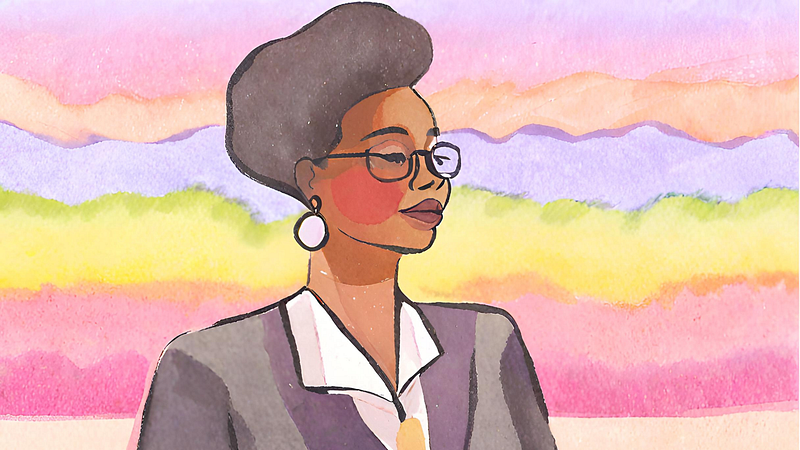
AI-generated photo of Black history professor | created by author using CANVA

Black history is essential, like brown sugar in a buttercream pie. And yet, far too many states treat the topic like a social taboo. So far, at least thirty-six states adopted or introduced laws or policies that prohibit or restrict teaching about race or racism. Coincidently, many stories are quickly becoming hidden history — a whitewashing campaign in real-time. Sadly, conservatives aren't considering what a buttercream pie would taste like without sugar or how misleading it is to teach students about history while leaving out any contributions made by Black people. However, that got me thinking we must be the change we want to see.

If we want more people to have access to black history and understand its relevance, then we have to share that information with one another and newer generations. This inspired me to ask, "What is a piece of black history you wish more people knew?" While these laws are designed to stop teachers from including black history in the classroom, nothing can stop citizens from discussing these topics at their leisure. Whether you are a college professor, a high school, middle school, or primary school teacher, or love to learn and share black history with others, you have a role to play. The responses I received from this question proposed on the social media platform formally known as Twitter were intriguing.

For example, Ryan Nickerson wished more people understood "Black people's role in the American Revolution." Indeed, many people have heard about Crispus Attucks, the first man to die for the rebellion in the Boston Massacre. As a Black and Indigenous man, his death has often been used as an early example of Black American patriotism. However, at least 20,000 Black people fought on the side of the British during the Revolution, significantly more than those who fought for the American side, because Dunmore's Proclamation promised freedom in return for their service. This is something that isn't often taught.

The Zinn Education Project chimed in to say, "Countless African Americans protested injustices on public transportation on an almost daily basis dating back to the 19th century. Many people think either Rosa Parks or Claudette Colvin were" first, but the "answer is neither. They followed in the footsteps of many" who came "before." The article, published by Civil Rights Teaching, which they included, cited Fredrick Douglas as the first who, in 1841, along with his friend James N. Buffum, challenged the racial hierarchy in Lynn, Massachusetts. They decided to sit in a whites-only train car and refused to leave after the conductor instructed them to do so. Homère Plessy, the Creole Black man who, in 1892, sat on a whites-only New Orleans streetcar, made the list. This article sheds light on many more examples of those who came before Rosa Parks and Claudette Colvin, Black people who protested injustices in public transportation that most Americans have never heard about. When we include more black history, we learn that this struggle to address racial discrimination in America's transportation apparatus was a long one, not one that began or ended neatly in the 1960s.

The topic of redlining came up several times. For those who are unaware of this phenomenon, redlining refers to a systemic discriminatory practice of denying mortgages and other financial services based on their race or ethnicity. It's the reason why most Americans are still living in communities that are informally segregated by race, a legacy that should be explored in the classroom but would be shunned in many states as "critical race theory." Different parts of cities were color-coded depending on how worthy of investment they rated each neighborhood. Those with the dreaded color "red" were given to neighborhoods they felt weren't worthy of inclusion in homeownership programs, or investment for that matter. According to an analysis of residential segregation, America's major cities are becoming more segregated, not less. And yet, any mention of this trend in a classroom may be dismissed as a critical race theory.

Of course, Henrietta Lacks came up, and many believed more people should learn about her "monumental scientific contribution." Without her knowledge, Lacks' cells were "donated" at Hopkins in 1951, providing them with "the only human cell line able to reproduce indefinitely." They became known as HeLa cells in the scientific community, short for Henrietta Lacks. According to Johns Hopkins Medicine, HeLa cells have "contributed to many medical breakthroughs, from research on the effects of zero gravity in outer space and the development of polio and COVID-19 vaccines to the study of leukemia, the AIDS virus and cancer worldwide." However, her case is a reminder of the way Black people have been routinely exploited by the medical industry, given that Henrietta Lacks and her family were deprived of any compensation for the use of her cells. This is consequential, as medical companies profited exponentially from using Henrietta Lacks's cells. Her family "reached a settlement with Thermo Fischer Scientific" after filing a lawsuit detailing how the company profited off Lacks' cells. However, this may be the first of many efforts to right their wrongs.

The Tulsa Race Massacre of 1921 was also discussed multiple times. Doctor Asha noted, "That Greenwood in Tulsa, Oklahoma, was neither the only Black Wall Street nor the only massacre to" a "black town. And the modern-day version of destruction to thriving black communities came in the form of urban policies" such as "slum removal," and "planned shrinkage." Yes, this is an important and underexplored topic. Thanks to hit series like The Watchmen, more people know about this piece of American history, which is far too often excluded from the curriculum of The Tulsa Race Massacre. However, Asha brought up an important point — there were many race massacres where White people destroyed black communities, nor is it accurate to describe the Black Wall Street in Tulsa as the only example of a thriving, self-sufficient black community.

In Louisiana, for instance, domestic terrorism was widespread during the Reconstruction Era, starting with the 1866 New Orleans Massacre. Two years later, there were six race massacres in the state: the 1868 Opelousas Massacre, Bloody Caddo, another in New Orleans, St. Bernard Parish Massacre, one in Algiers, and another in Bossier Parish. And that's just in one state, during one brief period of time. To truly understand the impact of white domestic terrorism during the Reconstruction Era and throughout Jim Crow takes intentional effort and study. Without school districts explicitly teaching students about this topic, many grow up in communities unaware of its history of racialized terror.

Some of the black history shared was tragic, to be sure. For example, a quarter of enslaved Black people died "from starvation and diseases on the streets of America after emancipation because the U.S. government excluded them from" any "reparations" for injustices they endured and the economic growth deprived to them. Having never learned this before, I had to research further. According to Professor Downs, the author of Sick From Freedom, between 1862 and 1870, "at least one-quarter of the four million former slaves got sick and died," and many perished from a "smallpox epidemic." The denial of reparations and a properly functioning Freedmen's Bureau became a death sentence for many Black Americans, and yet this part of black history is underexplored for sure. One woman highlighted the fact that newly freed Black Americans could not "get bank accounts." And despite the federal government establishing the Freedmen's Bank, it was quickly robbed. As the U.S. Department of Treasury noted, "the cash reserves of the Freedman's Bank were drained," afterward, those responsible quietly resigned, hence the saying, "the black man's cow but the white man's milk."

Others highlighted the accomplishments and contributions of Black Americans. Pamela Ginex, EdD, RN, noted that the first ambulance service in America was in "Pittsburgh's Hill District — Freedom House EMS" was "started by a group of Black men who set the standard for emergency medicine worldwide." They recommended reading American Sirens, the story of these Black men who became the first paramedics to learn more about this piece of black history. It's incredible to think of the modern-day social conventions, like ambulance services, that so many take for granted were created by Black men. Some wanted to talk about the contributions of Black inventors, figures like George Washington Carver, Marie Van Brittan Brown, John Lee Love, or Black athletes like Glenn Burke and Jackie Robinson. The list went on and on, mentioning figures and events that are underexamined or never mentioned in a classroom.

Ideally, black history would be included in discussions about American history, but far too often, these stories become hidden history, tucked away so as not to upset the social order. Unfortunately, we're left with sour pie. However, it's important to note that the parts of our country's history that many White people seek to forget are not so easy for Black Americans to tuck away. As former first lady Michelle Obama once said while living in the White House, "I wake up every morning in a house that was built by slaves." In asking what people would like to know about black history, I'm hoping more people feel inspired to share black history and to be the change they hope to see. We may not be able to overturn unjust laws overnight. Still, nothing is stopping us from sharing black history with others and engaging in meaningful conversations about Black Americans and those Black people living throughout the diaspora. Perhaps we're the ones we've been waiting for.

🌹Learn more about the author here.

BlackLivesMatter
Health
History
Culture
Education
Recommended from ReadMedium