
What do you notice? And why it matters
The hidden power of noticing

Noticing is different from simply seeing or hearing. If I say that I see a bowl of fruit on the table or I hear a dog barking down the street, it’s possible that the fruit bowl has just been placed there, or the dog has woken up and is barking for the first time. But if I say that I notice the fruit bowl or the dog barking, the implication is that it was there already, but I have only just now taken note of it.
The environment in which we find ourselves enters our field of perception, whether visual, auditory or via any of the other senses, in the form of information, the vast majority of which never reaches our conscious awareness. And that’s a good thing.
‘We are actually incapable of appreciating more than just a very little of our surroundings. In every sensory moment, we are absolutely flooded with input, much of which is irrelevant.’ Joyce Schenkein (PhD)
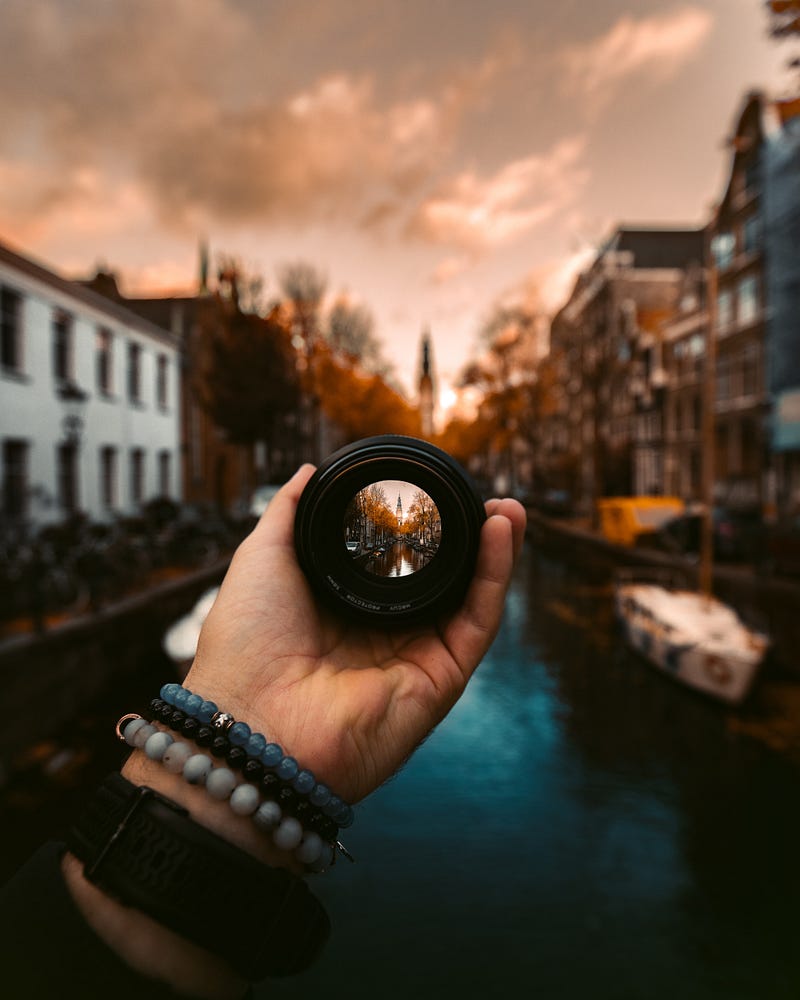
In fact, individuals whose brains struggle to adequately filter out extraneous information from the environment (those with Attention Deficit Disorder [ADD] perhaps, or with some forms of schizophrenia) are seriously hampered in their everyday lives. It seems that we can only function well in the tasks of living if our conscious awareness is restricted and focused.
If our brains are automatically filtering out irrelevant material, do we have any real choice about what we notice and what we don’t? It seems that we can have conscious influence on which aspects of reality we notice. Everyone has had the experience of discovering that the world is suddenly and inexplicably full of grey boots or Renault cars or whatever it is that we have been thinking about buying. And the new word we have just learnt the meaning of seems to turn up in every article we read.
The key here is in the ‘thinking about.’ When we are interested in a topic, for whatever reason, we consciously direct our attention to it: spending time and energy online, perhaps, comparing retailers’ offerings and ebay options for the grey boots we want. And hey presto! The grey boots worn by passers-by in the Mall, which have been there all the time but unnoticed by us, are suddenly revealed.
In this way, we have an element of choice about what we notice, because we have choice about where we direct our attention: what we read, what we consume from the media (mainstream and social), who we spend time with, what we think about. And of all the myriad aspects of life around us, the tiny few we notice will dictate how we feel, what we think, our attitudes — in short our experience of life.

We all know people whose focus seems to be almost exclusively on the negative: the glass half empty types. And once you start to give attention to all that is wrong in your life or in the world, there is no shortage of material to work with. And the more you focus on it, the more of it you will notice.
We have also met people to whom many ‘bad’ things have happened, who yet seem able to retain a sense that life is good. Without denying the pain of life, they are still able to notice the beauty that surrounds us, the kindness of others, the promise of better things ahead. I know slightly a woman who lost her young adult son to a climbing accident, has lost her husband to heart disease and is progressively losing her sight. Yet in the town in which I live, she and her guide dog are well-known and loved. She seems to exude a sense of purpose and enjoyment of life. The shopkeepers who serve her, the hairdresser who cuts her hair and many others are impacted for the better by encountering her.
What we notice about the people we encounter is interesting. Clearly every human being is multi-faceted, complex, sometimes contradictory. I only have to observe myself to see that I can be patient but also impatient, can appear extroverted when in fact I am an introvert, am able to show compassion but am also detached, some might even say callous. Which of all the many and varying aspects of another person do we notice? The answer is often dictated by our own ‘stuff’: whether we feel intimidated by the other, or have fallen in love with the other, whether the other displays faults which we have ourselves. In the latter case, we will probably find our attention disproportionately focused on the flaw in the other.

Is there any way to become more open to the hidden and often beautiful aspects of others and of the endless, rich reality of the life that surrounds us, both animate and so-called inanimate? Spiritual teachers from many traditions call us, not to seek a spiritual experience which is distant and beyond us, but to notice, to give our attention to the spiritual dimension which is already here, suffusing every aspect of life. Practices such as prayer, meditation, reflection, sensing the inner life in the body, reading or listening to material that points to the Truth, can help us here.
There is a very simple way to open ourselves to the possibility of a greater bandwidth of awareness. Aware that we are limited in our perceptions, we can make conscious choices to get out of our own way, to put to one side our conditioned responses and make way for something new. Whatever the day ahead holds — perhaps meeting up with an old friend, maybe something more challenging like checking into hospital for surgery — I find myself with certain expectations based on past experience, on memories and on fears. But as a guide to reality these can only ever be limited and limiting. Trapped within my settled opinion of my friend, I may not give her the chance to share the exciting changes that are happening in her life. Paralysed by anxiety about the surgery, I might not engage with that fellow patient in the waiting room and would never discover that he could offer me the job I have been looking for.

When I remember, at the start of a day, to internally step aside and open myself to more of Reality, the difference it makes is surprising. It is as if a space is then created for a Higher Intelligence - God if you will - to expand my awareness. I find myself noticing beauty in unexpected places and a sense of rightness about the most mundane, routine activities. Things I need to remember more easily come to mind. Serendipity seems to be an increasingly common feature of life. When problems crop up, creative solutions are easier to reach. It is as if I have finally noticed the most important truth of all: that I am not alone, struggling for survival in a cruel world, but part of a great web of Life that will uphold me if I let it.


