What Do Mosquitoes Really Eat?
A biting story full of vicious intrigues
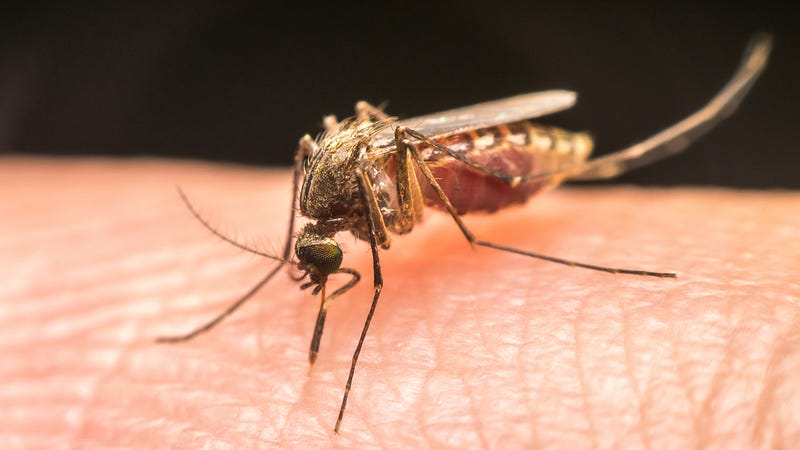
There she sits unsolicited on your exposed skin blood-red-cheeked … sucking your blood by a pipe which she inserted equally freely through your skin.
And you may not even realize it…
Only after a while do you scratch for relief at the red and bulging small effects of that blood-sucker insect.
Pestilent little Dracula! Who gives “her” the right to harass you like that?
In any case, if “her” little blood had been stolen, one could perhaps tolerate this highly troublesome bite as revenge. What is much worse, however, is that the female mosquito cannot possibly realize how unspeakable misery causes to humanity.
Let’s talk about these blood-sucker instincts
Malaria, yellow fever, ankylosing spondylitis, encephalitis — and about eighty other mosquito-borne viral diseases — have already landed millions of people in their graves.
Mosquitoes are known to humans as bloodsuckers that are terribly annoying in the warm season. Their bites are painful and the subtle humming above the ear can upset even the calmest person. But mosquitoes eat more than just blood. In fact, some of these insects are very friendly towards humans.
Mosquitoes are a large family of insects with more than 3,500 described species. These insects can be found everywhere in the world except Antarctica. You can meet them wherever there is a creature whose blood is necessary for procreation.
But for a successful life, they also need moisture and warmth, so most members of the species are settled in the tropics. In the temperate zone, mosquitoes live near bodies of water, in river valleys, shady forests, and swamps.
Sugar-containing liquids obtained from plant sap are what the mosquitoes in the swamp and in the forest feed on. But to lay eggs, from which larvae and pupae will later emerge, female insects need the blood of warm-blooded animals, less often reptiles. They prefer, of course, human blood, for which they are not loved by humans. Part of it is used by their body not only for the reproduction of the offspring but also for the nutrition of the female.
Without blood, after all, the female cannot lay its eggs so that the mosquito nation can survive. (At least some types of female mosquitoes never seek blood.). So it is the female that keeps its body leeches and so venomously goes on your body at times. In its defense, it might still be said that it desperately needs the protein of your blood.
Anatomy and species
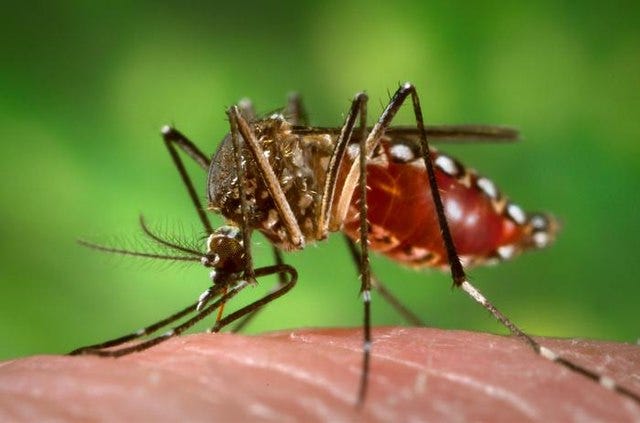
A very dangerous mosquito is Aedes aegypti, the species that spread the yellow fever virus in the tropical and subtropical parts of Africa and the Americas. This mosquito has already killed thousands of people.
But let’s take a closer look at one or more of the earth’s innumerable mosquitoes. You may have wondered, for example, exactly how these disgusting insects make that offending zoo sound for which they are so famous. Even if the poet speaks of a mosquito “singing” an aria, there is no similarity at all between the mosquito’s sound and your musical genius under the shower. It did not even have anything in common with the singing of birds.
The secret of the sound does not lie in vocal cords, but the female’s wings. These have thousands of scaly hairs that produce squeaky sounds when they vibrate their wings at a dizzying 200 to 600 wingbeats per second.
And in their way, the mosquitoes’ sounds are “love songs”. The male hears the female buzzing with his two plume-shaped feelers. At first, it was thought that the female might be deaf and that only the male could hear where she was flying around, but researchers from Cornell University in Ithaca, New York, found otherwise.
They studied the mosquito Aedes aegypti and found that free-ranging mosquitoes produce a mating duet by flapping their wings harmoniously. The love song of the Mosquito … one is amazed again at the harmony in nature that exists down to the smallest things!
But this is how the male and his loved partner find each other in the dark. And in the month or so in which the female lives, it can lay eggs four or five times, which she fertilizes each time with the male semen she keeps in her body.
Interestingly, the different mosquito species each have their own time when they are active — about two hours out of every 24 hours. So it’s not the same kind that tempts you early in the evening and then again late at night. Different species even bite at different heights above the ground.
Furthermore, some mosquitoes never venture further than 500 meters from their “birthplace”, while others can travel up to 30 km in one night after a sip of human blood. However, not everyone is picky. Some bite dogs, cattle, chickens, elephants, frogs, snakes — any blood donor they can find — and man is then merely a casualty.
Some species even suck the blood of other insects such as mantises and ants.
The female mosquito has already been called an aviation wonder. It can fly upside down, backward, and even sideways — and suddenly accelerate or slow down to escape a clapping hand. Some species, it is said, can even cuddle and dry out on the other side in a rainstorm!

What it is that attracts mosquitoes to humans is still not entirely clear. It has been said up to now that it is the smells of one’s feet that seduce them the most. As soon as you take off your shoes, their appetite would be whetted by the fumes in their immediate atmosphere — no matter how convinced you may be that you are not bothered by foul-smelling feet!
Temperature does seem to play an important role. In fact, the mosquito’s large, kidney-shaped eyes can detect infrared (or heat rays), just as human missiles can detect aircraft. Research also suggests that mosquitoes can sense fluctuations of up to 0.05 ºC in the air currents around humans.
They have particularly sensitive sensors. With this, they capture your scent on the carbon dioxide you exhale and the lactic acid on your skin. And if you smell better to them than anyone else, you’re the one who’s bitten the next morning.
In fact, scholars reckon mosquitoes’ sense of smell is so specialized that they can detect a human on a field full of cattle.
Moisture also attracts mosquitoes, so fat people, who sweat more, are bitten more than lean people.
But now one must finally also say that the “bite” of a mosquito is actually a wrong word in the vernacular. What the insect is actually doing is stinging, and doing so with a nasty stinging tube.
This sting tube is a long snout with knives that carves your skin carelessly open, after which the mosquito sniffs her snout a millimeter or so under your skin into one of your hair veins before it starts sucking blood.
It also injects saliva into the wound. It contains an anticoagulant that prevents your blood from clotting on its way to its stomach. It is this saliva that makes the sting itch so annoying afterward. It is, depending on the mosquito species, also such a droplet spit in which the germs can hide that one might make one get sick or kill.
Before celebrating on your body, the mosquito weighs only a tiny fraction of a gram. When it flies away carrying the load of your blood, it’s much heavier. Its precious loot often weighs more than 5 mg — three times its own weight.
Now it has enough food to produce 70 to 500 eggs, also depending on the species. And with that, a new generation of mosquitoes is born that can chase you out of bed with renewed bloodlust in the summer nights. Unless you were smart enough to buy yourself an effective mosquito repellent. Ward, mosquito, ward!
Muskiet belongs to the family Culicidae in the order of the two-winged Diptera. Malaria mosquitoes belong to the genus Anopheles. The common house mosquito is classified as Culex pipiens.
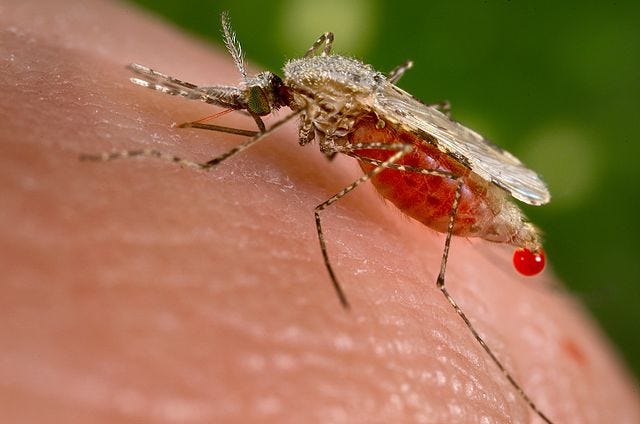
The mosquito undergoes a complete metamorphosis in its development from egg to adult insect. After the female fills its drum thick with your protein-rich blood, it lays its eggs singly or in groups (egg floats), mostly on water. Females lay between 70 and a whopping about 500 eggs, depending on the species. (Some species do lay their eggs on plants or on the ground, where they are dormant until it rains.)
Mosquito eggs float on the water thanks to two or more air chambers in the eggshell. After two or three days, the eggs hatch, and the legless, worm-like larvae make their home in the water. Here they will later develop into pupae before they can climb out of the water and fly away as adults.
The larva is, as far as humans are concerned, perhaps the only useful stage of the mosquito. After all, mosquito larvae are excellent small water purifiers. On either side of the larva’s mouth are two hairbrushes with which it swirls algae, microorganisms, and pieces of organic waste from the water into its mouth. In addition, larvae serve as food for fish.
The larva is slightly thicker at the head end and breathes through air tubes that open at the back of the body so that it always has to bring its tail to the surface to take in air.
It turns into a puppy after a week or two after shedding four times. The pupa, which does not eat at all and in turn breathes with two snorkels on its chest, sheds after two to three days — and the flying mosquito gets its course in the air.
Mosquito larvae and pupae can be killed in standing water by pouring oil on the water and thus preventing them from getting air. Unfortunately, this is not always the best option, because oil pollutes the environment.
How can you prevent mosquito bites by eating certain foods?
Garlic — The medicinal and health benefits of garlic are not surprising, but another very interesting benefit of garlic is that it serves as a powerful repellent for mosquitoes. The reason for this is that garlic contains a powerful element known as allicin. This compound has a pungent odor that is released by the skin pores. Allicin constantly interferes with the body’s initial odor and thus prevents insects or parasites from approaching. Other members of the garlic family, such as onions, shallots (small onions), leeks, chives, etc. also contain allicin. Thus one should include any of these in their daily diet.
Αpple cider vinegar — For many years, apple cider vinegar has been used as a very effective and natural mosquito repellent. This makes the human body less attractive to mosquitoes and prevents bites. A doubt that arises in people’s minds is whether the intake of these foods affects the way they smell to other people or not. The answer is no, the smell of humans is not as strong as mosquitoes. This vinegar can be easily mixed with soup, salad dressing, or drinks for a decent intake.
Lemongrass — Lemongrass has a very strong smell because it contains citronella oil, this oil is a natural insect repellent. One can either include lemongrass in their diet by mixing it with food or one can simply smear lemongrass oil on their body. The interesting aspect is that the smell of lemon is unpleasant for insects, but for humans, it is a very refreshing smell.
Peppers — Peppers contain an ingredient called capsaicin, which is a heat-generating element responsible for the spicy taste of chilies. Capsaicin is an irritant that causes a burning sensation after consuming any form of pepper. Given these quality peppers, it is used as an effective insect repellent in many different ways. Mosquitoes are very sensitive to the odor released by the human body after eating peppers, so they stay away.
Tomatoes. Tomatoes are very rich in thiamine, which is a form of vitamin B1. People who consume large amounts of thiamine in their diet remain protected from mosquitoes or other insects. People who have suffered mosquito bites can be immediately juiced with tomato paste and get rid of itching.
Grapefruit — Grapefruit is considered an excellent source of vitamin C and also serves as an antioxidant for body cleansing. Another interesting feature of this magical fruit, however, is that it is a very good source for preventing mosquito or insect bites. This fruit contains an ingredient called nut cotton. This ingredient serves in two ways in which it acts as an insecticide as well as a natural pesticide. Like lemongrass, grapefruit juice can be applied directly to the body to keep insects away. People suffering from lice can apply the fruit pulp to their hair for faster relief.
Legumes — Like tomatoes, lentils or beans are a rich source of thiamine. They release a strong odor from the body, which is not very pleasant or attractive to mosquitoes. Regular lens intake provides the necessary nutrition to the body and helps keep harmful insects away.
Thank you for reading!


