

What Do Health Experts Mean By “Inflammation”?
We frequently use this technical term in daily conversations, but do we really understand it?
Many of us might have heard of the word “inflammation” from doctors and other health professionals. I remembered when I was a child, I used to have a frequent sore throat. The doctor told me I had an inflammation due to an infection. I always hate to have a sore throat as it is so uncomfortable, I have difficulties in swallowing, a swollen throat, produce lots of mucus and I am constantly in need of water to soothe my sore throat. Similarly, when we have a small cut, or when we have mosquito bites, we have inflammation on our skin.
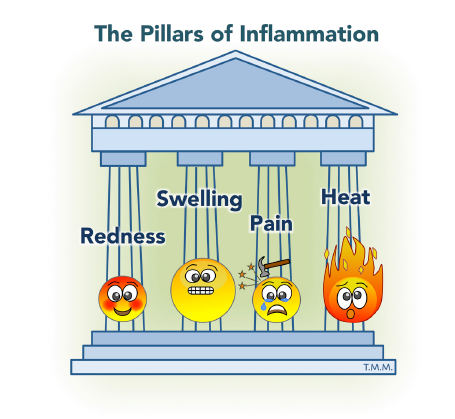
Recently, we heard conversations that food can cause inflammation. Health professionals say these are ultra-processed food. Wait a minute, I never feel uncomfortable, I never feel pain and burning sensation, and I never see any red swollen tissue by regularly consuming the ultra-processed food. Can food really cause inflammation? Is this the same inflammation as the sore throat?
In this article, I will guide you through two journeys of inflammation:
- The inflammatory response to pathogens
- The inflammatory response to diet
Inflammation is an immune response to injury, irrespective of the trigger, either pathogens or our diet.
Inflammation is an innate immune response to fight pathogens
Injury
A pathogen is a biological agent that can cause diseases, such as bacteria, virus, or parasites. Sometimes, inflammation occurs in response to allergens such as pollen or lactose, whereby our immune cells misidentify them as pathogens.
Initiation of inflammation
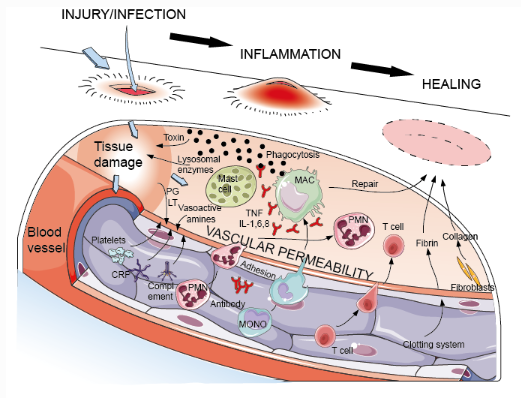
When pathogens enter our body, they are detected by our patrolling immune cells which are patrolling around our body tissues. Neutrophils are the most abundant immune cells that trigger our body’s innate immune response [1]. Once neutrophils encounter the pathogens, they secrete cytokines to attract more immune cells to the infected tissue.
Signs of inflammation
Now we know the red swollen tissue is an army of immune cells working around the infected tissue, whereas the burning sensation is caused by the increased blood flow around the infected tissue. The pain is caused by the release of various biochemicals that stimulate our nerve endings around the infected tissue [2].
Cost of inflammation
The infected tissue quickly becomes a battleground between immune cells and pathogens. Excessive and prolonged production of cytokines can damage our body cells. A battleground has little place for healing, not to say it irritates us [3]. Inflammation occurs to fight pathogens at a temporary cost of functio laesa, a medical term for loss of tissue function [4]. Once pathogens are neutralized, the inflammation is resolved, and healing ramps up dramatically.
Inflammation is a response to a poor diet?
Put the food allergens aside, how does food trigger inflammation? Health experts believe some food can trigger inflammation (pro-inflammatory), such as high-sugar and high-fat food.
Pro-inflammatory food triggers chronic low-grade inflammation particularly in organs that are frequently interacting with nutrients, such as the intestine, liver, and fat tissues. Unlike an infection, a chronic low-grade inflammation sustains over a long period if we maintain a diet made up of pro-inflammatory food. Low-grade inflammation is not sufficient to trigger a pain response. Once you feel the pain, that means the inflammation has intensified and you are likely to be very ill. Hence, a chronic disease is a “silent” disease.

In the intestine, inflammation happens when our immune cells are activated by intestinal bacteria [5]. High consumption of dietary fiber creates a conducive environment for good bacteria to grow. Our good bacteria returns the favour by fermenting the non-digestible carbohydrates into short-chain fatty acids which inhibit the inflammation process [6].
In the liver, excess alcohol may cause liver cell death. When a cell dies, it releases the intracellular constituents to the external environment [7]. In response to the presence of liver cell debris, immune cells secrete cytokines to trigger inflammation. Although inflammation helps to “clean up” the dead cells and cell debris, inflammation occurs at a cost of functio laesa. However, excessive drinking causes chronic liver inflammation that eventually leads to the loss of liver function in alcoholic liver disease.
A battleground has little place for healing.
In fat tissues, inflammation is a response to overnutrition. Fat cells expand naturally to store excess calories as fat, but they cannot expand indefinitely. Once fat cells reach their expansion limit, some fat cells experience mechanical stress due to limited space between fat cells, unable to receive enough oxygen, and eventually die [8]. A group of immune cells known as the macrophages are recruited to the injured fat tissue to perform surveillance in response to the stress signal. When a fat cell dies, the body has no other way to dispose of the excess fat, macrophages resort to consuming the fat. The high concentration of macrophages around fat tissue in an obese individual causes inflammation due to the biochemical byproducts they release.
The inflammation persists until we change our dietary habit.
Do we need to classify food based on whether it is anti-inflammatory or pro-inflammatory?
Two scientists answered this question to the Scientific American journal [9].
“I have seen extremely little data that say this food is anti-inflammatory and this food is pro-inflammatory.” — Dr Paul Ridker from Harvard University.
“The typical Mediterranean diet calls for loads of seafood a week, and yet studies of people taking fish oils as a supplement have not found many benefits. The virtues of fish may lie elsewhere or have more to do with displacing meat.” — Dr Martha Clare Morris from Chicago’s Rush University.
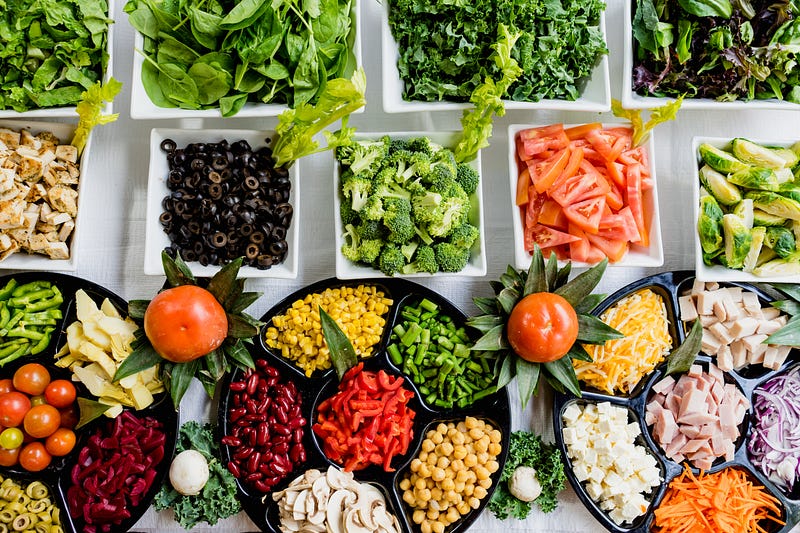
The key takeaways from Dr Ridker and Dr Morris are clear. Don’t dwell too much by drawing a line to distinguish between anti-inflammatory and pro-inflammatory. The overall dietary pattern matters. What is clear is that we should be having a balanced diet that is not ultra-processed.
Concluding remarks: Inflammation — The good and the bad
In summary, inflammation is an immune response to injury, irrespective of the trigger, either pathogens or our diet.
- Inflammation is necessary to activate the immune response to fight pathogens such as bacteria and viruses. Generally, pathogens cause transient inflammation. Once the pathogens are neutralized, there is no more stimulus that triggers immune cells.
- When inflammation is activated by a poor diet, such as insufficient dietary fiber, excessive alcohol and excessive calories. The inflammation persists until we change our dietary habit.
- The persistent ingestion of pro-inflammatory food leads to unresolved inflammation and limits the healing process.
Dr. Fabiola Rivas said inflammation is like a purifying flame that neutralises anything that will turn out to be bad, but eventually our body need to extinguish the fire before it causes extensive tissue damage [10].

Fortunately, some of the immune cells, such as T-regulatory cells, have anti-inflammatory properties, preventing the inflammation to intensify uncontrollably. If the inflammation is too severe, then we need to use an anti-inflammatory drug, such as aspirin. So, can we use aspirin to “cure” the chronic low-grade inflammation triggered by our diet? A medical doctor has to make this verdict. However, an appropriate inflammatory response is necessary for fighting pathogens and removing dead cells and their debris.
If you would like to learn more about the role of a typical Western diet and overconsumption of calories in triggering the immune system (hence inflammation), I highly recommend this article written by Shin Jie Yong:
Thank you for reading.


