
What Did the First Blue-Eyed Person Look Like?
The answer will surprise you
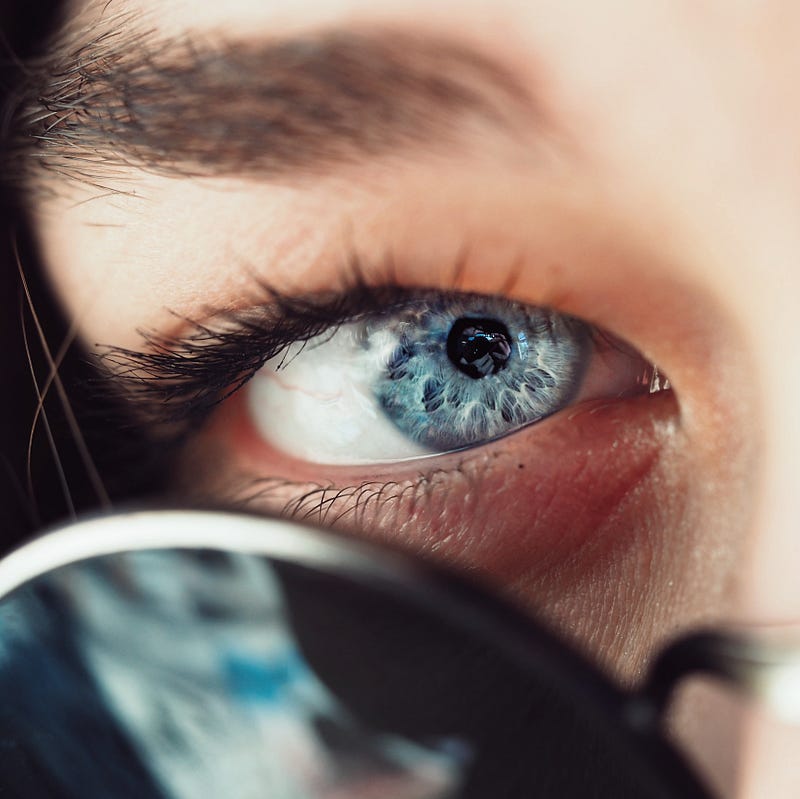
If you have blue eyes, chances are you’re related to everyone else who has blue eyes. Blue eyes are now the second most prevalent eye color after brown, accounting for 8–10% of humans.
But unlike brown eyes, we can trace the origin of blue eyes to a single common ancestor.
Scientists believe the first individual with blue eyes lived between 10,000 and 6,000 years ago around the Black Sea region. We haven’t yet been able to find out who it was. But we have enough evidence to make an educated guess.
A 7,000-year-old skeleton discovered in a cave in Northern Spain may give us a glimpse of the earliest known blue-eyed human. But, before we learn more about this person and what he looked like, let’s find out why some of us have blue eyes.
Are blue eyes actually blue?
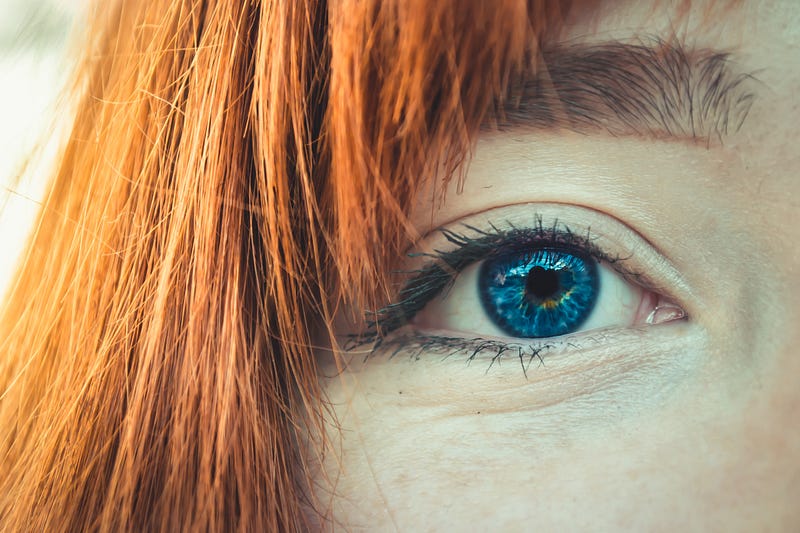
Let me clarify if the title of this section confuses you. Blue eyes are not blue. There is no blue pigment in our iris, the colored part of our eye.
A pigment called melanin determines the color of our eyes. Melanin is brown. Brown eyes have the highest concentration of melanin, while blue eyes have the least.
If blue eyes comprise a brown pigment, then why do they appear blue?
Eyes are blue for the same reason the sky or the ocean is blue.
The way light hits the iris and reflects to the viewers causes the eyes to appear blue. Our iris scatters the blue waves, giving the eye a blue appearance.
But why is it that just 8–10% of the population possesses this trait?
We can find the answer in genetics.
OCA2 is the gene that controls melanin in our iris. OCA2 generates a protein known as P protein, which influences the amount and quality of melanin.
Another gene, HERC2, controls the OCA2 gene. HERC2 functions as a switch, activating OCA2, resulting in P protein production and an increase in melanin.
However, the amount of P protein drops when HERC2 makes OCA2 less active. This means less melanin and a higher chance of getting blue eyes.
Genetic analysis revealed that nearly all carriers of the blue eye trait shared a mutation in the same gene. Around 10,000 to 6,000 years ago, one person near the Black Sea had this genetic mutation.
This person is the ancestor of all people with blue eyes today.
What did the individual look like?
A man’s skeleton, discovered in a cave in Leon, Spain, may hold the secret.
Reconstructing the first blue-eyed person
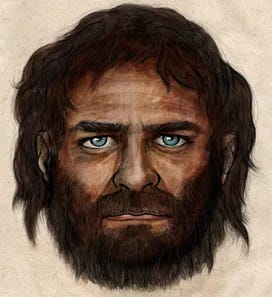
In 2006, archaeologists excavated a 7,000-year-old skeleton from the La Brana cave near Leon, Spain. The skeleton belonged to a person from the Neolithic (New Stone Age) era. Genetic analysis revealed that the skeleton belonged to a male with blue eyes.
The man is the first known human to have blue eyes. What did he look like?
The La Brana man is genetically similar to modern Scandinavians. But, unlike the people of Scandinavia, he didn’t have fair skin.
He was dark, had curly hair, and was lactose intolerant. These traits are usual among Africans. He may have resembled the common progenitor of all blue-eyed people.
Are you surprised that the first person with blue eyes was most likely a guy with dark skin and curly hair?
I know I am.
The La Brana man makes us wonder if the gene for blue eyes came from the Black Sea and is most common in Northern Europe: how did a blue-eyed man end up in Spain?
Archaeology could provide some answers.
During the Neolithic period, humanity changed from a nomadic, hunter-gatherer culture to a settled, agricultural one. Food security resulted in an increase in population. A sedentary lifestyle was accompanied by an increase in ceramics, polishing tools, vases, and farming equipment that defined a culture.
By combining artifacts with DNA, we can track the movement of populations. As people traveled, their genes spread, and they brought their distinct cultural markers, such as pottery.
Genetic research on Armenians has revealed that the country’s mountainous interior served as a vital staging area for people traveling from the Black Sea to Southern Europe.
There were two routes: one through the Anatolian peninsula and the other through the Mediterranean Sea.
A study of eight Bronze Age bodies from Spain, dating between 5,500 and 3,500 years, revealed the people were a mix of existing hunter-gatherers and migrants from North Africa, the Caucasus, and Central Asia.
Migration from the Black Sea region to Spain was one of many pathways that allowed blue-eyed genes to spread to Northern Europe.
Let’s answer one more question before we wrap up.
How did the rare gene for blue eyes spread so much that it is now the second most common eye color?
Climate adaptation or sexual selection?

The reason for the spread of the blue-eyed gene is unknown.
There are some hypotheses, but no proof.
One of the most common is climate theory. According to this hypothesis, the lower melanin in blue eyes protects those who live in cooler climates from sun damage. As more people moved to Northern Europe, the color of their skin and eyes changed.
A different theory proposes that people who have blue eyes find others with blue eyes more sexually desirable. Blue-eyed people mated preferentially, increasing the population of blue-eyed people.
The two perspectives have their benefits and drawbacks.
I prefer the sexual selection theory because we have proof that it is how human populations increase their height. Tall people preferred mating with other tall people, resulting in an increase in the average height of the population
The same thing may have happened to those with blue eyes.
The earliest known blue-eyed human was a dark-skinned man in Spain with curly hair. The first person to have blue eyes, who lived near the Black Sea, could’ve looked like him.
Here are the key takeaways from our discussion:
- 8–10% of people are blue-eyed and all such individuals can be traced to a common ancestor.
- Blue eyes are a result of low melanin production because of the function of genes OCA2 and HERC2.
- Blue-eyed genes originated in the Black Sea region. The earliest known example was a man found in La Brana cave in Spain. The guy was dark-skinned and had curly hair.
- Blue-eyed genes spread across Europe through Anatolia and the Mediterranean.
- It’s unclear how the recessive blue-eye gene increased in numbers. There are several theories to explain them. Climatic adaptation and sexual selection are popular explanations for the spread of the blue-eye gene.
Interested in knowing more about the origins of unique human abilities such as language?
Check out the story below.
If you liked this story, make sure to follow, clap, highlight, and comment. Subscribe to my posts and never miss an update.
References
- Is eye color determined by genetics? Medline Plus, NIH.
- Blue-eyed humans have a single, common ancestor, the University of Copenhagen.
- World Population by Eye Color, World Atlas
- Behind Blue Eyes: A Look at the Genetic and Cultural Components that Propelled the Spread of Blue-Eyed Humans, College of Physicians Philadelphia.
- A. Hoyhannisyan, Z. Khachatryan. M. Haber, P. Hrechdakian, et al. Different waves and directions of Neolithic migrations in the Armenian Highland. Investigative Genetics 5 (2014)
- Revealed: First Ol’ Blue Eyes is 7,000 years old and was a caveman living in Spain. The Independent.