avatarDouglas Perkins

Free AI web copilot to create summaries, insights and extended knowledge, download it at here

4474

Abstract

a holder of religious beliefs, question authority and the origins of religious dogma:</p><blockquote id="66bc"><p>A learned man came to me once.</p></blockquote><blockquote id="e415"><p>He said, “I know the way — come.”</p></blockquote><blockquote id="f4f3"><p>And I was overjoyed at this.</p></blockquote><blockquote id="d357"><p>Together we hastened.</p></blockquote><blockquote id="d8e6"><p>Soon, too soon, were we</p></blockquote><blockquote id="7d8b"><p>Where my eyes were useless,</p></blockquote><blockquote id="a020"><p>And I knew not the ways of my feet,</p></blockquote><blockquote id="5f5b"><p>I clung to the hand of my friend;</p></blockquote><blockquote id="03ee"><p>But at last he cried, “I am lost.”</p></blockquote><p id="bba9">Crane shows us that even though someone may claim to know the correct paths and even to know the truth, this does not necessarily mean they actually know or possess what they claim.</p><blockquote id="546a"><p>When the prophet, a complacent fat man,</p></blockquote><blockquote id="1f84"><p>Arrived at the mountain-top,</p></blockquote><blockquote id="2afa"><p>He cried: “Woe to my knowledge!</p></blockquote><blockquote id="1b35"><p>I intended to see good white lands</p></blockquote><blockquote id="9671"><p>And bad black lands,</p></blockquote><blockquote id="b8e4"><p>but the scene is grey.”</p></blockquote><p id="ed73">This poem shows that simply because a person is a religious leader does not mean he knows absolutely the rights and wrongs of religious belief. the inference could also include that religions and their leaders tend to oversimplify right and wrong, good and evil. There are actually shades of grey, and most probably, degrees of right and wrong, not just the extremes of “black” and “white.”</p><blockquote id="b20f"><p><i>“And the sins of the fathers shall be visited</i></p></blockquote><blockquote id="cc04"><p><i>upon the heads of the children, even unto the</i></p></blockquote><blockquote id="eb8f"><p><i>third and fourth generation of them that hate</i></p></blockquote><blockquote id="1fec"><p><i>me.”</i></p></blockquote><blockquote id="d5e8"><p>Well, then, I hate Thee, unrighteous picture;</p></blockquote><blockquote id="3612"><p>Wicked image, I hate Thee;</p></blockquote><blockquote id="46fb"><p>So, strike with Thy vengeance</p></blockquote><blockquote id="ac6c"><p>The heads of those little men</p></blockquote><blockquote id="5a6d"><p>Who come blindly.</p></blockquote><blockquote id="dd2b"><p>It will be a brave thing.</p></blockquote><p id="dff9">Crane graduate to a vicious mockery in this poem. He first quotes a passage from Deuteronomy 5:9, which describes the impending and perceived undue punishment of an incredibly unjust God, then goes on to rebuke the awful scene which the verse depicts. This is one of Crane’s most direct poems; the reader feels the immediacy and harshness in his frank tone. It is obvious how strongly Crane felt about these negative aspects of religion and God.</p><p id="9a3d">Possibly due in large part to his opinions regarding authority, doctrine, and organized religion in general, the reader can see in Crane’s poetry a strong leaning toward the belief that religious worship is personal and comes from within oneself, and should not be dictated by others.</p><p id="c85d">In this next poem, Crane also deals with finding the correct God, not a “strange” God. Crane believes that this is a personal decision, not to be made by anyone but oneself.</p><blockquote id="9d49"><p>I stood upon a highway,</p></blockquote><blockquote id="110f"><p>And, behold, there came</p></blockquote><blockquote id="ca6f"><p>Many strange peddlers.</p></blockquote><blockquote id="b75f"><p>To me each one made gestures,</p></blockquote><blockquote id="ba13"><p>Holding forth little images, saying,</p></blockquote><blockquote id="e31d"><p>“This is my pattern of God.</p></blockquote><blockquote id="19ea"><p>Now this is the God I prefer.”</p></blockquote><blockquote id="f902"><p>But I said, “Hence!</p></blockquote><blockquote id="e8c6"><p>Leave me with mine own,</p></blockquote><blockquote id="6f71"><p>And take you yours away;</p></blockquote><blockquote id="8d33"><p>I can’t buy of your patterns of God,</p></blockquote><blockquote id="63ae"><p>The little gods you may rightly prefer”</p></blockquote><p id="6146">Here the “peddlers” are men who represent different organized religions, each with his own “images” or “patterns” of how God should be. The word “peddle

Options

r” implies the selling of small goods of no great worth. The narrator of this poem tells the “peddlers” to leave for he has his own God and is pleased with him.</p><p id="e3ee">Crane deals further with the personal nature of God in the following poem:</p><blockquote id="98ba"><p>The livid lightnings flashed in the clouds;</p></blockquote><blockquote id="f9d1"><p>The leaden thunders crashed.</p></blockquote><blockquote id="0ffe"><p>A worshipper raised his arm.</p></blockquote><blockquote id="ad9d"><p>“Hearken! hearken! The voice of God!”</p></blockquote><blockquote id="ff21"><p>“Not so,” said a man.</p></blockquote><blockquote id="a930"><p>“The voice of God whispers in the heart</p></blockquote><blockquote id="eb9f"><p>So softly</p></blockquote><blockquote id="75fb"><p>That the would pauses,</p></blockquote><blockquote id="7b9a"><p>Making no noise,</p></blockquote><blockquote id="9067"><p>And strives for these melodies,</p></blockquote><blockquote id="3a4a"><p>Distant, sighing, like faintest breath,</p></blockquote><blockquote id="ab5a"><p>And all the being is still to hear.”</p></blockquote><p id="66b7">Crane wants the reader to ponder whether God would bellow and thunder or whether he would whisper faintly to the heart. His opinion is obvious. Since Crane obviously believes in a personal God, his communications will thus be personal and quiet.</p><p id="5717">Although Crane is concerned with God and organized religions, he does question the existence of a higher power. In the following poem, he ponders what will be encountered after death, if anything:</p><blockquote id="911a"><p>If I should cast off this tattered coat,</p></blockquote><blockquote id="91fa"><p>And go free in to the mighty sky;</p></blockquote><blockquote id="d637"><p>If I should find nothing there</p></blockquote><blockquote id="3c8f"><p>But a vast blue,</p></blockquote><blockquote id="9191"><p>Echoless, ignorant —</p></blockquote><blockquote id="30b0"><p>What then?</p></blockquote><p id="ad7f">Crane questions the existence of God but also appears to wonder whether it really makes a difference.</p><p id="4d6c">In direct contrast to the forced piety and religious arrogance of many churchgoers discussed above, Crane wrote the following poem which speaks of the humility one should have before God:</p><blockquote id="1d94"><p>In heaven,</p></blockquote><blockquote id="2d36"><p>Some little blades of grass</p></blockquote><blockquote id="6a20"><p>Stood before God.</p></blockquote><blockquote id="66c7"><p>“What did you do?”</p></blockquote><blockquote id="6957"><p>Then all save one of the little blades</p></blockquote><blockquote id="4c45"><p>Began eagerly to relate</p></blockquote><blockquote id="f0ed"><p>The merits of their lives.</p></blockquote><blockquote id="a1b0"><p>This one stayed a small way behind,</p></blockquote><blockquote id="00c1"><p>Ashamed.</p></blockquote><blockquote id="9d22"><p>Presently, God said,</p></blockquote><blockquote id="561f"><p>“And what did you do?”</p></blockquote><blockquote id="1344"><p>The little blade answered, “O my lord,</p></blockquote><blockquote id="e247"><p>Memory is bitter to me,</p></blockquote><blockquote id="9779"><p>For, if I did good deeds,</p></blockquote><blockquote id="81f1"><p>I know not of them.”</p></blockquote><blockquote id="83fc"><p>then God, in all His splendour,</p></blockquote><blockquote id="afe0"><p>Arose from His throne.</p></blockquote><blockquote id="dcea"><p>“O best little blade of grass!” He said.</p></blockquote><p id="c58e">In this poem, Crane uses the small blades of grass to demonstrate how small and seemingly insignificant we are and to convey a message of humility and honesty. The message is that no matter how small and trivial or how small and insignificant the life of a person may seem or how small and seemingly irrelevant a person’s good deeds, it is important to live as one believes correct. Even for this small blade of grass, humility, and honesty pay off.</p><figure id="1ae7"><img src="https://cdn-images-1.readmedium.com/v2/resize:fit:800/1*q_I4S-EXKGra8Jhy5T339g.jpeg"><figcaption>Crane in 1899 (Wikimedia Commons)</figcaption></figure><p id="5eba">For Stephen Crane, organized religion was not the important aspect of a person’s life. The vitally important was a person’s humility, honesty, and good works. If he did believe in a god, it would be one who appreciates and rewards these positive traits and one who speaks softly and kindly.</p></article></body>

What Did Stephen Crane Actually Believe?

The darkness of Crane’s poetry
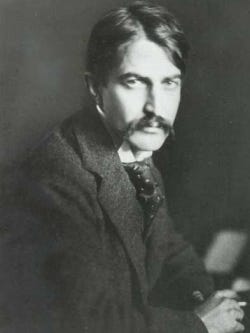
Crane in 1899 (Wikimedia Commons)

Crane’s background

Stephen Crane, although reared in an extremely religious home, his father being a pastor, never practiced religion. He never officially belonged to any organized religion as an adult. throughout his poetry, he expresses a contempt that he felt for organized religion and for religious ideals and beliefs in general. However, it is also evident that he believed it important to adhere to certain moral characteristics, such as honesty and humility.

Crane was born in Newark, New Jersey, and lived in various cities in New Jersey during his youth. His father was a Methodist pastor and later became Presiding Elder of the Methodist Conference for Newark. From this, it can be inferred that theirs was a devoutly religious home. Crane was the youngest of fourteen children. Crane’s biographer, Thomas L. Raymond, wrote:

“It is evident that the family supply of theology and religious piety had run out before this last Crane was born.”

Perceived Hypocrisy of the Religious

It becomes apparent in Crane’s writing that he had a great dislike for the forced piety and perceived hypocrisy of many churchgoers. An example of this disdain can be seen in the following poem:

You say you are holy,

And that

Because I have not seen you sin. Ay, but there are those

Who have seen you sin, my friend.

The “those in this poem who have witnessed the sins of the hypocrites could be a reference to either God or human beings or both. This perceived prevalent attitude of arrogance and forced piety is among the reasons why Crane felt contempt for organized religion as a whole. This manner of arrogance is addressed in a poem about “three little birds” who, upon seeing a man pass by, “nudge” one another and laugh at him because they believe they can sing much better than he. Crane labels this arrogance “curious,” and it seems that he finds it very strange and difficult to understand. Crane deals with this religious arrogance and those who try to force their beliefs and religious opinions on others in the following poem:

“Think as I think,” said a man,

“Or you are abominably wicked;

You are a toad.”

And after I had thought of it,

I said, “I will, then, be a toad.”

After reading a number of his poems, one cannot help concluding that this poem communicates Crane’s own personal response to those who try to push their forms of worship upon others.

Another poem is more specifically addressed to organized religion:

Two or three angels

Came near to the earth.

They saw a fat church.

Little streams of black people

Came and went in continually.

And the angels were puzzled

To know why the people went thus,

And why they stayed so long within.

The implication here is that the angels, assumedly from the presence of God, are “puzzled” by organized religion. Also implied here is that organized forms of group worship do not necessarily bring one closer to God. The reader may also infer from the word “fat” that there are too many people there worshipping in this manner. The word “fat” might also be indirectly referring to the large amounts of money being paid to the church by the masses. On a closer reading, it becomes apparent that the angels do not even know the people are in the act of worshipping.

In the next three poems, Crane shows that one should, as a holder of religious beliefs, question authority and the origins of religious dogma:

A learned man came to me once.

He said, “I know the way — come.”

And I was overjoyed at this.

Together we hastened.

Soon, too soon, were we

Where my eyes were useless,

And I knew not the ways of my feet,

I clung to the hand of my friend;

But at last he cried, “I am lost.”

Crane shows us that even though someone may claim to know the correct paths and even to know the truth, this does not necessarily mean they actually know or possess what they claim.

When the prophet, a complacent fat man,

Arrived at the mountain-top,

He cried: “Woe to my knowledge!

I intended to see good white lands

And bad black lands,

but the scene is grey.”

This poem shows that simply because a person is a religious leader does not mean he knows absolutely the rights and wrongs of religious belief. the inference could also include that religions and their leaders tend to oversimplify right and wrong, good and evil. There are actually shades of grey, and most probably, degrees of right and wrong, not just the extremes of “black” and “white.”

“And the sins of the fathers shall be visited

upon the heads of the children, even unto the

third and fourth generation of them that hate

me.”

Well, then, I hate Thee, unrighteous picture;

Wicked image, I hate Thee;

So, strike with Thy vengeance

The heads of those little men

Who come blindly.

It will be a brave thing.

Crane graduate to a vicious mockery in this poem. He first quotes a passage from Deuteronomy 5:9, which describes the impending and perceived undue punishment of an incredibly unjust God, then goes on to rebuke the awful scene which the verse depicts. This is one of Crane’s most direct poems; the reader feels the immediacy and harshness in his frank tone. It is obvious how strongly Crane felt about these negative aspects of religion and God.

Possibly due in large part to his opinions regarding authority, doctrine, and organized religion in general, the reader can see in Crane’s poetry a strong leaning toward the belief that religious worship is personal and comes from within oneself, and should not be dictated by others.

In this next poem, Crane also deals with finding the correct God, not a “strange” God. Crane believes that this is a personal decision, not to be made by anyone but oneself.

I stood upon a highway,

And, behold, there came

Many strange peddlers.

To me each one made gestures,

Holding forth little images, saying,

“This is my pattern of God.

Now this is the God I prefer.”

But I said, “Hence!

Leave me with mine own,

And take you yours away;

I can’t buy of your patterns of God,

The little gods you may rightly prefer”

Here the “peddlers” are men who represent different organized religions, each with his own “images” or “patterns” of how God should be. The word “peddler” implies the selling of small goods of no great worth. The narrator of this poem tells the “peddlers” to leave for he has his own God and is pleased with him.

Crane deals further with the personal nature of God in the following poem:

The livid lightnings flashed in the clouds;

The leaden thunders crashed.

A worshipper raised his arm.

“Hearken! hearken! The voice of God!”

“Not so,” said a man.

“The voice of God whispers in the heart

So softly

That the would pauses,

Making no noise,

And strives for these melodies,

Distant, sighing, like faintest breath,

And all the being is still to hear.”

Crane wants the reader to ponder whether God would bellow and thunder or whether he would whisper faintly to the heart. His opinion is obvious. Since Crane obviously believes in a personal God, his communications will thus be personal and quiet.

Although Crane is concerned with God and organized religions, he does question the existence of a higher power. In the following poem, he ponders what will be encountered after death, if anything:

If I should cast off this tattered coat,

And go free in to the mighty sky;

If I should find nothing there

But a vast blue,

Echoless, ignorant —

What then?

Crane questions the existence of God but also appears to wonder whether it really makes a difference.

In direct contrast to the forced piety and religious arrogance of many churchgoers discussed above, Crane wrote the following poem which speaks of the humility one should have before God:

In heaven,

Some little blades of grass

Stood before God.

“What did you do?”

Then all save one of the little blades

Began eagerly to relate

The merits of their lives.

This one stayed a small way behind,

Ashamed.

Presently, God said,

“And what did you do?”

The little blade answered, “O my lord,

Memory is bitter to me,

For, if I did good deeds,

I know not of them.”

then God, in all His splendour,

Arose from His throne.

“O best little blade of grass!” He said.

In this poem, Crane uses the small blades of grass to demonstrate how small and seemingly insignificant we are and to convey a message of humility and honesty. The message is that no matter how small and trivial or how small and insignificant the life of a person may seem or how small and seemingly irrelevant a person’s good deeds, it is important to live as one believes correct. Even for this small blade of grass, humility, and honesty pay off.
Crane in 1899 (Wikimedia Commons)

For Stephen Crane, organized religion was not the important aspect of a person’s life. The vitally important was a person’s humility, honesty, and good works. If he did believe in a god, it would be one who appreciates and rewards these positive traits and one who speaks softly and kindly.

Poetry
Poetry On Medium
Essay
Belief
Religion
Recommended from ReadMedium