
What Detroit, El Paso, and Portland Have in Common
The demographics are changing rapidly and some don’t like it
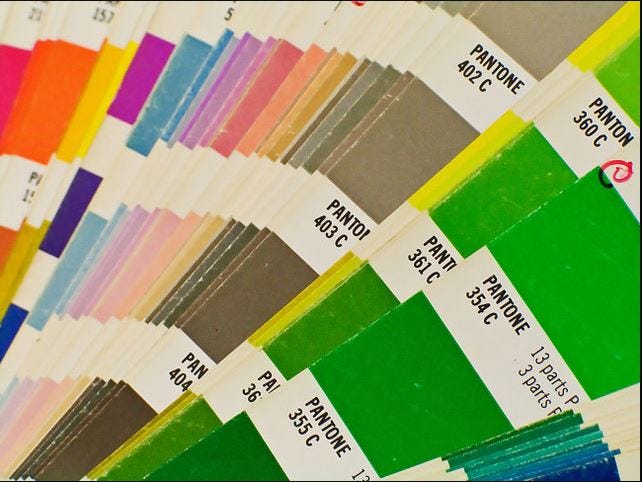
When we talk about diversity in the U.S., race, and ethnicity are generally top of mind. Federal laws also prohibit discrimination based on national origin, color, religion, age, disability, and gender.
A typical public or private company’s non-discrimination statement may include gender expression, marital status, pregnancy status, sexual orientation*, or military status.
For this article, we’re focusing on race. However, the face of the U.S. is changing quickly. By 2050, Whites (non-Hispanic or Latino) will be in the minority. I have no doubt this is what has white extremists so up in arms.
In both the 1930 and 1940 census, Whites made up 89.6% of the population. That is the highest recorded number in recordkeeping history. Whites now constitute 62% of the total.
The percentage of the population that is Black peaked in 1770 at 21.4%. However, their raw numbers continued to increase, primarily through the slave trade. At present, they constitute 12.4% of the population.
The population of Hispanics and Latinos (of any race) is 17.6%. This has increased from just 4.5% in 1970.
Here, then, is a story of three large cities and how they have become the least diverse cities in the country.
White
Among our largest cities, Portland, Oregon, bears the title of the “whitest of the white.” The city is 78% white. Colorado Springs comes in at a close second. My daughter lives in Portland, and she said “they say if Portland was a Baskin Robbins, 28 of the 31 flavors would be vanilla.”
Despite that, Portland was one of the most ardent supporters of the #BLM movement after the death of George Floyd. It was one of the hotbeds of protests that were occurring throughout the U.S.
Oregon began as a whites-only state. Laws were designed to discourage Blacks from living there. It banned slavery but established myriad laws that either prevented or discouraged Blacks from coming to the state. To this day, the state is only 2% Black.
If you’re counting whites of any race, Hialeah, Florida, tops the list at 93%. However, the NON-Hispanic White population is only 2.57%, which would make it the second least White city after East Los Angeles. In this count using this methodology, Lincoln and Boise come in at #2 and #3, respectively.
Another study looked at the percentage of the population of each city (greater than 100,000) that identified as White, NOT Hispanic or Latino. Springfield, MO, was the whitest at 85%, followed by Billings, Boise, Fargo, and Sterling Heights, MI.
For cities over 50,000, Mount Pleasant, SC, led the pack, with 91% of its 77,000 residents being White.
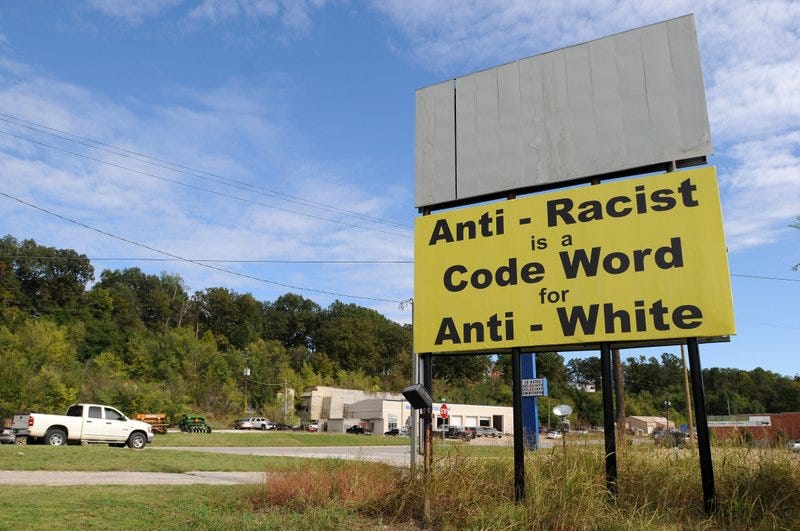
In the small city category, Harrison, Arkansas, is 92% White. Harrison has a history of racial tension. Race riots in 1905 and 1909 drove most Black residents away as Whites were “cleansing the area of crime.” In 2012, only 34 of its citizens were black. The KKK moved its primary headquarters just outside Harrison in the early 1970s. In 1982, Kingdom Identity Ministries, an anti-gay “Christian identity” outreach ministry, was founded in Harrison.
Black
Among the largest cities, New York, of course, has the highest number of Blacks. But Detroit has by far the largest percentage of Blacks, hovering around 80%, primarily due to redlining. These laws kept Blacks in their place, almost like imprisonment. When Whites left the city in droves for the new suburbs that were popping up, Blacks weren’t allowed in. It is a story unto itself.
While Jackson, Mississippi, has a higher percentage of Blacks than Detroit (82%), it is a far smaller city. Rounding out the top five smaller cities are Birmingham, Miami Gardens, and Memphis.
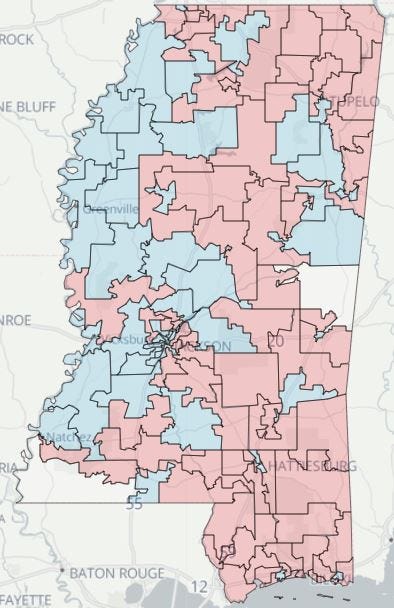
Since we’ve touched on Mississippi, it should be noted while 38% of its residents are Black, a Black governor has never been elected. Twenty-nine percent of its state legislators are Black, while only 21% of its senatorial seats are. All three branches are controlled by Republicans. Surprisingly, the first Black to serve in either house of the U.S. Congress was a Mississippian named Hiram Revels, from 1870 to 1871. He was a Republican. Southern Democrats were the enemy of Blacks. In all history, only 11 Blacks have ever served in the U.S. Senate.
Cities with the fewest Blacks are East Los Angeles, Laredo, and Brownsville, each with a mainly Hispanic/Latino population.
Hispanic/Latino
Of the top cities with a population of more than 250,000, El Paso leads here, with 81% of its residents being White-Hispanic or Latino. The White-non Hispanic or Latino population is only about 8%, while Blacks make up only 4% of the city.
El Paso wasn’t much of a city until 1890 when the Southern Pacific railway was built. The population swelled to 100,000 in the 1920s. At that point, it was mostly White. However, by 1965, it became a majority Hispanic/Latino city.
This only makes sense, given how Mexico is on the other side of the Rio Grande that separates the two cities and countries.
For cities under 250,000, East Los Angeles leads at 95% Hispanic, followed by Laredo (95%), Hialeah (also 95%), Brownsville (94%), and Edinburg, Texas (88%).
Brownsville is statistically the least Black city in the country. Only 0.4% of its residents are Black.
Interestingly, the eleven counties with the highest percentage of Hispanic population are all in Texas. All of those counties voted blue in 2020, with the exception of Webb County (Laredo). While this county voted for Clinton in 2016, 15% of those moved over the line and voted for Trump in 2020. It could be that they favored his immigration policies. Adjacent to the Rio Grande, Laredo is one of the more contentious U.S border cities when it comes to immigration crime.
I threw a lot of numbers at you, but they prove just how diverse we’ve become as a nation, and we better start behaving in the sandbox. We’re bound to have another January 6 if we don’t.
*The Equality Act was first proposed in the 114th U.S. Congress. During the 116th Congress the bill passed. However, the Senate passed on it, and then President Trump signaled he would have vetoed it anyway. The bill is once again in the Senate awaiting consideration. In the meantime, 28 states do NOT include sexual orientation within anti-discrimination statutes. (And yes, Texas is one of those states.) Trump: “I love gay people!” STFU.
Sources for this story include: * U.S. Census Bureau * World Population Review * Statista.com * American Community Survey 2013–2017, and 2017–2020 * The Woodmansee (AR) Project Newsletter, 12/22/2020 * Roadsnacks.com, “The 10 Whitest Cities in America for 2021” * Quora.com, 6/2/2017
Here are a couple of my related stories:
As a Medium member, you can read all of my articles and those written by thousands of other writers for just $5/month. I receive a small commission to help offset the cost of office supplies. Join by clicking the link below:


