
Freewriting // Day 5
What Can You Do With a Podcast?
Using the success stories of revolving ongoing projects
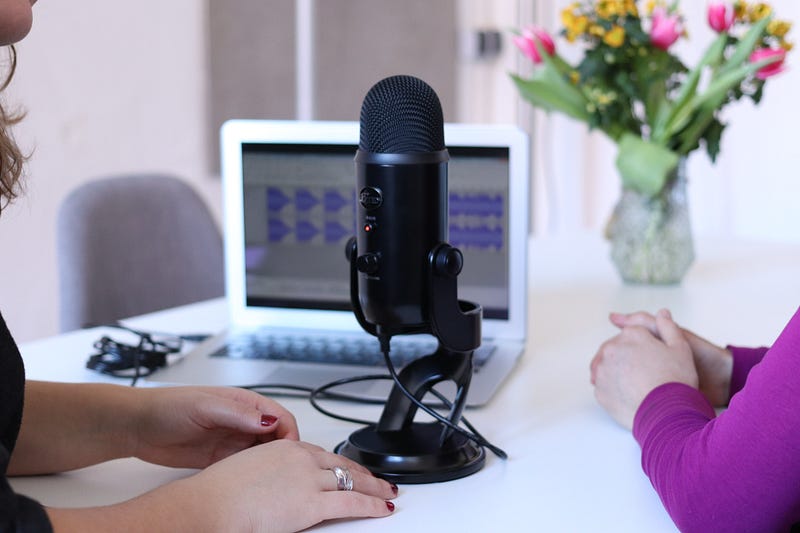
So, I have a podcast. So what?
So many people have started podcasts this pandemic, and it’s becoming quite a crowded space. On top of that, the podcast boom seems to be a reaction to lockdowns and staying inside, quite similar to the Medium writing boom.
So, just like Medium, perhaps there’ll be a decline in views while everything is “going back to normal”. You know, instead of hunched up on the couch reading poetry, you may be out and about.
I know that personally, I can’t wait to start thrifting again. Thrifting and listening to podcasts. My hobby. ❤
What is the Concept of Revolving, Ongoing Projects?
There must be some fancy name for it elsewhere but the versions I’ve seen include “the Jenna Kutcher 5”, and a few case studies where I’ve noticed Youtubers and podcasters apply this concept to their work.
The Jenna Kutcher 5
In this episode of the Goal Digger podcast was my first time encountering thsi concept in words, rather than in exposure.
She describes having five main themes that she cycles through with her instagram posts, which has netted her at least a million followers. In my time following her podcast, I believe she either consciously or subconsciously applies this principle to her episode themes too, which is partly why I think her podcast is so successful.
Or at the very least, interesting for me to listen to.
Case Study: Taylor R’s Youtube Channel
Taylor R is a Canadian Youtuber living in Hong Kong, and currently she does a revolving series of monthly vlogs alongside themed content and collaborations.
The most interesting thing is that her revolving themed series often go viral on different platforms including Tik Tok, which continually bring her new followers. It also keeps existing subscribers, like me, interested and engaged with new topics.
Her collaborations with various other Youtubers also continually create cross-pollination and cross-promotion of her content.
What’s most interesting about her revolving technique is that I first discovered her in my teenage years, where most of her vlogs involved her modelling life in Japan. Her fashion sense then was very pink, cutesy/ kawaii then; in a similar fashion, we’d both grown with existing fashion and beauty trends as well as with life transitions that her video content remained appealing to me.
Rather than remaining the same, it was her evolving that continued netting her new, different followers to help her grow, while giving her existing subscribers something new to be interested in.
Case Study: Young and Profiting with Hala Taha
Young and Profiting (YAP for short) is a rising and incredibly popular podcast. As her podcast introduction has drilled into me, she’s interviewed big figures like ex-FBI agents, and this podcast is designed to not have any fluff, getting straight into the informational, motivational content. That’s what she describes as her podcast’s appeal.
What I personally think is the appeal as an avid podcast listener is that she uses this topic and format cycling tactic to cater to different audiences, and keep things fresh.
Her current podcast rotates between interviews with amazing people, “Yap Snacks” (a short segment with stories, tips from her) and Clubhouse live episodes that are recorded and then adapted to podcasts. These episodes all have a different theme and pace to it, and make her podcast an intriguing place to be.
This rotating cycle centers around pulling lessons from authors, creators, etc., but the Yap Snacks and little conversations in between help her own story shine through. That provides the authenticity that audiences crave.
In between, we learn about how she hustled her first radio job as an intern but was sidelined and fired for something (that I think was pretty) unreasonable. We learn about how her rising podcasting fame introduces a new doubt on whether she can share her story and history as being Palestinian, knowing that others have conflicting views but also knowing that this is her story, her lived experience, both pain and joy.
Three Benefits of This Revolving Tactic
You introduce new segments as you phase out old ones
As an example of what didn’t work out, I look to the viral podcast, Serial. I hung on to every word of Serial’s season 1, which grew viral and was the entire reason I started listening to podcasts.
I abandoned season 2 because I wasn’t interested. The discreet seasons didn’t work for me.
Whereas, if I’d been eased into it, the way that Hala Taha had eased us into the Clubhouse live episodes, maybe I would have liked it more by mere exposure.
Mere exposure effect describes our tendency to develop preferences for things simply because we are familiar with them. For this reason, it is also known as the familiarity principle. (The Decision Lab)
I’m pretty sure I wouldn’t have listened to a podcast of purely Clubhouse live re-runs, but because she introduced this segment interspersed with content that I already loved, I think it worked.
It’s kind of like a restaurant promoting a new dish that they ease into the menu and decide to fade out if it doesn’t work, but keep around if it becomes popular.
Remain novel, grow with your audience
The revolving topic tactic also means you can a) evolve with your existing audience and b) attract new audiences at the same time.
As someone who grew up with Youtube, I’ve seen a lot of popular Youtubers fade into obscurity for simply doing the same thing they did in 2005, but in 2021.
Did you know that EpicMealTime still does his epic meal adventures? Though once netting several million views per video, he know averages in the tens of thousands of views range. That’s still a lot, but not what views were at the top.
Similarly, a classic beauty vlogging favourite, Bubzbeauty, now focusses on personal vlogs about motherhood.
I’ve grown out of watching both channels because I no longer derive joy from watching people eat ridiculous meals, and though bubzbeauty’s kids are so cute, I’m not dedicating an hour of my week to watch them do cute things. My Instagram is already full of all my friends having kids and posting about them.
As someone who respects others’ decisions to have kids and who does think kids are cute intermittently, I do have a personal quota on how much “other people kids’ crawling” content I want in a day. Respectfully.
To be clear, I also think both of these Youtubers have found a formula that brings in sufficient income so they can focus on other parts of their lives, and I respect that. Sometimes you’re just in a season of life where you don’t need to care about stats as much anymore, and that’s a really cool place to be in.
But if you’re starting out and don’t have a million subscribers to work with, this is probably not the tactic you want to try out.
Revolving topics will bring in a new audience interested in the new projects you’re working on, while keeping things interesting for your existing audience.
You, as a human being (or bean), are allowed to grow too!
So often, I reflect on how much we solely morph content for audience too, so I wanted to make sure to include that creating for your own growth is important too!
Sure, we should listen to what the audience wants, but don’t let it be 100% of how you decide what content to move forward with. By pure algorithmic stats, Medium tells me that “How I made $xxx in x months” articles are the only things that my audience wants. But if I only wrote about this topic, I’d throw up in my mouth a little.
Sorry.
As a reader, I find people who write about one thing can become dull at times, despite the common idea that you should “niche down”. Let’s examine why people recommend this to understand how we can tweak this idea.
Niching down has the solid benefit for ensuring that you routinely create content under a certain branch, so it can show up in tags, topics, searches that attract an audience that is interested in that topic. If you write about too many things, you never really have the chance to build that momentum.
That’s why a revolving set of n topics, where n is:
- a doable number of projects you can juggle
- a reasonable number interests you have in your life, because you can write about your pain and your joy
- not reached the point where you share too much while trying to achieve authenticity
And, depending on your life, you can phase in and out one topic at a time as you grow with your audience.
Writing should be a win-win for you AND your readers.
So, given this revolving theme idea, what would your podcast be about?
Mine is still under formulation, with a mixture of poetry and life hacks, similar to my existing medium content.
What would yours be about?
Hi I’m Lucy Dan 蛋小姐 (she/her/她) and never would have I ever thought I’d dive this deep into podcasts that I’d make my own, but here I am.
Ps, get an irregular and definitely not daily, weekly or monthly dose of random shower thoughts?
^ by Dr. Preeti Singh


