
What Can You Do About Prediabetes and Type 2 Diabetes?
How To Reverse Insulin Resistance
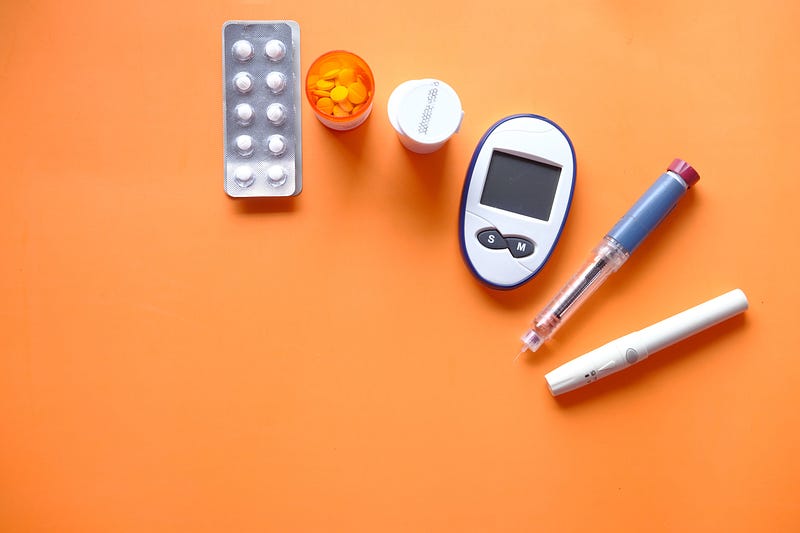
Nobody wants to end up needing the items in the photo above, yet so many people end up needing them anyway. Diabetes and, even more so, prediabetes (where blood sugar levels are higher than normal, but not high enough yet to be diagnosed as type 2 diabetes) are a scourge affecting millions in America.
According to the CDC, these are the data on diabetes in America:
Diabetes
- Total: 37.3 million people have diabetes (11.3% of the US population)
- Diagnosed: 28.7 million people, including 28.5 million adults
- Undiagnosed: 8.5 million people (23.0% of adults are undiagnosed)
Prediabetes
- Total: 96 million people aged 18 years or older have prediabetes (38.0% of the adult US population)
- 65 years or older: 26.4 million people aged 65 years or older (48.8%) have prediabetes
These numbers are staggering. It’s not an overstatement to call this an epidemic. And it just keeps getting worse. The question is: what can we do about it?
Of the more than 37 million Americans who have diabetes (about 1 in 10), approximately 90–95% of them have type 2 diabetes. Prediabetes is the precursor to type 2 diabetes. I want to focus on T2D (type 2 diabetes) and PD (prediabetes) because they’re largely avoidable (and even remedied) by simple means. Before getting to that, let’s take a look at what causes T2D and PD.
Insulin resistance is the root cause of T2D and PD. This resistance is caused by ingesting too much carbohydrate. When you eat carbohydrates, your body produces insulin to remove glucose (blood sugar) from your bloodstream. Glucose is actually toxic, which is why its presence in the blood in large amounts is a problem. The more glucose that’s present, the more insulin that’s produced. After a certain point, excess insulin actually causes cells to become resistant to its signal to take up glucose (hence the term insulin resistance).
It’s possible to reverse insulin resistance. It’s even possible to reverse T2D. According to Virta Health, the definition of T2D reversal is:
Maintaining an HbA1c below 6.5%, with the elimination of all diabetic medications (with the exception of metformin)
Metformin is excluded from these reversal criteria because it is not diabetes-specific — many patients choose to stay on this medication for reasons other than blood sugar control.
So, even if you’re suffering from T2D or are on the way with PD, it’s possible to restore your health without resorting to medication or resigning yourself to a lifetime of illness. The prescription here is the ketogenic diet.
It’s not enough simply to cut back a little on carbohydrates. It seems that ketones themselves are responsible for reversing insulin resistance. Ketones are a source of energy produced in the liver from fats when glucose is in short supply. Reducing carbohydrates in the diet to a negligible amount (5% of daily caloric intake) will cause the production of ketones as an alternative to glucose.
The ketogenic diet can lead to a reduction in the need for diabetes medications, such as insulin. “When your blood sugar is no longer chronically elevated, these blood-sugar-lowering medications are no longer necessary. An ongoing study has shown that sustained nutritional ketosis can lead to the permanent removal of these medications.”
I won’t go into great detail about the keto diet (you can learn more here), but the crux is to replace carbohydrates in your diet with fats. While carbohydrates will raise blood sugar (leading to insulin production), fats will not. Given how fats (and cholesterol) have been vilified for decades, many people will balk at the idea of the ketogenic diet. Is it safe?
According to Virta Health, fats do not cause cardiovascular disease. “Consuming high amounts of dietary fat is clinically demonstrated to be safe as long as carbohydrates are restricted.” Also, “the theory that fat is responsible for heart disease and cholesterol problems has largely been disproven.” Regarding the ketogenic diet, “studies have shown decreases in triglycerides, increases in HDL, and increases in LDL particle size. These results have been replicated in multiple low-carb dietary intervention trials, including controlled feeding studies”. You can learn about this in chapter eight of the book The Art and Science of Low Carbohydrate Living by Stephen Phinney and Jeff Volek (free copy here). The key is that in the absence of large amounts of carbohydrates in the diet, fats (and cholesterol) are not problematic. No carbs, no problem.
Some will assert that the ketogenic diet is difficult to stick with long-term, but “Virta Health’s clinical trial showed 83% retention at one year among patients receiving the Virta treatment, and 74% retention at 2 years. In addition to the obvious incentives of improved diabetes control and major weight loss, the lack of caloric restriction and the associated reduction in hunger and cravings contribute to this high adherence rate”. I myself have been on the ketogenic diet for almost three years now without any difficulty. I might not be able to eat everything I like, but I like everything I eat.
Given the high numbers of people suffering from T2D and PD, I find it a little bit shocking that the ketogenic diet isn’t prescribed by more doctors. People are paying thousands per year for insulin and other medications and suffering needlessly. Simply altering our diet can go a long way toward mitigating this malady.
This is a complicated medical issue, and I’m not a doctor, so please don’t take this as medical advice. If you’re already diabetic or taking medication for diabetes or hypertension, you should consult a physician before cutting all carbohydrates from your diet. To get started learning about the ketogenic diet, you can download the free book here and visit the sites in the links above.