
Distributed to Society, World
What Can We Learn From Strange Birthday Traditions Around The World?
Different cultures treat getting older in a variety of ways
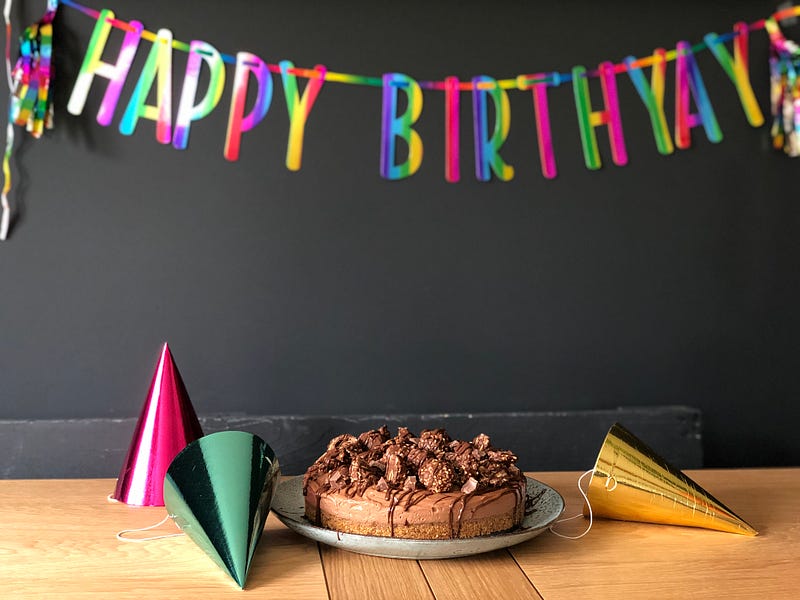
Getting older is something that happens to every human on the planet. How people deal with and celebrate the inevitable joys of ageing varies considerably. Sometimes these celebrations are just fun but others can grant insight into a culture and what they consider to be important in life.
Some countries don’t celebrate individual birthdays
Bhutan
In Bhutan, individual birthdays aren’t celebrated and a lot don’t know the actual date. This is for a couple of reasons — their calendar is different and doesn’t always tie up with the Gregorian calendar and also, it just isn’t important to them.
The Bhutanese do measure their age in years, however, and so for administrative purposes, the entire country gets one year older on the 1st January. This is official and has even caused problems at customs when officers grew suspicious that an entire Bhutanese delegation all had the same birthday.
It is worth noting that Bhutan is a country that doesn’t measure GDP — it measures GNH, Gross National Happiness. So maybe this lack of focus on an individual getting older is a positive thing. Although younger generations are starting to note their own date of birth, the entire country celebrates their birthday on New Year’s Day. It is surely no coincidence that the 2nd of January is also a public holiday.
Vietnam
The Vietnamese similarly have a countrywide birthday. Slightly more confusingly, everyone gets a year older on Vietnamese New Year, also known as Tet, which changes annually. So if you want to know when your birthday is the following year, you need to ask someone with next year’s calendar. The result is that in January or February, there is a huge party that can last up to a week.
Another factor to keep in mind if you want to know your Vietnamese age is that when you are born you start at age one. So you’ll always be a year older in Vietnam.
The weird and the boisterous
Ear tugging
Quite a few countries engage in ‘ear tugging’. This as odd as it sounds (to those who don’t do it). This tradition is particularly popular in countries including Hungary, Italy, Brazil and Argentina. The birthday boy or girl gets their ears tugged by friends and family with the number of times relating to age. This is normally done before gifts are given, presumably to make sure the receiver hangs around. In Hungary, this is accompanied by a song that loosely translates as “Bless you, live so long you ears reach your ankles.”
The ‘Bumps’
This is particularly popular in the UK and Ireland. The birthday celebrant is held by the wrists and ankles by as many as possible and hoisted rapidly upward then held on to, to stop them being flung away. Then, they’re lowered to the floor. And repeat, depending on the birthday. This is done less often as people get older for obvious reasons.
The severed head
In Denmark, the kids get a lovely cake. The cake is traditionally made in the shape of a human, like a gingerbread man, corresponding to the gender of the child. So far, so nice. But then the cake is decapitated and the severed head is presented to the delighted birthday boy or girl while their friends tear apart the body in a zombie-like frenzy.
Russian birthday pie
In Russia, they don’t waste time with fluffy and unsatisfying cake. Instead, they opt for a much more nutritious, practical and filling ‘birthday pie’. It is not just any old pie, however, it usually comes with a special birthday message engraved into the crust.
Getting floured
In the Caribbean, Jamaica, in particular, it is common for friends and family to throw water on someone having a birthday, closely followed by a load of flour. In Brazil, this is sometimes accompanied by raw eggs. So it is a bit like getting a cake but uncooked and all over you. It is not meant to humiliate or anything, it is all in the name of fun, with even Usain Bolt getting floured on his birthday while at the Beijing Olympics.
Butter on the nose
Slightly more humiliating is the Canadian birthday tradition — particularly prevalent in Nova Scotia, Prince Edward Island and Newfoundland — of pinning the lucky birthday child down and greasing their nose with butter. This is supposed to ensure that the recipient is too oily for bad luck to stick to them.
German birthday traditions get worse with age
In Germany there is a very specific tradition where, if a man turns 30 and is still single, he has to sweep the town hall steps, often in drag, to show that he is ‘eligible’ for marriage. Alcohol seems an optional and probably encouraged extra.
Younger German children get it better as they don’t have to do chores or even homework for the day.
China has birthday traditions throughout a lifetime
In China, birthdays are important with numerous traditions occurring as someone ages. So many in fact, they get their own section. Certain things hold true for every birthday, such as the colour red being lucky and never giving someone a watch (as the passing of time is a reminder of death). But others are specific.
The first birthday
As in Vietnam, when a child is born, it is immediately one. So the first birthday celebration a year after birth, sees the baby turning two. There are a couple of interesting traditions here.
The ‘zhua zhou’ (spellings vary) is an activity where a variety of objects are placed in front of the baby that relate to jobs. So a pen for a journalist, or a musical instrument, football, stethoscope, abacus, aeroplane, or to keep it modern, a computer mouse for a budding IT expert. Whatever the baby picks up is supposed to be a predictor for what career they will pick. This system seems ripe for abuse from parents with high ambitions for their offspring but is actually just a bit of fun.
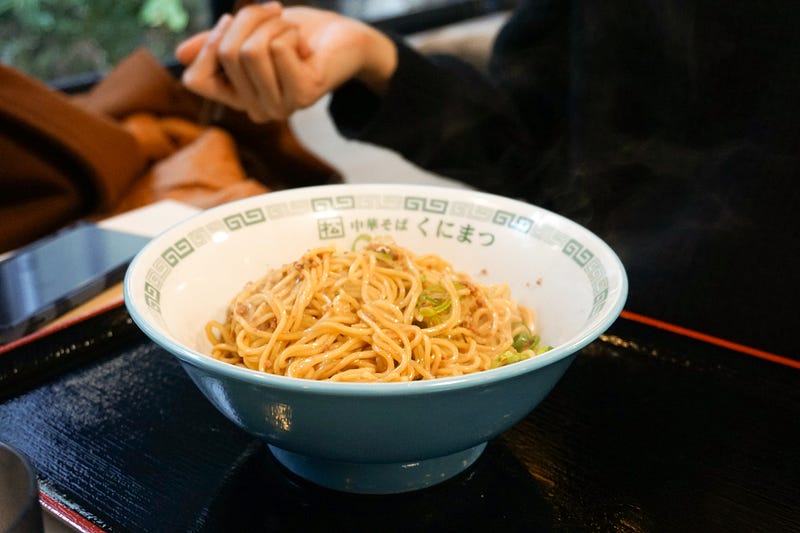
Instead of a cake, another enjoyable tradition is the consumption of a ‘longevity noodle’. This is a single long egg noodle that fills an entire bowl. The baby is expected to suck the noodle down in one slurp. Any cutting of the noodle symbolises a shortening of life, so it is possibly traumatic for the more superstitious. The Longevity noodle is an ongoing birthday tradition, so an accidental severance one year can be rectified the next.
In China, specific ages are important
For a Chinese female, the age of 30 is seen as a year of confusion and risk. The logical solution — skip it and stay 29 for another year. Superstition meets practicality. 33 is a bad luck year but women can defeat it by ignoring any celebration and cutting a piece of meat 33 times. The unfortunate meat is then discarded. This has to be repeated at age 66 with the meat correspondingly being slashed 66 times. In deference to age, this duty can, fortunately, be delegated to a daughter or close female relative. Similarly, men avoid the age of 40, staying 39 an extra year. Which seems wise.
The Chinese zodiac is made up of 12 signs, one a year. As a result, 60 is seen as a full life-cycle and is particularly auspicious. This results in a banquet, which the lucky birthday celebrant gets to pay for. In general, the Chinese aren’t all that big on birthdays until they hit 60. Then they go big.
Banned birthdays — in North Korea, there are two days where you just aren’t allowed to have a birthday
In North Korea, things are a little different for two days of the year. Having a birthday on the 8th of July or the 17th of December is strictly forbidden. This is because Kim Il-sung and Kim Jong-il died on those dates and you are supposed to be spending your time wailing and gnashing your teeth. There are an estimated 100,000 North Koreans who have ‘ghost birthdays’ on these days but many just change their birthday by a day.
Finally: a birthday tradition happily lost to history. Teeth removal!
It seems like a good idea to end with a bit perspective. This was a tradition that largely began in the 19th century but was particularly popular in the first half of the 20th century in places like the UK. When you turned 21 it was common to be given the gift of having all your teeth pulled out.
This stemmed from the fact that dental work was expensive and mouth hygiene wasn’t great. So, for poorer families, the obvious solution to avoid a lifetime of dentists was the extraordinary gift of paying to have all teeth removed and replacing them with dentures. It was incredibly common and lasted right up until the establishment of the NHS at the end of the 1940s.
So what can be learned?
Getting older happens to all and is something that is noted and celebrated in all cultures. While some, like the Bhutanese and Vietnamese, don’t really care much about the actual day, ageing is noted and celebrated. Other cultures, such as those in the West, have some quirky ways of enjoying the big day and while a few might seem odd, they are all in the spirit of fun. Even in the more traditional and superstitious China, the customs are light-hearted and enjoyable.
Birthdays are something to be noted and enjoyed rather than lamented and feared. While individuals may disagree, the trend around the world is to celebrate. Getting older is inevitable, so you might as well have some good times along the way.


