avatarAimée Brown Gramblin

Free AI web copilot to create summaries, insights and extended knowledge, download it at here

2769

Abstract

illian still keeps in touch with the housemothers.</p><p id="8cc9">Lillian got to see the first vaccination for smallpox come out.</p><p id="263b">Lillian said she admires our transportation as she remembers the early 1900s when there were only covered wagons. There were also only dirt roads. Lillian admires our schools. She says she also admires the marketing system we have.</p><p id="c3e5">~ <a href="undefined">Aimée Gramblin</a> nee Brown, November 29, 1990</p><h1 id="0758">Ozark Hoecake</h1><h2 id="a1a8">Ingredients</h2><ul><li>2 cups cornmeal</li><li>1/2 teaspoon salt</li><li>1/2 teaspoon baking powder</li><li>1 tablespoon melted fat</li><li>water as needed</li><li>Optional: butter, syrup</li></ul><h2 id="f9d2">Instructions</h2><ol><li>Combine two cups of cornmeal and two 1/2 teaspoons each of salt and baking powder. Add 1 tablespoon of melted fat and stir in water to make a soft dough.</li><li>Make into small cakes about 1/2" thick.</li><li>Bake on a hot, greased griddle until lightly browned. Then, turn to brown the other side.</li><li>Add butter and/or syrup to make the hoecake tastier.</li></ol><p id="097f">About 2” across, 1/2” thick. Press into well greased pan over medium to medium high heat. Watch for a change in texture. Check carefully with flat spatula. When it feels solid, flip. Wait for edges to brown and check frequently. Take off the pan when browned to your liking. Makes 12.</p><blockquote id="5792"><p>The dish remained popular across races and socioeconomic status. A 1821 <a href="http://catalog.mountvernon.org/digital/collection/p16829coll15/id/1008/">letter</a> written by George Washington’s step-granddaughter Nelly Custis Lewis highlights not only that the president favored hoecakes for breakfast but also that the terms “hoe” and “griddle” were used interchangeably. “His breakfast was then ready — he ate three small mush cakes (Indian meal) swimming in butter and honey, and drank three cups of tea without cream,” Lewis writes of Washington’s morning routine, before describing the creation process: “Add as much lukewarm water as will make it like pancake batter, drop a spoonful at a time on a hoe or griddle (as we say in the south).” <i>(Source)</i></p></blockquote><p id="3db7">It seems hoecakes can be dated all the way back to “johnnycakes” made by indigenous Americans in the 1600s. Lillian was a white woman. In my new research on hoecakes, I discovered their roots are in American Indigenous and Black history and culture.</p><figure id="d3db"><img src="https://cdn-images-1.readmedium.com/v2/resize:fit:800/1*[email protected]"><figcaption></figcaption></figure><figure id="b5bc"><img src="https://cdn-images-1.readmedium.com/v2/resize:fit:800/1*[email protected]"><figcapti

Options

on></figcaption></figure><figure id="4d74"><img src="https://cdn-images-1.readmedium.com/v2/resize:fit:800/1*[email protected]"><figcaption>I tried making Ozark Hoecakes. Left: the dough; center: raw hoecakes; right: cooked hoecakes. Author’s collection.</figcaption></figure><p id="4572">Welp, it was a fun and short journey back into Ozark Hoecake days. They taste like dense cornbread trying to be a pancake. They’re best served warm, buttery, and drowned in syrup.</p><p id="c690">They are easy to make and require simple, nonperishable or slow-to-expire ingredients. I can see why they’d be a staple of early 1900s farm life.</p><p id="9b56"><i>So where’d they get their name anyway?</i></p><p id="1418">Welp, that’s not clear. Either folks used a garden hoe as a “griddle,” or folks used a cooking implement called a hoe.</p><blockquote id="a0a7"><p>In his oft-cited essay, “How the Hoe Cake (Most Likely) Got Its Name,” historian Rod Cofield notes that many 19th- and 20th-century books “claim that a hoecake is so-called because it was baked on the blade of a gardening hoe by slaves in the fields, who furthermore, apparently took the necessary ingredients with them to mix and bake during their mid-day break.” Cofield points out that supporting evidence of this explanation is in fact limited, and that the bulk of written accounts reference a piece of cooking equipment — not a garden tool — called a “hoe,” as the source of the name hoecake. <a href="https://food52.com/blog/27067-how-hoecakes-mark-the-endurance-strength-of-black-americans"><i>(Source)</i></a></p></blockquote><p id="1202">The one thing I didn’t do correctly when creating our own hoecakes was to use warm, or even boiling water. The gritty texture is probably smoothed a lot when one does this.</p><p id="35a8">Have any of you Cooker peeps made hoecakes or similar? Do share in the comments below. This <a href="https://slate.com/culture/2014/07/hoecakes-recipe-and-history-how-the-southern-cornbread-got-its-name.html"><i>Slate</i></a> article includes tips for making fantastic hoecakes while also delving into their history.</p><p id="a943"><b>~<a href="undefined">Aimée Gramblin</a></b></p><div id="c950" class="link-block"> <a href="https://readmedium.com/two-women-walk-into-starbucks-1e114514d4f4"> <div> <div> <h2>Don’t Mess With The Starbucks Chihuahua</h2> <div><h3>Microfiction</h3></div> <div><p>medium.com</p></div> </div> <div> <div style="background-image: url(https://miro.readmedium.com/v2/resize:fit:320/1*EDso_gfSC1tLPbzfNq9tGA.jpeg)"></div> </div> </div> </a> </div></article></body>

What Can We Learn From Older Folks? A Sort-Of-History of Hoecakes And A Neighborly Interview

When primary school sent me to interview a neighbor, I got to learn about the “olden” days
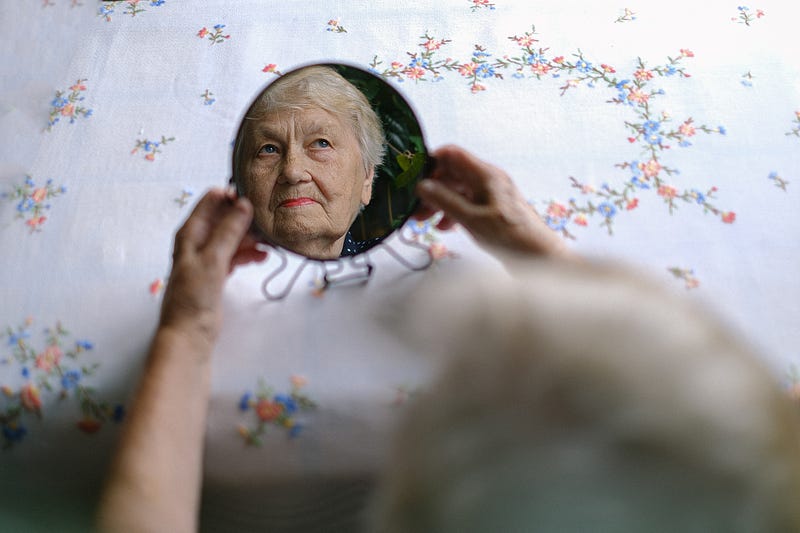
Photo by Anna Shvets from Pexels

Just saying “hoecake” sounds derogatory, like I’m calling out my cake for hoing around, which I would never do. I thought my research would reveal a risque story of yesteryear.

Nope.

Even though they’re spelled differently, hoecake manages to have a sultry (?) slutty (?) sound to it.

Moving on.

The Interview

Lillian Bowen was born in Benwheeler, Texas. She was born at home with a doctor attending on January 15, 1907. Lillian walked to school and had to cover a mile and a half to get there.

Her friend Jewel was quiet and funny; she was also 1/4 Choctaw Indian. Betsy and Lucille were noisy. Lillian said they were all tomboys. They entertained themselves by playing games: basketball, baseball, hopscotch, jump rope, seesaws, rope swings, shuffleboard, flench (card game), checkers, dominoes, and swimming. These were some of the athletic things in which Lillian participated.

When Lillian was 11 years old, she lived on a farm. There were many animals on the farm, including goats, sheep, ducks, cows, chickens, geese, turkeys, guineas, and hens. Her chores were tending to the animals and getting firewood.

As a girl, Lillian was not allowed to wear pants. She and the other girls wore dresses and skirts, stockings, hats, mittens, union suits, and high-topped shoes.

Lillian wanted to be a nurse when she grew up; she never got to, but her youngest daughter did.

She drank from clear creeks when Lillian was a girl. Lilian ate hoecakes. They tasted like pancakes. Lillian’s family used hoecakes as we use bread.

When Lillian was nine years old, she came to Oklahoma in a covered wagon. As a child and an adult, Lillian has lived in Arkansas, Oklahoma, New Mexico, California, Texas, and Kansas.

As an adult, Lillian’s first job was to cook at the university for sororities and fraternities. She worked there for over 30 years and enjoyed it. Lillian still keeps in touch with the housemothers.

Lillian got to see the first vaccination for smallpox come out.

Lillian said she admires our transportation as she remembers the early 1900s when there were only covered wagons. There were also only dirt roads. Lillian admires our schools. She says she also admires the marketing system we have.

~ Aimée Gramblin nee Brown, November 29, 1990

Ozark Hoecake

Ingredients

  • 2 cups cornmeal
  • 1/2 teaspoon salt
  • 1/2 teaspoon baking powder
  • 1 tablespoon melted fat
  • water as needed
  • Optional: butter, syrup

Instructions

  1. Combine two cups of cornmeal and two 1/2 teaspoons each of salt and baking powder. Add 1 tablespoon of melted fat and stir in water to make a soft dough.
  2. Make into small cakes about 1/2" thick.
  3. Bake on a hot, greased griddle until lightly browned. Then, turn to brown the other side.
  4. Add butter and/or syrup to make the hoecake tastier.

About 2” across, 1/2” thick. Press into well greased pan over medium to medium high heat. Watch for a change in texture. Check carefully with flat spatula. When it feels solid, flip. Wait for edges to brown and check frequently. Take off the pan when browned to your liking. Makes 12.

The dish remained popular across races and socioeconomic status. A 1821 letter written by George Washington’s step-granddaughter Nelly Custis Lewis highlights not only that the president favored hoecakes for breakfast but also that the terms “hoe” and “griddle” were used interchangeably. “His breakfast was then ready — he ate three small mush cakes (Indian meal) swimming in butter and honey, and drank three cups of tea without cream,” Lewis writes of Washington’s morning routine, before describing the creation process: “Add as much lukewarm water as will make it like pancake batter, drop a spoonful at a time on a hoe or griddle (as we say in the south).” (Source)

It seems hoecakes can be dated all the way back to “johnnycakes” made by indigenous Americans in the 1600s. Lillian was a white woman. In my new research on hoecakes, I discovered their roots are in American Indigenous and Black history and culture.
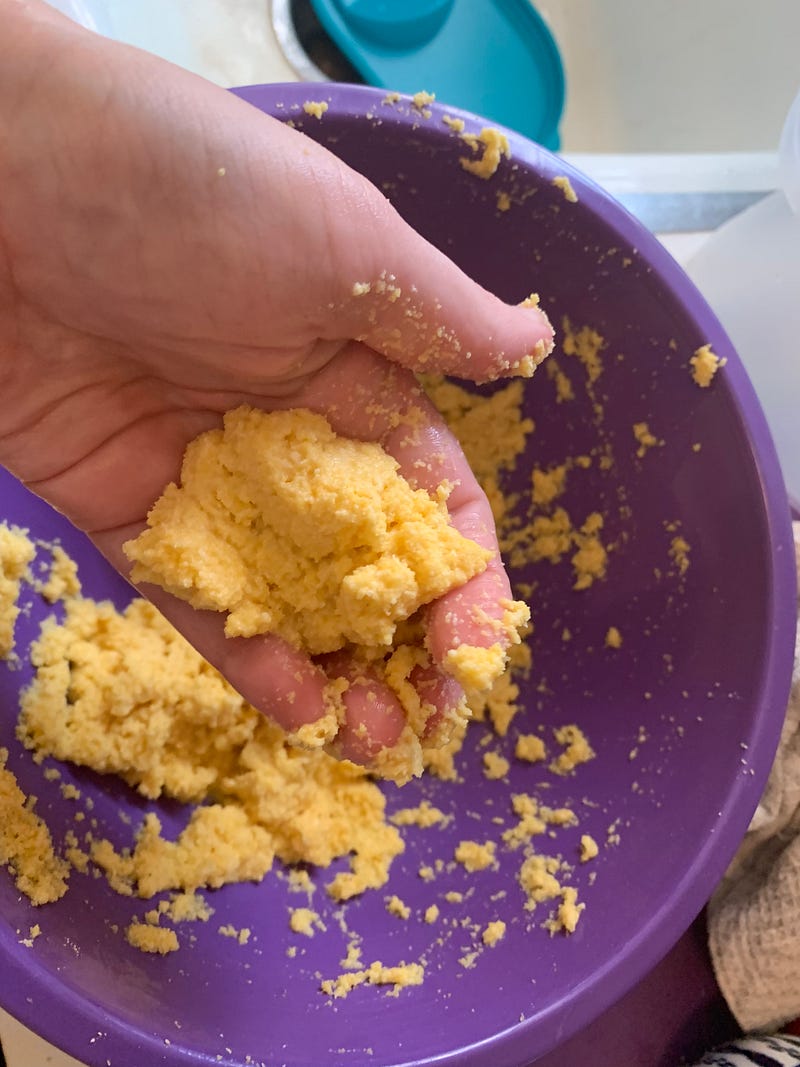
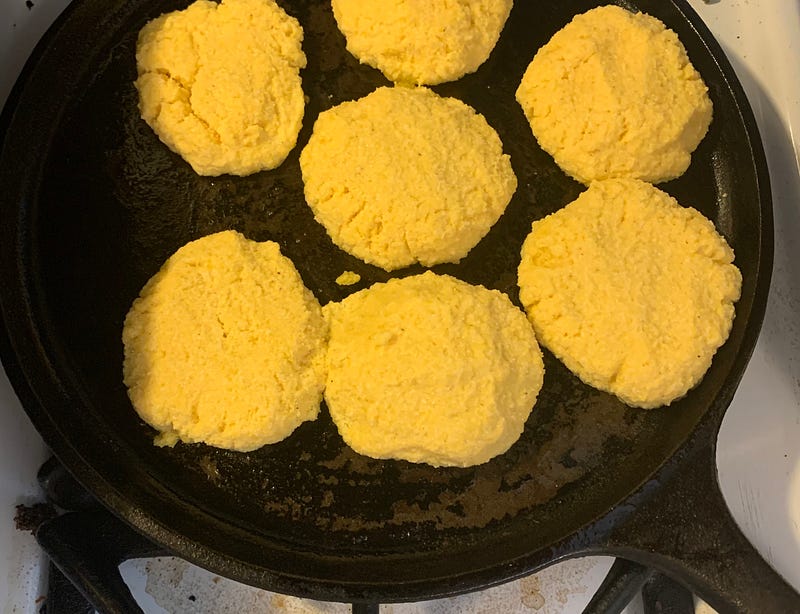
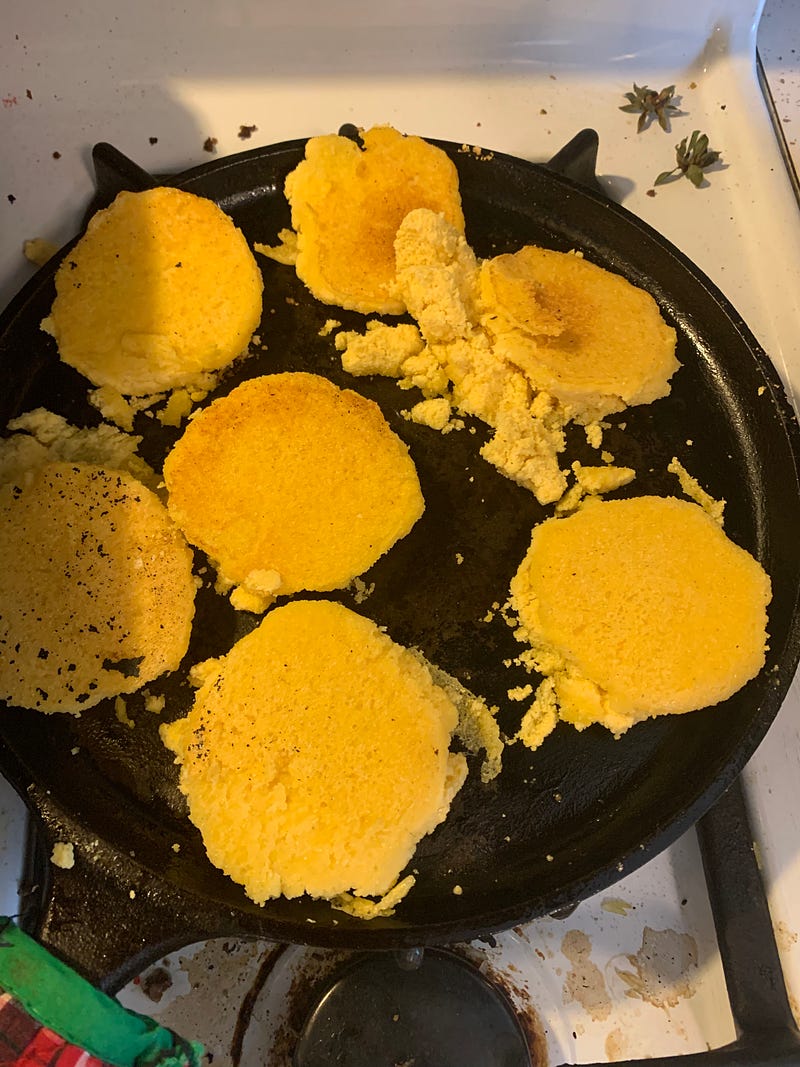
I tried making Ozark Hoecakes. Left: the dough; center: raw hoecakes; right: cooked hoecakes. Author’s collection.

Welp, it was a fun and short journey back into Ozark Hoecake days. They taste like dense cornbread trying to be a pancake. They’re best served warm, buttery, and drowned in syrup.

They are easy to make and require simple, nonperishable or slow-to-expire ingredients. I can see why they’d be a staple of early 1900s farm life.

So where’d they get their name anyway?

Welp, that’s not clear. Either folks used a garden hoe as a “griddle,” or folks used a cooking implement called a hoe.

In his oft-cited essay, “How the Hoe Cake (Most Likely) Got Its Name,” historian Rod Cofield notes that many 19th- and 20th-century books “claim that a hoecake is so-called because it was baked on the blade of a gardening hoe by slaves in the fields, who furthermore, apparently took the necessary ingredients with them to mix and bake during their mid-day break.” Cofield points out that supporting evidence of this explanation is in fact limited, and that the bulk of written accounts reference a piece of cooking equipment — not a garden tool — called a “hoe,” as the source of the name hoecake. (Source)

The one thing I didn’t do correctly when creating our own hoecakes was to use warm, or even boiling water. The gritty texture is probably smoothed a lot when one does this.

Have any of you Cooker peeps made hoecakes or similar? Do share in the comments below. This Slate article includes tips for making fantastic hoecakes while also delving into their history.

~Aimée Gramblin

History
Feminism
Women
Recipe
United States Of America
Recommended from ReadMedium