
What behind Republican Presidential Hopefuls’ visits of Taiwan in 2023?
Mike Pence, John Bolton, and Glen Youngkin will visit Taiwan in 2023 before their potential presidential bid in the next year.
American politicians are keen on visiting Taiwan in recent years, as the triangle relationship of the United States-China-Taiwan has become an increasingly important issue in the region.
According to RFA in April 2023:
“John Bolton, who served as national security advisor to President Donald Trump from 2018 to 2019 and has launched a bid to become the next Republican nominee for president, will deliver remarks at two pro-Taiwanese independence events in Taipei…
…Just Ahead of Bolton’s visit, Virginia Gov. Glen Youngkin — another ambitious Republican — will also be in Taiwan…
…Former vice president Mike Pence, also believed to have presidential aspirations, is due to visit in June, according to analysts in Washington.”
Taiwan as a democratic island that is heavily dependent on the United States for its security and defense, is located just 100 miles off the coast of China, which claims Taiwan as its own territory. As a result, the visits of potential Republican presidential candidates to Taiwan have significant implications for both the election and the international relations.
Taiwan is a democratic island nation located in East Asia. It has a population of approximately 23 million people and a vibrant economy that is heavily dependent on trade with other countries.

Support for Democracy
Firstly, the visits of Republican presidential candidates to Taiwan signal a strong show of support for Taiwan’s democracy and its status as an independent nation. This is particularly important in the face of China’s increasing aggression towards Taiwan and its efforts to isolate the island diplomatically.
Republican politicians and candidates may visit Taiwan as a way to show solidarity with a fellow democracy and to signal to China that the United States will not tolerate any aggression towards Taiwan. By visiting Taiwan, they are sending a message to China that the United States stands firmly behind Taiwan and will not tolerate any attempts to interfere with its sovereignty.
Additionally, they may use the opportunity to discuss economic and trade issues, as well as human rights concerns over China’s recent practices.
FYI: Why did recent US politicians visit Taiwan or meet Taiwan leaders?
Hardline on China
Secondly, the visits of Republican presidential candidates to Taiwan have important implications for U.S.-China relations. China has long viewed Taiwan as a “core interest,” and has warned the United States against any interference in the Taiwan issue. Therefore, when Republican candidates visit Taiwan, they are challenging China’s claims over Taiwan and sending a signal that the United States will not be cowed by China’s threats.
This can lead to increased tensions between the United States and China, particularly if China perceives the visits as a direct challenge to its sovereignty. It could also lead to increased pressure on Taiwan, as China may see the visits as a provocation and respond with military or diplomatic actions.
However, the visits of Republican candidates to Taiwan could also have positive implications for U.S.-China relations. By demonstrating a commitment to Taiwan, the United States may be able to signal to China that it is willing to engage in constructive dialogue and find ways to peacefully resolve the Taiwan issue.
Electoral Booster
Thirdly, the visits of Republican presidential candidates to Taiwan can also have implications for the domestic politics of both the United States and Taiwan. In the United States, the visits can be seen as a way for Republican candidates to appeal to their base, particularly those who are strongly supportive of Taiwan. By demonstrating a commitment to Taiwan, Republican candidates may be able to differentiate themselves from their Democratic counterparts and appeal to voters who view China as a major threat to U.S. national security.
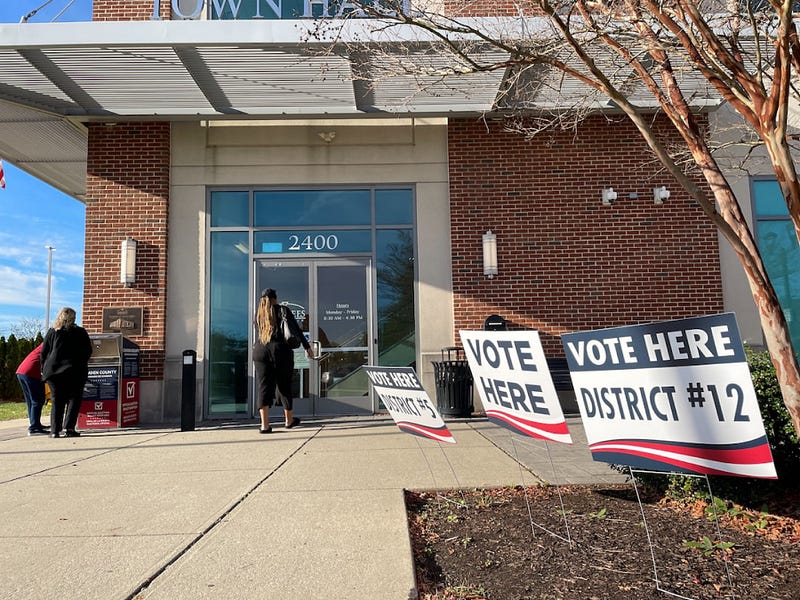
In Taiwan, the visits of Republican candidates can be seen as a sign of international recognition and support for the island. This can help to bolster the popularity of the ruling party, particularly if it is seen as being successful in cultivating relationships with international partners.
The Risk
However, the visits of Republican candidates to Taiwan can also be seen as a risk for the ruling party. China may view the visits as a direct challenge to its sovereignty, and may respond by putting pressure on Taiwan and isolating it diplomatically. This could lead to negative consequences for Taiwan’s economy and security, as it becomes increasingly isolated from the international community.
In August 2022, China threatened “targeted military operations” as then House Speaker Nancy Pelosi arrived in Taiwan. The country’s foreign minister claimed that “A visit by Pelosi would “severely undermine China’s sovereignty and territorial integrity, gravely impact the foundation of China-U.S. relations.”
Conclusion
Overall, the visits of Republican presidential candidates to Taiwan have significant implications for both the United States and Taiwan. While they can be seen as a strong show of support for Taiwan’s democracy and sovereignty, they can also increase tensions between the United States and China and put Taiwan at risk.
It will be important for all parties to carefully consider the potential consequences of such visits and work to find ways to peacefully resolve the Taiwan issue.