
What Are We Doing To Our Oceans?
Today is world marine protection day and it highlights how badly we are doing.
Our oceans are critical to the well being of the planet and obviously, therefore, to our survival. They are the world’s largest source of protein, absorb thirty percent of the carbon dioxide we pour into the atmosphere and three billion people depend on them for their livelihoods. Bacteria from the depths of the ocean are even being used to detect the presence of COVID 19.
Despite the glaring necessity for preserving the health of these vast tracts of water, we have done an appalling job of protecting them. We rape them indiscriminately for fish and other food, we pour chemicals into them without thinking twice about it, and we pollute them with the plastic that has become so prevalent in our lives.
One way that we can help alleviate the pressure on our oceans is through the establishment of marine reserves, also sometimes referred to as marine protected areas. That is one of the prime objectives of World Oceans Day. They would like to see world leaders around the planet agree to the establishment of these protected areas covering thirty percent of our oceans by 2030. I am sure, if you turn on your television today, you are bound to see a politician paying generous lip service to this bold initiative and listing all they intend to do to achieve its goals.
The reason I use the term lip service is that ten years ago the countries that are members of the United Nations all got together, and with equal enthusiasm to what you will see today, agreed to protect ten percent of the oceans by 2020. I am sorry to report that they failed dismally. Not only did they fail, but they did not even come up with a cohesive agreement as to what constitutes a marine reserve. For this reason, it is quite difficult to know exactly how far they were from the 2020 target.
Some countries define a marine reserve as an area where no activity such as fishing, mining, or dredging can take place, and others are a little more generous in what they will allow within those areas. That inbuilt ambiguity is why the area covered by reserves can be interpreted differently. A study by Sciencedirect.com in 2017, suggested that protected areas at the time accounted for 5.7 percent of world oceans and that the protected area would likely be 7.9 percent by 2020. Many of the reserves at the time existed on paper only.
I know that politicians have a tough job trying to juggle economic interests with the needs of the environment. At the same time, they were not forced into their positions. On the contrary, they were all too happy to stand up on their little soapboxes and say ‘vote for me’. Very often, when they did so, they were quick to offer sweeping promises as to what they would do to help save the planet, and it is for this reason that they now need to be held to account.
Greenwashing aside, we have still made crucial advances in the creation of marine protected areas. For most of the twentieth century they accounted for 0.1 percent of our oceans.
Marine reserves are not a cure-all answer to the many threats that our oceans are confronted with, almost all of which have been generated by man. There is, however, widely accepted scientific evidence that they provide a crucial reservoir of biodiversity. In addition, the huge fish increases that are associated with them provide a spillover. This, in turn, leads to better harvests outside of the reserves themselves.
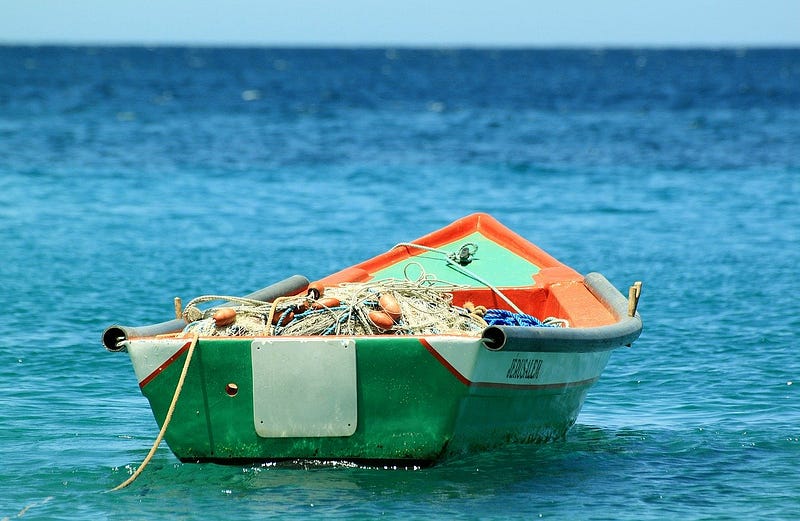
Although I am quick to point a finger at politicians, we all play a part in the demise of our oceans. There are things that we can all do to help turn the tide. Our efforts may be smaller, but that does not mean they don’t count. We can educate ourselves on the types of seafood that we choose to eat. Much of it is terribly overharvested, but some are still harvested at sustainable levels. We can choose to buy fish caught by small artisanal fishermen rather than huge corporates. We can choose to eat less or even no fish at all, and of course, we can choose to reduce the amount of plastic waste we use and dispose of it responsibly. Finally, as it is World Oceans Day, why not sign the petition they have, demanding that we get that thirty percent of our blue planet safeguarded as pristine reserves.