
What are Social Movements?
Social Movements 101
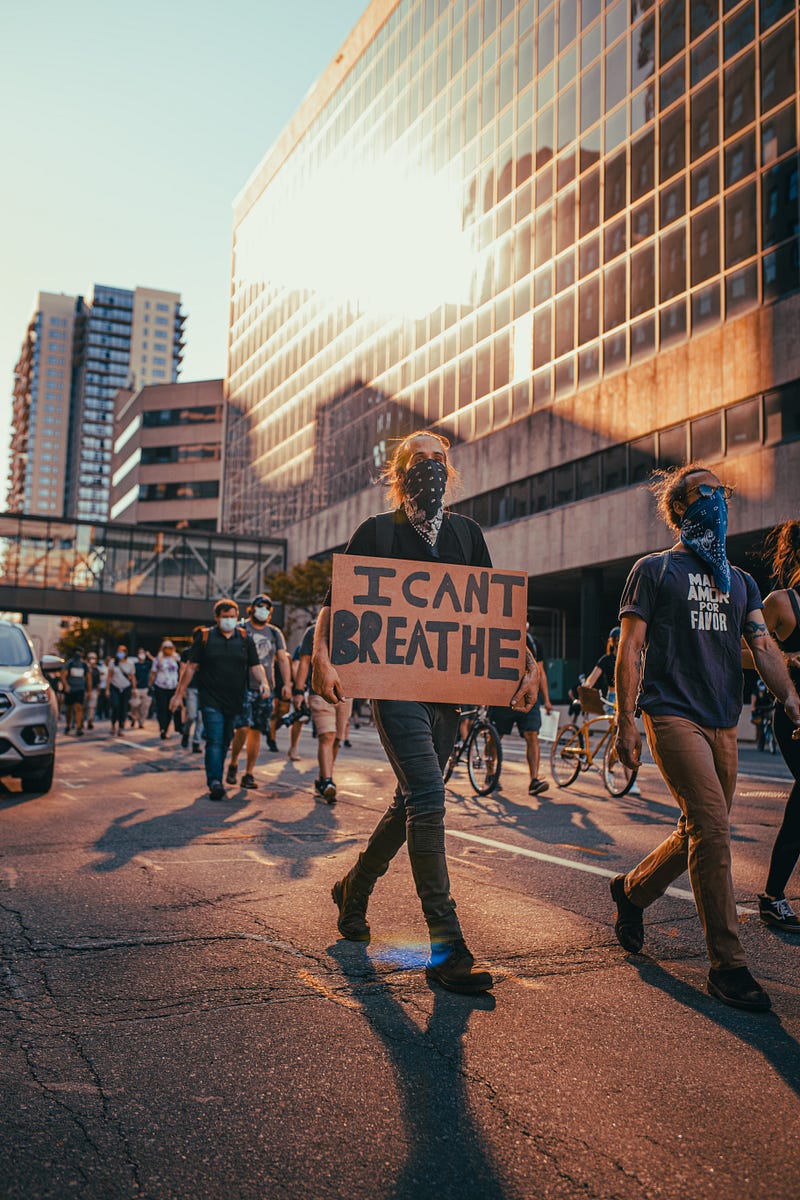
Social movements are vital to social change in our society and culture. They are as American as apple pie and baseball. Violence and nonviolence alike are as American as apple pie and baseball. Peace and protest have always been with us, dissent and civil disobedience have always been with us. And desires to do both keep things as they are and change things that need changing have always been with us. Social movements are our past, present, and future. And they have many different tactics and ways to influence and attempt to achieve social change.
I will not be able to cover everything in this or in any other series of essays. I will include as many resources as possible at the end. But I just felt compelled to give us all a place to start. Conversations online are intense. There’s a lot of ignorance. A lot of it is willful. A lot of it is cherished by those who hold it. And there’s a lot of concern and worry over what is happening, why, and what can be done to make things better. To get social change. Hence, back to social movements the only way to get social change in our society.
Let’s talk a bit about some definitions.
First, our society is unequal. Flat out.
Social Stratification: Social groups are positioned in a hierarchy of unequal value and this ranking is used to justify the unequal distribution of resources, rights, fair treatment, positive life chances, among social groups.
Second, along with this there are things that people want to do about this fact.
Status quo: Keep it as it is, justify it, make no effort to change anything.
Equality: Work towards something called “equality” which is a concept that means theoretically everyone no matter what position in our stratified society is considered equal.
Equity: Work towards something called equity which means changing the systems and structures to give those in oppressed positions what they need to reach the level playing field towards “equality”
Social Justice: Doing away with the structures and systems that cause stratification and unequal treatment, getting to the issues at the root and putting an end to the things that actively oppress and harm some and benefit and boost others. Things that are not distributed equally, or fairly, in terms of resources, rights, privileges are redistributed to remedy centuries of oppression and inequality.
We get to these equality, equity, social justice places via social movements.
Social Movement: Social movements are a form of collective behavior, but they are very different from fads, crazes, etc. This is due to the fact that social movements are sustained, they usually last for longer periods of time, they have higher levels of organization, including movement leaders, and a system of recruiting new members, along with this they actively mobilize resources, this includes time, money, opportunities for action and finally, social movements usually have a well-defined goal as their driving force, which is usually more broad based than eating goldfish or wearing bell bottoms! Social movements also have political or social justice ramifications. In short, Social Movements:
- Are collective, organized and sustained
- Direct action to further a common goal or interest
- Challenge authorities, power-holders, or cultural beliefs and practices (opposition)
- Use non-institutional, non-conventional means (disruptive tactics) to bring about or resist change
- Can use institutional means in innovative ways
- Typically last longer than fads, crazes or other forms of collective behavior
- Have higher level of organization
- Actively mobilize resources (including people)
- Have a well-defined goal as their driving force
- Have political ramifications
Types of Social Movements
Reform: Bring about limited social change working within the existing system; seeks to alter a specific part of society, commonly focus on a single issue (piece of pie, want in, pie is ok)
Revolutionary: Seeks fundamental Change, transformative change to entire society (whole pie is rotten, at root) (Radical)
Resistance/Reaction: Organized to prevent or resist change; often reactionary to “restore traditional values” (we liked it best when it was just our pie! OR resist them taking any more of our small slice)
Redemptive/Individual: Focused on targeting individuals for total or partial change (not social focus, but, can sometimes, in part involve rhetoric or desire to transform society via transforming individuals)
Social Movement Tactics Social Movements are action based. They can draw upon a variety of tactics to speak truth to power, raise awareness, and push for justice in their cause. Here are some resources on tactics. What is neat is that all of this can be researched, and looked at historically in terms of what has worked, what has not worked. And I will say that some of the most inspiring reporting on social movements and social movement tactics has come from this episode of Drunk History, of which I highly recommend — the tactics utilized by social movements of the past have lessons to teach the social movements of today. The full episode is Drunk History, Civil Rights, Season 5 episode 5, but some clips are here:
Resources on tactics:
On Violence and NonViolence: The issue of violence is a double standard in our society. Our government is allowed to use violence and always has been. Our nation was founded in violence and we call it a Revolution. When oppressed people in this nation seek to create change they are told to do it in ways that are palatable to the power structure, usually nonviolent ways and ways that involve getting a permit for a nice weekend rally that will not cause any disruption, harm, or threat to the power structures at all.
As Arundhati Roy wrote, “ Colorful demonstrations and weekend marches are vital but alone are not powerful enough to stop wars. Wars will be stopped only when soldiers refuse to fight, when workers refuse to load weapons onto ships and aircraft, when people boycott the economic outposts of Empire that are strung across the globe. ”
This nonviolent potential — of stopping, of no longer participating, is something social movements can also explore and utilize.
The issue of violence is one that causes great debate but often is not fully explored. One of the best resources on violence, revolution, and nonviolence is Malcolm X’s Message to the Grassroots.
“Look at the American Revolution in 1776. That revolution was for what? For land. Why did they want land? Independence. How was it carried out? Bloodshed. Number one, it was based on land, the basis of independence. And the only way they could get it was bloodshed. The French Revolution — what was it based on? The land-less against the landlord. What was it for? Land. How did they get it? Bloodshed. Was no love lost; was no compromise; was no negotiation. I’m telling you, you don’t know what a revolution is. ’Cause when you find out what it is, you’ll get back in the alley; you’ll get out of the way. The Russian Revolution — what was it based on? Land. The land-less against the landlord. How did they bring it about? Bloodshed. You haven’t got a revolution that doesn’t involve bloodshed. And you’re afraid to bleed. I said, you’re afraid to bleed.
[As] long as the white man sent you to Korea, you bled. He sent you to Germany, you bled. He sent you to the South Pacific to fight the Japanese, you bled. You bleed for white people. But when it comes time to seeing your own churches being bombed and little black girls be murdered, you haven’t got no blood. You bleed when the white man says bleed; you bite when the white man says bite; and you bark when the white man says bark. I hate to say this about us, but it’s true. How are you going to be nonviolent in Mississippi, as violent as you were in Korea? How can you justify being nonviolent in Mississippi and Alabama, when your churches are being bombed, and your little girls are being murdered, and at the same time you’re going to get violent with Hitler, and Tojo, and somebody else that you don’t even know?”
Malcolm X, From:

Root Structures of American Society
We have three basic, fundamental, root level systems that drive and shape and contain and constrain all forms of action and context in our society. These are the things that those seeking justice have to focus on, tear down, and then work to replace with better ways of being.
These root level structures are:
- White Supremacy
- Capitalism
- Patriarchy
Three massive, giant, horrific systems of stratification and exploitation. In every one of these areas, someone wins, or benefits, and someone loses, or is oppressed. Oppression means to trample, to hold down. Well, someone is standing or walking or running over those that are held down.
These three structures sit at the base of all social problems. Every single one. Name a social problem. Now, follow it back through history, through time, through place. I can guarantee that you have hit one or more of these root systems.
No, it’s not magic, I’m not a magician. I’m a sociologist. It’s social science.
Brief Introduction to Our Root Structures These root causes, root structures go way back and always move forward. They intertwine and lock together. They hit some people once, some people twice, and some people three times. They branch out into other areas (sexuality, sexual orientation, parenting, education) shapeshifting a bit here and there, to ensure they remain strong, protected, almost immovable.
White Supremacy is a structure, a racial system that prioritizes and gives dominance and assumed superiority/natural-ness to the experiences, bodies, histories, cultures, ideologies, and other aspects of social living of people in the socially constructed category of whiteness over all other socially constructed racial/ethnic categories.
The oppression(s) that correspond to White Supremacy are called Racism and Internalized Racism.
Capitalism is a structure, an economic system that prioritizes private ownership of the means of production and profit. Capitalism gives superiority and dominance to those in social class positions that are in control of the means of production, the rich and the wealthy, in our time, and in most times, this is the 1% . Capitalism as a system that values profit above all also exploits and disadvantages all other class categories using material and ideological means of social and economic control.
The oppression(s) that correspond to Capitalism are called Classism and Internalized Classism.
Patriarchy is a structure, a sex-gender system that prioritizes and rewards and assumes as superior and normal/neutral the bodies, needs, wants, experiences, histories, desires, ideologies, stories, words, feelings, of those culturally constructed as being male, masculine, and/or men over those of people culturally constructed of being female, feminine, and/or women.
The oppression(s) that correspond to Patriarchy are called Sexism/Misogyny and Internalized Sexism/Misogyny.
Real quick. The form of capitalism and of government we have now is called neoliberalism.
It’s important to understand how it works. In brief:
- Privatization of ALL things; belief that privatization and tax breaks to corporate and rich “trickle down” (never proven in reality, doesn’t matter, powerful rhetoric)
- Value Private Sector, Disdain for Public Sector, intentional internalized defunding and in all otherways sabotaging of government so that it can be justified and have public support when it is replaced with private corporations
- Anti-Union, Anti-Social Movement
- Enclosure of Public Spaces
- De-regulation (environmental, workers rights, human rights, safety, health, financial)
- Globalized Economy based on finances that are not rooted to place
- Decreased ability/funding for government at every level — National, State, City, Local
- Passes the responsibility, but not the power or resources, down to the lowest scale (personal responsibility rhetoric)
- Government/State: Only role is to ensure movement and flow of capital; not welfare of people, not health, not regulations to protect environment, not laws that ensure equality or democracy “big government”
- Increased government surveillance, control, mass incarceration, punishment, punitive role of the state at every scale is amped up due to LACK/LOSS/DISDAIN for role of the state in programs for human and social welfare, — prison system, social control, cameras, “tough on crime” etc STAND IN to deal with the collateral damage from neoliberalisms attack on social contract (government has role to ensure public good)
- “liberal” is not equal to “liberal” as in political liberal (ok with gays, women’s rights, etc) NO. liberal = “liberal” market, = liberal capitalism, — freedom for money, freedom of money, — liberal ideology in terms of letting market roam free
- Freedom under neoliberalism is NOT something FOR people; freedom to consume if you have money, that is about it. Patriot Act, Citizens United, — the hijacking of government (for by of people) for use against democracy
- Stresses “good business climates” in local areas that result in gentrification, criminalization, privatization, and loss of work and environmental regulations
For more resources on neoliberalism check this out:
Prejudice, Discrimination, Oppression Let’s get started with the important definitions and differences between prejudice, discrimination, and oppression.
Prejudice is something all people have, we aren’t born with it, but we learn it via socialization and it gets internalized into us through our culture. Prejudice is attitudes and feelings. It is a learned prejudgment about members of a group to which we do not belong. It’s based on limited contact and limited knowledge of this “other” group.
Prejudice relies on and builds stereotypes.
Examples of prejudice include having a positive opinion of women nurses and a negative opinion of male nurses, thinking older people are bad drivers, or believing that people who are more attractive are nicer than people who are less attractive.
All humans have prejudice. Prejudice can be unlearned and not acted upon.
Discrimination is action that comes from prejudice. It’s making choices based upon stereotypes and prejudgments. It’s avoiding certain people or places.
All humans can discriminate. Discrimination can be unlearned and not enacted.
Oppression is:
Prejudice and Discrimination + Institutional and Historical Power = Oppression
Oppression means to “hold down” a group of people and depends upon harnessing prejudice and discrimination within ideological, legal, social, and day to day contexts that are rooted in historical, institutional, ideological, and structural forms of power.
Not all people can oppress. Only those who benefit from historical and institutional power can oppress
Oppression is Different from Prejudice and Discrimination Now for the hard part for some people. If oppression is a structure rooted in historical and institutional power, the group that has always and who continues to benefit from this historical and institutional power is the group that can and does oppress. This group is the dominant group in the power dynamic. And this only goes one way.
So, connect the dots, put two and two together, breathe deeply because here it is:
The dominant group in our society in the category of White Supremacy are white people. Hence, only white people can and do oppress or benefit from oppression. Hence only white people can truly be and enforce and benefit from the oppression of Racism. Only white people can end the oppression of Racism.
The dominant group in our society in the category of Capitalism is the upper class, the 1%, the corporate, the wealthy, the bourgeoisie. Hence only they can oppress and benefit from the oppression of the poor, the working poor, the working class, the middle class. Hence only wealthy people can truly be and enforce and benefit from the oppression of Classism. And only the wealthy or a massive revolution and shift in power, via Socialism or Communism, can end the oppression of Classism.
The dominant group in our society in the category of Patriarchy are males, men, and the presentation of socially constructed masculinity. Hence only men, males, and toxic forms of masculinity can oppress and benefit from the exploitation and oppression of females, women, girls, and femininity. Hence, again, only men can truly be and enforce the oppression of Sexism. And only men can end the oppression of sexism.
Examples? It is well known that a tactic of oppression is dehumanization, which makes it easier to justify oppression and violence, which then justifies the dehumanizing efforts. This is ongoing. This is happening now. This is America.
This happens to women every day. Dehumanization in the form of porn videos, sex trafficking, commodification of our bodies, trivializing of our lives and concerns, mansplaining. Men do not have to endure these things in the same way.
This happens to poor people every day. Dehumanization in the form of living in poverty that is so deep and encompassing that even healthcare is a privilege, even food is construed as a luxury. And in the form of media that ignore, blame, shame, and belittle the lives of the poor and working poor in our nation. The wealthy do not have to endure these things in the same way.
This happens to people of color every day. Dehumanization in the form of concentration camps at the border, lives deemed worthless by police and courts, words from the President’s mouth or twitter feed demanding women of color go back to where they came from, and on and on and on. White people do not have to endure these things in the same way.
Racism is a power dynamic. It’s not individual actions or choices. It’s not about you being a bad or good person. It’s a root structure of our contemporary society and it is playing out in ways that are often predictable, in patterns, cycles and that have a history.
It is not about numbers either. This needs to be cleared up. The terms minority and majority are misnomers, and intentionally so.
There have always been more oppressed people in America than there have been members of the dominant group. Women make up over 51% of the population so if this were a simple issue of which group has more people that justifies the power and oppression, then by this language, women should be benefiting from the system right now. Instead it is the exact opposite by design.
These are categories of oppression and power, of dominance and control. So, when I teach I make sure my students know not to use the term “minority” in our class because it implies somehow that this is a numbers game and that’s the reason for the oppression. Instead we use terms like the oppressed, or members of the non-dominant group, or “minoritized” group which implies ongoing action to ensure minority status in terms of power and representation.
As Audre Lorde said, “There are no new ideas, only new ways to make them felt.” This goes for both great and lovely ideas like art and culture and for pretty awful ideas like methods and tactics of oppression and domination.
Internalized Oppression, in brief. Other key terms that relate to this and are helpful in understanding the power of language includes terms that relate to internalized oppression. Internalized oppression benefits the oppressor and upholds the system and structure. There is no other way to put this.
So, when women act in ways that Patriarchy has said men should like women to act, — when we watch porn, laugh at rape jokes, support ‘raunch culture’ as ‘empowerment’ we are telling the system that it is ok to oppress us, we love it!
When people of color treat each other with insults and scapegoating, this only benefits white people because white people can say, “They do it to each other! So racism is everywhere!”
When poor people and the working poor believe they are one lotto ticket away from being rich and so, alienate and isolate themselves from other poor and working poor people, this perpetuates the system of capitalism as the only way, and also thwarts any hope of solidarity and revolution.
Internalized Oppression: when members of an oppressed group are socialized into accepting and perpetuating their own oppression via beliefs, attitudes, actions, and behaviors that prop up the oppressive system while making it seem like it is justified and right.
Internalized Racism: when people of color identify with and believe and perpetuate the lies and stereotypes told about them by the dominant culture in ways that prop up and serve to justify, excuse and normalize white supremacy and inequality between racial groups.
Internalized Classism: when poor people, the working poor, the lower-middle class, the have-nots, identify with and believe the lies and stereotypes told about them by the dominant culture in ways that prop up and serve to justify and excuse, and normalize, the system of capitalism and inequality between the rich and poor.
Internalized Misogyny: when women, girls, and feminine people identify with and believe the lies and stereotypes told about them by the dominant culture in ways that prop up and serve to justify and excuse, and normalize, the system of patriarchy and inequality between men and women.
Structural, not Individual Solutions to Structural Problems is Key Key for sociology in looking at these issues is to get our attention focused on where it needs to be. To focus on the structures and systems of oppression. To name and confront white supremacy, capitalism, and patriarchy.
When we focus on the actual structures, we can avoid individualizing that which is rooted in structural stratification. This is often an uphill battle in a society where individual “personal responsibility” is touted as the only thing that causes anything, for better or for worse. It is an uphill battle in a society that does not want people to connect the dots, think critically, address structures, or truly see the complexities and realities of oppression.
The solutions or causes of structural problems and macro level patterns of inequity are not found in individual actions or behaviors; they require exposing at the structural root and then utilizing solutions that directly attack and remedy that root.
Going to the root will automatically inspire us, demand of us, to come up with solutions that are collective and wide scale, whose force of organization and focus of attack are as grand and deep as the structure itself.
For example, paper straws are nice but they don’t make a dent in the structural global earth wide problem of global warming that is driven and created by the structural system of capitalism and that is caused by a handful of nations and a handful of massive corporations.
And yet, most media or political or #trending ideas for solutions frame the issues in such steep ideological social control and false consciousness that all we can see are individual causes and responses to social problems that are rooted in structural sources.
The system is very successful at putting the blame and responsibility on individuals. This serves to obfuscate and shelter the actual causes and erase the responsibility of corporations and governments who have made it their number one job to consistently benefit from and devotedly protect the root systems of oppression.
We can do better, hit harder, and trace things back to where they belong. We can join forces and use words correctly. We can name the source of the problem to better organize for, fight for, demand, and implement the right solutions that effectively attack the roots of white supremacy, capitalism, and patriarchy where they live.

There is too much to write about, too much to do. I did not touch upon framing, and media, and narrative, and so on and so on — all important. But the resources exist. Find them. Do what you can to be on the right side of history in this time of uprising, COVID19, budding, racist white boys seeking civil war, fascism in the US, and some odd stuff about extremist conservative religious fundamentalism that would make Jesus super sad.
I will leave you with this powerful quote by Arundhati Roy, because it is 100% accurate, vital, and the way to take down and expose and replace all of those root structures, capitalism, white supremacy, and patriarchy:
“Our strategy should be not only to confront empire, but to lay siege to it. To deprive it of oxygen. To shame it. To mock it. With our art, our music, our literature, our stubbornness, our joy, our brilliance, our sheer relentlessness — and our ability to tell our own stories. Stories that are different from the ones we’re being brainwashed to believe.
The corporate revolution will collapse if we refuse to buy what they are selling — their ideas, their version of history, their wars, their weapons, their notion of inevitability.
Remember this: We be many and they be few. They need us more than we need them.
Another world is not only possible, she is on her way. On a quiet day, I can hear her breathing.” — Arundhati Roy, War Talk
Resources First, a few resources on more resources, because I will never cover it all and no one can -
Now, some books that have been important to me and that I have used in my teaching:
Some Websites:
The House I Live In, Documentary:
All Audre Lorde
All James Baldwin
All Malcom X
All Angela Davis
And this free pdf of my amazing college professor’s book about Social Movements, I love her. She’s wonderful. Enjoy.
And because I am trying so hard, I feel that we could all try hard at doing the work on these Four Noble Truths and the Eightfold Path. Imagine if we could all just Mr. Roger’s and Buddha and real red letter Jesus this life? Imagine if we could put these things first — we would not need a social movement for anything because the work of dismantling it all would have long been done — compassion, kindness, doing less harm to no harm, and filling your mind and life and the lives of others with things that are rooted in respect and peace. This is some hard work too, but it can for now, since we missed a few chances to not have this type of world happen, it can fuel our activism to root ourselves in the spiritual and deep philosophical traditions that focus on how to change our worlds, inside and out.
©Jenny Justice. All Rights Reserved.
Jenny Justice, Poet. Sociologist. Mother. Anti-Racist Educator. Author of Love in the Time of Climate Change and Reveal. You can read more of her poetry at Justice Poetic. Sign up for her newsletter here.


