
What Ancient People Thought the Future Would Be Like
Here’s what the Romans, the Greeks, and the Mayas predicted.
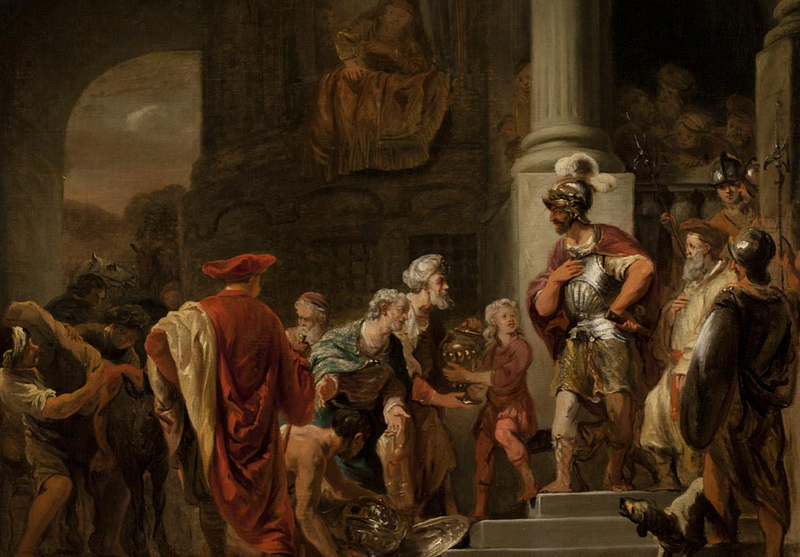
The art of divination in Ancient Rome was a fascinating practice with bizarre methods for predicting the future. Divination was mainly used to “foresee” short-term outcomes like victory in battle or the sex of an unborn child. But what did the ancient people believe the future would turn out like in the long term? What did they think it had in store for them, and how accurate did it turn out to be?
To answer this question, we first look at the prediction of Stoic philosopher Lucius Annaeus Seneca the Younger, who lived during the reign of Roman emperor Nero. While reflecting on the future and, more specifically, the end of the world, Seneca concluded that the most likely cause behind the end of the world would be a massive universal flood in which rain and huge tides would submerge everything.
Only some survivors would make it to the mountaintops, where they would slowly starve to death as the thunderclouds boomed over their heads. Similar to the story of Noah’s Ark, Seneca thought the world would eventually be rebuilt after the flood and humanity would start anew. But man’s inherent corruption would persist, and it would be his eventual doom as the world drowned again.
The Stoics Believed History Was on a Loop
It is pretty clear that ancient ideas of what the future held in store were profoundly different from ours. Today, we believe that the future will most likely be more technologically advanced than the present, a belief that likely stemmed from the Industrial Revolution in the nineteenth century that opened up a new era of technological possibility.
Meanwhile, some Greek thinkers believed they could predict the future based on cyclical systems they had identified in society in the past. For example, the Greek historian Polybius believed he had identified a cycle of governments through which all states inevitably pass through. The first stage he identified was monarchy, where a powerful figure would come into power, and the last stage would be mob rule, where the people would reject the monarch and take over.
Pre-Socratic philosophers even applied a similar paradigm to the universe itself. For instance, Heraclitus believed that all matter was resolving from and dissolving into an eternal fire. Later on, Stoic philosophers held the belief that the universe would be consumed by a massive fire at the end of every eon (a period of 1 billion years), after which history would repeat itself exactly, and there would be another Athens and another Rome.
They Underestimated the Potential of Technology
Perhaps the significance of scientific discovery and technological advancement toward a better future wasn’t truly known in ancient societies. However, they generally believed that human discoveries had changed their lives for the better.
Pliny the Elder — commonly credited with making the world’s first encyclopedia, quotes a long list of inventions from the alphabet to geometry and catapults, highlighting how knowledge of such discoveries became widespread over time.
Regardless, when the Greeks or Romans envisioned a better future, they were likely to imagine a better moral or political environment than a technologically advanced one. The best example of this would be the fictional ideal city of Kalllipolis in Plato’s Republic, which he imagined to be even less technologically advanced than concurrent cities.
The Romans largely adopted Greek beliefs about the future, adding their own political spin to them. For example, after the unrest of the Roman Republic, it finally transitioned into an empire once Augustus Caesar came into power in 27 BC.
Roman poets believed that Augustus’ reign had brought about peace that was reminiscent of a “primeval golden age,” when there was no such thing as war, once again promoting the idea of a cyclical time progression. The Romans believed that the original golden age had been completely free of technology because the Earth provided all things.
Well before the Roman Empire actually fell, many were concerned about a future decline. The Romans believed their ancestors had been simple and virtuous and would always jump at the opportunity to tackle corruption in their society brought about by modern luxuries. Self-indulgence and greed, especially that exhibited by the leaders, would be their doom if not corrected.
Mayas Were the Masters of Astronomical Cycles and Time
The Maya people had a clever way to keep track of time and knew a lot about the stars. They had a big cycle called a “Baktun,” which was nearly 394 years long. Their special calendar, the Long Count, showed that the 13th Baktun finished on December 21, 2012. Some people today got it wrong and thought the Maya said the world would end then, but the Maya actually thought such times were just part of life starting over again.
The Maya wrote down when to farm and what their kings did, and they had parties and built big statues when a cycle ended.
They were smart about space too, they could tell when an eclipse would happen and knew lots about the Moon and planets. This was important for their religion and for making their calendars.
The Maya believed that gods played a part in everyday life and that it was important for people to be good and keep order. They thought that bad things could happen if people didn’t live right when a cycle ended. This idea that time goes in cycles and that what we do matters is found in many old cultures. They used what they knew about the sky to help them with their beliefs and what they did.
The Maya idea that when something ends, something new begins is shown in how they built new cities on top of old ones and in their stories about worlds ending and starting again. It’s like they believed in getting a fresh start and that an ending is really just a new beginning.
Studying the theories of ancient societies about what the future had in store is incredibly fascinating, considering how much the world has changed since then. Given their limited scientific and technological progress, most of their predictions admittedly seem bizarre and unfathomable. However, perhaps there is a shred of truth to be found somewhere in their wild imaginations of cyclical time and prophecies of destruction and rebirth.