What Adventure Travel Taught Me About Thriving in Lockdown
You learn to be in life’s slow lanes by being fully in life
Last summer on a lengthy horse ride in the Muskwa Kechika wilderness in Northern Canada, I wore a single pair of long johns so many days that my leg hair grew right into the fabric. Getting undressed one sunny morning to wash those bad boys was an eye-opening experience. So was the smell. Like giving yourself an impromptu Brazilian while standing in the men’s locker room at your local high school gym.
On that same trip, I was limited to one piece of fresh fruit a day: an apple. The rest of the time I ate powdered eggs, but primarily nuts and dried fruit. For four weeks. Showered in icy cold glacier water on the rare rest days, and washed clothing as time permitted, on days with sun, when there was enough time to dry everything. Not often. Woke up to crusty ice on and inside my tent. And, sometimes, unwelcome guests. Porcupines, or bears. Or whatever.
When I hiked the Everest Base Camp for fourteen days in 2014, I didn’t wash my hair once. By the time I made it back to Kathmandu, I swore I had an entire family of field mice in my dome. Felt like it. When I stood under hot water for the first time in weeks, I nearly screamed with the pleasure of it, watching that black filth swirl down the drain (and that family of field mice, equipped with scuba gear).
One night I slept in a tent in Tsengel Khairkhun, Mongolia, while a howling wind came screaming over the mountains. The sides of my bright orange tent heaved like a pair of lungs. Any moment I believed those banshee winds would lift my site and drop me in rural China. They didn’t, but by the time I woke up the next morning the temperature had plummeted. The winds still blew hard. Finding a safe place to relieve myself was a genuine challenge.
Those are snapshots from my life on the road. There are thousands of them.
Yesterday afternoon I read a lovely piece by Kristi Keller, who like me, has done her time doing travel writing. While in all fairness, Kristi’s travel preferences are a bit different, she and I share something critically important. First, her piece:
Kristi’s job, as has mine, has been to capture the magic, the gentility as well as the intensity of what we see and feel in the world’s spaces. Whether that’s the dreaminess of waking up to a foggy morning at altitude or enjoying a dense cappuccino on the cobbled streets of a foreign city, doesn’t matter. The latter would be more Kristi’s style. Mine would sipping a hot chocolate at 3:30 am in the high country after shooing away whatever animals had invaded the campsite looking for morsels from last night’s dinner.
I met a young man at a hostel in Buenos Aires some time back. He was 25. He told me, as we shared the breakfast table, that he’d been traveling a long time. He was of Indian heritage, a born Londoner.
One morning while waiting for the tube, he was standing next to an older woman. The train was five minutes late. The older woman was apoplectic about the five minutes.
Apoplectic about five. fucking. minutes.
The young man, as I have, has had to wait several days for transport. A plane doesn’t work. The Jeep breaks down. The guide goes walkabout. You just deal. No amount of screaming and complaining or barking about your mileage status or self-importance makes a whit of difference. If anything, you get delayed even longer for being rude.
You learn how little urgency matters. Unless, of course, you have, as I have, come face-to-face with a very large carnivore.
You wanna talk urgency?
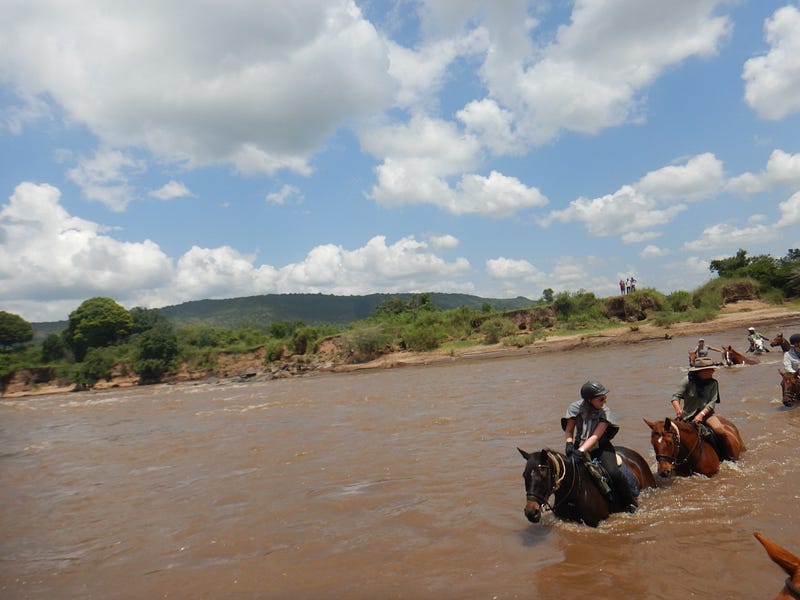
Cross a hippo and croc-filled stream by horse. I just did it several times in Central Kenya.
I’ve had to trust a broken back to Russian-speaking Kazakhs who had limited medical training and nothing more than cold, white congealed porridge to eat. That, in a hospital that had no curtains, no privacy, no toilet paper, no towels, no soap, no hot water. Shall I go on? One morning I woke up and very nearly impaled myself on the syringe the nurse had casually dropped on the floor next to my bed the night before after giving me a pain shot.
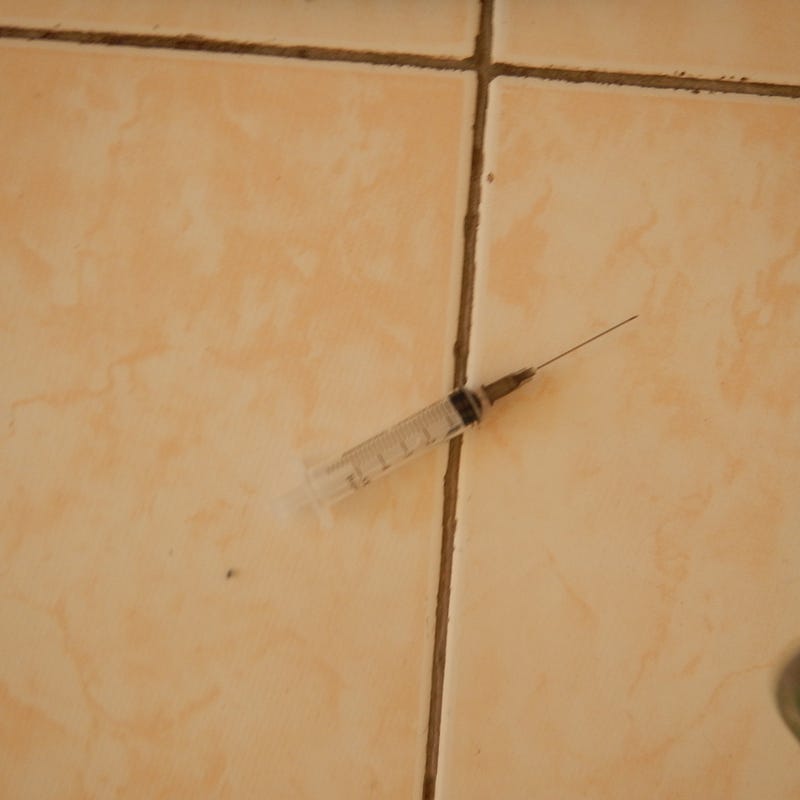
You cannot make this stuff up.
Every single one of these, and many many more experiences have taught me a few things. First, there’s not much I can’t handle. Nearly all these trips I’ve done after turning sixty. Second, there’s not much that has happened to me that isn’t gut-bustingly funny. When I saw that syringe on the floor my first instinct was hilarity. I almost didn’t make it to the toilet where, of course, there was no toilet paper. Then back to the room where there were no curtains, and the male patients would wander in and start to drop their pants so that I could inspect their scars. Or whatever. Thank god I knew the Russian word for “no.”
You learn to see with different eyes.
So did Kristi.
You learn to live slow. See slow. You learn to notice the smallest things.
Kristi and I, at best, got paid pennies to write about such things. I subsidize my own flights. I exchange my writing skills for experiences. Those rights are given those of us who have the chops, the skills, the competence to be able to not only survive but also thrive where we are. We are paid to be extraordinary noticers. We are paid a pittance (like $25, huge intake of breath, for a long story for a major publication) to be able to perfectly translate why a simple breakfast served on a verandah in the Brazilian Pantanal wetlands is transformational. In such places, eggs are not just eggs.
When she and I come home, we see differently.
Right now there’s a lame doe who has mowed through all my tulips. She hangs out here so much that she’s actually trod a path in my ivy ground cover. She’s unafraid of my presence on the deck. She’s got water, my rutabaga and plenty of snackables. Shade and cover and a human who won’t chase her off.
Friday morning just after 5:30 I spotted a tell-tale shape on a far tree which hasn’t leafed in quite yet. A huge owl, one of a mating pair, that has nested in one of my pines. It’s like a Bambi movie in my back yard, what with the squirrels and birds and deer and owls and everything you can now hear, and they can hear each other.
For once. We forget that our noise drowns out Nature’s conversations. Please see The Great Animal Orchestra: Finding the Origins of Music in the World’s Wild Places
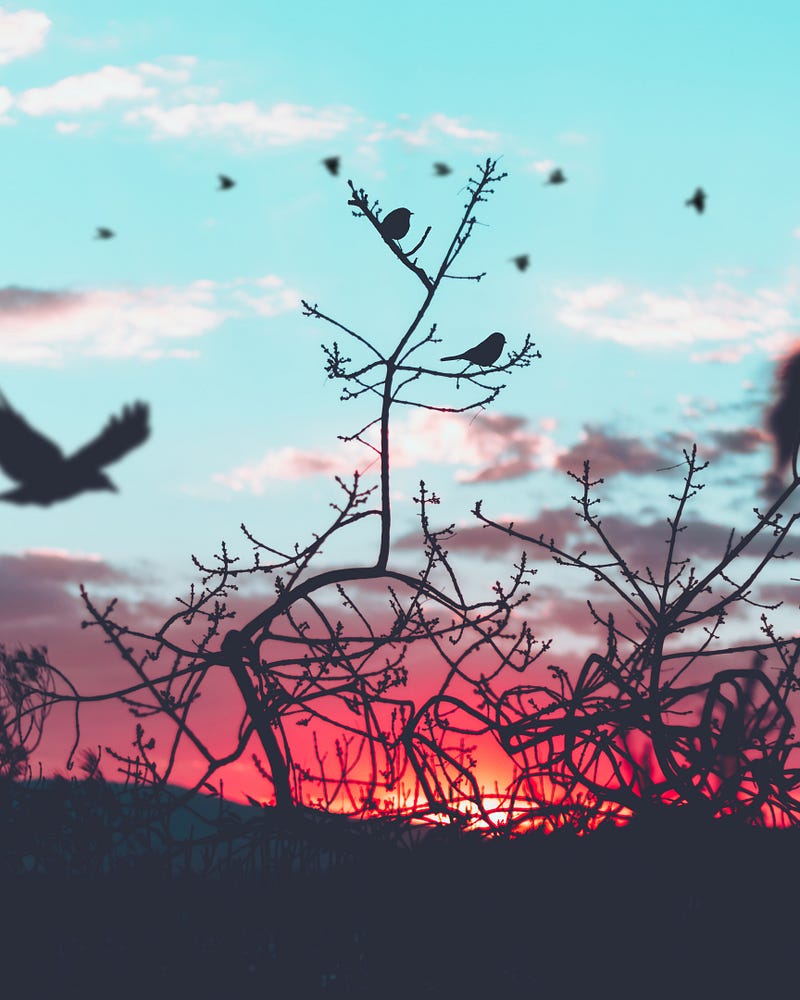
Adventure travel- the buggy tents with holes that collapse in Africa, the cantankerous animals you get to ride, the constant challenges of culture and poor infrastructure, the completely unpredictable food and its impact on your GI tract, well, look. Those are the whole point.
You laugh at limited food options (would you like rice, rice or rice?). You guffaw at waking up with three inches of water inside your tent. INSIDE, and you and your bag and mattress are floating on it. That was South Island, New Zealand (Thank god for Sunday papers).
You learn in every single way to be very grateful to be warm, dry, safe, fed, watered.
The simplest possible things. Extremity, which I happen to enjoy, teaches appreciation for what most people I know take for granted, and billions everywhere else don’t. Can’t. Never will.
Perspective is a fine thing.
I came home to an empty house that was ready to sell. I’ve been holed up here for six weeks now. Most of what I own is in storage. I don’t miss it one bit. While I’d appreciate a bit more toilet paper, I have gone without plenty of times. You learn to deal. I had nothing to cook or eat with, so Goodwill was handy before it closed. I have barely one of everything. With the exception of the size of my house, I live very much as though I were on the road. No big closet full of options. One plate, one cup, one saucer, one glass, one set of utensils. One towel, one set of sheets, a few pieces of clothing (getting tattered with use and washing). At least I can can keep my hair clean.
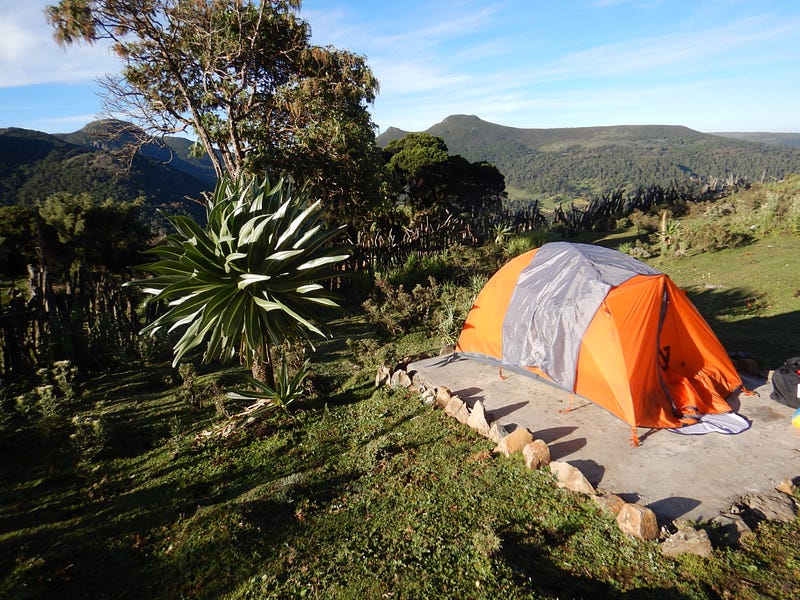
If you’ve ever been stuck in a tent during a storm, if you’ve ever had to wait days for a trip to begin, if you’ve ever had to deal with being badly injured in a country where English is exceedingly rare, you learn to be patient.
If you’ve ever had limited options, you learn not to break what you have. Like, plates. You learn to repair the holes and tears and rips in the clothing you’ve got. You appreciate having clothing in the first place.
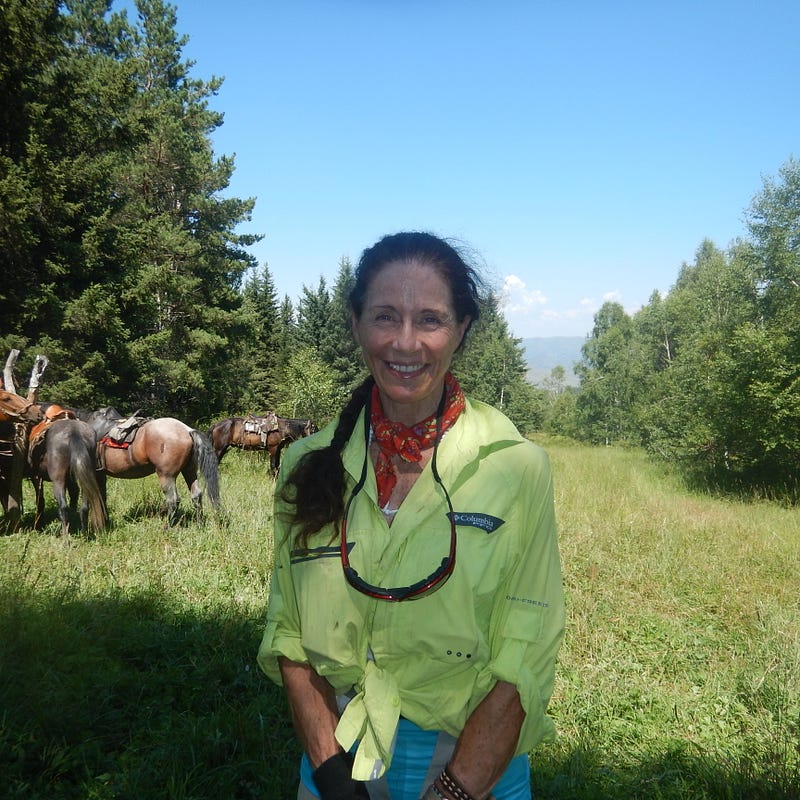
In truth, the worse things get, the better I do. I grew up poor, so I don’t have the need for high thread count sheets. Extremity seems to like me, and I’ve come to like it. Those quiet times often end up being collectible gems. In those gems, I can appreciate the smallest possible things. The way the house finches and goldfinches have appropriated the birdseed. How the doe makes her careful way through my ivy. Hearing the owls hoot from the boughs right over my head, as I sleep with the night’s breezes flowing through my too-big house (not my home, in truth it’s already someone else’s; I just haven’t moved yet).
Lockdown with little more than what I had on my trip to Africa is a breeze. I’m in a big roomy place, nice neighbors, hot water and adequate food.
That’s a whole lot more than I normally have on the road. Where I’ve been in this wide world? I’m in a castle by comparison.
Life in the slow lane is just life. Other Medium writers have commented on the incessant need for something epic, intense, amazing just to feel alive.
Nope. You and I don’t need any such thing. Life is already brilliant, vibrant and amazing just as it is in the slow lane.
From Kristi’s article:
Now that I have lived it I’d say those years were the most successful of my life. Not for the money but because I learned the art of slow living while doing things I love. I learned the art of beautifully connecting with strangers. (author bolded)
I want to tease out her last point, for it deserves highlighting. I have found that while I travel, it has ever been far easier for me to strike up a conversation with strangers. “Beautifully connecting,” as Kristi puts in. By comparison when I return to the States, almost any and all attempts to do the same get rebuffed. People hide on their phones, hide on their devices, and consistently treat attempts to start up a casual conversation as an insult or a terrible imposition. How. Dare. You. Interrupt My Royal Self. Cretin. Who the hell do you think you are to invade MY fucking personal space?
My ease in starting a conversation with a doctor in Istanbul, a couple in Buenos Aires, a farmer in Vietnam or a mahout in Laos are in stark comparison to the increasingly rude hand in the face that I experience in the USA. The exceptions? People who came here from other countries and cultures. People who have traveled. People gifted with innate curiosity. Not folks so madly in love with their (useless and mindless) self-importance they just cannot be bothered with the ever-so-annoying YOU.
My observation is that at least for now, this has shifted. The threat of devastating if not deadly illness has a way of focusing us on what really is important.
While I suspect it may not last, it’s quite lovely to interact with people suddenly forced into isolation, their exchanges now limited in large part to smiling behind their masks at each other in shared discomfort in the grocery stores. They suddenly understand, when jerked out of the fast lane, that indeed, we need each other. Ya think?
The slow lane teaches us a lot about life. I sincerely hope that more of us learn to live there, and with any luck, take those lessons forward. You and I don’t need to be travel writers to enjoy what’s being offered to us on a silver platter right here, right now.