
What About the Economy?
Climate Change, Limitless Growth, and 20th Century Economic Thought
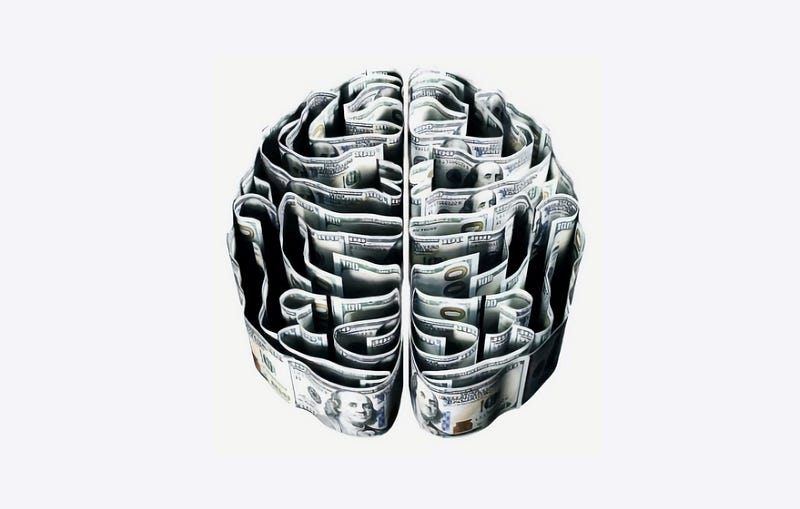
Nowadays, we tend to associate concepts like nature and the environment with ‘nonhuman’ things like forests, wildlife, oceans, etc. We speak about nature as something that is separate from society and from all the ‘unnatural’ or ‘humanmade’ things that society entails, such as businesses, markets, and economic models. This article shows that the separation of nature from the so-called human realms of society and economics is problematic and the product of 20th century environmentally harmful developments in economic thought.
Understanding problematic framings of the relationship between nature, society, and economics is important because how we deal with the current climate crisis is shaped by the various assumptions that we have about these three concepts. More specifically, these assumptions affect how individuals, states, and corporations will respond to climate change.
In particular, I’d like to discuss how, throughout the 20th century, mainstream economics has promoted ideas about limitless economic growth and sustainable development in ways that problematically frame nature as an inexhaustible private resource that humans can exploit with little regard for social and environmental consequences.
This has not always been the case in economics. Before the 20th century, economic activity and economic thought acknowledged the limits and challenges that the environment posed for the economy. Economists, for instance, understood that recycling waste and maintaining the overall health of the soil was crucial for crop yields (this is no longer the case now that industrial agro-business has an arsenal of GMOs, pesticides, herbicides, and a wide range of technologies and specialized infrastructures at its disposal).
For these economic thinkers, it was clear that nature played an important role in economic planning. An economy could not produce and distribute the goods people needed to survive if it did not maintain a good relationship with nature. Society, nature, and the economy were inseparable.
This changed at the turn of the 20th century with the popularization of the idea that the economy did not need to account for natural elements and processes, as if nature was irrelevant or played only a minor role in the economy.
19th Century
To understand this shift in economic thought, it is useful to take a look at what was happening in 19th century Europe. This century witnessed an energy crisis related to shrinking forests in Western Europe. A solution to this crisis (and to the revitalization of the forests), was the exploitation of coal in cooperation with the science of geology.
Geology has played an important role in the history of economic thought. For instance, it made it possible to speculate about global inventories of energy and metal resources. These insights about the potential location and availability of resources considered key to a nations’ economic development made it possible to think about the economy as something that could be separated from planetary limits — thus nurturing the development of problematic notions of limitless growth.
These geology-facilitated visions of limitless economic growth, along with understandings of human action as small and inconsequential compared to natural processes, created a false sense of stability that confirmed the idea that nature and environmental concerns were not relevant to economic activity, further legitimizing the exploitation of natural resources.
The field of orthodox economics intensified this theoretical separation of nature and the economy by framing economics as a science that studied the choices that individuals make in the market. As such, economists working within this school of thought viewed the economy as a matter of consumption, supply, and demand, and tried to understand economic growth through a microeconomics lens that focused primarily on individuals’ behaviors, decisions, and motivations. As a result, the concepts of economic growth and stability were no longer tied to natural resources and productive capacities, but to market dynamics surrounding price adjustments.
These views helped detach economic activity from wider social, political, and environmental realities, concealing the material basis of both markets and the economy. Even capital went from being seen as a concrete set of productive equipment and capacities to abstract sets of financial flows. Therefore, it is not surprising that toward the end of the 19th century the economy was being studied more and more through mathematical tools, statistics, and microeconomics, with nature occupying only a marginal place in economic theory. If nature appeared in these calculations, it was only as a stock or storehouse of resources to be exploited for economic gain.
20th century
The economy did not achieve its most abstract stage until the turn of the 20th century, when economists began to completely dismiss concerns about planetary limits and environmental harm in their discussions about the economy. By then, economists had become primarily interested in economic cycles, favouring the study of economic realities through examinations of financial rather than natural dynamics. What they wanted was to study the economy scientifically — that is, at a distance from nature.
The overproduction crisis of the early 20th century further supported this view by framing the economic crisis as soluble through a reorganization of monetary relations (e.g., by encouraging consumption and purchasing power rather than looking into underlying material or productive relations). Growth required an intensification of economic exchange that could be understood and mobilized through Keynesian economic strategies and systems of national accounting like GDP[1] — thus framing the economy as the totality of market transactions in a given territory.
This changed a bit in the late 20th century when capitalism took a ‘neoliberal turn’, establishing a radically globalized economy facilitated in part by innovation in communication technologies. From the 1970s onwards, with the rise of the modern environmental movement and the release of an influential report by the Club of Rome, Limits to Growth (1972), the notion of sustainability became central in debates about the Western model of economic growth. But these ideas about sustainable economic development advanced a misleading vision of nature and natural processes: it framed climate change and environmental degradation as reversible, proposing technological innovation and market forces as solutions to tensions between economic growth and environmental problems.
Climate change was framed as a problem of maximizing economic growth in a context of planetary constraints and climate-based disruptions. The solution, the argument went (goes), was not necessarily public action but the absorption of nature by the market (e.g., putting a price on nature). As such, caring for nature became a question of managing the world’s resources to make capitalism and environmental sustainability compatible. Yet, if environmental elements, flows, services, and processes mattered, it was for purely economic reasons.
This framing of nature further supported the idea of limitless growth by emphasizing that when the economy appears to reach planetary limits, the preservation of the environment, the environmental crisis, and the scarcity of resources open new economic opportunities. (This continues to be the dominant idea within mainstream economic thought, which frames nature as a storehouse of exploitable resources and promotes a market-based environmentalism that aims to privatize, commodify, and marketize nature, encouraging the total absorption of nature into the commercial techno-sphere of contemporary capitalism).
21st Century
So far, the 21st century has been characterized by discussions of green economies and of capital- and technology-intensive ways of quantifying and making nature profitable. Ecosystem services, for instance, have become the new focus of markets and policies, revealing how the quantification of nature has become this century’s big business.
In many ways, the mainstream ‘green’ economic turn resembles neoclassical economics’ emphasis on price-setting as solutions to market failures, supplemented with various methods of taxation, compensation, and incentives that can help reconcile tensions between the environment, capitalism, and economic growth. A problem with this is that, historically, such tactics have often led to more environmental degradation. For instance, in an effort to secure higher profits, production has not become more environmentally responsible but has moved to cheaper and more weakly regulated zones of production. Not to mention that the market alone does not guarantee specific outcomes.
Conclusion
The economic history of the 20th century has been one of first separating nature from the realm of economic activity to then re-incorporate it into economic calculations through problematic notions of green economic development. To this day, the idea that infinite economic growth is possible in a world of finite resources and unpredictable environmental responses dominates economic discussions — discussions that often frame environmental problems as either irrelevant to economic activity or as manageable by market forces alone. In both cases, economic growth is envisioned as depending on the freeing of human societies from the limits of nature, portraying nature as a problem to be solved, and advancing an antagonistic understanding of the relation between nature and human societies in which either one or the other can thrive, but not both.
To think better, more environmentally friendly economies, we must pay attention to how economic activity and models frame the relationship between society, the economy, and the environment. The three are neither separable nor reducible to economic activity and market mechanisms (regardless of what mainstream economics might tell us).
[1] Keynesianism viewed the economy as driven by demand and consumption, and sough to utilize the state (if needed) to create a context in which individuals and households would be willing to consume and restart a positive economic cycle.
The invention of GDP in the 1930s rendered the study of the economy all the more abstract. Economic activity, as envisioned by GDP, operates as a circuit with circular flows of value between production and consumption, cut off from natural conditions and physical limits.
Sources
Angus, Ian. (2016). Facing the Anthropocene: Fossil Capitalism and the Crisis of the Earth System.
Birch, K., Peacock, M., Wellen, R., Shenaz Hossein, C., Scott, S., & Salazar, A. (2017). Business and Society: A critical introduction. Zed books.
Bonneuil, C., & Fressoz, J-B. (2016). The Shock of the Anthropocene: The Earth, History and Us. Verso.
Dunlap, Riley E., & Brulle, Robert J. (2015). Climate Change and Society: Sociological Perspectives. Oxford University Press.
Related Stories by MCQ


