
What a safety culture should be
From climate to personal data, we need to create a safety culture that goes beyond dangers and better fits into our society.
I was invited to a conference in one of the top pharmaceutical and chemical businesses in Northern Europe a few years ago. The meeting took place in their headquarters, an old building in a small town where the company was founded. I was there with a colleague from another consulting firm to meet with one of their executives. After checking in, I was greeted by a large, triple staircase with alabaster handrails on both sides. As I approached the stairs, my colleague asked me to do the same by placing my hand on the handrail.
We had a great rapport, fueled by the healthy competition that only consultants from various firms working on the same program can have.
I thought it was a joke, and I was kind of reluctant to follow that instruction. Why was that needed?
I looked around: everyone was utilizing the railing for both descent and ascent. Despite my reservations, I chose to comply.
After a cordial meeting, I couldn’t contain my curiosity anymore and asked my guest about that practice mounting the stairs.
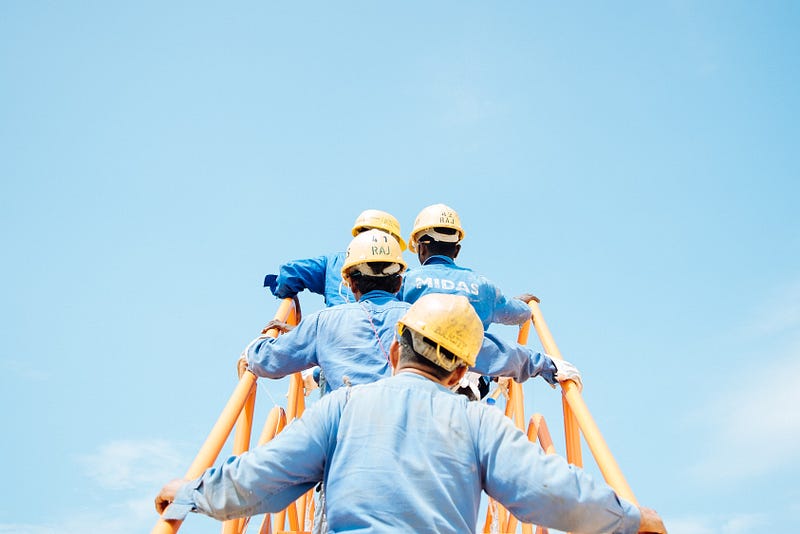
He told me that a few decades back the CEO decided to promote the practice for the entire company. Mounting the stairs, visitors and employees had to use the handrail as a gesture of respect for the safety measures that all blue-collar personnel had to follow while performing their duties.
What did I learn from it?
That altered my perception of safety, and I started to consider the success of building a safety culture. When we consider safety training, we think of administration, paperwork, tedious procedure updates, and the roles and responsibilities of technocrats.
We do not consider that there has been a serious breach or incident with terrible effects for each update we receive.
In the example above safety is viewed through a different lens, and the measure becomes much more than a form to fill out. It is a symbol of respect. It is a matter of identity and a kind of care for others.
That is a significant distinction.
A safety culture
If you google safety culture you will find 2.3 billion links and even a Wikipedia page, a sign that this article is not about something new:
“Safety culture is the collection of the beliefs, perceptions, and values that employees share in relation to risks within an organization, such as a workplace or community”.
But which of these produces a culture wider term?
Every sector has standards: SOX, GDPR, GxP, and HIPAA, to name a few.
In many firms, they are regarded as facilitators, similar to patents that must be renewed periodically. Compliance takes precedence before contribution.
Reading this definition, it is clear that the literature emphasizes on the risk side. It would be similar to the CEO in the previous case, encouraging visitors to utilize the handrail or risk falling down the steps. The difficulty with employing a risk paradigm is that beliefs and perceptions play a role in the judgment and do not always push for the adoption of the measure.
Conclusions
War, according to Oscar Wilde, will always remain intriguing as long as it is viewed as wicked. If it is deemed vulgar, it will lose popularity.
The same is true about failing to adhere to safety procedures. It should be seen as vile.
Associating safety solely with risks penalizes adoption: personal preferences and overarching goals will always take precedence.
Creating a safety culture based on identification, respect, and care will help us fully integrate it into our society.
Considering safety through the lens of contribution rather than compliance represents a culture transformation that requires the development of a specific sensitiveness. Human awareness is far more powerful than artificial intelligence in that.
However, AI, VR and AR technologies can help creating educational material and examples, build experiences that elicit empathy. In this regard, social media could play an enlightening, rather than a dystopian, role.
Thanks for reading. Tweet me @flavalib and let me know you read this!
If you enjoyed the reading, I suggest you look at
______________________________________________________________
Disclaimer: Views or opinions represented in this article are personal and belong solely to the article writer and do not represent those of people, institutions or organizations that the writer may or may not be associated with in professional or personal capacity, unless explicitly stated.
______________________________________________________________