
What a Privilege to Know Congressman John Lewis
The World Has Lost a Civil Rights Icon
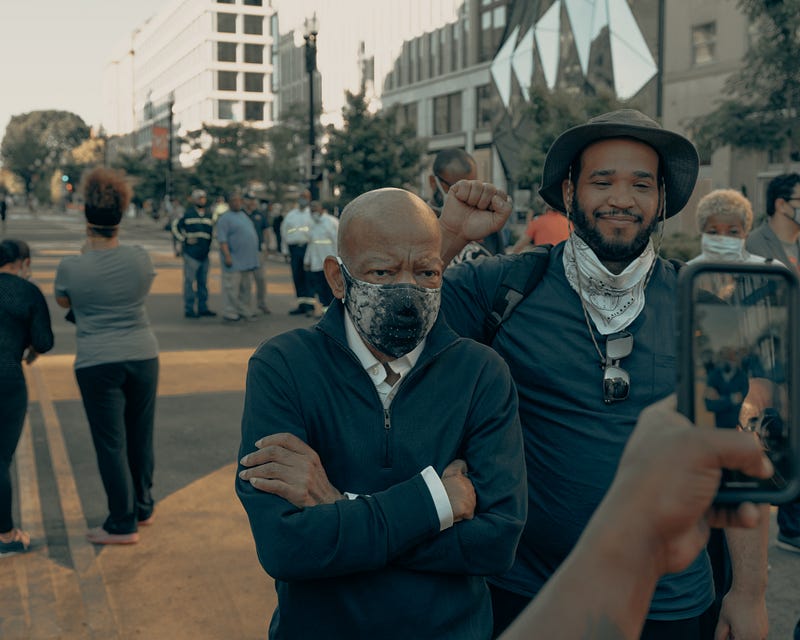
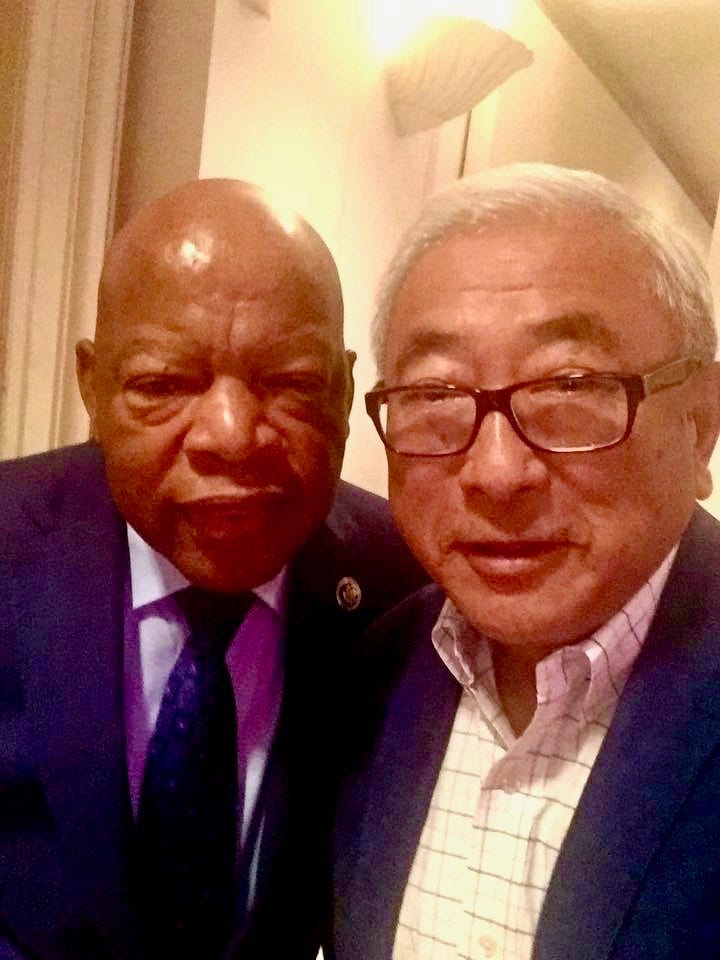
As the National Executive Director/CEO of the Japanese American Citizens League (JACL) for over five years and later as President/CEO of the Asian Pacific American Institute for Congressional Studies (APAICS), I was privileged to meet many important and inspirational people in Washington, D.C. One of the most memorable was Congressman John Lewis, who has served in the U.S. Congress since 1987 representing the State of Georgia.
The JACL is the oldest continuously operating Asian American civil and human rights organization in the nation. As such, our issues were often the same as those about which Congressman Lewis was very concerned. APAICS is a nonprofit organization which is closely associated with primarily the Asian American and Pacific Islander Members of Congress but which works with all of Congress.
John Lewis was born on February 21 , 1940, to sharecroppers in Troy, Georgia. He attended segregated public schools and experienced racism. He considered the Montgomery Bus Boycott and Dr. Martin Luther King Jr.’s radio broadcasts as inspiration for his work as a civil rights activist. He lived an exemplary life as a civil rights icon and a public servant. He dedicated his life to service and became known as the “Conscience of the U.S. Congress.”
During a routine doctor’s visit in December 2019, he was diagnosed with stage 4 pancreatic cancer. He announced: “So I have decided to do what I know to do and do what I have always done: I am going to fight it and keep fighting for the Beloved Community. We still have many bridges to cross.” He lost that fight and passed away on July 17, 2020, at the age of 80.
When he was 18 years old, John Lewis wrote a letter to Dr. Martin Luther King, Jr. Being very impressed, Dr. King purchased a bus ticket for Lewis to Montgomery so they could meet. The two began to work together on civil rights issues. Lewis was invited to speak in Washington, D.C. and was the youngest speaker at the March on Washington in 1963. He was the last remaining of the speakers who spoke that day when Dr. King gave his famous “I Have a Dream” speech.
While a college student, Lewis became very dedicated to the Civil Rights Movement. He organized sit-ins at segregated lunch counters in Nashville. He was arrested and jailed many times in the nonviolent movements to desegregate the downtown of Nashville. He joined the fight for voter rights and racial equality which resulted in the marches of 1965.
Lewis was one of the original Freedom Riders and a leader of the “Bloody Sunday” march in Selma in 1965. He suffered a skull fracture after being beaten with a nightstick by a police officer while marching for Black voting rights. The group had been met at the other side of the Edmund Pettus Bridge in Montgomery by Alabama State Troopers in riot gear. The movie entitled “Selma” covers this part of history and the important part that John Lewis played.
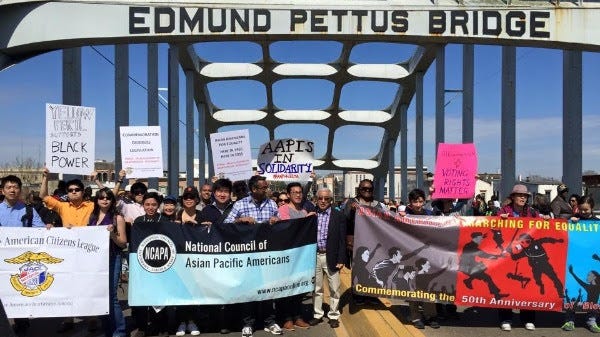
John Lewis was a key figure in the 50 year anniversary commemoration of the March in Selma. Amy Watanabe and I were able to organize a group of Asian Americans and Pacific Islanders (AAPI) who went from Washington, D.C. to join in the march to show our support for the fight for civil rights. President Barack Obama and President George W. Bush, along with their wives, joined in the celebration.
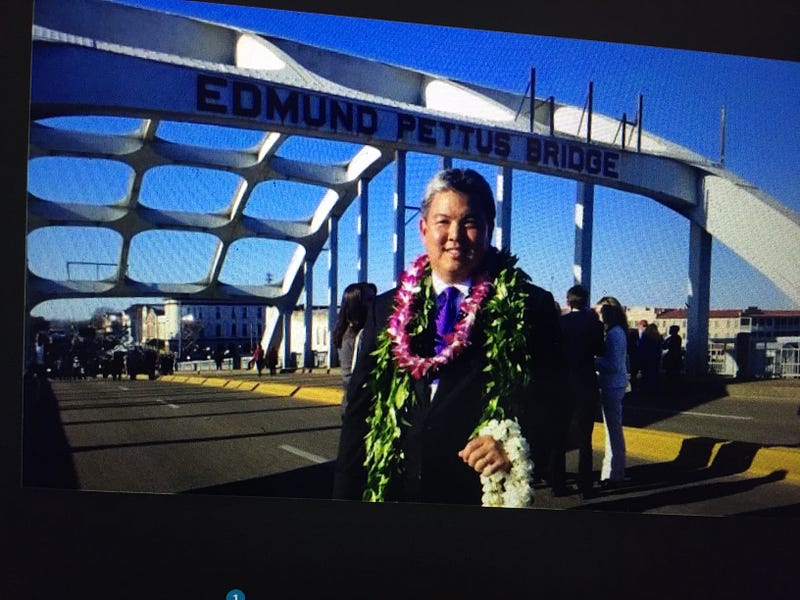
Then Congressman Mark Takai of Hawaii (who himself lost his life to pancreatic cancer in 2016 at the age of 49) was on hand at the commemoration. He had ordered leis from Hawaii which he presented to dignitaries at the event including Congressman John Lewis.
With the recent peaceful protests against police brutality of Black people after the killing of George Floyd by a Minneapolis police officer, Lewis approved of what he liked to call “good trouble.” He always advocated for nonviolence although he met with much violence against him as he worked for the civil rights of others.
When President Barack Obama was inaugurated as President of the United States, he told John Lewis that it was because of him that this had happened. President Obama presented Lewis with the Presidential Medal of Freedom in 2011.
Congressman John Lewis left a legacy of civil rights activism and public service which will last for generations. He stood up for equality and justice for all. He was brutally beaten and was jailed numerous times for the stands he took in working for equal rights. He was brave and courageous as he fought for justice. He had a great impact on our nation and should be revered by all.
We cannot all do the things that Congressman John Lewis did, but we can each do our small part to seek equal justice for all. We can support and help those who are fighting for equal rights.
[Some information for this article came from Wikipedia and the Internet.]