
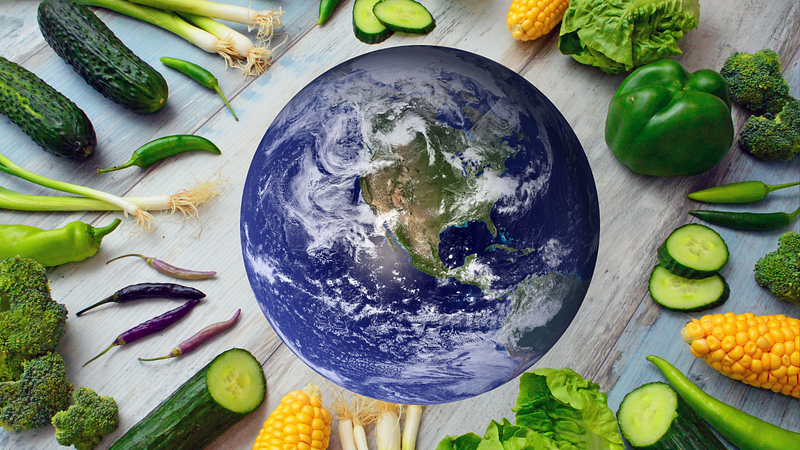
What A Planet Sustaining Diet Looks Like
Why sustainability should be in our conversations about dieting and nutrition.
North of Mombasa in Kenya, there is a collection of fishing villages dotting the coast near Kilifi. Those waters are home to a variety of edible sea creatures like parrotfish, and octopuses.
Even though those villages have access to these edible sea creatures, residents — and the children — are rarely seen eating any seafood at all. For children, their staple meal is ugali (basically a porridge to us westerners that’s a mixture of cornflour and water), and their vitamins and nutrition come from plants.
This lifestyle has resulted in some unusual circumstances with the growth of the kids in the area. Half of the kids have stunted growth — twice the national rate.
The state they are in makes sense in the parent’s minds. If they were to be eating even a little bit of what they caught, that would cut into their profits which would impact their way of life.
In response to this, a group of researchers in 2020 devised a plan to:
- Determine what kinds of seafood can be eaten that can be healthy for the residents;
- Enhancing the catching method so residents can reasonably incorporate said seafood into their diets;
- And eat and catch in a sustainable manner that is good for the planet.
These queries aren’t being asked in small fishing villages in Africa. These are questions being asked around the world as more and more people are eager to find answers.
After all, a Lancet study found…
- Over 2 billion people are overweight or obese. Most of those people live in the Western world.
- 811 million people aren’t getting enough calories or nutrition. Those individuals are in low- and middle-income nations
- Unhealthy diets contributed to more deaths globally in 2017 than any other cause, including smoking.
Combined with a rising world population and more people adopting the Western diet, we can already begin to see problems with the sustainability of this.
The UN Food and Agriculture Organization stated the production of meat, dairy and eggs will have to increase by 44% by 2050 to meet demands.
And already, our industrialized food system emits about a quarter of the world’s greenhouse-gas emissions. It also covers 70% of freshwater use and 40% of land coverage.
This is on top of the fertilizers disrupting the soil and polluting rivers and coasts.
Something needs to change.
The EAT-Lancet Plan
In 2019, 37 nutritionists, ecologists, and other experts from 16 countries formed the EAT-Lancet Commission on Food, Planet, Health and released a report.
The report outlined a broad dietary change that not only would cover humans' nutritional needs, but also the environment as well.
Looking at the numbers, the EAT-Lancet Commission started off with environmental limits for the diet. They placed caps on carbon emissions, biodiversity loss, and use of freshwater, land, nitrogen and phosphorus.
Breaking past those environmental limits could lead to the planet being unlivable for us.
From there, they accounted for those numbers when putting together the diet.
- The diet is diverse but mainly plant-based meals and has a 2,500 calorie per day limit.
- Meat is permitted but the maximum one can have is 100 grams of it every week. This amounts to a single serving of red meat each week.
- Ultra-processed foods like soft drinks, frozen dinners and reconstituted meats, sugars and fats should be avoided.
This diet has gotten a lot of attention as people are growing more concerned about the planet. However, it’s got its fair share of criticism too.
Naturally, the meat industry has issues with this as the limits of meat on the diet would mean eating less than one-quarter of what the average American eats right now.
The other one is on whether this is practical for people to be eating overall.
On the practicality front, scientists are doing more research and testing into this diet. Think of this as a rough draft while scientists tweak it to ensure it’s sustainable in local contexts and doesn’t compromise nutrition or harm livelihoods.
This is further stressed by public-health scientists saying this diet isn’t a one-size-fits-all recommendation and that they’re studying how to make this diet realistic for everyone.
However, one can speculate that the real diet wouldn’t be too far off from what was suggested above.
As for the meat industry… well they’re going to have to change.
- Producing food creates a lot of greenhouse-gas pollution.
- The largest portion of emissions stems from livestock supply chains. It accounts for 30–50% according to estimates.
- Cutting back on both of those things will ensure that we have better odds of hitting the 1.5 °C climate-change target set out by the Paris Agreement. 67% chance of hitting it in fact.
- The average person in a wealthy nation eats 2.6 times more meat than others in low-income countries too. At the rate of consumption, the eating habits will be unsustainable and companies wouldn’t be able to keep up with demand.
- There is also that threshold I mentioned above as well. Breaking past that means making the planet less habitable for said meat executives including their client base and their cash cows, pigs, and chickens.
What Changes Can We Make Now?
In terms of our eating habits now, waiting for that guide is one option to making it more sustainable, however, it’ll take some time before it can come to fruition.
In the meantime, researchers are looking for ways to convince people to try this diet out and there are some options we can do to ease ourselves into it.
Some considerations are:
- Consuming traditional, sustainable foods like seasonal vegetables and free-range meats. Scandinavian countries have adopted this movement and call it the New Nordic Diet.
- Looking at increasing nutritional value while being nicer to the climate by replacing meats with vegetables. In stews, for example, reduce the amount of meat and add in more beans and other vegetables.
- Encouraging this lifestyle in younger generations and kids. Kids don’t tend to notice the swapping of foods. Furthermore, dietary habits developed as children tend to stick more when growing up as adults.
This diet has a lot of work to get through. There are cultural barriers as well as economic barriers. This is on top of having to make a major shift in our diets which is never easy.
However, there are some merits to doing this and starting early.
- It’s a more sustainable way of eating for the average person.
- It’s also cheaper to be eating this way since you’ll be stocking up on more vegetables and less meat.
- It’s also highly nutritious with the diet in its base state covering 78% of recommended zinc intake, 86% of calcium for people over 25, and 55% of iron required for women of reproductive age. With those coverages, vitamin supplements could cover the remaining daily amount.
- It is the first-ever dietary plan that has environmental concerns at the forefront. For those of us who care about the planet, this diet has more sentimental value if you’re one who eats with purpose.
If you found this article helpful, subscribe to my email list here and receive emails whenever I publish on Medium! Or if you’re new to Medium and wish to support my work, consider being a Medium member and get access to all current posts from me and hundreds of other writers!


