
What A Month of Reading About Influenza Taught me
Extended periods of lockdown have given me a chance to read more than ever. While earlier I was reading once a day, mostly at night, now my work breaks are made up of reading. A few weeks back, I decided to learn more about the influenza virus, epidemics, and how the world coped with the last major health crisis in modern history — The Spanish Flu.
But let’s start with understanding more about viruses and the human body to understand their impact on each other’s survival.
What is a Virus and How Does it Work
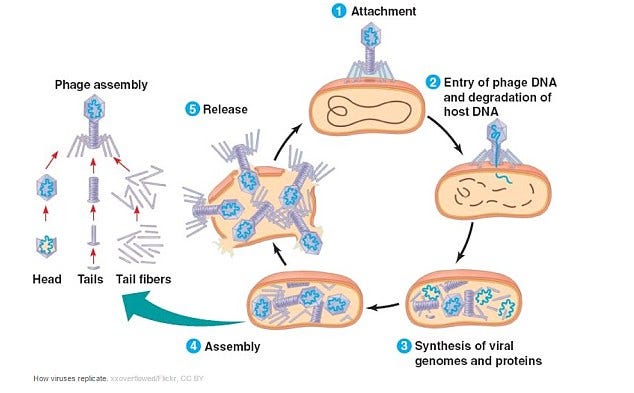
A virus has many definitions, but it is simply an infectious agent which is a tiny collection of genes. A virus can be of different types — coronavirus, human immunodeficiency virus (HIV), poliovirus, hepatitis virus, etc, to name a common few. How the first virus originated is debatable, but how viruses have originated in recent history has some consensus — HIV came from chimpanzees, Hepatitis and Influenza viruses originated in birds, etc.
A virus is hardly categorized as a living organism. There is no metabolism, waste production, reproduction, nothing. Its only noteworthy feature is that of replication, and it does that in a sinister way.
When a virus enters a body, it starts looking for cells whose outer surface complements the outer surface of the virus, so they both can click like a jigsaw puzzle. Once attached, it starts seeping inside the host cell and replaces the genetic code of the host cell, the human DNA responsible for the functioning of the cell, with its own genetic code. The cell has now been hijacked, and its operating code now only reads the instruction given by the hijacker — to create copies of the virus.
Within hours, more than a thousand copies of the virus are created and released. The host cell faces a gradual death as it no longer lives for its own survival. The new viruses find new cells, and the process continues.
Thankfully, the whole process is not as efficient as it sounds. Of the new viruses that are created, more than 90% will not be able to attach to any host cell and will be wasted. This replication will continue for a few generations until stopped by the immune system.
During the Spanish Flu, the virus encountered was never seen before. It multiplied aggressively, while the immune system was trying to cope up with the foreigner, and was highly contagious. And it was only an Influenza virus.
How the Immune System Works
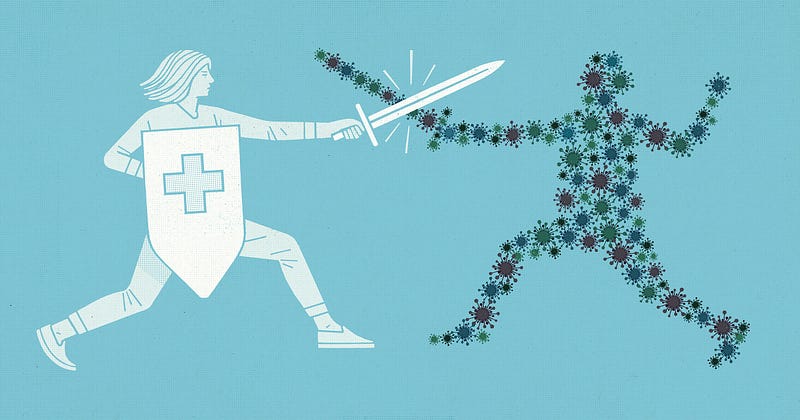
The immune system is the army that protects against any invader, big or small, that enters the inner territory of the body. It is made of white blood cells, antibodies, lymphatic system, etc. White blood cells keep the record of every foreigner they have encountered and make sure that the body has antibodies to protect against them at all times. This is how you develop immunity against a pathogen after getting infected once.
When viruses replicate, the copies are not exact and each generation undergoes a variation which is called virus mutation. As long as the mutation is within an acceptable range that the immune system can identify, it will fight with it. The virus resulting in diseases like measles, chickenpox, hepatitis do not mutate by a large degree. Hence, one vaccine as a child is enough to confer lifelong immunity.
But what happens when the mutation causes a large drift in the structure of the virus, and the immune system is unable to identify it? When the body encounters a new type of a pathogen, it has to start producing antibodies for it. At this point, it becomes a race between the pathogen and antibodies as they both raise their armies. In many cases, the body will recover in a few days as the immune system starts taking over. But in some cases, victory doesn’t come easily.
The degree of virus mutation that causes the shift in its shape determines if a wide portion of the population will be immune to it or not. If latter, the virus has the potential to start an epidemic. And as long as the viruses keep mutating, epidemics will keep appearing.
During the Spanish Flu, the virus mutated at a high speed. Any human it reached got infected and sick, with most of them dying. And it reached a lot of humans. The killing was mostly due to two reasons — the immune system getting in panic mode due to the inability to identify the pathogen and attacking virus along with other body cells, and, secondary infections right after the person recovered from Influenza but had a weak and recovering immune system.
The Spanish Flu
The 1918 pandemic lasted roughly two years, peaked in waves in spring and fall, and did not subside until a herd immunity was reached. At that point, most people developed antibodies and the virus was not left with enough humans to allow it to mutate by large degrees.
It is believed that as many as 500 million people or one-third of the world population at that time got infected, and a large number of young people died. The war played a catalyst. There were packed military camps and ships and a shortage of healthcare workers to cater to civilians. Finally, people were not told about the rising rate of infections and there were no quarantine instructions until very late to avoid exacerbating an existing panic among the world reeling with World War 1.
Takeaway
When Bill Gates gave his now-famous ominous speech, he was not predicting a pandemic but just stating what basic science taught him about how viruses work and how unprepared the world is if a pandemic strikes.
The takeaway is to understand that our governing authorities need to make healthcare and medical science as much of a priority as the economy to protect its citizens.
The takeaway is to understand that nothing can and should replace the priority to have a healthy body.
For anyone interested in reading more about the Spanish flu, The Great Influenza is a great resource.


