
What a Journalism Trip to Belize Taught Me About Marketing Diversity
How to present diverse stories in an authentic way
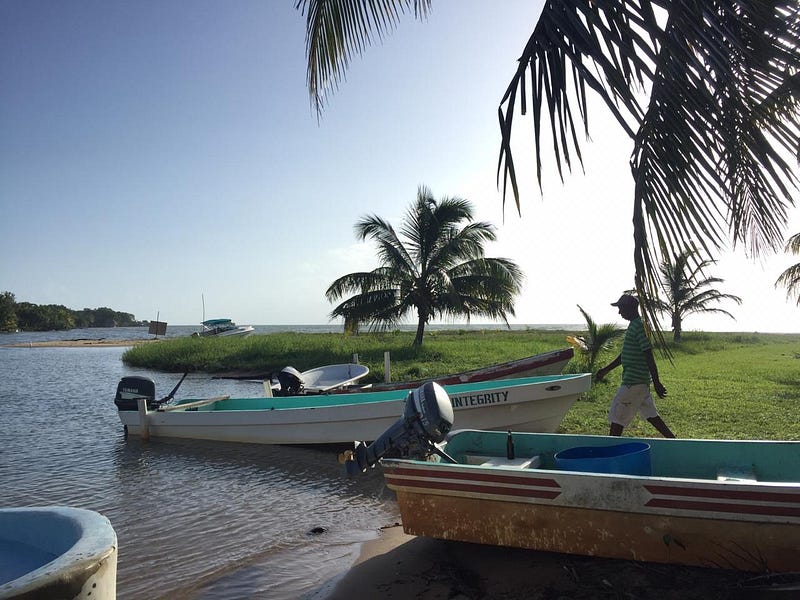
At 14, my mother took me to get a passport. It was my first real taste of adventure, and the possibilities that might await me beyond the border. Seven years would pass before I would ever actually use my passport, but when the time came I was more than ready.
In college, I studied public relations and general marketing. I stumbled upon a foundational class for advertising and PR one day in my sophomore year, and knew that I’d be declaring my major (for the third time) that day. Two years later, I came across an ad for a student marketing and public relations coordinator for an upcoming global projects class.The coordinator would be responsible for managing a social media account, overall publicity and creating marketing assets. It wasn’t the first time I had seen this ad. A year before I had applied to join the global projects team as a marketer when the class headed to Colombia to document the Venezuelan refugee crisis there. I was denied then, but in the spirit of perseverance, decided to try for the position again. And this time, I was successful.
Our destination was Belize. We would be documenting the changing relationship with Belizeans and the environment. Adopting a strategic approach to present the problems our “story partners” (the designation we assigned to those featured in our stories) were facing due to climate change, tourist development and a host of other environmental issues in a holistic, authentic way. Though I was excited to jetset over the Atlantic, I found myself feeling ambivalent toward the project as a whole. I was confident in my abilities to market products, but how would that transfer to the promotion of people and their stories? I knew I’d be studying abroad, but what did I know about Belize?
I knew I had to get smart about a lot of things if I was going to be able to do my job. The stakes are so much higher when you’re in the business of marketing people, and I could not fail. I set out to engross myself with all things Belize, believing the sudden immersion would prepare me to tell stories that were authentic, personal, raw. I coupled this with theory, finding guides that helped me develop cultural competencies that became essential on the ground. It was an extensive journey that served me well when it came time to step into my role and effectively market the plights and triumphs of our story partners.
Here’s what I learned.
Planning the Story
Map out assumptions, then reroute
When I say Belize, what’s the first thing you think of? For some, it might be the giant hole, while visions of vibrant beaches, cerulean seas and placid isles might come to mind for others. There’s no denying that Belize is a beautiful country, from the dense jungles in the North to the crystalline beaches and sunkissed docks in the South.
But, there’s more to Belize than just its beaches and sights. Behind the facade of “island life” are the people who call Belize home. While tourists are concerned with scouting the best island bar, Belizeans are laboring, working jobs to support themselves and their families. Island life for them, and island life for us is completely different. This may seem obvious, but given the focus of our project, I thought it an especially important call-out. We were telling stories about people, not places and our copy and imagery had to reflect that.
When marketing diverse stories, you should always question your assumptions. Begin by writing down all the preconceived notions you have about an idea, product or people. Then, actively search for research that will negate your claims. If you’ve written, “all x people like y” then your search query should look something like “x people that do not like y.” Marketers are especially susceptible to confirmation bias, or the process of seeking out information that confirms your own beliefs, so you have to get in a habit of seeking out information that negates your theories. It’s an odd practice, but once you’ve trained your mind to be skeptical of generalizations, you can begin to subvert expectations and produce content that speaks to what makes the community or person you are speaking about unique.
Develop your cultural competencies
When we first met our story partners, I was surprised by how little I knew about the country. For example, the native language of the country is English, and Belize wasn’t even recognized as a national country until 1964. I knew my lack of knowledge could be a problem down the line given the potentially intrusive nature of my role. To accommodate for this, I sought out theories in the field of diversity and communication, eventually coming across a textbook from one of my earlier classes. “Cross-Cultural Journalism: Communicating strategically about Diversity’’ [1] outlines eight criteria for developing one’s cultural competency, or the ability to communicate with and on the behalf of those who are different from us. They are:
- Physical Closeness: how close in proximity do people tend to be to one another in the culture?
- Saying hello: How do people greet one another?
- Facial Expressions: What do certain facial expressions in the culture communicate/mean?
- Showing Respect: How is respect shown?
- Touch: Who can you touch? Where can you touch?
- Talking Style: How do people in the culture communicate?
- Time Before the interview: What is appropriate to do before the interview?
- Gifts and Food: Should you bring a gift or food? What is appropriate to bring?
My team and I used these criteria to guide our research as we prepared for our trip, assigning our findings to various “buckets” based on the competencies. Doing so helped us to develop a good foundation of general knowledge about Belize. We knew things might come up when we were on the ground, but being familiar with the basic culture of Belize served us well in the long run.
When marketing diverse stories, use these cultural competencies to inform how you gather information. You’ll find that researching blind won’t be as fruitful as it could be if you dive into your search with an agenda instead. Try to find something that fits into each of the criteria set forth, then develop a cheat sheet of sorts. This sheet can take any form you choose, but it can be helpful to use as a refresher before you meet with your story partners for an interview, filming, etc. You should remember that general facts may not speak for everyone, and while you should trust your research, don’t view it as indisputable. Trust your instincts and change your approach to interviewing when you feel it is necessary.
Telling the Story
Focus on individuals in stories, rather than making generalizations
One of the most interesting communities we reported on while in Belize was that of the Garifuna in Monkey River Village. A 40-minute boat ride north of Placencia will find you in Monkey River, a small island in the Toledo district where there are no cars and many find work taking locals on boat tours and fishing. Monkey River is also home to a large sect of the Garifuna; a matriarchal culture borne from descendants of Africa, the Caribbean, Europe, and other indigenous groups. Gender roles are not as rigid for the Garifuna and many in the culture have chosen to have children with other groups in Belize, enriching the diversity of the community as a result.
So much so, that we found it difficult to fully capture the different identities represented among the Garifuna. Soon, the community stories we had planned shifted to profiles, contextual facts were written with addendums. We knew we had an opportunity, and more importantly, a responsibility to accurately represent the various identities and cultural markers that made up the Garifuna. It took spending some extra time with our story partners, asking pointed questions, and being willing to challenge our perceptions for us to get these stories right.
When marketing diverse stories, make sure your images and copy feature real people, not some caricature of a group you’ve made up in your head. Present story partners as complete people with real lives and real problems, rather than representatives of a particular group. Make mention of the fact that the single Black mom is also pursuing her doctorate, the LGBTQ+ activist has a penchant for guitar playing. Get granular in your approach, uncovering every aspect of your story partner’s identity. Share your findings with your broader audience, thereby challenging their expectations and catalyzing their understanding of outside groups.
Prepare to feel uncomfortable when you enter the lives of others
Before we even stepped foot on the plane to Belize, we had racked up countless hours building rapport with our story partners. Emailing back and forth, setting up initial calls, texting back and forth. We were like pre-teens trying to woo a crush, checking in for no reason other than to say “hey,” spending hours on the phone talking about life, etc. By the time we stepped off the plane, all of our story partners had become friends and we felt we knew them on a deep, personal level. Nerves were still there, but they were more subdued. More than anything, we were excited than anything to meet our pen-pals in real life. Little did we know that most of these meetings would be far from easy.
My story team worked with a seaweed farmer who spent most of his days on a remote caye culling seaweed from the ocean floor. His caye was situated in what seemed like the middle of nowhere, surrounded by an emerald sea everywhere you looked. Electricity was scarce (entirely dependent on the weather) and running water (despite being surrounded by ocean) was a rarity. Three of my teammates traveled to the island early on in our trip, hoping to capture the day-to-day minutiae of our story partner’s life. The plan was to spend a night there. They didn’t come back for three days. On the island, my team experienced torrential downpours, a merciless sun, and the very real fear of being disconnected from the world. They found themselves racing to the one spot on the caye with reliable electricity to charge their filming equipment daily, battered by the elements and in desperate need of a shower. More than that, the seas surrounding the caye were so unpredictable; they were unable to route a return trip for the first two nights of their stay. It was literal hell, but for our story partner, everything that happened was just another day in the life. He lived his life with a happy indifference, one that was impervious to the extreme nature of his circumstances. Isolation was simply a way of life.
When marketing diverse stories, you have to be willing to go all the way to tell the story of others. Fully immerse yourself in their lives however you can. But, be warned, it’s going to feel uncomfortable. Entering a person’s life is like traversing a rocky sea in a boat with no life jackets. You simply have to buckle down and prepare for the ride. It’s in this journey when you find yourself pushed so far out of your comfort zone that it’s no longer in your line of sight, that’s when you’ll experience the most growth and understanding of the story you’re about to tell.
When the Story has been told
Give something back to your story partners
We spent countless hours with our story partners. Sometimes crashing on their floor for the night, and other times enjoying entire meals and snorkeling trips at their expense. Belizeans are known for their island hospitality, so it was no surprise that the people we met were so accommodating. But something about the whole ordeal felt wrong, exploitative in a way. We were random kids from a school they had never heard of who asked our story partners to show us the good, bad and ugly of their lives. So that we could then capture their life story on camera, return home, and present our findings to their world.
Our team leaders recognized the problematic nature of this transaction and commissioned me to plan and implement an on the ground service project with one of the local nonprofits in Placencia. The thinking was that in doing so, we would be giving something back to the country and tip the scales, canceling out what we took from our story partners. The very notion of this was problematic in itself, and though we completed a service project with a local crocodile conservation while we were there, I found myself still concerned that we hadn’t done enough. I wasn’t alone in this feeling and was pleased to see the collective effort my teammates made to go beyond the scope of our project when we returned from Belize and create extra marketing materials that were then sent back to our story partners. What we did was take their stories, polish them off with a little Premiere and Photoshop, then wrapped them in a bow for our new friends to use. The realization that the best way to give back to our story partners was to gift them their own lives back may seem like an easy conclusion to come to, but for us, it truly changed the game.
When marketing diverse stories, always be sure to thank your story partner for sharing their experiences with you. Go the extra step and craft some content that is just for them, or give them the option to preview your work before you put it out in the world. In the case of Belize, multiple story partners used our assets to promote their own individual businesses and exploits. We were happy to help them get their ventures off the ground and love to hear updates about how things are going when we can. The bottom line is when a group or individual gives you the opportunity to introduce them to the world, make sure you’re doing everything you can to express your gratitude.
We traveled to Belize in March, just before the pandemic turned the world on its head. We spent 10 days in paradise as the world collapsed; incessant news alerts serving as the only portent we had to prepare for what would await us in the states. But in the midst of all the uncertainty, I found I was still able to learn so much. My time in Belize taught me how to tell stories that mattered and the proper way to introduce the world to diverse people and ideas they may have never heard of. I feel lucky to have finally gotten to use my passport seven years later, just before the world shut down. And if I had the chance, I would do it all over again.
Head over to barriers.unc.edu to see our work.
[1] Len-Ríos, M. E., & Perry, E. L. (2019). Cross-cultural journalism: Communicating strategically about diversity. London: Routledge.


