What A Good Bartender Does When You Nervously Step To The Bar To Order A Drink
They never judge you, except under one condition
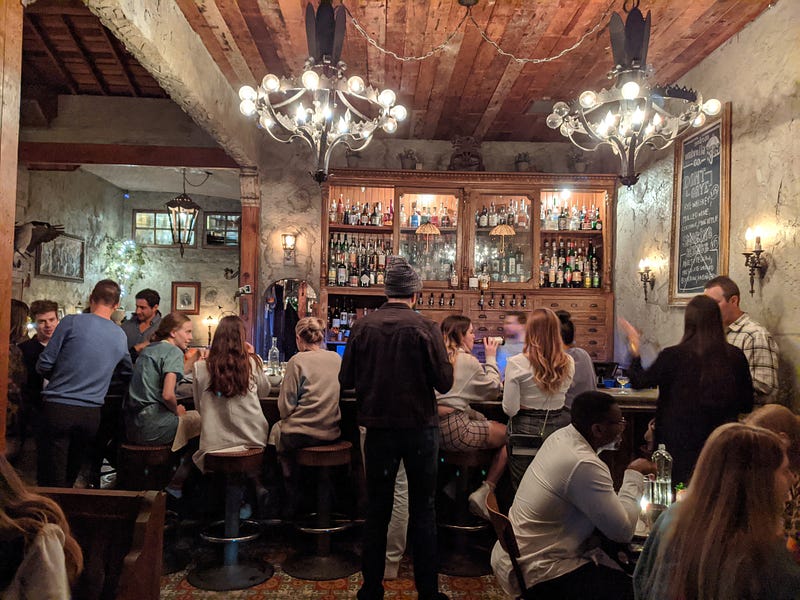
Not enough bartenders take the time to realize that large numbers of people who step up to their bar had mini freakouts beforehand. Or maybe big freakouts. For whatever reason, it can be intimidating to go through the ordering process at a bar until, of course, you’ve had a few drinks.
As someone who has felt this anxiety, I think it has to do with two things: the fear of being judged and the perception that bartenders are cool beings. Too cool for your lame school.
Sadly, there’s lots of truth to the former. Too many bartenders judge, all too often.
As for the latter, bartenders are among the most self-conscious, uncool bunch of people you’ll ever run into. However, being behind the bar allows them to portray a confidence they simply don’t have in everyday life.
It’s unfortunate that far too many bartenders take advantage of this dynamic to be — let’s face it — insecure dicks. Judgmental and often pretentious, these are the bad bartenders you frequently see going through the motions of making a drink.
In this article, I show you what a good bartender does when you step to the bar and nervously — or confidently — order a drink. They do these things — when the opportunities present themselves — to make you feel at ease and give you the best, most unique experience possible.
They don’t judge you. With one exception. If you order a Long Island Iced Tea. That’s the drink with 1/2- to 3/4-ounce pours of vodka, gin, rum and tequila, hit with sugar, citrus and a splash of cola.
Nobody orders a Long Island Iced Tea because it tastes good. They order it with the sole purpose of getting drunk and the perception that it’s the best value on the path to that goal.
The last bar I worked at wouldn’t serve Long Island Iced Teas. It was a real rule written on the menu among a mostly tongue-and-cheek list of rules. But we adhered to it. We adhered to it because of safety and to provide the best experience for all guests. Most people don’t want to be around a horde of sloppy drunks who got intoxicated after pounding a thoughtless mix of booze.
That said, there’s nothing wrong with going to the bar with the intent of getting drunk. Or at least buzzed and a little loose. Good bartenders realize this and responsibly help facilitate it.
So, just as they’re going to hesitate to build you a Long Island Iced Tea, they’ll likely ignore your request to make your vodka/soda strong. It feels much better to take the slow path to having your senses altered — for yourself and the people around you.
Beyond this, bartenders — the good ones — don’t care what you drink. There’s no judgment. Drink what you like, whether that’s white wine with ice cubes, a cosmopolitan or the good old go-to, a vodka and soda.
This said, good bartenders look for opportunities to move some drinkers beyond vodka and soda. Contrary to popular belief, this has nothing to do with cost and profit. A bar that pours $10 or $12 dollar vodka and sodas and gin and tonics all night will make more money than one that’s constantly preparing high-cost and time-consuming $14 and $16 craft cocktails.
The craft cocktails exist to create a certain type of bar and draw people in — from foodies to aficionados to people simply looking for a cool scene. The vodka and sodas, $6 bottles of beer and $8 draft beers will always dominate. And they keep bars running. That’s just the reality of the business.
Good bartenders tend to push more expensive — for the bar and the consumer — craft cocktails for a number of reasons:
- They’re passionate about them.
- They put a lot of effort into creating the drinks and designing the menu.
- They want to be bartenders, doing the technical side of the job at the same time as working efficiently when super busy.
- They want you to drink like them.
To that last point.
There are vodka and soda or beer drinkers who will always be vodka and soda or beer drinkers. Lots of full-service bars have guests who are like this with wine. Good bartenders give these people what they want.
However, some of the folks in the aforementioned nervous bunch only order something standard because it’s the easiest way to work around their anxiety. It’s a quick and easy order to spit out. You think, it’s basic and the bartender won’t be annoyed to have to make it. To the contrary, some bartenders want to introduce you to stuff beyond what you normally drink. It’s their craft, their knowledge base, their passion and they want to bring you into their world.
If I sensed a guest was nervous and probably would enjoy something different, I’d start small. I wrote about this process during the pandemic for a bar industry publication:
I sometimes try to subtly elevate mixed drink orders. For example, “I’ll just have a Gin and Tonic.”
Serve it in a wine glass. Garnish it with a flower. Even better, suggest one of the ingredients from the cocktail menu. Mention that it makes a great addition to a Gin and Tonic. Most recently, I did this when I had a housemade melon syrup behind the bar.
A quarter to half ounce of this melon syrup absolutely does make a killer gin and tonic. Beyond that, it sets the stage to make the gin and tonic or vodka-soda drinker more open to trying a craft cocktail. For many bars and bartenders, that’s the goal.
Same goes for bloody Mary or martini orders. In America, at least, people expect vodka to front these drinks. Suggest gin in place of vodka and guests look at you like you’re crazy. Get them to try one of these classics with gin and they look at you like you’re their new best friend. Before you know it, the guest becomes a regular and routinely asks you to make me whatever you want!
Good bartenders realize that this doesn’t mean make drinks for guests only to impress themselves and other bartenders. Many bartenders have specific tastes. They like relatively weird, often bitter shit. Or cocktails with obscure ingredients. You’re doing a guest more of a favor by making them the best gin and tonic or margarita they’ve ever had in their life than putting a Trinidad sour they can barely get through in front of them.
To this end, good bartenders never get annoyed by and go out of their way to make guests special drinks. There are certain drinks — particularly those that use egg whites or require extra steps in preparation — that many bartenders “hate” making. They hate it even more when someone in the know orders one. Because when other guests see these drinks, they want one as well, creating a domino effect that can make things crazy behind the bar.
My answer to these annoyed bartenders — not only do your job, but this is your job, so do it well:
I used to get annoyed by and scoff at Espresso Martini, egg white cocktail and, especially, Ramos Gin Fizz orders. However, as I became more and more passionate about (and obsessed with) hospitality and as I saw how happy these types of drinks make guests, I stopped scoffing. Now I embrace the challenge.
As bartenders, we’re desensitized to these drinks, so to speak. Maybe we think they’re basic (even though they’re not). To many — and probably most — guests, they’re far from basic. Instead, they’re intriguing. They add to the experience. They also show that you, the bartender, is willing to go the extra mile to create cocktails for guests that have stories behind them and take (a little) extra effort to execute.
From a very real, though seemingly symbolic standpoint, I equate a bartender’s reaction to making these types of cocktails to his or her desire and ability to be a great host. If you react negatively to these or similar cocktail requests, you’re acting in opposition to the notion of providing not merely great hospitality, but experiences guests will remember. The type of experiences that will make them remember you and your bar and make them want to come back.
And that’s really what all of this is about. Going above and beyond to give guests what they want even if they don’t know they want it, due to anxiety or some other factor.
The best bartenders can tell when a guest actually does know what they want. And they give it to them with pride. Even if it’s only a pint of beer. Make it the perfect pint alongside solid and genuine hospitality.
As the cost of eating and drinking out continues to rise, it’s these little things that can go a long way for service industry workers and their budget-conscious, experience-seeking guests.
To receive a notification each time I publish a Medium article, go here. You’ll get to see more of what I normally write about — personal finance for those of us who might never retire.
You can also subscribe to my Never Retire: Living The Semi-Retired Life newsletter where I chronicle my big decisions on lifestyle, housing and cost of living, which includes moving to Spain sooner rather than later.