
What a Decade of Piano Taught Me
My piano journey began when I was just five years old.
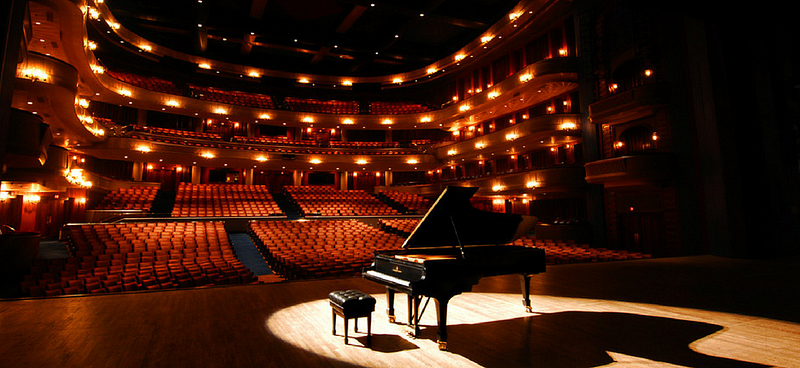
I’m Asmi, a high school sophomore in Milton, GA, and I’ve been playing the piano — a versatile, dynamic, and beautiful instrument — for over a decade. My journey has been a wonderful ride so far, and through this post, I’d like to share snippets of my evolution with you!
The Suzuki Method was my guiding light on my piano journey. Its instruction depends on the “mother tongue” approach, allowing students to be fully immersed in music. They listen and learn the flow of the piece until they know and feel it by heart, or at least long enough to get a good sense of the music. Only then does the student attempt to reproduce it. Playing by listening first is an incredibly effective way to learn music, because it expedites the process. Understanding how a piece of music should sound when played skillfully helps the student learn both hands and put them together much more quickly, find and correct mistakes, and thus, recreate it faster. Learning this way also benefits the practice of sight reading, which is generally a point of focus once the student has exceeded the beginner stages.
Integrated into this method is a “triangular” basis, where equal effort is required from the teacher, student, and parent. Unlike other traditional methods, parents are highly involved. By choosing the Suzuki Method, they commit to it themselves by taking copious notes, reinforcing lesson teachings at home, helping provide corrections, and giving positive encouragement and feedback. Thus, students have two outlets to grow from, ensuring they are engaged even when not at a lesson. They are responsible for practicing diligently and in a structured and organized manner to promote efficiency and progress.
The Beginning
When I was nearly six years old, a family friend recommended a piano teacher, as I had been insisting on beginning an instrument for some time. As a shy, quiet kindergartner sitting in on a few of the older children’s lessons at my teacher’s, house, I was thoroughly intrigued and excited to learn. I tried to soak up as much as I could. After a few weeks, it was my turn to begin.
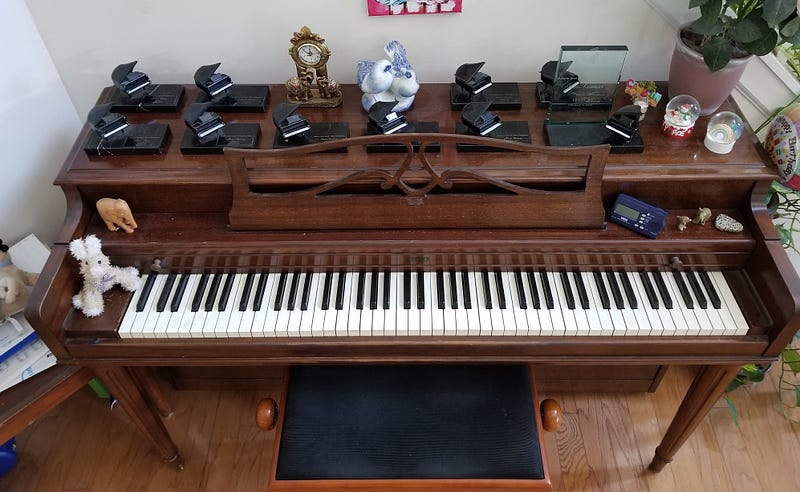
I purchased all the beginner-level materials I needed: Suzuki Level 1, Methode Rose Volume 1, and note-taking sheets. My teacher gave my mom and me an overview of what a typical lesson would consist of once I grew more advanced: warming up with scales and a short piece learned solely over the week from the Methode Rose books, playing a scale (major or minor, and keys that gradually grow in complexity), and then focusing on repertoire for the rest of the time. But, that material would come in a few months. I first needed to learn the foundations of music, of piano. Of learning to control, coordinate, and play with two hands. Of taking apart melodies and harmonies and analyzing them. Of applying technique to make music much more than regurgitating notes and motions written on pieces of paper.
I still vividly remember playing with colored, laminated cards with all the notes of an octave and understanding their placement on a staff. Together, my teacher would watch as I placed cards in order on the carpeted floor and hummed them back to her to create the tunes she played on the piano. Over and over again for weeks, she gradually helped me train to rely on my ears rather than just my eyes and hands to reproduce them. The pitches do, re, mi soon turned to C, D, E, which eventually became chords, and then doubled for the right and left hands. I didn’t realize it, but I was learning quickly, and I was ecstatic when I was able to finally pick up the Level 1 book, drop it onto the piano stand, flip to the first piece — Twinkle Variations by Shinichi Suzuki — and break down one of the songs I had been listening to on a loop for weeks, both subliminally and actively, to the point where I could learn it note by note.
In addition to weekly lessons, we had formal and informal recitals four times a year where we would get to play a “fun” piece, perhaps a pop or holiday song, or a memorized piece from our repertoire. Singalongs and duets were also incorporated! Recitals were always a time of excitement and anticipation, and I thoroughly enjoyed interacting with my fellow studio members.
Within a year, I was preparing to perform at Spivey Hall at Clayton State University for the first time. The graduation program at my studio, and collectively the Atlanta Area Suzuki Piano Association (AASPA), held annual concerts at this venue, combining Suzuki Piano studios from across Georgia. Students performed in this concert hall to advance to the next level, of which there were ten. My Level 1 piece was short and sweet — Christmas Day Secrets by Theodora Dutton. I can easily recall my pounding heart and sweating hands as I walked up the stage to bow and perform.
Progressing and Growing a Love for Piano
After my Level 1 performance, I really started taking my piano lessons seriously, vowing to graduate every year and play difficult pieces. I didn’t want to make my journey as easy as possible, but rather learn as much as I could along the way. I began practicing, with my mother’s consistent help, on a set schedule. I raced through my weekly practice books, which had turned from the Methode Rose collection to Czerny’s Practical Method for Beginners on the Pianoforte, a book of a hundred short pieces and the first of a series. This was probably the most exciting part of each lesson, because I loved learning new pieces every week and exposing myself to various types of classical music instead of just sticking to the same things week after week. Additionally, these songs allowed me to reinforce the technique I was practicing in class and at home. I started to show real progress and genuine interest in my playing. I became more confident in my abilities and stepped outside my shell, singing and performing duets with my sister on the violin as well as older and younger studio members.
As I matured, I began taking full responsibility of my practice time. All the technique that had been ingrained and developed over the years — a tall and relaxed wrist, tonal variation, phrasing and dynamics, interpretation, pedaling and structure, rhythms, and so much more — helped me read and learn music on my own very quickly. I became more independent, from choosing which pieces to learn to breaking up practice time at home to picking out a graduation dress at the mall.
Developing Stronger Motivation and Goals
I increased my pace of learning music and was blowing through books by a vast array of composers: Czerny, Burgmüller, Bach, Beethoven, Mozart, among several others. At this point, the motivation was coming from within as I did what I could to grow into a better pianist. I had a strong love for the music I was learning, which truly made a significant difference in my performances and practice sessions.
As the levels progressed, I began to realize that I was somewhat of a role model for the younger children, which furthered my drive. The pieces gradually grew in difficulty, but so did my will to play. I decided I would always pick lengthier pieces to play for graduation, because I enjoyed the feeling of accomplishment and playing in the spotlight. I also appreciate variation and diversity in the music I play, so I often opted for multiple movements of a piece.
Putting All the Love Into a Final Performance
All my years of hard work culminated in one Level 10 performance, my final graduation. Adamant about playing three movements from the Baroque or Classical eras, I had been searching for the perfect piece since February, nearly a year before graduation. Mozart’s Piano Quartet in G Minor, №1, K. 478 was my first chamber quartet piece with a violinist, violist, and cellist, so I was even more determined to make it a performance to remember.
Stage-fright nerves kicked in the morning of the concert on February, 9th, 2020. I’d actually barely gotten to the venue in time due to my car breaking down in the middle of freeway. It’s amazing, though, what a decade-long piano journey teaches you about leveling emotion at the most critical of times. I thought, this is my last chance. My very last performance on this stage as a part of this wonderful organization. Make it count. As I walked on stage, I had my values set and my end goal in mind. As I walked off, I felt wonderful pride.
Life Lessons and Takeaways
Piano has been more than just an instrument or achievement to me. It has been something that guides my life, morals, and skills, and it has evolved to become a significant part of who I am. My trophies aren’t what I’ve worked for; they commemorate the process of learning and the countless hours of effort I’ve put in to complete each level. Below, I’ve shared some life lessons I’ve learned along the way.
- Discipline and concentration for longer periods of time. Piano has taught me to pay attention to detail and focus on the little things that collectively form an end product. With attention to detail comes specificity, meticulousness, and the drive for progress and perfection, all of which are beneficial qualities to possess.
- Memorization skills. The small lessons matter, too. Anything from memorizing rhetorical devices and vocab words to cramming for a test, my memory has notably improved.
- An appreciation for and greater recognition of many types of music and knowledge about something so intriguing. Classical music is incredibly complex, and many of its pieces are the product of true genius, pure work, and talent. Ironically, it has shown me that simplicity is beautiful. This music is raw, unedited, and unfiltered, yet it’s the best I’ve ever heard. It’s easy to play, without the obstacles of electronics and editing, yet it’s difficult to play well.
- The power of interpretation. People can choose to play things so differently because of what they emphasize. It’s baffling to hear such a diverse selection of recordings of the same piece, and in the process, you can blend bits of pieces from the ones you are drawn to and create an interpretation entirely your own. No one is necessarily better than another. Likewise, in daily life, we should be open-minded and willing to understand and empathize, and we should also hold our opinions with confidence.
- A peaceful, relaxing stress-reliever. Classical music is incredibly valuable for the mind, because it releases positive chemicals in the brain and enables exercise in multiple areas at the same time, developing new connections between the left and right hemispheres. Our bodies (and plants — my money plant grew long and fast, wrapping around an entire staircase multiple times over, curving towards the piano) respond well to music, which provides vital neural, psychological, and emotional benefits. Whether it’s wonder, sorrow, happiness, or wistful, classical music evokes so many emotions.
- A gift for life. With piano, I’ve found something I can always go back to. I’ll never forget how to make music. Sure, I’ll be rough around the edges and playing well again would take lots of hard practice after losing some technique over the years, but I will always have something to provide unmitigated joy. Knowing that it’s a gift I will be able to expose many more people to in my life is very comforting and meaningful.
For now, I am switching gears and trying out pop and Disney music for fun. In two years, I hope to incorporate piano in my college years and keep it a steady part of my life. After all, I’m still chasing my dream of owning a baby grand piano! I’m never leaving piano, and piano is never leaving me. I will always have insurmountable love for this instrument.