
What 6ix9ine can Teach Us about our Decadence
He is not showing us the mirror; he is the first shard of it.
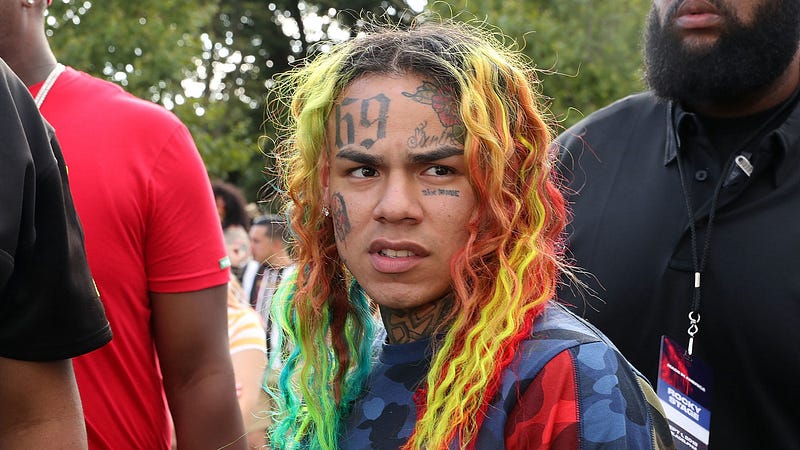
There was a time when only the jester could dress weird and make fun of the king. At some point in western history, people used to get beheaded for treason. Hell, sometimes you got sentenced to wearing a metal mask that prevented you from speaking because you were being rude. 6ix9ine allegedly committed all of these crimes, and he gets paid for it. What does this tell us about the state of culture?
Artist, Hothead, Criminal
You probably know Tekashi 6ix9ine, which is why I’m going to use him to drive a point home about decadence. But for the chance you don’t, here is the gist of it: The rainbow-haired rapper from the US is the most controversial and popular phenomenon in trap or cloud rap of the recent years and he is not in a gang.
To explain the last part of this, we have to take a quick look into the events of 2019.
There is a reason 6ix9ine’s Wikipedia page has its own section for ›Legal issues‹ that is longer than some peoples entire career. A troubled upcoming seems to combine explosively with an unrestrained character. A lot of his recognition early on can be explained by his many feuds with other rappers. But we are not here to judge.
Anyway, last year this culminated in him facing up to 47 years in prison for being involved with a violent street gang. During the trials, the rapper testified against his supposed partners in crime but also revealed that he mainly affiliated himself with them to earn street credibility for his music career.
In the Hip-Hop scene this sparked discussions between ›Old Heads‹ and the younger generation on whether 6ix9ine could ever recover from this loss of reputation, mainly because of the breach of street code many saw in his ›ratting out‹ of other gang members. But one thing everybody agreed on: Daniel Hernandez’ life, the person behind the artist, was now in serious danger.
Telling on the gang helped him to avoid most prison time, and even the two years he got he didn’t end up spending there. Due to Covid-19 safety-measures he got released early this year. His comeback with the music video »GOOBA« saw him reach 542 million views by now and the status of most watched Hip-Hop debut on YouTube within 24 hours.
The video clip is a colorful trip of twerking women and expensive watches, while 6ix9ine stays true to his sound and weighs in on the fact that he is a ›rat‹ — what inspired compliments on his trolling in the comment section.
Long story short, an attention-seeking rapper beefs with the scene and attains infamous status. When he breaks the code and saves his own ass, his credibility crumbles. Then his comeback becomes the biggest moment in his entire career.
What does this tell us about society, culture and the decadence of current times?
The Societal Status Of Art Throughout History
Disclaimer: The western world has become less cruel. When I compared the punishment of crimes in ancient times to the lack thereof today, I think that’s mostly a good thing.
Nowadays we need not make an example of people so much because we can rely on persecuting more people overall. This might cause a similar scare-factor, as punishment becomes less harsh, but the likelihood of punishment rises. This is besides the point. Secular states consider a smaller number of indecencies to be crimes because we focus more on inner-worldly results than on god’s punishment.
Furthermore, even in medieval times there was a societal role that made it acceptable to say things that the general public couldn’t express. The jester or fool could make fun of the king for entertainment. This may origin, psychologically, from him being a personified joke leading himself ad absurdum. It might have also had the purpose of Catharsis to alleviate social frustration.
In this understanding, the fool serves the king in his very criticism of his highness. Yet, when the modern world thinks of its ideal of artistic freedom, this isn’t the equivalent.
Society learned to tolerate the indecent forms of expression. In some circles, the act of the tabu has become an end in itself — which by design gets harder and harder to achieve. The boundaries of what we can say and do are being tested out this very minute. Meanwhile, we aim to protect developing youth from the very worst of it. In many countries there is a ›bedtime‹-line for tv programs on when they may start showing nudity and so forth…
All of this freedom can’t possibly fall short of appeasing the minds, can it?
Well, there is an argument to be had about that. But mostly we (silently) agreed on there being nothing wrong with free expression of the arts, as long as it doesn’t unreasonably cause harm to people. Not liking it isn’t sufficient reason to forbid it — nobody has to consume it. And some might go further with their stance on the matter.
So is 6ix9ine a fool or an artist? Or is he neither nor?
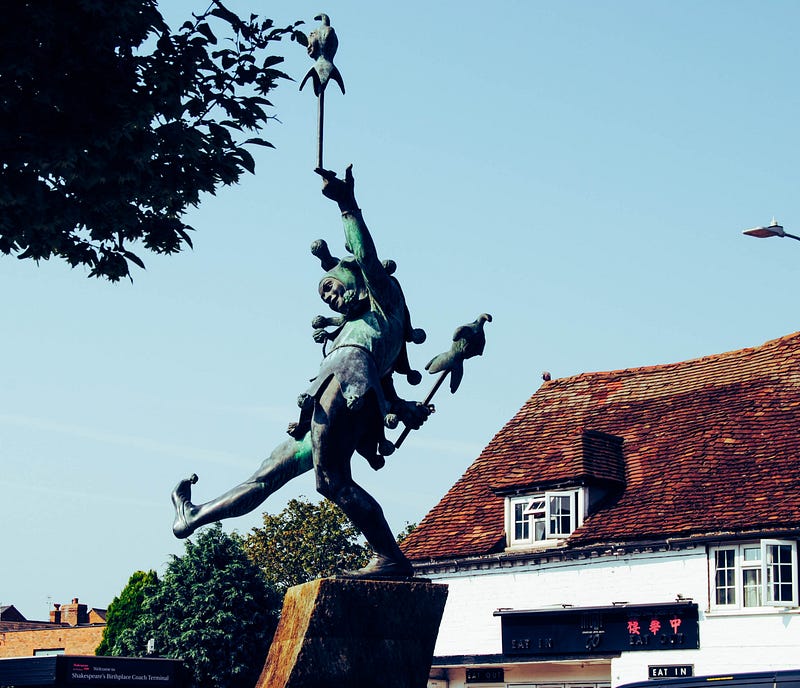
It might be a stretch to consider his rap lyrics literature. But hear me out on this german literature professor’s take!
Friedrich Gundolf, who taught literary studies at Heidelberg University around 1920, has a theory about the epochs of the craft.
In his opinion, there occasionally is the need for a person who either ends a certain period for good or brings a new era with force. In his book on George, he considers Nietzsche to be such a terminator. The philosopher would be the timely conclusion in the eye of decadent and widespread nihilism.
In this theory, only a person who lives in their own time but has already distanced themselves from it internally can bring change to the masses.
6ix9ine is the opposite of that.
Instead of showing the sensationalist and greedy audience the mirror, the rapper buys into his own extravagance. Nobody can argue that Daniel Hernandez himself still knows the line between art figure and authentic person. The real person had to testify in a trial for what the gangster persona did. The real person has the tattoos on his face and all over his body.
So 6ix9ine is the opposite of a time’s terminator and he also brings nothing original to the table. Instead, he is the loud and bright sum of all pieces regarding the laws of attention. He floods the primitive parts of young minds with dopamine by stimulating the superficial senses. Hernandez might have well been aware of his own marketing strategy. He saw the potential in joining a gang and he was kind of right. But he isn’t just selling anymore, he has become the product.
In a time when artistic freedom is big as ever, the real art becomes about not realizing every last inch of it.
In a competitive field like the music industry, 6ix9ine felt the need to ›max out‹ on all the laws of attention; but his art itself lacks essence. Sure, he can say all the swear words, show some probably real guns into the camera and there are half-naked women. But that is only exciting for so long. And then, once we are used to it, not only do we get bored, we need more exciting stimuli.
Real art can’t be quantified like this.
Society’s standards on what we consider art are too loose.
Wagner’s music is special because of the coexistence of calm and exciting passages. Shakespeare’s literature is special because of the right measure in his choice of words. Da Vinci’s Mona Lisa isn’t so interesting because of her mile-wide grin.
Where 6ix9ine’s product falls short of being art — or rather: The reason society’s standards on what we consider art are too loose, is our inability to acknowledge the degree to which art doesn’t exhaust its frame of liberty.
What we finance is what we value — but what if we finance someone who values nothing?
›Decadence‹ describes the decay of values and morals in a cultural sense and also applies to art that either portrays such a decay or where the standards it is being held to decay. We can currently see the latter in music — and frankly, in many art forms.
The person declaring something to be decadent reveals about themselves, that they still receive the echoes of an already lost sense of appreciation. Fair enough. But where no new values are created and we only ascribe worth to the destruction of old ones, we find decadence. Absolutely.
6ix9ine is a commercialised symptom of our own decadence. Since a substantial amount of people helped him make a fortune in return for short-lived entertainment, we have to assume that society values exactly that. And nothing else is decadence: The loss of higher values in return for easy-attainable, temporary gratification.
Diversity has become an end in itself and morals get thrown out because of financial incentives. »There is no such thing as bad publicity.« That’s a common saying by now. But there is such a thing as bad art.
And that we value bad art shows our decadence.


