Features
Westerns: Social Commentary Disguised as Frontier Mythology
How Hollywood’s greatest genre has always reflected contemporary American concerns.
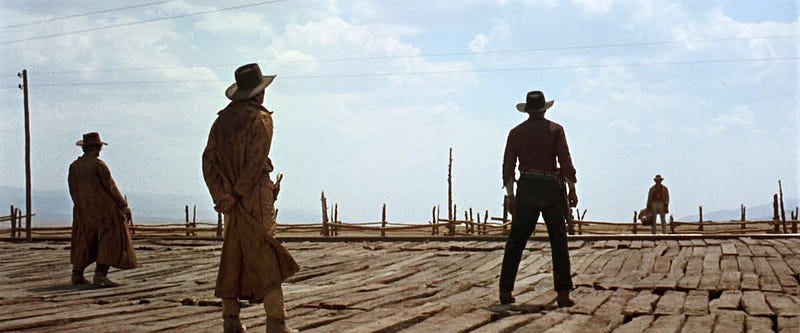

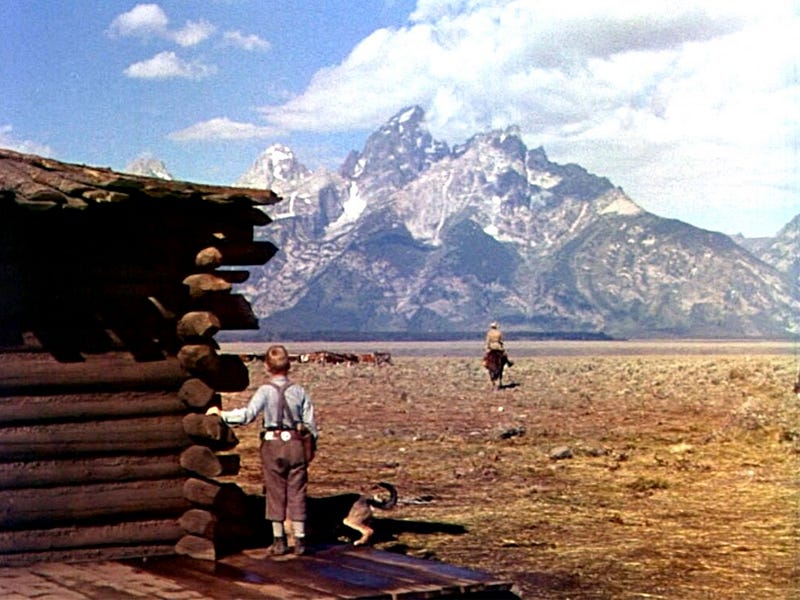
The western arguably constitutes America’s single most outstanding contribution to world cinema. From its earliest incarnation in The Great Train Robbery (1903), to silent gems such as The Iron Horse (1924) and the first-ever western Academy Award-winner Cimarron (1931), the genre became a staple of Hollywood. Many memorable gunslinging tales like My Darling Clementine (1946) and Shane (1953) still enjoy classic status today. In fact, I’d argue there are more classics among westerns than any other genre.
Although almost entirely set in a specific period of history, the western also constitutes a kind of mythology, with romanticised figures such as Wyatt Earp, Jesse James, and Billy the Kid akin to (probably fictional) figures from UK romantic myth, like King Arthur and Robin Hood. However, the history of the western has another vitally important layer that elevates it beyond simple adventure stories. For a hundred years, the genre’s also been used as an allegorical or metaphorical vehicle for exploring contemporary American concerns.
Fake News
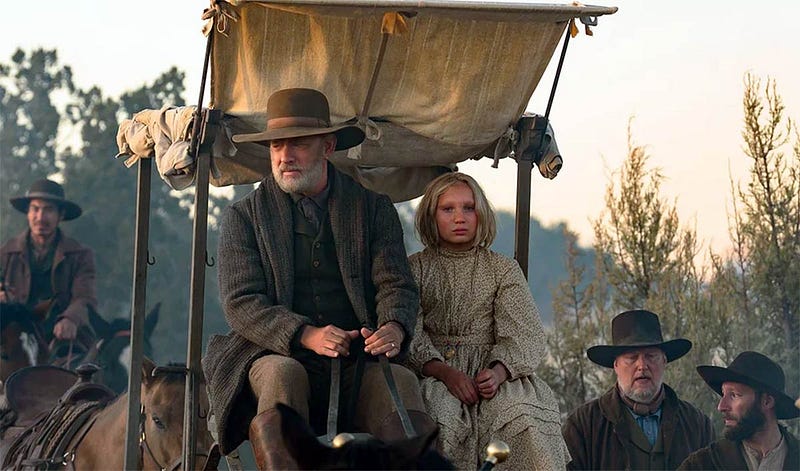
Before taking a glide through examples throughout the history of the genre, I’ll begin with a recent film, Paul Greengrass’s News of the World (2021). Tom Hanks plays civil war veteran Captain Kidd, who travels from town to town, reading newspaper clippings to curious customers. He winds up taking a young orphan girl under his wing, who had been abducted by the Kiowa, in order to return her to her surviving relatives. Along the way, they bond and face various perils together.
However, the most interesting aspect of the film is not their relationship, but the allusions to the present political landscape. Post-Civil War America is depicted as hurting and divided, beleaguered by fake news and echo chambers. Kidd, who fought on the Confederate side, is now a voice of reconciliation, urging both sides to find common ground and unity. Sound familiar? Such sentiments are often heard in the US today, among both Democrats and certain sections of the Republican Party, urging people to move on from the Trump cult.
The Western & Race
Perhaps the most obvious example of the western echoing contemporary concerns is in its treatment of Native Americans. Forbidden by the Hays Code to directly address issues of race and civil rights, I’d argue the western addressed them indirectly, perhaps not even consciously, with Native Americans acting as a stand-in for black people and other non-white racial groups.
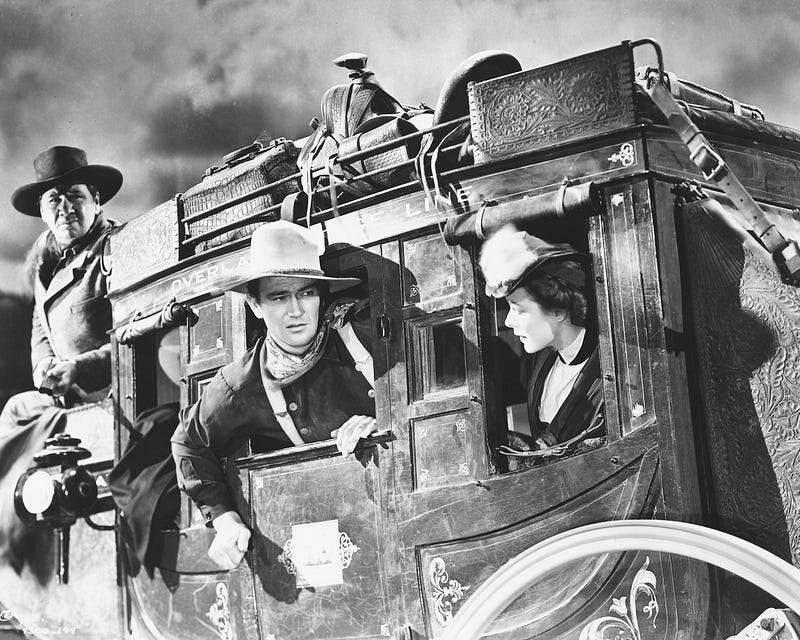
In that respect, the vicious outright villainy of Geronimo in John Ford’s Stagecoach (1939) can be seen in contrast to the Geronimo who simply wants to defend his tribe in Arnold Laven’s Geronimo (1962). In the intervening years, attitudes to Native Americans softened. I’d argue this reflected America gradually coming round to the idea of racial equality, amid the civil rights movements that peppered the 1960s.
This oversimplification paints John Ford in a slightly unfair light. Although derided as a racist in some quarters, and undoubtedly a product of his time, Ford took care to include scenes in his films that questioned blanket racist attitudes. For example, there’s a lovely little scene in Stagecoach where a stagecoach passenger expresses shock that a Mexican character is married to a Native American, calling her a “savage”. The Mexican responds: “Si senor, she’s a little bit savage, I think.” His amused reaction to absurd racism is surely a counterpoint to the Ford-was-racist brigade, indicating that it wasn’t quite that straightforward.
Ford continued to gradually incorporate sympathetic Native American character traits, notably in his “cavalry trilogy” Fort Apache (1948), She Wore A Yellow Ribbon (1949), and Rio Grande (1950). Each of these feature Native American antagonists, but also contain scenes that humanise them far more than in earlier westerns. Indeed, one could even flippantly make the case that Ford humanised Native Americans before it was cool to do so.
Wandering Forever Between the Winds
Another strong argument in favour of Ford is found in The Searchers (1956). Although some elements are undoubtedly problematic, the obsessive hatred towards the Comanche shown by Ethan Edwards (John Wayne) is so extreme that the destructive nature of such vehement racism cannot be missed. Even though the Comanche are responsible for murder and abduction (of Ethan’s niece Debbie), Ethan’s actions indicate the terrifying, pathological depth of his hate. For instance, in one scene he shoots out the eyes of a dead Comanche. When his preacher companion asks what good that did, Ethan responds:
“By what you preach, none. But what that Comanche believes, ain’t got no eyes, he can’t enter the spirit-land. Has to wander forever between the winds.”
Ethan’s years-long search for his abducted niece is undertaken alongside Martin Pawley (Jeffrey Hunter). Martin acts as Ethan’s conscience, which proves particularly important when Ethan decides it’s better to kill Debbie than to rescue her if she’s been raped by the Comanche. As far as he’s concerned, Debbie is better off dead in circumstances of miscegenation, but Martin’s having none of it.
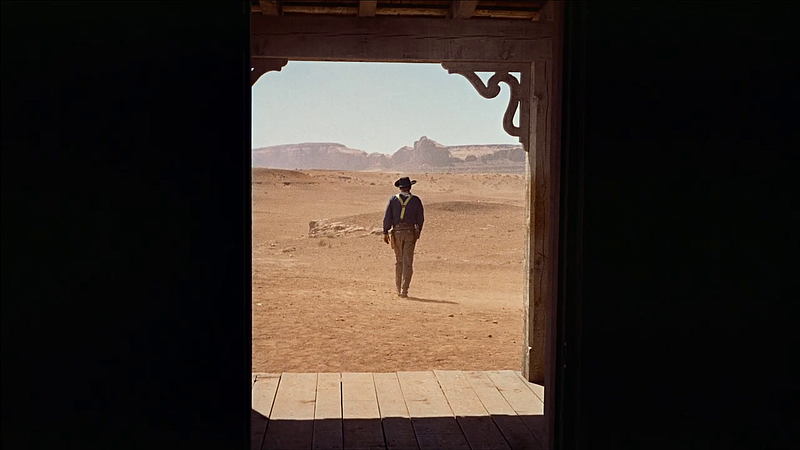
I doubt Ford intended The Searchers as a direct allegory of race relations in the US, but I find it difficult not to read ingrained, pro-KKK Deep South racist attitudes into Ethan’s character. Whether intended or not, I can’t help but think something of the national shifting mood seeped into the film. When Ethan finally does rescue Debbie instead of killing her, it’s hardly an act of redemption. He cannot join the family idyll. He is seen returning to the wilderness — via an unforgettable, iconic doorway framed final shot — like the Comanche whose eyes he shot out, condemned to wander forever between the winds. A metaphor for the dying embers of a racist past?
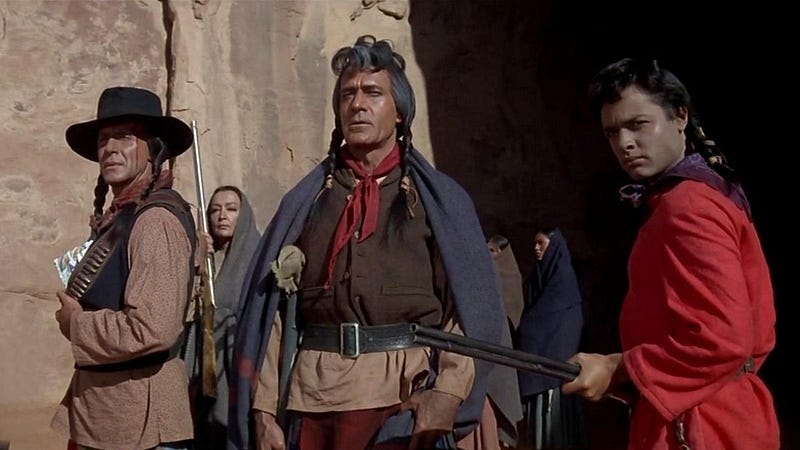
Later Treatment of Native Americans in the Western
Given that racism is alive and well in the United States, perhaps that’s too much of a stretch. Nonetheless, the gradual change in depictions both of Native Americans and those who kill them, in subsequent westerns, bears out my hypothesis. Ford’s later films, especially Cheyenne Autumn (1964), reflect this trend. Another key film reflecting this trend is found in Sam Peckinpah’s hugely underrated Major Dundee (1965), which in some ways is a tougher, less romanticised take on Fort Apache.
Also around this time, Clint Eastwood emerged as a western icon in Sergio Leone’s ground-breaking trilogy A Fistful of Dollars (1964), For a Few Dollars More (1965), and The Good, the Bad, and the Ugly (1966), but despite all the violence in those pictures, not once does The Man With No Name shoot a Native American. Indeed, Clint Eastwood has never been seen killing them at any point in his career.
Post-Hays Code, American cinema was no longer restricted in terms of being unable to depict films about racism and civil rights. The western was no longer relied upon to deliver commentary in coded terms, using Native Americans as a stand-in. This led to other notable works depicting Native Americans in a more sympathetic light, including Arthur Penn’s Little Big Man (1970), and Elliot Silverstein’s A Man Called Horse (1970), in which Richard Harris’s character John Morgan is captured and enslaved by Sioux. He gradually earns their trust and respect, even undergoing painful Sun Dance initiation rites, before emerging as a warrior, and essentially becoming one of them.
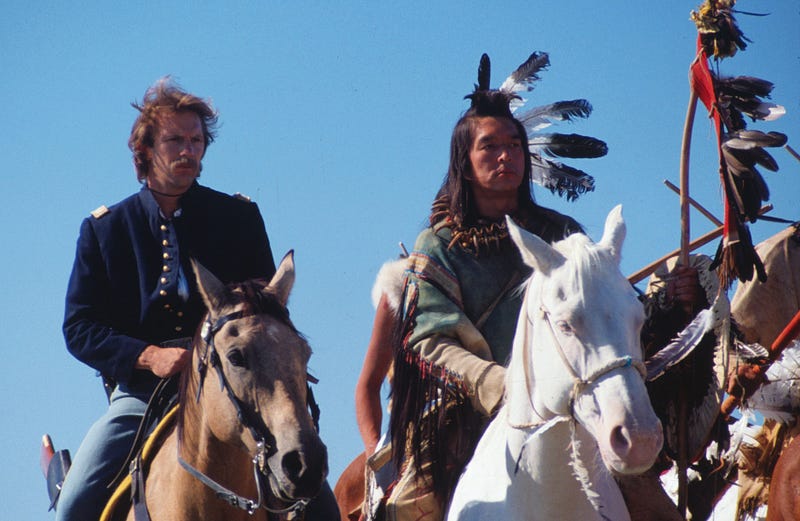
Both were well-received, but not as well-received as Kevin Costner’s Dances with Wolves (1990), which was rewarded with seven Oscars, including ‘Best Film’ and ‘Best Director’. Dances with Wolves features another white man befriending a Sioux tribe and slowly becoming one of them. However, it’s more culturally significant, in that it was seen as something of an atonement or corrective, though not to history. Indeed, to my mind, those who criticise Dances with Wolves for historical revisionism slightly miss the point. The film is a corrective to Hollywood’s depiction of the Native American.
Some critics didn’t buy into the earnestness of Dances with Wolves, pointing out that it still features a white protagonist, as well as a white love interest character, leaving it open to accusations that such choices were made to preempt miscegenation fears. I find this view rather ungenerous. Though not as radical as some claimed, Dances with Wolves is an epic, beautiful film with its heart in the right place.
It’s worth adding that there have since been films made by Native Americans filmmakers, which add a very different perspective on the Native American experience, inside and outside the western genre. To that end, I would recommend checking out films such as Smoke Signals (1998), Atanarjuat: The Fast Runner (2001), Four Sheets to the Wind (2007), Shimasani (2009), and Trudell (2005).
The Psychological Western
Outside of civil rights, the western has also reflected other social changes and concerns. For example, in the 1950s, Cold War fears informed the genre, along with everything from McCarthyism to Freud’s psychoanalysis theories, which were becoming popularised in many areas of American culture. After World War II, many western protagonists became more traumatised, more battle-weary, and looked to their inner demons. Film scholars loosely term such westerns as “psychological”, and their number includes some films I’ve already mentioned, including The Searchers.
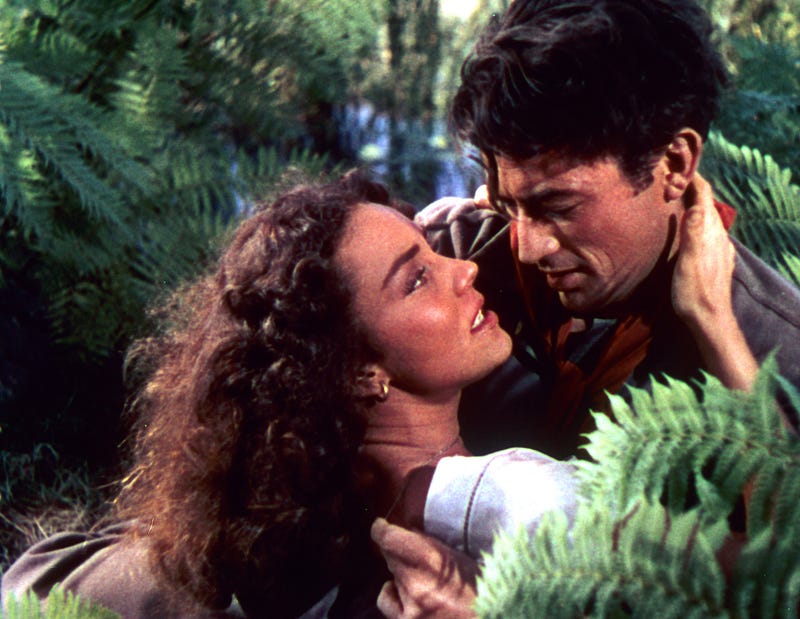
I’d argue these psychological elements were first detected in earnest in King Vidor’s ludicrously overheated Duel in the Sun (1946). A technicolour romantic melodrama writ large in the old west, the film is packed with phallic symbology and star-crossed-lovers fatalism. The baffling, insane, but undeniably gripping finale oozes with repressed sexuality, as Jennifer Jones and Gregory Peck shoot each other to death under the burning sun in a kind of orgasmic frenzy. No wonder the film had such an impact on a very young Martin Scorsese.
Psychoanalysis & Purgatory in ‘The Naked Spur’
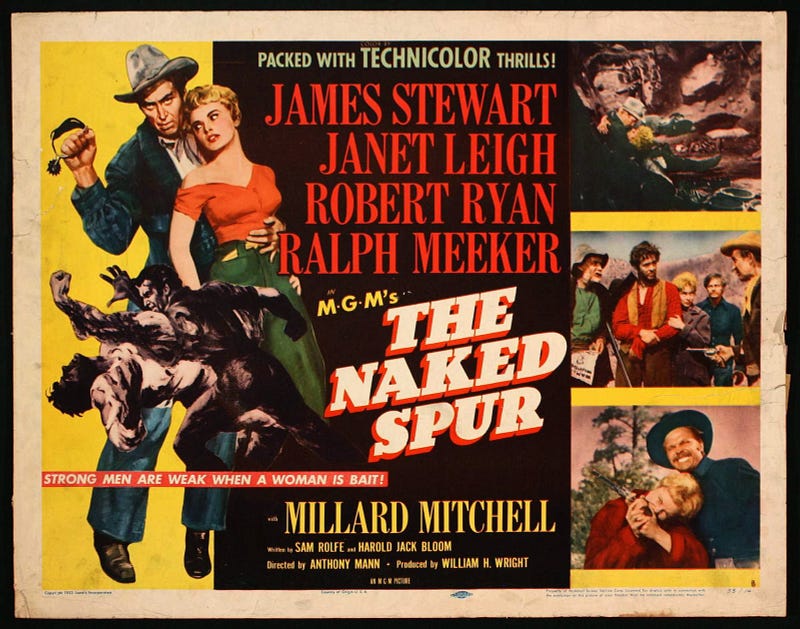
However, it’s Anthony Mann who perhaps directed the most notable of the psychological westerns, all of them starring James Stewart. Winchester 73 (1950), Bend of the River (1951), The Naked Spur (1953), The Far Country (1954), and The Man From Laramie (1955) feature baleful, ambiguous protagonists loaded with self-doubt and self-loathing that wouldn’t be out of place in a cynical film noir P.I. These westerns feature savage violence that would make today’s desensitised audience wince (the point-blank shooting of Stewart’s gun hand in The Man from Laramie, for example).
The Naked Spur is a personal favourite of mine, taking place entirely outside, in a brutal landscape. Guilt-ridden Howard Kemp (Stewart) tracks Ben Vandergroat (Robert Ryan) in a kind of masochistic purgatory self-imposed after he lost his family ranch and fiancée. The latter ran away with her lover, taking the proceeds of the ranch sale with them, whilst Howard was fighting in the Civil War.
Howard is assisted by old gold prospector Jesse Tate (Millard Mitchell), and disgraced cavalry lieutenant Roy Anderson (Ralph Meeker), both of whom demand an equal share of the reward when they discover Howard is not a sheriff but a bounty hunter. They manage to capture their quarry and his girlfriend Lina Patch (Janet Leigh), but then have to traverse cliffhanger crags and rushing rapids. They also have to fend off vengeful Blackfeet on Roy’s trail, as well as deal with dangers from within the group, stirred by their manipulative captive.
Ben tempts Jesse with non-existent gold and uses Lina as sexual bait to drive a wedge between Roy and Howard. But Lina is genuinely attracted to Howard, which causes fresh torment over his fiancée’s betrayal to rise to the surface. Oedipal abandonment anxieties ensue, as he wrestles with whether or not to kill Ben.
McCarthyism and the Cold War
Oedipal themes also crop up in Howard Hawk’s Red River (1947), which British film critic Barry Norman once flippantly dubbed “Mutiny on the Prairie”, in reference to the famous historic mutiny involving HMS Bounty. In that respect, John Wayne and Montgomery Clift more or less fit the William Bligh and Fletcher Christian personas, but the film has also been interpreted as a Cold War allegory reflecting more self-questioning post-war American anxieties.
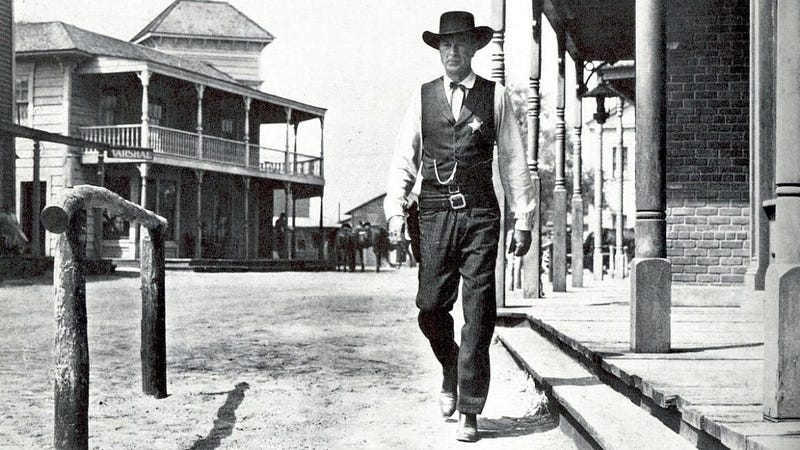
Fred Zinnemann’s High Noon (1952) is one of the most famous psychological westerns, dealing in allegorical terms with McCarthy communist witch-hunts. As marshal Will Kane (Gary Cooper) is gradually abandoned by his friends when faced with revenge-seeking criminals arriving on the noon train, it reflects the shameful way people abandoned their friends in the face of communist sympathy suspicion.
The film delivers one of the most suspenseful finales in the genre’s history, including a hugely memorable ironic twist wherein pacifist Quaker Amy (Grace Kelly) is the only one ultimately standing with her husband against his foes. That she kills a man in the process, thus betraying her strict religious convictions, is the reason behind Will’s contempt as he casts the tin star to the ground. John Wayne considered this action one of the most un-American things he’d ever seen and famously hated the film.
McCarthy allegories were also seen in Allan Dwan’s Silver Lode (1954), Nicholas Ray’s Johnny Guitar (1954), and Ray Milland’s A Man Alone (1955), as well as Anthony Mann’s The Tin Star (1957), and Delmer Dave’s 3:10 to Yuma (1958). The latter acts as a kind of High Noon in reverse (ie escaping the villains by getting on the train, rather than facing them as they get off). It was also remade surprisingly well by James Mangold in 2007.
Counter-Culture Westerns
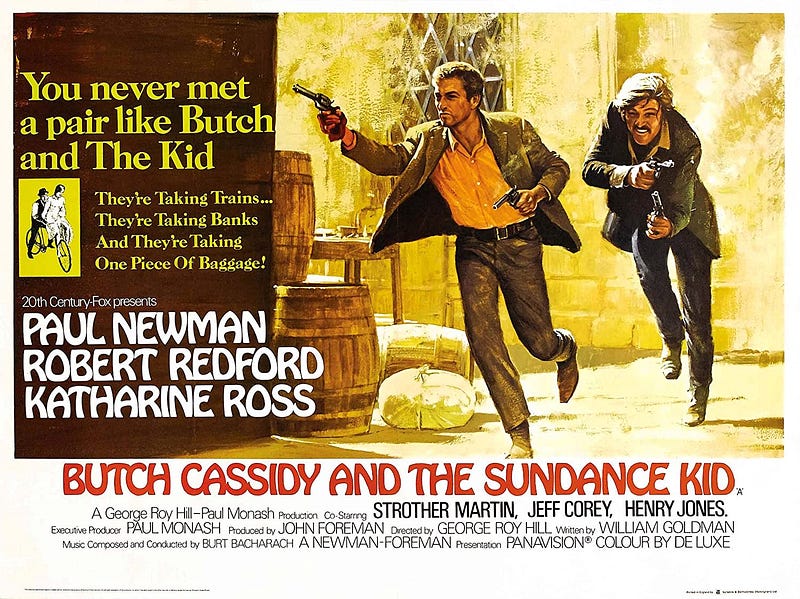
The counter-culture movements of the 1960s brought an entirely new set of allegorical concerns to the western. Anti-establishment feeling was reflected in films such as George Roy Hill’s Butch Cassidy and the Sundance Kid (1969) and Sam Peckinpah’s The Wild Bunch (1969).
The former presented two lovable rogues in the greatest of buddy movies, romanticising a real band of thieves known as the Hole in the Wall Gang. Paul Newman and Robert Redford were an instant hit with young audiences who wanted to tear up the rules, and who sympathised with Butch and Sundance’s disdain for society. On the other hand, the film could be interpreted as reactionary; them-days-is-over syndrome, if you will. As Butch famously says: “The future’s all yours, you lousy bicycle!”
The Wild Bunch is similarly mournful, but with one key difference: It is brutal as hell rather than nostalgic and wistful. Sam Peckinpah more or less invented modern screen violence with the fast-edit, slow-motion, bloody massacres that bookend the picture. Unlike John Ford, who was one of cinema’s great romantic poets, Peckinpah’s vision has no place for false nobility in the old west. Bank robbing gang leader Pike Bishop (William Holden) is fully capable of gunning down a wounded partner-in-crime that’s slowing him down. Like Butch and Sundance, they too are headed for inevitable death, as they are dragged kicking and screaming into the modern world.
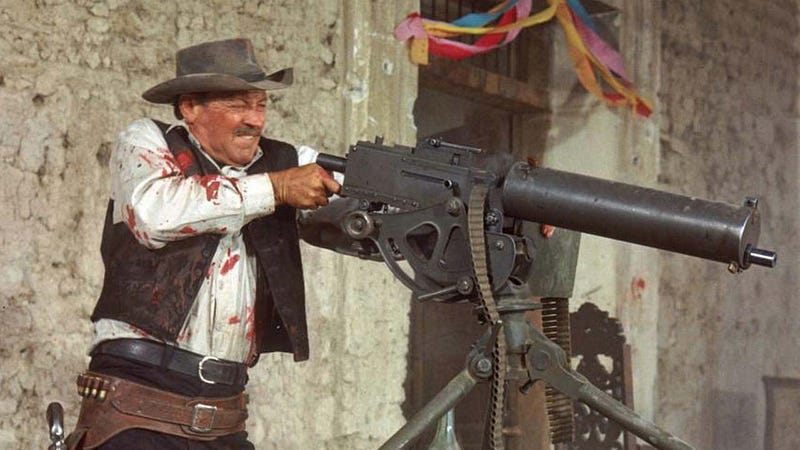
As such, The Wild Bunch arguably reflects the nihilistic despair of a nation engulfed in the moral murkiness of the Vietnam war, just as John Ford’s The Man Who Shot Liberty Valance (1962) eerily anticipated Kennedy assassination conspiracy theories. The spaghetti westerns also reflected these concerns to a degree, especially in the works of Sergio Corbucci, such as The Big Silence (1968), and Django (1966). The latter was famously banned in the UK until the early 1990s on account of its extreme violence. One of its most famous sequences — where Franco Nero’s character guns down hoards of Ku Klux Klan with a mini-gun concealed in a coffin — reflects the changing times, and how concerns around racism and civil rights were now able to be directly addressed. Of course, Quentin Tarantino is a big fan of Django and its various sequels, hence his own later film, Django Unchained (2012).
More melancholy and elegiac westerns reflecting the end of an era cropped up around the same time, including Sergio Leone’s masterpiece Once Upon a Time in the West (1968), and another gem from Peckinpah in the form of Pat Garrett and Billy the Kid (1973). Around this time, the western continually reinvented itself to reflect contemporary concerns. It sometimes took on an eerie, supernatural tone in films like High Plains Drifter (1973), explored dangerous sexual awakenings in the likes of The Beguiled (1971), or even took a left turn into trippy, avant-garde philosophy reflecting the rampant experimental drug-taking of the time, in the case of Alejandro Jodorowsky’s El Topo (1970). Robert Altman’s McCabe and Mrs Miller (1971) is another key western of the period, subverting genre tropes in a manner that again reflected the counter-culture changes taking place in western society. Blazing Saddles (1974) shouldn’t be overlooked either, as it exposed racism in westerns via satirical black comedy.
Unforgiven: A Deconstruction of Western Myth
The 1980s were a quiet time for westerns, after the financial disaster of Michael Cimino’s Heaven’s Gate (1980). There were occasional glimmers of life from the genre, in the likes of Lawrence Kasdan’s Silverado (1985) and Clint Eastwood’s Shane remake Pale Rider (1985), but on the whole tales of frontier life were absent. However, in the early 1990s, the western was revived by the popularity of Dances with Wolves.
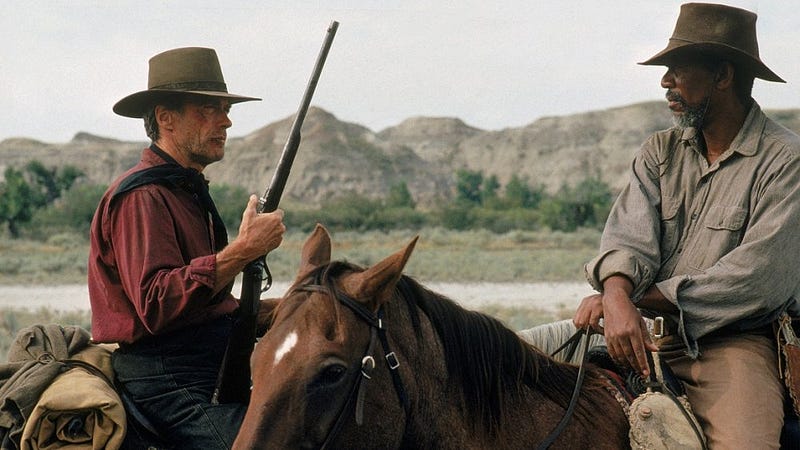
Clint Eastwood took the opportunity to offer the ultimate deconstruction of western mythology in his masterpiece Unforgiven (1992). The most fascinating aspect of this truly brilliant film is the way it demolishes so many western clichés. For instance, the myth of the quick draw is shown to be nonsensical. In addition, the way brutal sheriff Little Bill (Gene Hackman) exposes the fraudulent, romanticised gunfighting anecdotes of English Bob (Richard Harris) is a crucial debunking of the penny dreadful novels that informed the genre in the first place. Unforgiven is a western that refuses to compromise on reality, even an inch. Sleeping on the trail is painful. Hitting a target is difficult. You can’t just bounce back from a severe beating. Above all, killing a man is a truly horrifying, soul-annihilating business.
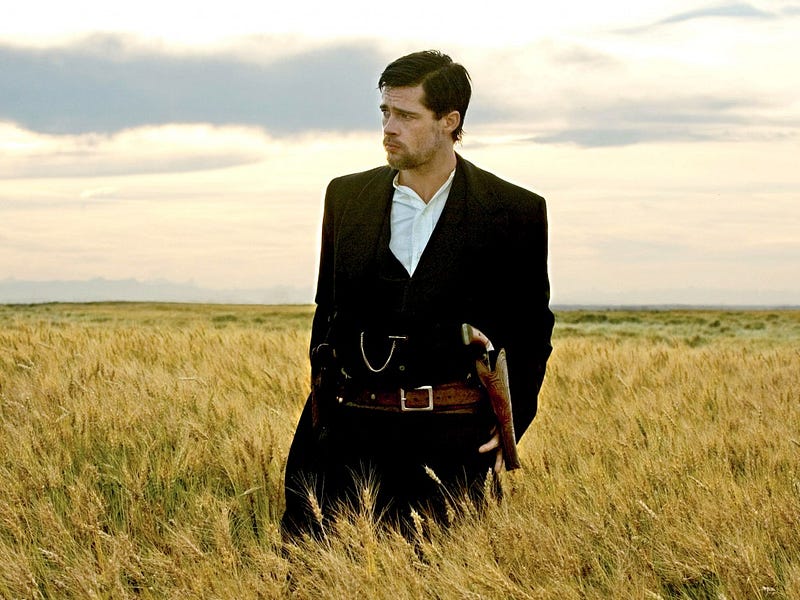
After Unforgiven, you could be forgiven for thinking the western had in effect been destroyed by Eastwood, but it continues to evolve in new and fascinating ways, always reflecting current concerns. For example, Andrew Dominik’s The Assassination of Jesse James by the Coward Robert Ford (2007) is concerned with celebrity and PR. Despite being a violent and dangerous criminal, Jesse James (Brad Pitt) has the advantage of being romanticised in fiction. As a result, Robert Ford (Casey Affleck) is remembered as a cowardly murderer, yet for much of the running time, he is depicted as a celebrity worshipping fanboy, whose affection sours when his idol inevitably disappoints him. Such contemporary themes are if anything more resonant than ever.
The Western Continues to Evolve
Today, westerns explore everything from nihilism to existentialism, feminism, homosexuality, and, as always, good old-fashioned revenge. There has also been an increase in the subgenre of westerns set in the present, though this isn’t necessarily a new trend. John Sturges’s Bad Day and Black Rock (1955) is a good example from classic Hollywood, but newer examples include No Country for Old Men (2007), The Three Burials of Melquiades Estrada (2005), and arguably Brokeback Mountain (2005). With fare as diverse as The Homesman (2014), Brimstone (2016), Meek’s Cutoff (2010), Open Range (2003), Seraphim Falls (2006), Slow West (2015), and even in the form of True Grit (2010) a remake that surpassed the original, I expect the western — a genre written off as all but extinct more than once — won’t be dying out any time soon.
Author’s note: I hope you enjoyed this article. For more about me and my writing, please click here.