
Western Intervention in Ukraine: The Impact of US & Allied Military Support on the Ukrainian-Russian Conflict
The Strategic Influence and Implications of Western Military Aid in Ukraine’s War Effort Against Russia
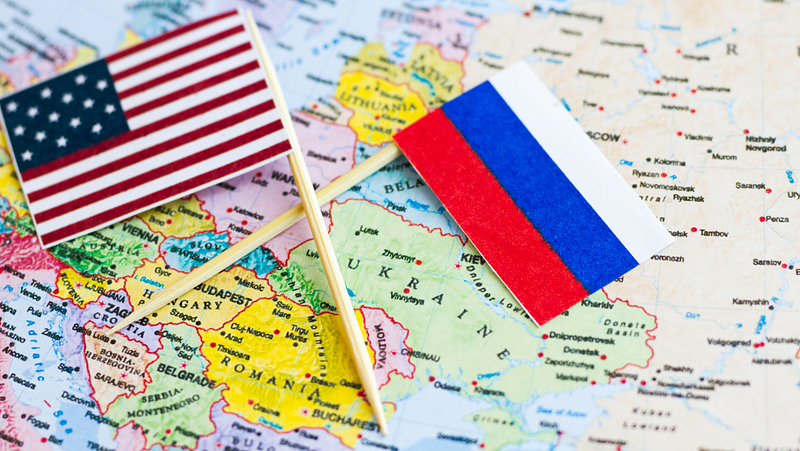
In 2014, when Russia first initiated aggressive military actions against Ukraine, the response of the United States was notably measured. The Obama administration, fearing a potential escalation of the conflict, chose a conservative approach mainly offering non-lethal aid to Ukraine.
The US opted to provide humanitarian aid and economic support, while also implementing a series of sanctions against Russia. Direct military intervention, in terms of supplying arms to the Ukrainian forces, was considered a step too far at that time.
This restrained response was driven by a cautious assessment of the complex geopolitical balance and the potential risks associated with escalating an already volatile situation.
However, the landscape changed dramatically in 2022. Russia, emboldened, launched a full-scale invasion of Ukraine, leading to a dire escalation of the conflict. This move catalysed a stark change in the US strategy, under President Joe Biden’s administration.
Recognising the escalating severity of the situation, the US, in cooperation with its Western allies, began approving significant packages of weapons to support Ukraine. This change in policy was more than just an affirmation of Western commitment to Ukraine’s sovereignty; it was a vital lifeline to a nation under siege.
These extensive arms packages had an immediate and transformative impact on the war.
In the face of superior Russian firepower, the Ukrainian forces were initially on the back foot. However, the introduction of advanced Western weaponry helped to level the playing field.
The Ukrainian army effectively utilised the new weapons to halt Russia’s advance towards Kiev, marking a significant turning point in the conflict.
The speed and efficacy of the Ukrainian response underscored not only the strategic importance of these weapon packages but also the resilience and resolve of the Ukrainian military.
The proactive response from the US and its allies also signalled a significant shift in the Western approach towards the conflict in Ukraine.
This initial phase of the war and the Western intervention set the stage for a complex unfolding of events that have significantly transformed the Ukrainian-Russian conflict.
Progression of US Assistance
The US involvement in the Ukrainian conflict has been characterised by a gradual increase in the scale and sophistication of military aid.
This commitment started in the spring of 2022, when the US, recognising the growing threat Ukraine was under, sent heavy artillery to the country.
This was a significant development, as it marked a departure from the earlier policy of providing only non-lethal aid.
The delivery of artillery was followed by another important decision: the agreement to send tanks in the winter of 2023.
The introduction of tanks represented a further escalation of US military support and demonstrated the seriousness of the Western commitment to aiding Ukraine in its fight against Russian forces.
However, this escalation of military aid was not without its complications. Each decision to increase the level of weaponry support came after significant deliberation within the US administration.
The two primary considerations were whether Ukraine could effectively utilise the weapons being provided and whether the introduction of these new weapons could inadvertently provoke Russia into further escalating the conflict.
Despite these concerns, the US and its allies ultimately decided to continue ramping up military support to Ukraine. Plans are now being considered to provide Ukraine with advanced long-range missiles and F-16 fighter jets, marking the highest level of military aid so far.
If approved and implemented, these would significantly enhance the Ukrainian military’s capabilities, marking a potential game-changer in the ongoing conflict.
Throughout this progression of US assistance, the US administration has maintained a careful balance between the need to support Ukraine’s defensive efforts and the necessity of avoiding unintended escalation.
Despite the increasing sophistication and scale of the aid, the approach has remained cautious, with a focus on ensuring Ukraine can effectively employ the assistance provided, and on managing the potential reactions from Russia.
The Risks of Weapons Drawdown
As the US continues to provide Ukraine with advanced weapons and munitions, a range of associated risks are emerging. A primary concern centres on the US weapons inventory.
The US needs to maintain a sufficient quantity of weapons systems to equip operational units, maintain routine training operations, and ensure readiness for potential conflicts.
However, with weapons being supplied to Ukraine, the US is faced with a challenge: ensuring that these supplies do not critically deplete its own inventories.
The reduction in weapon stocks could create significant operational difficulties. For example, unit training might become more challenging without a complete set of equipment.
Mobilisation, the process of preparing military forces for war, might also slow down due to a complicated redistribution process.
The problem also extends into the political sphere — many of the late-deploying units, whose stocks might be borrowed for transfer to Ukraine, are part of the National Guard.
This body, with strong state ties and significant representation in Congress, has historically resisted any policy that implies a reduction in readiness or perceived status.
In terms of munitions, the US must retain enough stockpiles to support its own war plans. The volume and variety of these stockpiles are determined based on a range of potential scenarios, from a conflict with China over Taiwan or the South China Sea, to potential ground engagements in North Korea or Europe.
The process of drawing from these stocks to aid Ukraine poses a delicate balance of risk.
These risk judgments are rooted in a variety of factors, including the predicted length and intensity of potential conflicts, the role of allies and partners, and the nature of various threats.
Although assumptions underlying these judgments could theoretically be adjusted to free up additional inventory for Ukraine, such changes are complex and time-consuming.
Many stakeholders would likely object to revisions that could potentially expose the US to greater risk.
Thus, the process of arming Ukraine carries inherent risks and complications.
It requires the careful balancing of immediate needs against long-term strategy, and the weighing of the benefits of supporting an ally against the potential detriment to national readiness and war-fighting capabilities.
Production Capabilities and Challenges
As the US continues to provide military support to Ukraine, increased pressure is being placed on the domestic defence industry to ramp up production.
The Department of Defense (DOD) has engaged in extensive talks with industry players regarding the possibility of upscaling the manufacturing of weapons systems and munitions. This dialogue is aimed at ensuring the US military’s readiness isn’t compromised while continuing to aid Ukraine.
However, the defence industry is largely structured around peacetime production rates. This framework prioritises efficiency and cost-effectiveness over surge capacity, limiting the industry’s ability to rapidly expand production in response to emergencies.
A recent study by the Center for Strategic and International Studies (CSIS) found that replacing depleted inventories in an emergency could take many years for most items.
The defence industry generally argues that long-term commitments from the DOD are necessary to justify the investments required to expand production capabilities.
There have been proposals for increased production of High Mobility Artillery Rocket Systems (HIMARS) and Guided Multiple Launch Rocket Systems (GMLRS), as well as 155-millimeter (mm) ammunition.
These proposals, however, require congressional approval, and the industry remains cautious about committing to surge production without guarantees.
Converting civilian industries to support wartime production is another option that is theoretically possible. However, the process is long and complex.
During World War II, this conversion process took two to three years, even in a fully mobilised society and economy.
The challenges of ramping up production have led to considerations of alternative solutions. One such alternative involves supplying Ukraine with older or nonstandard equipment that is still effective on the battlefield.
The US could also acquire weapons from third-party countries to supplement its own supplies.
While these strategies would mark a departure from the current practice of supplying cutting-edge equipment, they offer pragmatic solutions in the face of mounting production challenges.
It’s also important to acknowledge that relying on these alternatives doesn’t signify a lack of commitment or a reduction in military support to Ukraine. However, it is a clear indication that the US military was not originally structured to fight or support an extended conflict.
This raises important questions about future budget priorities and military strategy.
The Risk-Reward Balance
The decision to aid Ukraine’s defence forces has placed the United States in a delicate risk-reward balance. One of the most pressing concerns is the long lead times involved in producing and shipping replacement weapons and munitions.
As US inventories deplete to support Ukraine, replenishing these stocks becomes a critical task. However, it is a task that is fraught with complexities.
Congress has provided substantial funding to replace transferred equipment, but the gap between shipping weapons and receiving replacements is a significant risk.
As it currently stands, the US has provided around $10 billion worth of equipment from stocks, with just $1.2 billion allocated for replacements via signed contracts.
Once these contracts are executed, there will be a lengthy waiting period before the replacement equipment arrives at units. In some cases, this can take several years.
The risk associated with these long production lead times is exacerbated by the ongoing nature of the conflict. Ukraine’s successes on the battlefield suggest that the war may not be as protracted as once feared, but the nation still requires a continuous flow of weapons and munitions to sustain its combat forces.
While the United States has made financial commitments to replacing transferred equipment, the reality is that these replacements will not arrive in time to affect the current conflict.
In the short term, US support must come from existing stocks that can be quickly transferred and immediately put to use on the battlefield.
As some stocks run low, the US may increasingly need to consider alternatives such as older or nonstandard systems, or acquiring stocks from third countries.
The current situation offers a clear indication of the balancing act that the US and other Western allies are performing: supporting Ukraine in its conflict while simultaneously ensuring their own military readiness and capabilities.
This delicate risk-reward balance will be a key consideration in the continued US response to the conflict in Ukraine.
Looking Ahead
Looking to the future of the conflict in Ukraine, there are several important factors to consider. First and foremost are the recent successes of the Ukrainian army on the battlefield.
These victories have instilled a sense of optimism, suggesting that the war may not drag on as long as initially feared.
However, the reality is that Ukraine will continue to need a steady influx of weapons and munitions to maintain its combat effectiveness.
Most of this support has come from the United States so far, with a few other countries offering some assistance. This imbalance will likely continue, but in the long term, support can come from new production lines that the United States has already begun to establish.
Yet, given the lengthy production times, these new systems will primarily be useful for rebuilding a post-war Ukrainian military rather than influencing the current conflict.
In the short term, support must come from existing stocks that can be transferred quickly and have an immediate effect on the battlefield. With some US stocks running low, the United States may need to turn to alternative sources such as older, experimental, or nonstandard systems.
The United States might also consider acquiring stocks from third countries.
Again, this reliance on alternative systems is not indicative of a lack of commitment but rather an acknowledgment of the practical limitations of military supply.
These systems can still prove effective on the battlefield, although their use may spark debate about budget priorities and the structure of the US military.
In the face of long production lead times and inventory drawdown, these alternatives are becoming an increasingly large proportion of the transfers.
As the war progresses, the risk associated with these transfers will continue to be a significant consideration for the US and its allies.
The German-made Leopard tank has been at the centre of discussions among Ukraine’s partners, marking a key point in European involvement in the conflict. The United States has promised advanced M1A2 Abrams tanks, but it appears they may not arrive for months.
Such commitments demonstrate the evolving nature of international support for Ukraine — a dynamic that will no doubt continue to shape the course of the war.
The sustained flow of weapons and munitions will continue, as will the war, until a resolution can be achieved.
As the conflict continues to unfold, these elements of support will undoubtedly remain at the forefront of strategic considerations for the United States and its Western allies.
The Role of Other Western Allies and the Impact of Their Donations
Other Western allies, including countries like Germany, Britain, and Poland, have also played a significant role in the conflict, providing Ukraine with a range of support.
Germany, for example, ended weeks of deliberation when Chancellor Olaf Scholz made a commitment to send the advanced Leopard 2A6 tanks to Ukraine.
This move marked a pivotal moment, as many expected it to trigger a cascade of donations from the dozen other European countries that operate Leopard tanks. However, the response has been more of a trickle than a torrent.
Britain, on the other hand, has promised a company of 14 Challenger 2 tanks.
The United States too, has pledged 31 M1A2 Abrams — the most advanced tanks in its arsenal, although it seems likely that they will not arrive for several months.
Meanwhile, Poland, which has already sent around 250 Soviet-designed T-72 tanks to Ukraine, is promising to send 14 Leopards and 60 modernised T-72s.
Yet, amidst all these promises and deliveries of tanks, an important shift in Western strategy is also taking place.
In December, it was recognised that a protracted war was not in the best interests of the West and that Russia was weaker than previously thought.
This realisation spurred a change in strategy, and has resulted in the initial trickle of arms becoming something of a flood.
Most of the donations are not as ‘headline-grabbing’ as tanks, but they remain critically important for Ukraine’s defence.
As a result of this increased Western aid, the Ukrainian army is undergoing significant transformation. Despite the fact that a substantial portion of its hardware still originates from the Soviet era, the ratio of Soviet-standard to Western equipment is expected to drastically decrease.
This shift is setting the stage for almost a third of Ukraine’s army to soon be equipped with NATO-standard equipment.
The influx of Western aid is significantly transforming the composition of Ukraine’s army. Longer term, this transformation will be contingent on the sustained flow of aid from Western nations though.
Through this transformation, the Ukrainian army is being reshaped into a force that is not only capable of defending the nation in the present conflict but is also equipped to face future challenges.
This transformation underscores the far-reaching impact of Western aid and the enduring significance of global alliances.
The impact of Western military assistance on the war in Ukraine has been profound, essentially reshaping the dynamics of the conflict. From the initial hesitation in 2014 to the more assertive response in 2022, the United States and its allies have progressively escalated their aid to Ukraine.
The Western weapons, ranging from artillery to advanced long-range missiles and fighter jets, have not only fortified Ukraine’s defence but have also given the country a significant edge in this drawn-out war.
The unfolding events in Ukraine provide an important lesson for the international community too, demonstrating the potentially game-changing role of military aid in conflicts.
Decisions about military aid — what to provide, when to deliver it, and how to balance the risks of depletion at home — carry immense weight, potentially influencing the course of a conflict and the fate of nations.
The challenges faced with respect to Ukraine also underscores the need for nations to maintain a balance between their domestic military inventories and their international obligations.
As the war in Ukraine continues, the consequences of the decisions made today will reverberate far into the future. The nature of these reverberations will depend not just on the outcome of the current conflict but also on the lessons the world draws from this moment in history.
From the transformation of Ukraine’s army to the rethinking of international aid policies, the legacy of this war will likely impact global politics and military strategies for decades to come.


