
We’re Running Out of Time

The latest report by the Intergovernmental Panel on Climate Change presents a bleak picture.
Like you-rather-not-know kind of bad.
Barring massive economic mobilization and rapid transition to more efficient technologies, we are in serious trouble.
After I first ranted about this, then followed up with a second one at the peak of the summer’s heat wave, I stuck my head in the sand and ignored any article dealing with this issue because I felt there is nothing I could do.
I’ve also been numbed by fear.
But I can’t turn my back and ignore it, can I? Like you, I hold one share (of 7.5 Billion) in our planetary venture and feel it my duty to do something. If anything, out of gratitude for my luck of living in such a beautiful place.
I don’t know about you, but I really like this little blue planet, which, as far as I know, is the only home we have.

As it is, my carbon footprint is as shallow as Paris Hilton. I like meat, but can only afford it once or twice a week, don’t have many devices plugged in, own an iPhone 5 whose battery just ran out…again, don’t own a car, don’t conform to latest fashion, and barely travel. What else can I do?
Call a legislator and rant? Write a letter to the United Nations? Pope Francis?
Good luck with that.
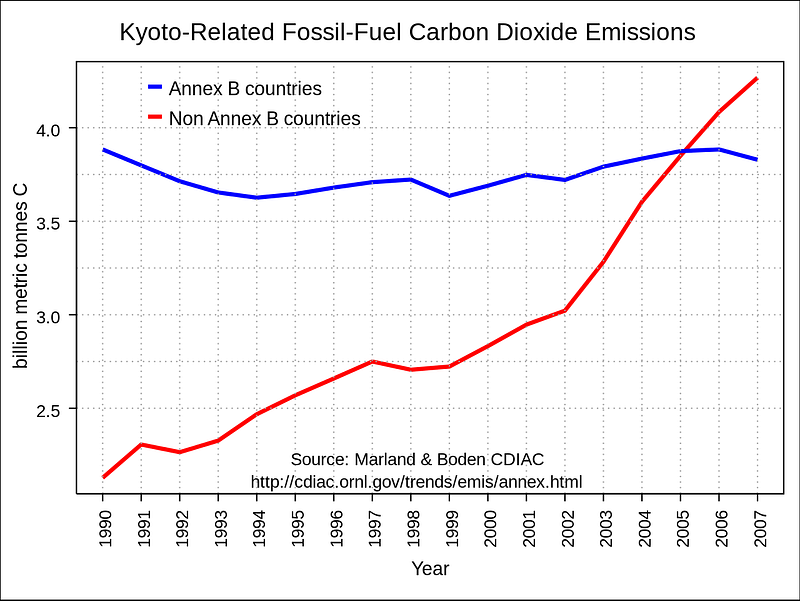
From their track record, it is clear that the powers that be are too unwieldy — or spineless — to bring about the rapid transition we need to stave disaster. It’s been twenty years since many of the world’s leaders adopted the Kyoto Protocol to reduce greenhouse gas concentrations and here’s what they’ve accomplished:
Pretty grim, I know.
What then?
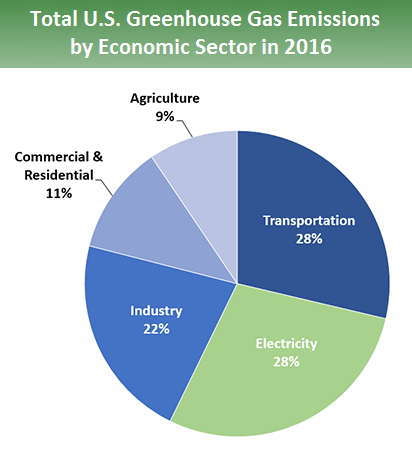
I decided to find out what the largest sources of greenhouse-gas emissions are, and then figure out what the average Joe can do about it.
Ok.
Since I cannot afford an electric car nor house on which to install solar panels and double-pane windows, I focused instead on Industry and Electricity which constitute 50% of the problem.
The Industry sector produces the goods and raw materials we use every day and its main emissions are produced by burning fossil fuels for power or heat. So stop buying unnecessary stuff, and don’t upgrade my iPhone5. Ok, Check!
The Electricity sector emissions are also released when burning fossil fuels, such as coal, oil, and natural gas.
Burning fossil fuels, then, is the common denominator; the main culprit, and the most carbon intensive fossil fuel out there is coal. In the electricity sector alone, coal accounts for 67 percent of CO2 emissions yet only generates about 30 percent of U.S. electricity.
What now? Call Rob Murray, Coal-Boss of Murray Energy, and rant?
Good luck with that too. Murray is the guy who reportedly presented Trump with a plan to overturn the classification of carbon dioxide as a pollutant.
I think I have a better idea.
Instead, let’s contact the person in charge of our 401K or pension plan to instruct him/her to divest our portfolios of anything having to do with coal and switch those investments to companies which are leading the pack in energy efficiency and renewable energy. Or, if you live, say, in Norway, Abu Dhabi, Kuwait, Saudi Arabia, or China, call the officer who manages your country’s sovereign wealth fund and tell him the same thing (Okay, maybe not China).
Retirement accounts and foreign investors — primarily sovereign wealth funds — own close to three-quarters of U.S. corporate stocks. They control the spigots that flow with the capital companies need to invest and grow.
If we all wiped our portfolios clean of coal, we might have a chance.
Desperate times call for stealthy measures.
Once the CEO’s of these companies see their capital flows run dry and stocks plummet, they might wake up and move towards more efficient technologies. After all, they should know that they are not in the coal business per se, but in the energy business. All they need is some imagination and a little push to evolve.
As for those employed in the sector, governments must step-in to ease the transition. A combination of a temporary guaranteed income and intensive retraining should work. The U.S., for example, employs about 80,000 workers in the coal industry. At the country’s median income, the country would need to come up with about $5 billion to cover a year’s worth of salaries. If the U.S. government has $3.1 billion to spare on vacation for federal employees placed on administrative leave, I’m sure it can make this work.
For all other investments in your 401K or pension plan portfolio, make sure the companies you are supporting are aligned with your values by becoming a conscious investor as Vinay Shandal suggests in his humorous TED talk.
Margaret Mead famously said we should “never doubt that a small group of thoughtful, committed citizens can change the world. Indeed, it’s the only thing that ever has.”
Rachel Carson published ‘Silent Spring’ in 1962 as a warning to the nation about the adverse effects on the environment of the indiscriminate use of pesticides. Silent Spring was met with fierce opposition by chemical companies but spurred a reversal in national pesticide policy, led to a nationwide ban on DDT for agriculture, and launched the environmental movement.
In 1965, geochemist Clair Cameron Patterson tried to draw public attention to the problem of increased lead levels in the environment and our food chain. In his effort to ensure that lead was removed from gasoline, Patterson fought against the lobbying power of the Ethyl Corporation and against the lead additive industry as a whole. Following Patterson’s clarion call, he was refused contracts with many research organizations, including the United States Public Health Service. In 1971, he was excluded from a National Research Council panel on atmospheric lead contamination, even though he was the foremost expert on the subject. But he persisted, and by 1975, the United States mandated the use of unleaded gasoline resulting in the phaseout of lead from all automotive gasoline by 1986. Lead levels within the blood of Americans dropped by up to 80% by the late 1990s.
“The world is not dangerous because of those who do harm but because of those who look at it without doing anything” — Albert Einstein
Inspired by these courageous figures, I mailed my ‘No More Coal’ letter to my pension fund.
It’s my tiny drop in the bucket.
How about adding yours?
Hurry though, because we’re running out of time.
But before you go, join my mailing list to receive more bold ideas.


