
Were Most Great Writers Drunks?
I looked into this question.
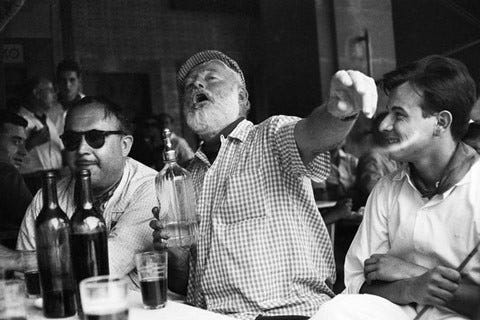
“Alcohol becomes a weapon to kill something inside … a worm that would not die.” Baudelaire of Edgar Allan Poe
“I think I’d write better if I drank more!” a writer friend texted me today.
Lori (not her real name) has been having horrible insomnia lately. She hasn’t been able to get more than a few hours of sleep a night. She wakes up at 3.30 and 4 a.m then says screw it and stays up the rest of the day which she says is fucking with her mental and creative capacities.
She said, ‘I’m just sooooo damn tired I can’t think straight lately. I feel like I have a fatigue hangover every morning — but, hey, didn’t a lot of writers and authors do some of their best work drunk or stoned or tired?”
Hmm. I dunno…best work while drunk?
My friend went on, “This is a great question. We should Google it but — what do we ask Google?” I Googled this:
“Were most great writers drunks?”
Nothing came up. I did find this from Dr. Lawrence Samuel:
“Alcohol (and alcoholism) has been a defining feature of literary life in this country, with some research showing a clear link to writing and drinking that may be neurologically based. Other countries had their fair share of literary drunks, but writing and drinking were almost synonymous in 20th century America. Booze “has come to seem a natural accompaniment of the literary life, a symbol of the profession’s “loneliness, creative aspirations, and frenzies.”
OK. So alcohol and writers go hand in hand. That isn’t a big surprise.
I read on:
“Sinclair Lewis, Eugene O’Neill, and William Faulkner were either alcoholics or compulsive drinkers for much of their lives, and both Hemingway and Steinbeck each hit the bottle hard. The list seemed to go on and on.
Fitzgerald and Ring Lardner were alcoholics (and each died in their forties), as were Jack London and John Berryman (each a suicide). Hart Crane had a drinking problem (and killed himself), as did J.P. Marquand, Wallace Stevens, E.E. Cummings, and Edna St. Vincent Millay.”
SHIT! OK, I get it. Many great writers have been alcoholics. Many were total drunks, others were just social drinkers (not flaming boozers) and others I’m sure were sloshed when they wrote their manuscripts and/or masterpieces.
But what I wanted to find out was:
- Does alcohol HELP your writing?
- Does alcohol HINDER your writing?
- Is alcohol UNRELATED to your writing?
Another fascinating question to me is:
Do some writers do their BEST WORK while intoxicated? Does intoxication actually help them create better work??
Yesterday I mentioned I was researching this subject to another writer friend who is a college professor. She has studied the history of authors and books. She said,
”Dontcha know MOST of the great writers were drunks!?”
“Wow. MOST? Why do you say MOST?”
“Well. They had time to...think.”
I laughed. “They did…? How did they get so much time to think? Were they independently wealthy or have a sugar daddy or...or…?”
I still don’t have an answer to this. More than that I was curious about her comment that — MOST great writers were drunks.
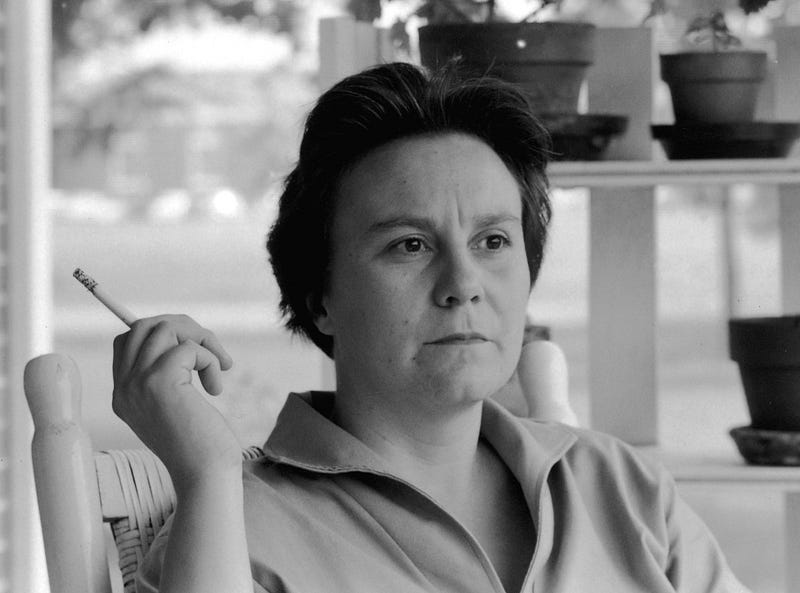
She gave me a few examples like Harper Lee who wrote just one book To Kill A Mockingbird, but then could never write another. She drank a lot because of it. My friend explained, “She tried but then destroyed her work and never wrote another book. She used to knock on her neighbors’ doors at 3 am asking for vodka after she drank all she had…”
Ohhhh. I never knew this.
Here’s more on Harper Lee from a New Yorker Magazine article:
“It was easy enough to forget about Harper Lee in those days. To Kill a Mockingbird had come out eighteen years before in 1960, and in all that time Lee had published almost nothing else. Three short essays for two glossy magazines, two tiny profiles that were favors for her friend Truman Capote, one satirical recipe for crackling bread in a novelty cookbook: in nearly two decades, that was the only writing she had put into the world.
No second novel had followed the first, and she hadn’t given an interview in fourteen years.
The last time she had so much as agreed to be quoted in print was another favor for Capote. In 1976, he had asked Lee to sit with him during an interview for People, which was running a profile of him. She had said a total of twelve words on the record, seven of which were, “We are bound by a common anguish.”
Here is a list of just some writers who were confirmed, alcoholics.
(Yes there are so many more than this list. My boyfriend said “Hey, you could look into Mary Shelley who wrote Frankenstein and even Shakespeare who was known to be a bit of a drunk. Oh, and the author of Sherlock Holmes and — Carrie Fisher”. Hmm. Ok OK, that’ll be for another article.)
For now, here’s my list:
1. Hunter Thompson
Hunter Stockton Thompson (July 18, 1937 — February 20, 2005) was an American journalist and author, and founder of the Gonzo Journalism movement. He first rose to prominence with the publication of Hell’s Angels (1967), a book for which he spent a year living and riding with the Hells Angels motorcycle gang in order to write a first-hand account of the lives and experiences of its members.
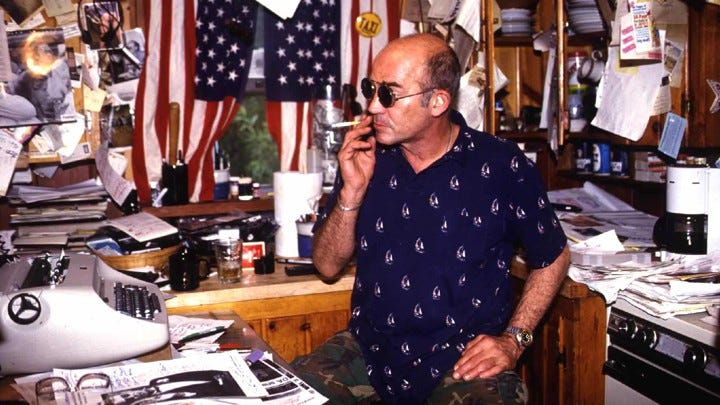
Thompson remains best known for Fear and Loathing in Las Vegas (1971), a book first serialized in Rolling Stone in which he grapples with the implications of what he considered the failure of the 1960s counterculture movement. It was adapted on film twice. — Wikipedia
It was well-known that Thompson was heavily into drugs and alcohol. I would bet he wrote this passage while wasted.
Wouldn’t you?
“We were somewhere around Barstow, on the edge of the desert, when the drugs began to take hold… the sky was full of what looked like huge bats… We had two bags of grass, 75 pellets of mescaline, 5 sheets of high powered blotter acid, a salt shaker half-full of cocaine, a whole galaxy of multi-colored uppers, downers, screamers, laughers, also a quart of tequila… a pint of raw ether, two dozen amyls… once you get locked into a serious drug collection the tendency is to push it as far as you can. The only thing that really worried me is the ether. There is nothing in the world more helpless and irresponsible and depraved than a man in the depths of an ether binge.”
Juan Thompson, Hunter’s son describes his father as “an alcoholic and drug fiend, a wild, angry, passionate, sometimes dangerous, charismatic, unpredictable, irresponsible, idealistic, sensitive man with a powerful and deeply rooted sense of justice.”
2. John Cheever
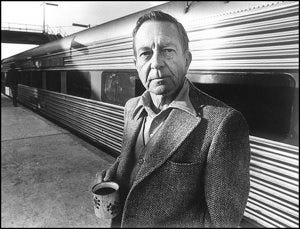
John Cheever (May 27, 1912–June 18, 1982) was an American novelist and short story writer, sometimes called “the Chekhov of the suburbs” or “the Ovid of Ossining.” A compilation of his short stories, The Stories of John Cheever, won the 1979 Pulitzer Prize for Fiction.
A combination of his extreme alcoholism and inability to cope with being bisexual, Cheever sought the advice of a therapist who said: “[Cheever] is a neurotic man, narcissistic, egocentric, friendless, and so deeply involved in [his] own defensive illusions that [he has] invented a manic-depressive wife.”
He eventually won the battle against alcohol and began a relationship with a male student. Some theories are that he never resolved his homosexuality which added to his alcohol abuse.
3. Dorothy Parker
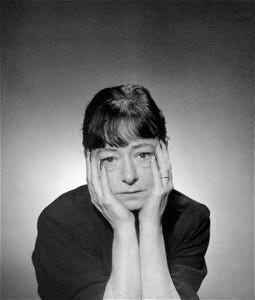
Dorothy Parker (August 22, 1893 — June 7, 1967) was an American writer and poet, best known for her caustic wit, wisecracks, and sharp eye for 20th century urban foibles. Parker survived three marriages (two to the same man) and several suicide attempts, but grew increasingly dependent on alcohol. Although she would come to dismiss her own talents and deplore her reputation as a “wisecracker,” her literary output and her sparkling wit have endured long past her death. — Wikipedia
During her later years, Dorothy Parker committed herself to a sanitarium so that she could “dry out” which was the term used back in the day.
Parker told the doctor that she loved the room but that she needed to get out of the hospital every hour or so, for a drink at the local bar. The doctor told her that if she continued drinking the way that she did, she would be dead within 30 days. Parker wryly responded with, “Promises, promises.”
Shortly after she left the hospital, which provided primitive forms of detox, she fell off the wagon. During her hospital stay, she probably suffered from horrible withdrawals, as was the case with many alcoholics who went into sanitariums back then.
4. Margarite Duras
Marguerite Donnadieu, known as Marguerite Duras, was a French novelist, playwright, screenwriter, essayist, and experimental filmmaker. Her script for the film Hiroshima mon amour earned her a nomination for Best Original Screenplay at the Academy Awards. — Wikipedia
Marguerite’s work was said to be elegant, experimental, impassioned, incantatory and visually striking — almost hallucinatory in its appeal to the senses, its rhythmic force.
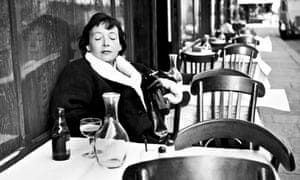
Margaurite Duras had been an alcoholic, she figured, from the moment of her first drink.
Sometimes she managed to stop for years at a time, but during her bingeing periods she’d go all-out: start as soon as she woke up, pausing to vomit the first two glasses, then polishing off as many as eight liters of Bordeaux before passing out in a stupor.
“I drank because I was an alcoholic,” she told the New York Times in 1991. “I was a real one — like a writer. I’m a real writer, I was a real alcoholic. I drank red wine to fall asleep. Afterwards, Cognac in the night. Every hour a glass of wine and in the morning Cognac after coffee, and afterwards I wrote. What is astonishing when I look back is how I managed to write.”
What is also astonishing is how much she managed to write, and ‘how fine most of it was’, said a critic.
5. Elizabeth Bishop.
Elizabeth Bishop (February 8, 1911 — October 6, 1979) was an American poet poet and short-story writer. She won a Pulitzer Prize for Poetry in 1956. She was Consultant in Poetry to the Library of Congress from 1949 to 1950, the Pulitzer Prize winner for Poetry in 1956, the National Book Award winner in 1970, and the recipient of the Neustadt International Prize for Literature in 1976. — Wikipedia
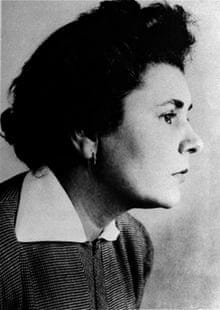
Elizabeth Bishop lived a tragic life although very gifted.
Shame was one of the central drivers in her drinking regarding her sexual identity: first, the internalized shame she carried from her childhood and, later, the shame that followed her own appalling binges.
Her requested epitaph, the last two lines from her poem “The Bight” — “All the untidy activity continues, / awful but cheerful.”
6. Truman Capote
Truman Capote (30 September 1924–25 August 1984) was an American writer whose stories, novels, plays, and non-fiction are recognized literary classics, including the novella Breakfast at Tiffany’s (1958) and In Cold Blood (1965), which he labeled a “non-fiction novel.”
After Truman was arrested for drunken driving on Long Island, he went to Silver Hill, an expensive clinic in Connecticut for alcoholics. He could stay off the booze for three or four months, and then he went back on it.
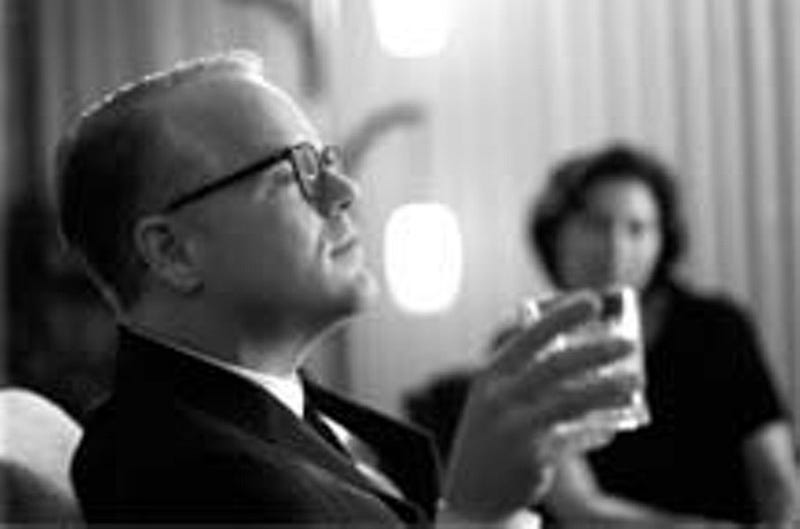
He appeared on talk shows drunk and rambling. While Capote was writing In Cold Blood, he would have a double martini before lunch, another with lunch and a stinger afterward.
“I drink because it’s the only time I can stand it.” — Truman Capote
7. Jack Kerouac
Jack Kerouac (March 12, 1922 — October 21, 1969) was an American novelist, writer, poet, and artist. Along with William S. Burroughs and Allen Ginsberg, he is amongst the best known of the writers (and friends) known as the Beat Generation. Kerouac died on October 21, 1969, at the age of 47, resulting from an internal hemorrhage caused by cirrhosis of the liver, the result of a lifetime of heavy drinking. — Wikipedia
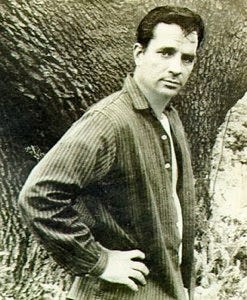
“As I grew older I became a drunk. Why? Because I like ecstasy of the mind.” Jack Kerouac
8. Jack London
John Griffith London was an American novelist, journalist, and social activist. A pioneer in the world of commercial magazine fiction, he was one of the first writers to become a worldwide celebrity and earn a large fortune from writing. — Wikipedia
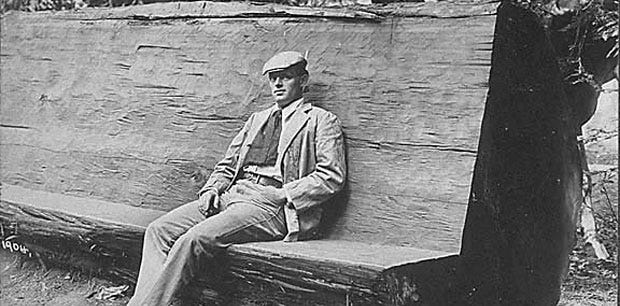
“I began to anticipate the completion of my daily thousand words by taking a drink when only five hundred words were written. It was not long until I prefaced the beginning of the thousand words with a drink.” Jack London
9. Anne Lamott
Anne Lamott (born April 10, 1954) is an American novelist and non-fiction writer. She is also a progressive political activist, public speaker, and writing teacher. Her nonfiction works are largely autobiographical. Marked by their self-deprecating humor and openness, Lamott’s writings cover such subjects as alcholism, single-motherhood, depression and Christianity. — Wikipedia
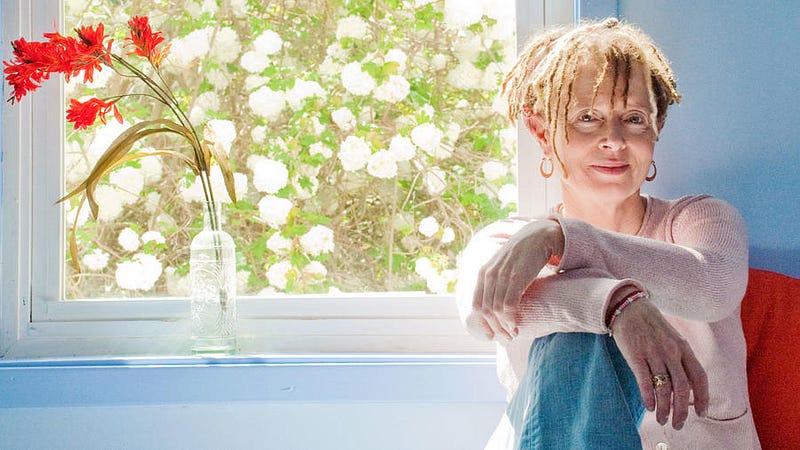
I love Anne Lamott. At the height of her success and popularity, she admitted to being ‘drunk as a skunk every day”.
“I was 32, with three published books, and the huge local love of my family and life-long friends. I was loved out of all sense of proportion. I gave talks and readings that hundreds of people came to. I had won a Guggenheim Fellowship, although, like many fabulous writers, I was drunk as a skunk every day. I was penniless and bulimic, but adorable, and cherished.
But there was one tiny problem. I was dying. Oh, also, my soul was rotted out from mental illness and physical abuse. My insides felt like Swiss cheese until I had that first cool, refreshing drink.”
So it’s obvious great writers of the 20th century struggled with addictions to alcohol.
Some believe that this may have contributed to their great artistic abilities, while others believe that the alcohol served as a medication for other problems in their lives.
This gets me back to my original 3 questions. First:
1. Does Alcohol Help Writing?
Some feel that alcohol helps get rid of inhibitions, and maybe this helps some people write the truth, or frees the imagination to write crazy things.
Alcohol helps many writers write, or survive the writer’s life. Alcohol can also make people funnier, wittier and more attractive — or at least it seems that way after a few drinks.
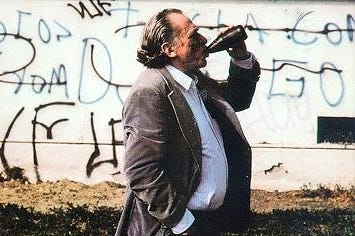
Alcohol can give false confidence that helps someone get through a situation that might be daunting. Many writers are shy or under-confident so it may help in this situation.
2. Does Alcohol Hurt My Writing?
“When I took up writing seriously, I gave up drinking. For me the two simply can’t exist.” —G.M Barrett
“Write drunk, edit sober” is a quote popularly and falsely attributed to Ernest Hemingway. But, it wasn’t true. Hemingway wrote clearly and truly in the sober light of dawn.
What he did in the afternoon was his business; He did not believe in combining the two.
Stephen King in his wonderful memoir “On Writing” talks about his recovery from alcohol and drug addiction. He almost lost his family during that time but managed to give it up, and continues to write bestsellers.
He said,
“From this perspective, alcohol steals time and your true self. Your health, as well as your relationships, can suffer. You may write things that perhaps you shouldn’t share, especially in these days of instant publication through blogs and social networks.”
A writer on Quora added this:
“I have found that anything serious I have ever tried to write while under the influence has made me a huge fan of myself and my golden pen as my brain churned out priceless nuggets of wisdom achieved through incredibly dramatic pathos. In the morning, of course, that all turned to rubbish as I kicked away the glass slipper that never really fit the false princess.”
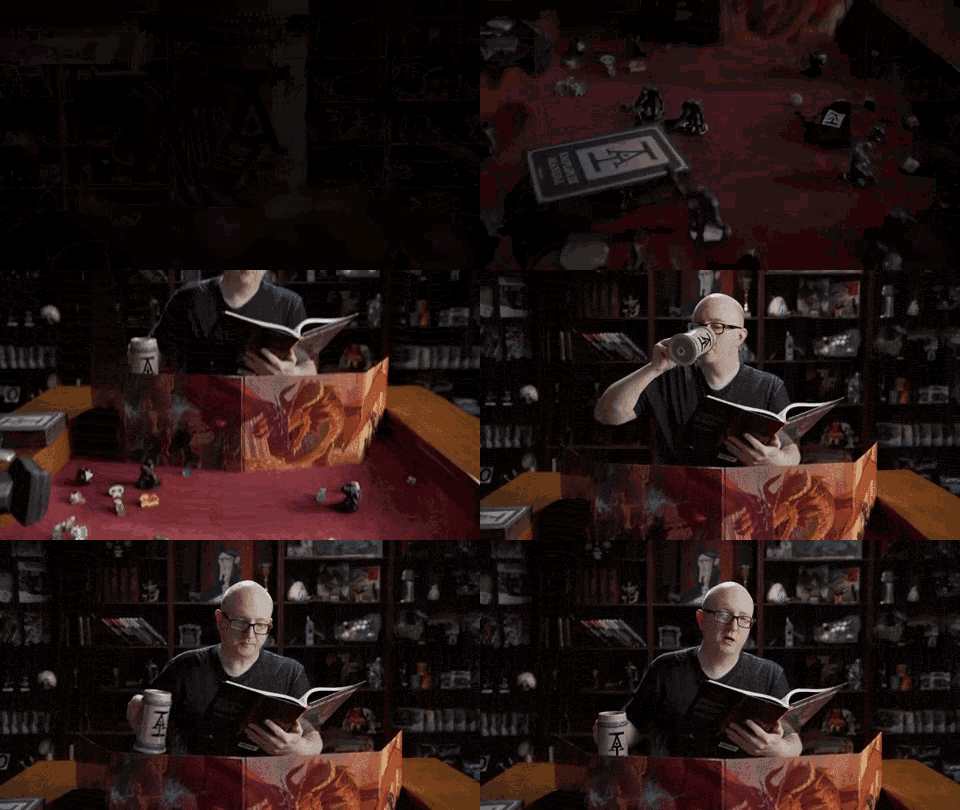
Joanna Penn from the online writing blog Creative Penn says this:
“Great writers suffered terrible things because of drinking, and several of them died of it. That seems like too much of a trade-off to me, even if you think alcohol does help creativity.”
3. Is Alcohol Unrelated to Writing?
Obviously, alcohol is not a prerequisite to becoming a writer. Here are some famous writers who were not alcoholics:
Nathaniel Hawthorne, Mark Twain, Mary McCarthy, Upton Sinclair, Emily Dickinson, Henry Thoreau, Zane Gray, Ralph Waldo Emerson, Saul Bellow, William Golding, Robert Frost, Edith Wharton, Willa Cather, James Michener, Lillian Hellman, Tom Wolfe, and Flannery O’Connor. Of course, there are so many more!
Nobel Prize winner for Literature William Faulkner said he did not drink while writing and that drinking did not help the creative process. He drank as a pressure release from daily life so it was separate from his writing.
Some say you can have a few drinks without it affecting your writing or your life. It can be a pleasure, if not abused.
Finally, I asked a few of my writing friends their take on this subject. Here are some of the varied responses I got:
I’ve had some funny insights with a couple of beers…!
I gave up drinking over a year ago as it really curbed my creativity. Although it relaxed me, all creativity vanished
I think you can drink too much to be a writer. You have to know when to say when. You’ll think your writing is awesome but it’s actually drunk words.
I believe that writers who claim to enjoy (or even need) alcohol to help them write are just so-called “functional alcoholics” who fool no one but themselves. We only notice the few exceptions to this rule so much because they have woven alcoholism into their own perceived mythos and eccentric character (both of which are bullshit) and have, despite all odds, managed to let extreme genius bubble up through the wine. Such artistes are often short-lived and in the end disposable as humans.
Most great artists were manic depressives did drugs and alcohol. It must be that side of the brain that take over. Left side? I think it has something to do with that.
I don’t know if it made my writing better but it seemed to make it easier to get started and quiet the inner critic
Alcohol only helps the perfectionist; to silence his inner critic so that he can write
“If I was going to medicate and write, I think I would prefer weed.”
Thanks for reading. contact: [email protected]
Michelle Monet has published 5 non-fiction books including 4 Poetic Memoirs. Her upcoming Memoir is about her life in show business. She is also writing a Broadway style Musical based on her life story.
SOURCES: