
Welcome to Your Intellect — Exploring the Sense Organ of Reality
Let me introduce you to an essential part of your being.
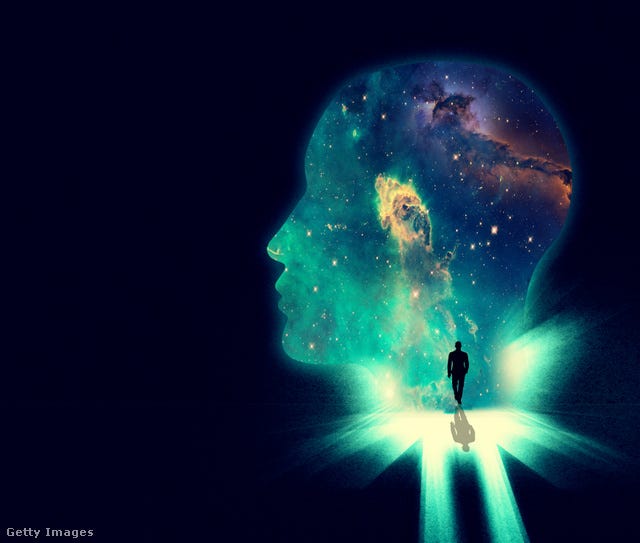
The human intellect is the capability of a human mind to generalize experiences, to work with abstract terms, and to make conclusions from assumptions. This complex concept enables us to make observations, organize pieces of information and form associations, and thus understand ourselves as well as our relationship with the outer world.
Without my intellect, I would not be able to write this article and you without yours would not be able to read my words. It is the abilities of our mind that make us human.
The complexity of the concept stems from the fact that it can be approached from several points of view, and although each approach looks at human intellect from a different angle, they all point in the same direction and define the very same entity.
“Just like an object with a complex structure that cannot be fully understood from a single point of view, the human intellect must be examined from different perspectives in order to get a complete picture of what it really is”, philosopher Balázs Török-Szabó notes in his book about the practice of improvement. So let’s have a closer look at our understanding.
We perceive reality through our intellect
Our experience of reality is based entirely on sensory information reaching the brain from outside and inside the body. Since it connects and encapsulates the five senses through which everything from the outside world reaches the individual, the intellect, from a certain point of view, is the sense organ of reality.
When a person experiences something of reality through his senses, he perceives that as pieces of information. In other words, this also means that the intellect is through which the individual is able to see information in reality. Furthermore it is able to see possibilities in information.
Intellect perceives reality as pieces of information.
Information always carries possibilities — possibilities for action, change, experience. That is why we can also look at intellect as the sense organ of possibilities.
Information is broken down by our intellect into physical, mental and emotional notions — the basic units of thinking. From this standpoint, the intellect functions as a transforming principle.
After breaking down information into different kinds of notions, the intellect organizes, moves, rearranges and connects these basic elements in the process of thinking. Because of its controlling the thought process, the intellect is an arranging principle and a driving force.
Rearranged notions can then be transformed into pieces of information (this is, again, the transforming function of the intellect), and new information can be brought into reality through actions. This is how our intellect affects reality, and this is another reason why it can be considered as a driving force.
In the process of thinking, the intellect is able to recognize correlations –– and form new associations. Through experience and will, it can create connections between itself and its environment. From this point of view, the intellect is not only able to create connections, but is also a nexus itself.
The intellect is the connection between reality and the individual.
Since it encompasses all the aforementioned operations, the intellect is a process, a continuous movement. Besides being implied, these organizing processes are also controlled by the intellect, that’s why we can call it a directing principle.
The human intellect has several abilities that build upon each other
- The intellect is able to make decisions.
- In decision-making, the intellect is able to carry out work. In this sense, work is a circular process in which the individual thinks and carries through his will based on his thinking –– as such, the individual performs an act in reality from which he gathers experiences and then delivers those experiences into his thinking so as to start another circle of thought. During the course of work, the individual affects reality with his actions, in other words, a change in reality takes place as a result of the individual’s decision, work and action.
- This effect or change in reality is called responsibility. Responsibility takes place in reality as the consequence of the individual’s actions. It is the individual’s ability to recognize and comprehend the information resulting from the change he made.
- Seeing the consequences of his actions can lead the individual to the realization that he is unique. The more decisions he makes, the more consequences he becomes aware of, and the more attention he focuses on himself, the more he will be able to see that he himself (the base of his decisions and actions) is unique. Unique to him. He is thereby able to see that he is independent. Independence is also an important ability of the human intellect.
- If the individual becomes aware of his uniqueness, he will be able to use his imagination independently, he can arrange his thoughts and reality in a unique way, thus he can establish his own value system. Based on his unique value system, the individual is able to create, that is bring things into existence.
- If the individual comes to the realization that he is unique, independent, and that he is able to make decisions, take responsibility, systematize information and create new things, he then becomes able to improve himself. This also means that the individual will not just suffer changes that happen to him, but initiate changes according to his intentions –– whilst being aware of what he is doing, and the fact that his actions have consequences and that he can gain new information from the consequences.
Yes, you, too can do all this work due to your uniqueness. Sounds promising, doesn’t it?
In Summary
Intellect is a transformative and organizing principle, a driving and acting force, a process and a connexion.
And from my personal point of view? I believe the human intellect is the birthplace of a great deal of wonderful realizations and innovations that can help us become a better person –– for ourselves and for others. Provided that we are willing to use our abilities and put effort into the project of IMPROVEMENT.
Improvement, the ability of the intellect to change consciously, to organize independently, and thus shape itself as well as the outside world, is another complex concept that is worth clarifying in order to be able to put it into practice. That’s what I am planning to do in the near future so stay tuned for my upcoming articles if you’d like to know more about your abilities and understand the five pillars of self-development.
References:
- https://www.sciencedirect.com/topics/computer-science/human-intellect
- Balázs Török-Szabó: A teória (The Theory — it will soon be available in English as well), A teoretika (The Theroetics), A fejlődéspraktika (The Practice of Improvement)
- https://www.psychologicalscience.org/teaching/myth-we-are-in-touch-with-reality.html
If you enjoyed reading this piece and would like to support my blog, consider buying me a bowl of salad here!


