
Welcome The New YouTube Of 2020

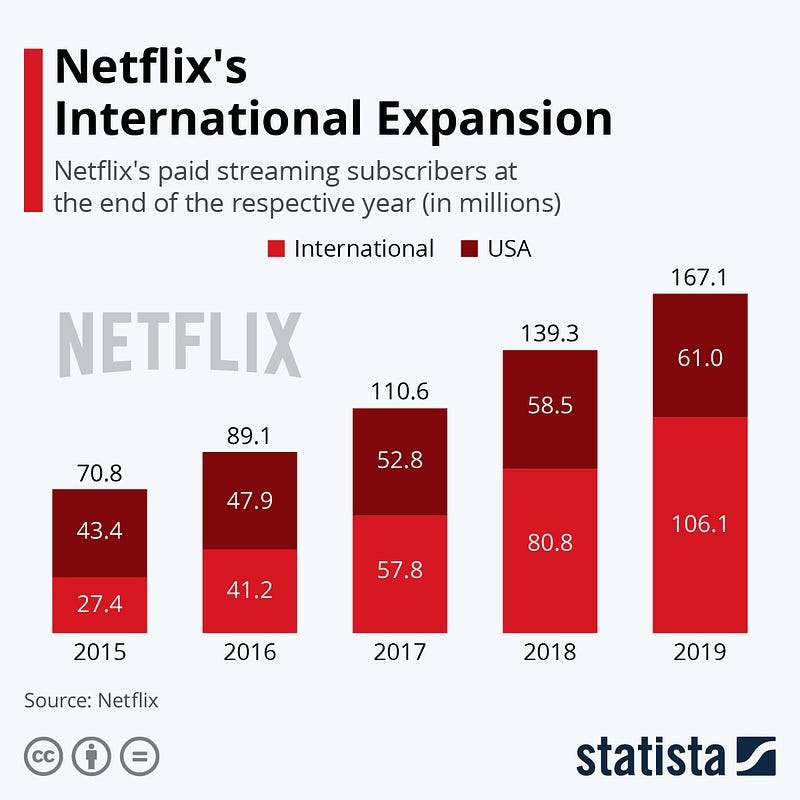
Well, who doesn’t know YouTube? What started off as a video-sharing website where users could upload, share and view content has turned into one of the paramount ways we consume video content. As of 2020, Netflix has over 182 million paying streaming subscribers worldwide, which is another 14 million subscribers added from the previous year. That’s quite the leap.
YouTube has undergone some major changes through their lifespan. Most of these changes have been carried out under the radar, and we can’t really define with certainty how YouTube actually pays out. If they weren’t already racking up enough money, they recently launched a new advertising strategy to boost their revenues further.
Now what is this strategy?
It works something like this…
Strategy: CPM vs CPC
Now, you may have to watch two adverts on some monetized videos instead of one. This transition took place right at the end of 2019. YouTube usually implements this on videos which generate a large traffic of viewers and in countries that have a lower Cost-per-Mille (CPM). Yes, that’s “Mille”. CPM focuses on a certain goal, which is the number of views. Once this goal is reached (based on YouTube’s criteria) you get paid more.
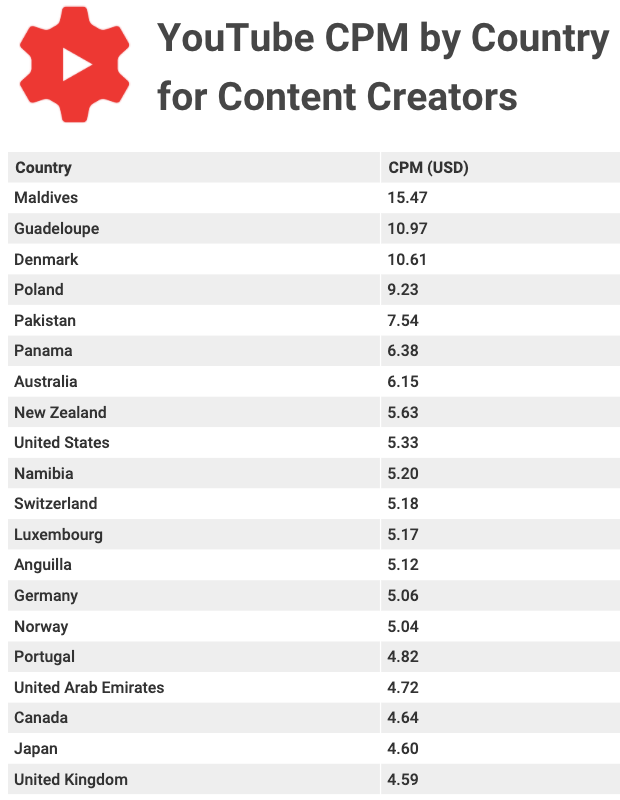
This strategy is a lot different from their original usage of the Cost-per-Click (CPC) system, which represents the amount of revenue derived from every click on the ad. Living in Canada, the CPM rate over here is around $4.64, which is fairly low when compared to the other countries.
Confused yet? I wouldn’t blame you.
For better understanding, here’s a screenshot illustrating some of CPM rates of top countries around the world.
Dual Revenue Streams
YouTube quickly realized the potential CPM possesses, and chose to adopt this strategy to generate revenue in the following two ways:
- Streaming an additional advert on some monetized videos; and
- Pushing the need for an upgrade to YouTube Premium since it offers ad-free video streaming.
Being a consumer, you don’t really have a choice anymore because you would generate revenue for YouTube regardless. Either by watching the ads or shelling out cash to pay the monthly subscription for YouTube premium for an ad-free viewership experience.
YouTubers often receive a certain grade ranging from F to A++ based on the impressions (likes/dislikes) their videos generate. Those videos with a higher grade and, in theory, a higher demand, are chosen to be given two adverts before the start of the video. This is also conducted in accordance with the CPM of the country the video is being watched in.
In 2019, on average, an A-grade YouTuber made $3 for every 1,000 views (without skipping). So, you can only imagine how much the ones that are above Grade A (A+ and A++) make. However, there are only a handful of them that make the cut.
Generally, if the video is being viewed from a country with a low CPM rate, then viewers there would not face two adverts. Arguably, this depends on the number of views generated from that country.
Personally, I think it is an ingenious marketing strategy as the demand keeps growing, which further influences the quality of content produced by these content creators, that can positively influence their revenue streams.
User Awareness
YouTube consumers are yet to register this change, but I became aware of it as YouTube has taken prime position in terms of my source of exercise, research, and visual entertainment.
We also need to take into consideration that many children are watching cartoons and/or other educational videos on YouTube now. They could sometimes leave their devices unattended, which means that ads keep playing between videos and YouTube keeps raking in revenue. The revenue generated here acts as a form of indirect revenue as the service is still being used, but not watched (if that makes sense).
YouTube Premium seems to be gaining popularity, as many people are purchasing this service. Why? Since there seems to be quite a massive population around the globe that still uses YouTube to stream music. Don’t worry, no judgements here since I tend to do the same from time to time. This clearly supports the reason behind people choosing to pay the extra subscription free for premium services.
Marketing Perspective
When analyzed from a marketing perspective, YouTube demands quality content from its content creators, which drives traffic on the website. Well, obviously, that explains the millions of users. But what’s interesting is that this creates an almost perfect butterfly effect that generates demand and traffic, and therefore — revenue.
YouTube also focuses their efforts on providing personalized advertisements. These ad campaigns have really taken off and are better welcomed by the end users. However, that’s a conversation for another time.
I would like to conclude by leaving you with the most watched YouTube video of all time, which has over 6.7 Billion views on YouTube — Despacito by Luis Fonsi featuring Daddy Yankee.
Was the experience ad-free?
If not, you could always upgrade to YouTube Premium.


