
Lose Weight with Low Carb, Keto, Intermittent Fasting, or TRE
Weight Loss: It Could Be Possible to Avoid Insulin by Losing Weight
I had elevated glucose levels and didn’t know until I had an operation for an unrelated condition.
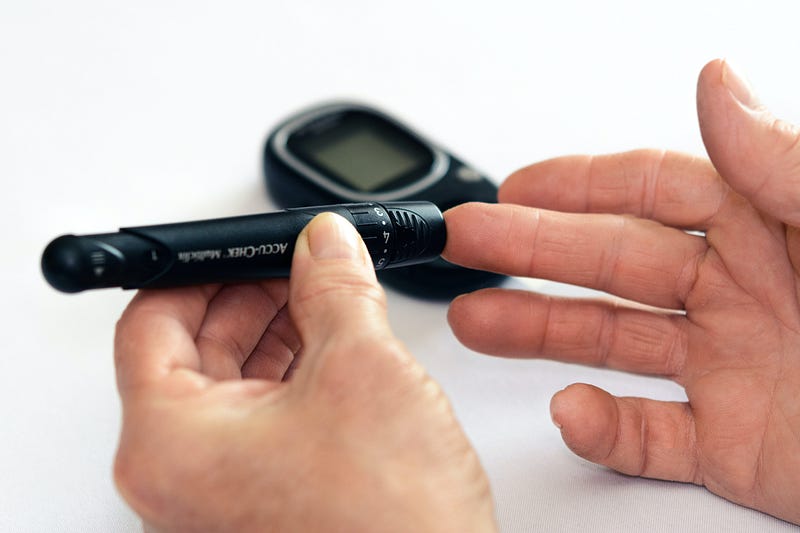
The National Center for Health Statistics stated in an article, Obesity and Overweight, 39.8% of Americans are not just overweight, but obese. That same study shows that around 67% are overweight.
An even more alarming statistic is that nearly 10% are living with diabetes. Estimates from the Centers for Disease Control (CDC) indicate another one-third might have high blood glucose or diabetes and not even know.
That was the case with me. I had elevated glucose levels and didn’t know until I had an operation for an unrelated condition.
I used similar statistics in that article, and whereas, I don’t want to keep harping on these statistics, it hit really close to home for me. Several members of my family are diabetic and my A1C was borderline.
That kind of scared the shit out of me. I’ve watched some of my family members inject insulin before meals, and I have a brother-in-law who had a toe amputated because of diabetes. That was not the life I wanted if I could help it. So, I started digging and found that although I could wind up injecting insulin, it didn’t have to be that way.
There Is a Clear Link Between Weight Loss & Diabetic Remission
Although diabetes frequently leads to insulin injections before meals, lower leg infections and amputation, cardiovascular (CV) disease, diabetic neuropathy, blindness, and kidney problems, it can be reversed.
Those with diabetes are nearly 25 times more likely to have an amputation of their lower leg than one of their peers. Likewise, the leading source of death from CV disease is diabetes.
Dambha-Miller, Strelitz, Day, and others discovered some excellent news during a study supported and financed by the National Institute of Health Research (NIHR). This study showed there was a definitive link between diabetic remission and a 10% body weight loss during the first year after diagnosis.
Results recorded by researchers point to those patients with a high HbA1C serum at screening were able to reverse those numbers with a change in diet and exercise that led to a 10% weight loss within the first year.
One of the Leading Causes of Amputation Is Neurodermatitis
People with diabetes have to be careful of infections in their lower limbs, feet, and toes that could cause amputation. I have had Neurodermatitis for 40 years. Although it is not always caused by or related to diabetes, in my case, it is.
While I was in the military, most doctors had no idea what it was. In fact, many doctors are unfamiliar with it, nor even know the cause. I use Dermovate ointment (a steroidal anti-inflammatory) to keep the skin moist and reduce itching. Scratching it will increase the possibility of infection.
In almost every one of the world’s high-income countries, diabetes is the leading origin of limb amputations, blindness, and CV disease. Accordingly, those with elevated glucose, overweight or obese, and those living with diabetes must monitor their sugar levels.
Know the Numbers
Those with elevated glucose should monitor and record their blood sugar levels. I do this every Monday, Wednesday, and Friday, but you should follow your doctor’s recommendation.
Some other things to monitor are:
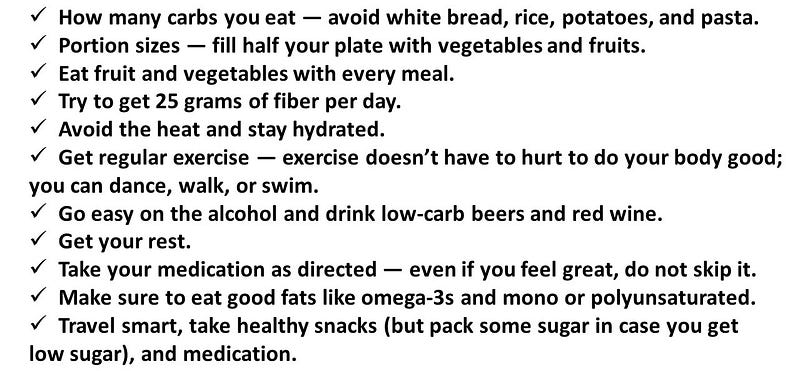
Watching those could help you avoid insulin.
The Study Guidelines
Baseline numbers were established for each participant, including their previous diet, alcohol use, weight, and levels of physical activity.
The objective of the study was to establish if the theory of weight loss alone, without medication, would lead to remission. Also, the researchers hoped to confirm how much weight loss led to diabetic remission.
Their instructions to patients were to avoid alcohol, increase their physical activity within comfortable levels, and lose 10% of their body mass by cutting carbs and portion sizes.
When a patient weighed 250 pounds, for example, their first-year weight loss objective was to lose 25 pounds or more, avoid alcohol, and increase physical activity.
Implications & Takeaways
The study found that 30% of patients, 257 out of the 867 who lost at least 10% achieved remission without extreme caloric restrictions.
Many doctors and nutritionists advise using a low carb or ketogenic diet to achieve weight loss. However, ten-hour restrictive eating and intermittent fasting are two other methods to help you lose weight and keep it off.
Before starting any weight loss plan to achieve chances of diabetic remission, consult a doctor or nutritionist.
References:
1. https://www.ncbi.nlm.nih.gov/pubmed/32005673
2. http://www.diseaseinfosearch.org/result/2243
3. https://medlineplus.gov/weightcontrol.html
4. https://www.cdc.gov/nchs/fastats/obesity-overweight.htm
6. https://www.mayoclinic.org/diseases-conditions/neurodermatitis/symptoms-causes/syc-20375634
About Me
Stephen Dalton is a retired US Army First Sergeant with a degree in journalism from the University of Maryland and a Certified US English Chicago Manual of Style Editor. He is a freelance journalist currently living in the Philippines.
You can see his portfolio here. Email [email protected]


