
Weight Loss for Those Who Don’t Like Plans
It isn’t easy — but it isn’t complicated, either.
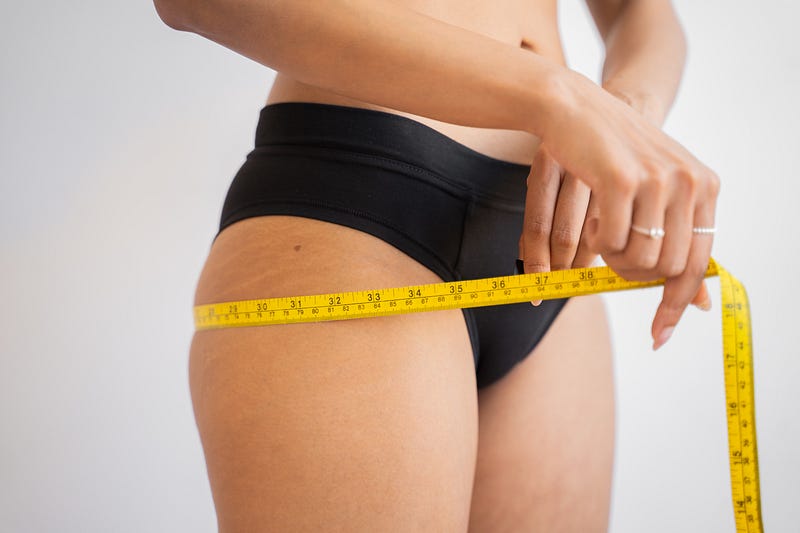
I’ve always liked the idea of being healthy, but I’ve never put in the effort. Don’t get me wrong, it’s on my list of priorities, it’s just that it’s a long list and this has always been down toward the bottom.
Throughout my life, I’ve tended to be a little up and down with my weight, but the older I get the harder it seems to shift. After a Christmas in lockdown, where overeating was the only available vice, I managed to get up to 14 and a half stone (that’s 203lb if you’re in America or over 92kg if you’re almost anywhere else).
The only other time I’ve been this heavy, I lucked out. I got a job in a warehouse that required a fair bit of lifting and carrying and a lot of walking. It didn’t take long before I was two stone lighter. This time, though, my circumstances have changed and I couldn’t see a way back without putting in some effort.
It Can Be Expensive — But It Doesn’t Have to Be
I panicked a little, I have to admit. Some people like to splash out on sports cars for their midlife crisis but I’ve never had that sort of money, so I settled for an exercise bike. The cheap ones are not cheap if you’re skint, but I felt it was the only decent exercise I could conveniently fit into my day.
Coincidentally, my partner bought me a Fitbit for Christmas. It wasn’t something I’d ever considered — again, they’re not cheap, and I thought they were only for joggers — but I thought I’d give it a go all the same.
This is not an insignificant outlay. But it took having both to realise I didn’t need either.
What the Fitbit Taught Me
I’ve known for a long time that there’s a general rule for calorie intake. Men, they say, should consume around 2,500 calories each day, while for women the number is 2,000. I knew these were only ball-park figures, but it never dawned on me just how wildly they can vary — and how much of this is in your own hands.
It makes sense, of course. We’ve all read stories where top athletes reveal the insane amounts they eat for breakfast every morning. They need it; they’re about to go out and burn an incredible amount. It stands to reason, then, that if us mere mortals have days where we do next to nothing, we probably shouldn’t be consuming as much as we do on other days.
The problem is, if I’m sat behind a desk or stuck in the house for whatever reason, I like to snack. It helps with the boredom (lifting your hand to your mouth is some sort of physical activity, right?) and food is usually to hand. What has helped, for me, is knowing exactly what impact my activities have — both good and bad.
The Fitbit helped to spell this out for me. Tracking your heartrate throughout the day, it estimates the number of calories you’re burning. It also gives you the option of counting the calories you eat, and produces a bar chart to compare. It points out that by burning 500 calories more than you eat each day, you’re likely to lose roughly half a pound each week.
I know, calorie counting is boring as hell. I don’t recommend it long term. But even paying attention for a week or two, just to learn which of your regular foods might be worth cutting back on, can make a real difference to your habits.
I used to cook with a lot of olive oil, but, while it might be healthy, it’s really high in calories. And I always used to wonder, is chocolate really that bad? Yes, depressingly, it is. I still eat chocolate, but I’ve learned to savour small amounts instead of smashing whole packs of whatever I fancy.
What really helped me was to think of everything as a trade-off. And perhaps the most important lesson was that in paying for any extra calories, everything helps. Moving upstairs with just a little more spring in your step, pacing up and down while taking a phone call, getting up from the sofa for no reason other than you haven’t moved in a while — it all increases your heartrate, which in turn increases the amount of calories you burn throughout the day.
It isn’t fair — running up a flight of stairs isn’t going to cancel out that chocolate bar, unfortunately. But if I want that bar, I make sure I’m on the move all day. If that’s not an option, or if I just don’t have the energy today, then I’ll skip the snack.
Once It’s On Your Mind, It’s Instinctive
I don’t pay much attention to all the charts anymore, because I know when I’m getting it right. It didn’t take long to learn that parking further away from the office or supermarket really does make a difference, especially if you up the pace and do it regularly. I even run to the kids in the next room when they call, rather than asking them to come to me, because it all adds up.
The bike often gives way to brisk walks, short aerobic workouts, a bit of shadow boxing or playing ball with the kids — it wasn’t long before I started craving exercise. Not necessarily the full-on exercise advocated by those in truly excellent shape, but movement of any kind — I’m just not as comfortable sitting still as I used to be.
In three months, I’ve lost over two stone (30lb/13.6kg). That might not sound like much to some people, but bear in mind I haven’t been going crazy. It’s just been on my mind, in the background, reminding to make sure I win the trade-off on far more days than I lose.
There Are Only Really Two Rules
This isn’t a comprehensive guide to weight loss. I’m sure there are more effective tips and advice to get you where you want to be. But I can’t see how anything could be more simple. And for me, that’s what I needed.
Really, it boils down to just two rules:
- Rule 1: Eat less
- Rule 2: Do more stuff
If you want to lose weight, you need to move more and eat less of those foods that are high in calories. It isn’t easy — of course you have to put in the effort — but it really is that simple.

You just read another post from In Fitness And In Health: a health and fitness community dedicated to sharing knowledge, lessons, and suggestions to living happier, healthier lives.
If you’d like to join our newsletter and receive more stories like this one, tap here.


