
Weighing the South China Sea Dispute Under Trump or Biden Leadership
World War III might be in the hands of the next U.S. president
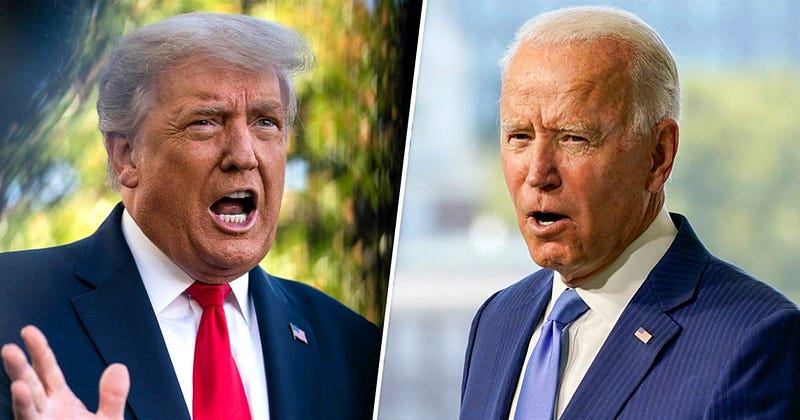
It is only a matter of days until Americans choose their next president. But as Election Day nears, we hear more and more about China. In the last debate of Donald Trump and Joe Biden, the South China Sea tension reemerged.
For six years, I have covered the South China Sea dispute. And in this article, I will explain the issue in layperson’s terms for easy comprehension. Weighing how the White House handled the South China Sea row in past years and its possible future in the hands of Joe Biden or Donald Trump.
The South China Sea Dispute
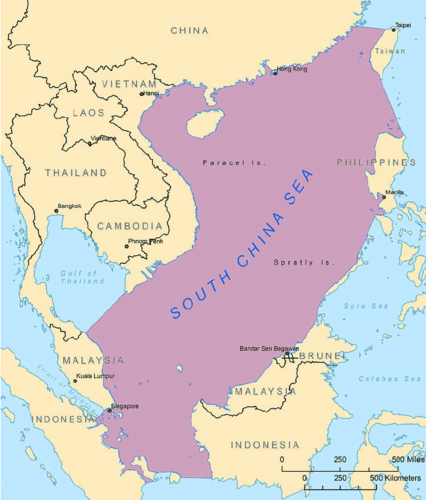
The South China Sea is a marginal sea located in the Western Pacific Ocean. It is crucial international water as it connects the East China Sea, West Philippine Sea, Sulu Sea, Java Sea, all the way to the Indian Ocean.
It is a region of tremendous economic and geostrategic importance. One-third of the world’s maritime shipping passes through the South China Sea, carrying over 5.3 trillion USD in trade each year. Oil and natural gas reserves are believed to lie beneath its seabed. Fisheries and aquatic resources are abundant as well, which is essential for Southeast Asia’s food security.
The water and territories’ claimants
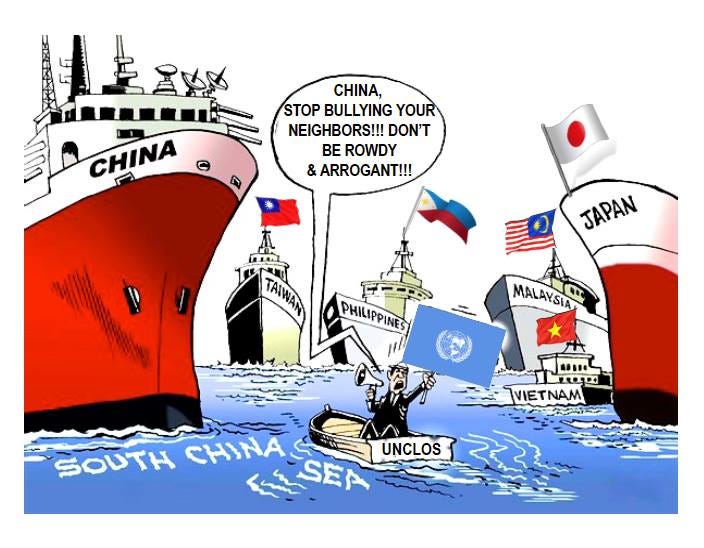
Due to its rich resources and strategic position, several nations surround it fighting for their fair share of maritime claims and territories. They are the Philippines, Vietnam, Indonesia, Malaysia, Brunei, Taiwan, and China.
To ensure these nations would not go into a war, the United Nations Convention on the Law of the Sea (UNCLOS) in 1973 and 1982 created an agreement with the participating countries. They settled official maritime boundaries of 200 nautical-miles Exclusive Economic Zone (EEZ) for each, and whatever resources inside their respective EEZs belong to them. Including islands, islets, shoals, atolls, or reefs — all claimants signed and agreed.
Claimants dispute
So, if boundaries are already settled, then why is there a dispute?
Unfortunately, the 200 EEZs only created overlapping claims among the petitioner countries. Not just in seawater limits but also in territories, some areas even have multiple claimants. Check the list below.
Territories: Paracel Island — Vietnam vs. China Scarborough Shoal — Philippines vs. China and Taiwan The Spratly Islands — China and Taiwan vs. Vietnam vs. the Philippines vs. Malaysia vs. Brunei Natuna Islands — Indonesia vs. China and Taiwan
What makes the South China Sea more complicated is because of one country — China. In 2009, Beijing released its nine-dash-line map, declaring they owned 90% of the area. Such a claim was amplified when Xi Jinping became the Chinese president in 2013.
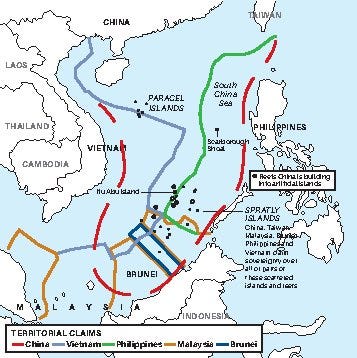
Beijing positioned itself as the “rightful owner” of the South China Sea by showing historical maps as pieces of evidence.
However, according to geopolitical expert Prof. Richard Heydarian, author of Asia’s New Battlefield, the UNCLOS agreement supersedes all previous historical claims of each nation, including China.
Thus, the Chinese signed the UN convention. Therefore, on paper it agreed that they don’t have full ownership of the region. Unfortunately, China is acting otherwise.
The United States Intervention
When Beijing announced its nine-dash-line claim, Washington, under former U.S. President Barack Obama declared “the U.S. pivot to Asia.” In a diplomatic sense, Washington was enriching its relationship to East Asia, particularly with the Southeast Asia nations.
From a defense perspective, it was the U.S.’s way of encircling their emerging “enemy” — China. The Pentagon started pulling out their troops in the Middle East and transferred them to East and Southeast Asia.
A similar tactic that Washington did during the Cold War when they contained Russia’s communism.
Provocation game: the Eagle vs. the Dragon
The U.S. reinforced its military assistance with Japan, South Korea, the Philippines, Singapore, Malaysia, Indonesia, and even patching things up with Vietnam. While Washington was implicitly maneuvering their “encircling China” tactic, Beijing didn’t back down. For the longest time of silence, Asia’s dragon finally awakened. And it became disruptive.
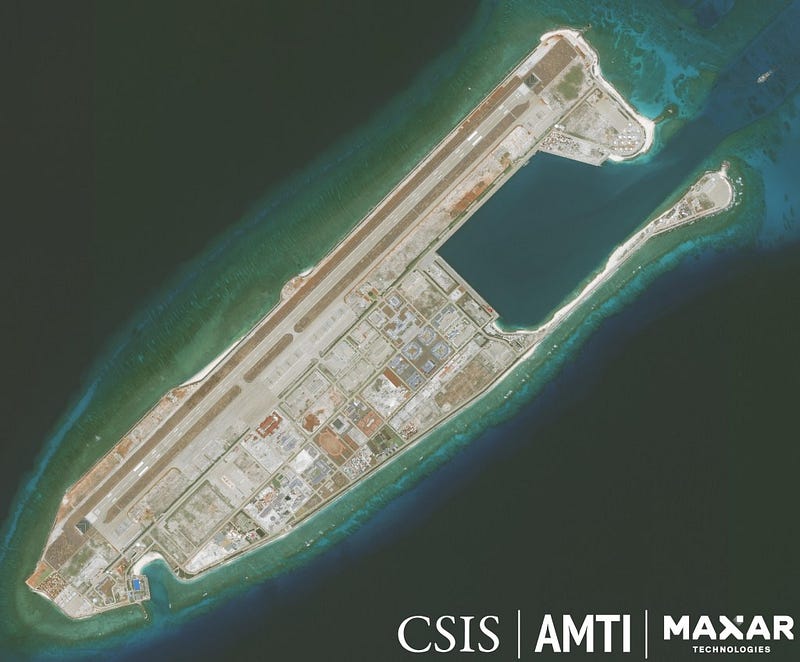
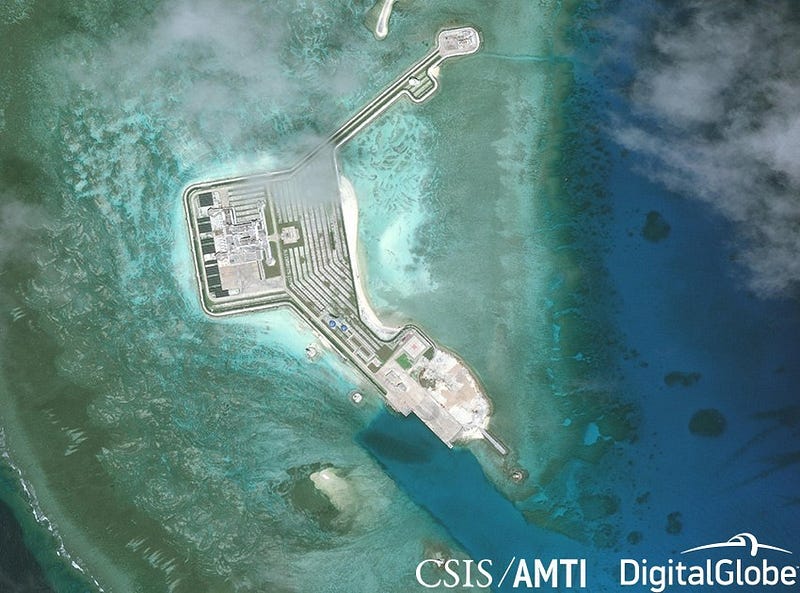
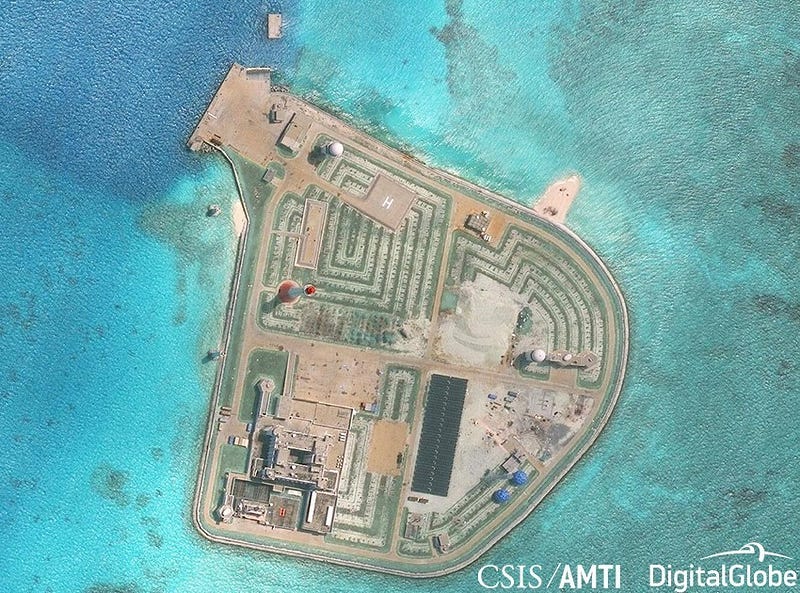
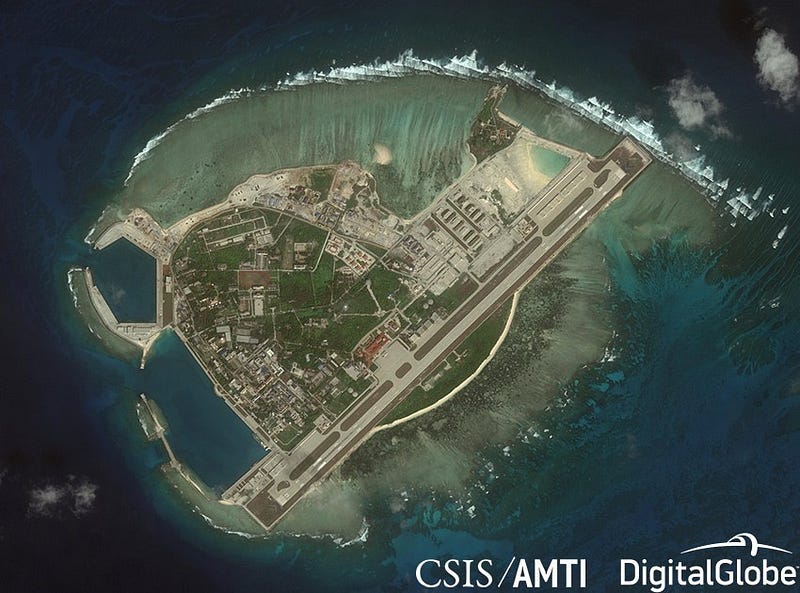
China responded with much apparent invasion by building artificial islands in the South China Sea, undermining other claimant countries. Hence, they are also militarizing the area.
Currently, China already has 28 militarized posts in the South China Sea, which they built from scratch. To check all the artificial islands, see the website of the Asia Maritime Transparency Initiative.
The Philippines lawsuit against China
China knew that despite their aggression, the U.S. wouldn’t attack them nor compel them. For one, the U.S. is not a claimant country, nor belongs in the region. But Washington argued that the law mandates “freedom of navigation” in the South China Sea. Still, such a reason is not compelling enough for Beijing.
Therefore, to ensure no other countries in the Asia Pacific would surpass the United States' supremacy. Washington assisted its oldest ally in Asia, the Philippines, through former President Benigno “Ninoy” Aquino III to sue China to the international court, the arbitral tribunal at The Hague, Netherlands, in 2013.
Asia’s dragon flexing its might
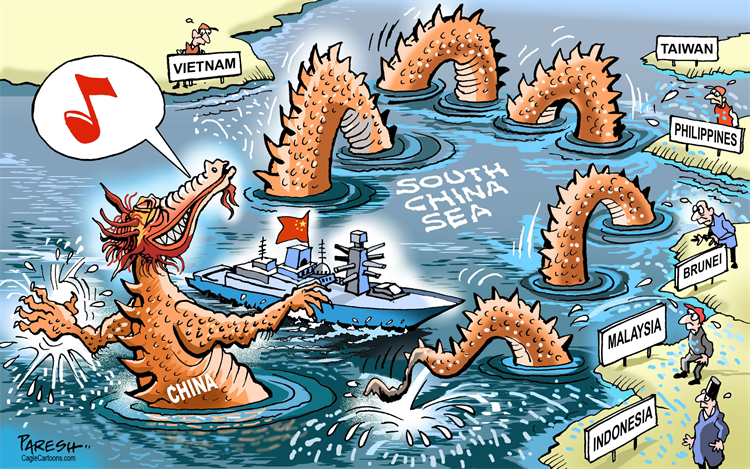
Beijing responded by hastening their reclamation projects in the South China Sea, destroying more reefs, tripled their military presence, and increased their coast guards in the region.
They started patrolling, even to the nearest exclusive zones of other Southeast Asia claimants. Chinese coast guards also harassing local fishermen from the Philippines, Vietnam, and Indonesia on countless occasions.
In 2014, the tension between Vietnam and China rose to its highest levels in decades when a Chinese oil rig started drilling in Vietnamese waters. The incident triggered boat ramming by both sides, water shooing, coast guards' standoff, and anti-China riots in Vietnam.
Due to these incidents, the Obama administration assembled the U.S.’s allies to propagate China’s image as the giant bully of Asia. He was pressuring Xi Jinping to tame his actions in the region.
Democrat’s Struggles, Republican’s Gains
When China became inimical to the Philippines because of the latter’s lawsuit against the former, Beijing started declining bilateral talks with Manila. The Chinese believed that President Aquino was a “puppet” of the Americans. But in 2016, when Rodrigo Duterte became the Philippines president, China found a new “friend.”
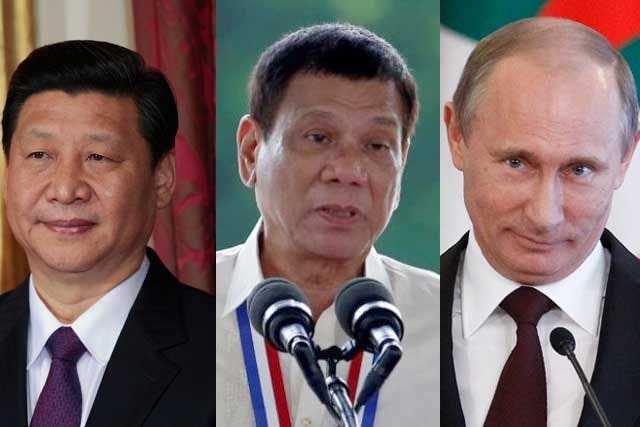
Duterte loathes the U.S. from the very beginning. He is a self-declared diehard fan of Russian President Vladimir Putin and China’s Xi Jinping, a total opposite of Aquino. When he won the seat, he called Obama “a son of a bitch.” Duterte didn’t like how the Democrats run the show, especially how they always meddle in the Philippines’ internal matters.
Duterte was infamous for his “war on drugs” that resulted in massive extrajudicial killings in the Philippines. Obama called out Duterte on his extreme policy measures, which violated several human rights' accounts. Since then, Duterte kept slamming Obama and the United States for being too nosy. His rhetoric only stopped when Donald Trump won.
Trump clarified that he supported Duterte’s drastic measures and promised not to intervene in how the Philippine president runs his country. Besides, Trump’s 2016 campaign was like Duterte’s with his “America First” policy.
In 2016, when the arbitral tribunal’s decision ruled in favor of the Philippines, the hype already died. Duterte downplayed the ruling. China was smirking. And the U.S., under Trump’s administration, shy away from the South China Sea tension.
“The Trump administration demonstrated that it either does not understand or sufficiently care about the interests of its friends and potential partners in Southeast Asia to protect them against China. Southeast Asian governments will conclude that the United States does not have their backs… one of the world’s most crucial regions is slipping into Beijing’s hands.” ~ The Foreign Policy, 2017
Trump sudden tough stance on China
For the past four years, China has continued its building spree in the South China Sea while enhancing its defense capabilities. The Pentagon still monitors the region but not provocatively meddling or displaying any force.
However, recently, a sudden turn of events during the campaign season in the U.S. happened. Trump may be well known for his trade war against China, but he never touched the South China Sea dispute compared to Obama. But on July 13, 2020, Secretary of State Mike Pompeo declared that President Trump opposes China’s claim in the South China Sea, calling it “unlawful” and “baseless.”
“The world will not allow Beijing to treat the South China Sea as its maritime empire.” — Sec. Mike Pompeo
The question is, why only now?
According to former U.S. Diplomat and CEO of Decision Analytics, Brian Klein, Trump needs to exploit China to attack Joe Biden’s credibility. Trump’s campaign focused on the Obama administration’s gentle approach in handling China’s aggression in the South China Sea.
In May and July 2020, the U.S. sent aircraft carriers and several warships in the South China Sea using “military exercises” as an excuse to follow Trump’s rhetoric with action. Their navigation was timely as China then held its own drill near the Paracel Islands off Vietnam.
Washington, after four years, showcased its powers again in the contested water. It is now more vivid that the U.S. is challenging China on its unlawful claims.
Washington asked other countries to back its stance
Other nations delivered firm statements against Beijing’s illegal invasion and militarization in the region, which we haven’t heard for quite some time.
“We understand that the announcement by the U.S. this time shows the unwavering commitment by the U.S. to the region’s peace and stability amid the increasing severity of the regional security environment. We want to support such a commitment by the US”~ Japan’s Prime Minister Yoshishide Suga
Last month, France, the United Kingdom, and Germany sent a note verbale to the United Nations office in New York. The three nations informed the UN of their unified position in “rejecting” China’s indisputable claim.
“France, Germany, and the United Kingdom also highlight that claims with regard to the exercise of ‘historic rights’ over the South China Sea waters do not comply with international law and UNCLOS provisions and recall that the arbitral award in the Philippines v. China case dating to 12 July 2016 clearly confirms this point.”
Also, in September, even the Philippines, during the UN’s 75th General Assembly, had a powerful statement regarding the importance of abiding by international law for peaceful settlement of global disputes. President Duterte’s current position becomes unpredictable. He is now playing his cards wisely, testing the authorities of the world’s mightiest.
“The Philippines affirms that commitment in the South China Sea in accordance with UNCLOS and the 2016 Arbitral Award. The Award is now part of international law, beyond compromise and beyond the reach of passing governments to dilute, diminish or abandon.
We firmly reject attempts to undermine it.
We welcome the increasing number of states that have come in support of the award and what it stands for — the triumph of reason over rashness, of law over disorder, of amity over ambition. This — as it should — is the majesty of the law.” ~ Philippine President Rodrigo Duterte
Future of the South China Sea Under Biden or Trump
Regardless of who will win this 2020 election, both presidential candidates reject China’s aggression in the South China Sea.
Trump’s strong rhetoric against China was not new. It was a carbon copy of the Obama administration’s strategy (but much careless):
- Increase military presence in East and Southeast Asia region
- Collect international support against China
- Propagate China’s global image as a supreme villain
Biden administration
If Biden wins, he might continue Obama’s sly tactic by crusading the arbitral tribunal’s ruling. Hence, projecting peaceful resolution, while developing defense presence in the region. Another Cold War kind of manipulation.
His administration would forge all the United States’ allies in pressuring China economically until the Chinese give up and force them to follow international law.
Biden may not immediately win over the current Philippine president, but in 2022, Duterte’s reign will be over. Therefore, advancing America’s plans as early as now would help Washington contain China in the region.
The United States needs the Filipinos on their side because the Philippines is the only claimant country in Southeast Asia with a favorable international court ruling against China’s aggression. Without Manila's support, the U.S. cannot further advance its interposition in the disputed international water.
Trump administration
If Trump wins, he either deflate the issue once again, as he did before. But he could also continue a face-off with China with a much more aggressive force, which he’s been actively doing these days. Besides, blaming China for all the Americans’ misfortunes was the center of Trump’s 2020 campaign.
The latter could be plausible, but such an undertaking is too risky for the United States because it will clearly violates international law. Knowingly, the South China Sea is not Americans’ turf.
China has been contesting U.S. troops’ presence in the South China Sea, albeit they don’t belong in the region. For Beijing, the tension should only be settled between the Chinese and the Southeast Asian nations. No room for outsider’s participation.
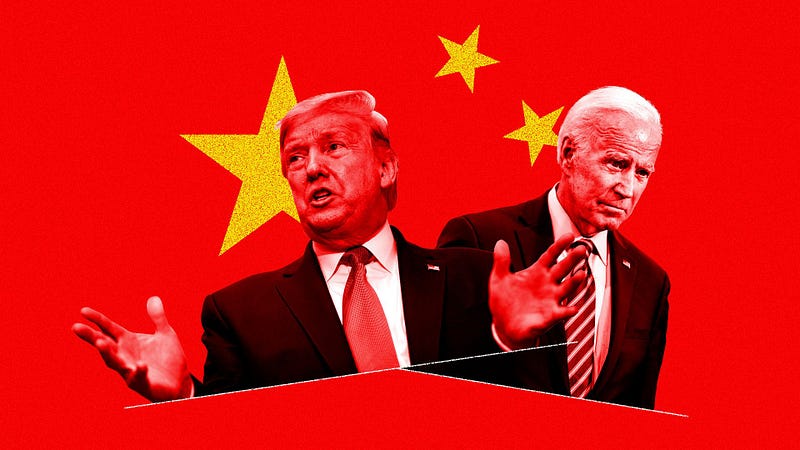
The South China Sea dispute may not directly affect the Americans as of this time. But soon, it will. Whoever sits in the White House, his decision would significantly impact the East and Southeast Asian people. Whenever Washington flexes its muscles in the region, Beijing replicates it by bullying other smaller claimants.
However, being a foreigner in the area, the United States could only provoke China until the Chinese do the first strike. But with all the militarization that Beijing has already built and keep building in the South China Sea, it safe to conclude that the Chinese are ready.
Both nations seem prepared, but the Southeast Asians are not.
Many experts already predict that the much-contested water is a potential root of World War 3. A terror we are all pleading not to occur.
“When two elephants fight, it is the grass that suffers” ~ African proverb
About the author: Jhemmylrut Teng (aka Carla Lim) was a former diplomatic correspondent for TV5 Network Inc. and Bloomberg TV-PH. She covered the South China Sea dispute from 2011 to 2016. She also had an editorial stint at Xinhua News Agency — Manila Bureau, and was an Editor-in-Chief in the communications department of the Office of President of the Republic of the Philippines.