
Weekly Prompt: Population Growth
Just how much more can life on earth grow, and what would that mean?
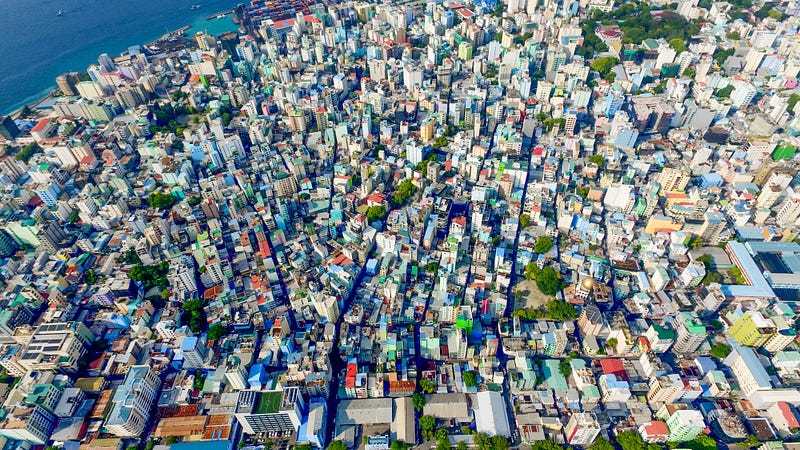
When you think about population growth, it’s usually in terms of humans, at all levels of society. You might be talking about the population of a household, a town, a city, a county, a state, a country, or even the entire world.
At the global level, we are approaching eight billion people, and it’s currently increasing by over 1% per year:
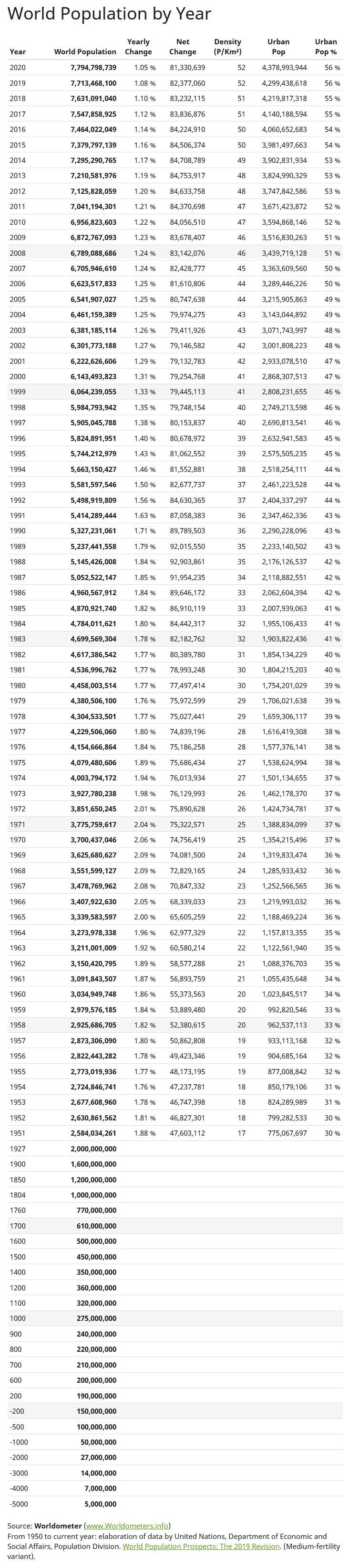
While you might assume this number will continue increasing and worry about the implications of that, the Pew Research Center projects the population will more or less stop growing by the end of the current century. In the year 2100, they estimate there will be 10.9 billion people, with a growth rate that is down to a mere 0.1%.
But what about animals (of which humans are, of course, one species)?
The California Academy of Sciences reports that there are approximately 8,700,000 species on earth, three-quarters of which are land-based.
When you consider it’s estimated that 99% of the species to have ever existed are now extinct, it puts life here on this planet into perspective.
We apparently lose dozens, maybe over a hundred, species every single day. And you have to wonder to what extent this is the result of humans’ effects on the planet.
But whatever type of population growth you’re looking at, there are practical considerations, which is why there is a whole branch of science dedicated to studying it.
These implications include the availability of:
- food
- non-toxic environments
- shelter
- space
- transport
- utilities (e.g. electricity)
- water
Some are already predicting global food shortages and the need to curb population growth — well before 2100.
To this end, it’s worth being aware of the first of ten principles engraved on the anonymously erected Georgia Guidestones:
Maintain humanity under 500,000,000 in perpetual balance with nature.
You will, of course, note that we are way past that limit, and have been since 1600 according to the chart above.
On the other hand, some claim it’s not the availability of food that’s the problem but the logistics to ensure everybody has enough.
Either way continued population growth, whether that’s human or other animals, is a matter of great concern.
And while non-human animal species are being lost faster than new ones evolve, what would the effects be, say, if there were dramatic increases in specific species, such as ants or locusts? How would that change the world?
Challenge Requirements
Your story must:
- Be about some aspect of population growth.
- Be exactly 300 words long, excluding the title, subtitle, and any post-story bio/links. (We use Medium’s own word count feature.)
- Be fictional, even if it includes factual information or concerns.
- Use “Population Growth” as one of your five tags.
There is plenty of food for thought here, and we look forward to seeing how you weave population growth into your short story.