
Life Through the Lens of My Camera
Weekend Visit to Lublin, Poland
Searching the past and understanding the present
“Is this the place?”
“Yes, I think so,” said my wife.
I turned the car into a graveled lot along a side street in the center of the city. The weather was uncharacteristically warm. Dappled sunlight filters through trees, towering over worn cemetery paths.
We were at the Ulica Lipowa Cemetery, Lublin, Poland. The final resting place of my wife’s father. I had gently suggested we make the trip several years ago, but other matters always seem to get in the way. It took a while for the trip to happen, but we were here now. The trip offered a time to reflect on the past for my wife, and a time for me to learn more about Poland and its culture.
The trip also created a chance to explore a city rich in history and character, Lublin, Poland. Not as well-known as other Polish cities, it is located southeast of Warsaw, an hour from the Ukrainian border. The old town’s tightly clustered buildings offer the visitor a chance to explore and enjoy the fusion with the present.
Sitting on the ancient crossroads of east and west Lublin was a place for caravans to stop to trade goods with kingdoms of northern Poland. It is now a bustling modern city, but one that has not forgotten its unique history and architecture.
Like all European Cities, Lublin is a collection of old interlaced with new. Arched gates mark the boundaries of the old and new. Set along the boundaries of old city walls, they allow entrance into Old Town. Inside are open spaces surrounded by shops and restaurants. With narrow streets threading to the sides, you can find quirky little shops and stores selling handmade trinkets, art and homemade bread.
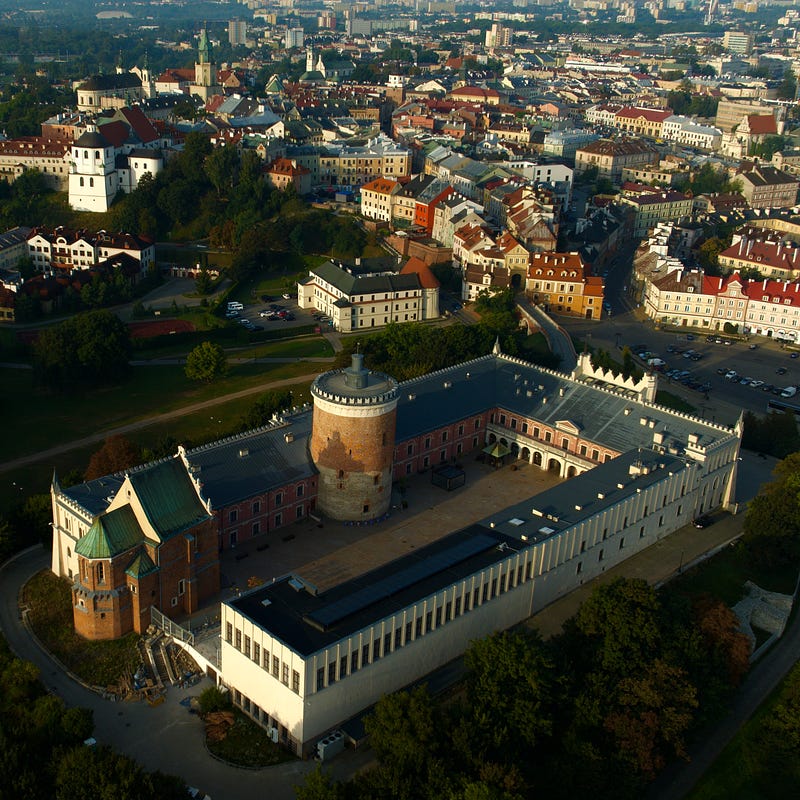
We began by exploring Lublin Castle. The castle has a checkered past. Dating back to the 12th century once commanded access to the city. Proclaiming the Polish-Lithuanian Commonwealth took place there. Later wars would reduce much of the castle to ruins, with only the chapel and brick tower remaining. Restored, it now serves as the seat of the National Museum.
The museum contains a collection of art and historical artifacts that provide the visitor with a sweeping history of the land now known as Poland. The displays of prehistorical homes, knights' armor and art are arranged in sequential order as you stroll through the interior of the castle. For me, it helps tie past to present and gain a better understanding of Eastern Europe.
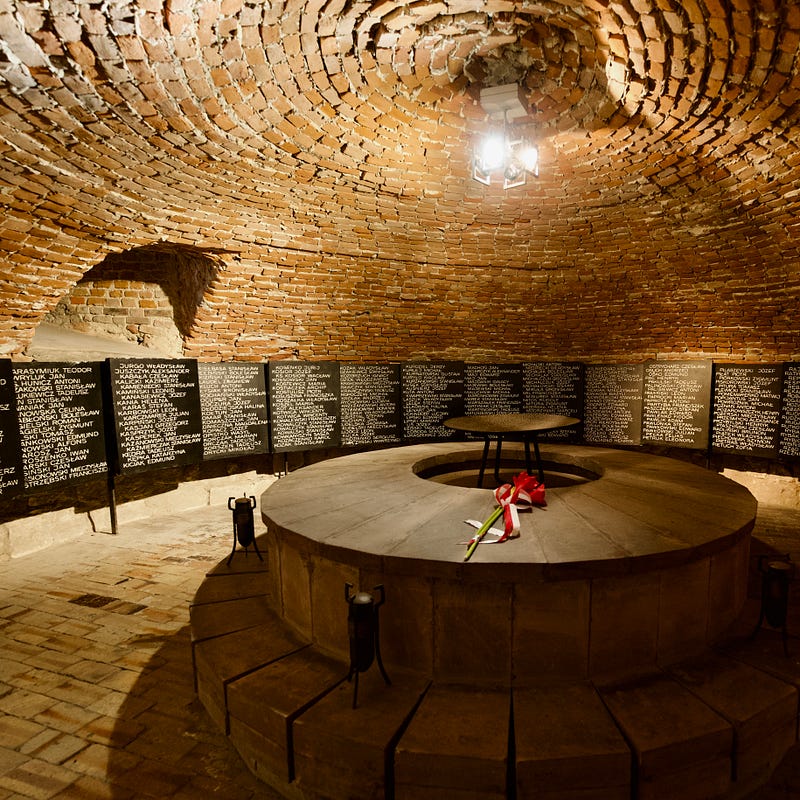
Embedded in the walls of the castle is a medieval brick tower, “Donjon”. It is the oldest building in eastern Poland. Open to the public, ancient stairs lead the visitor through a sobering history of oppression by Nazi and Soviet Union occupiers. In the basement is a simple memorial to those who died during the occupation.
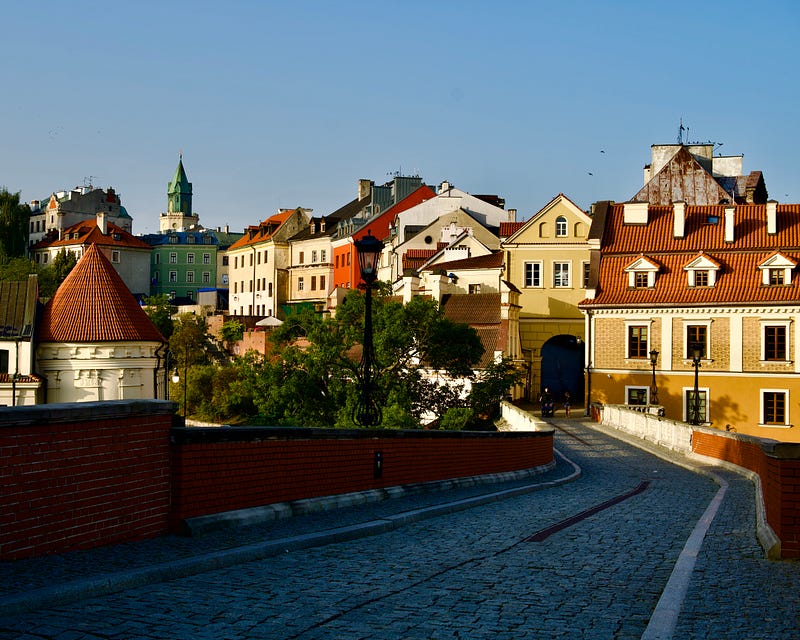
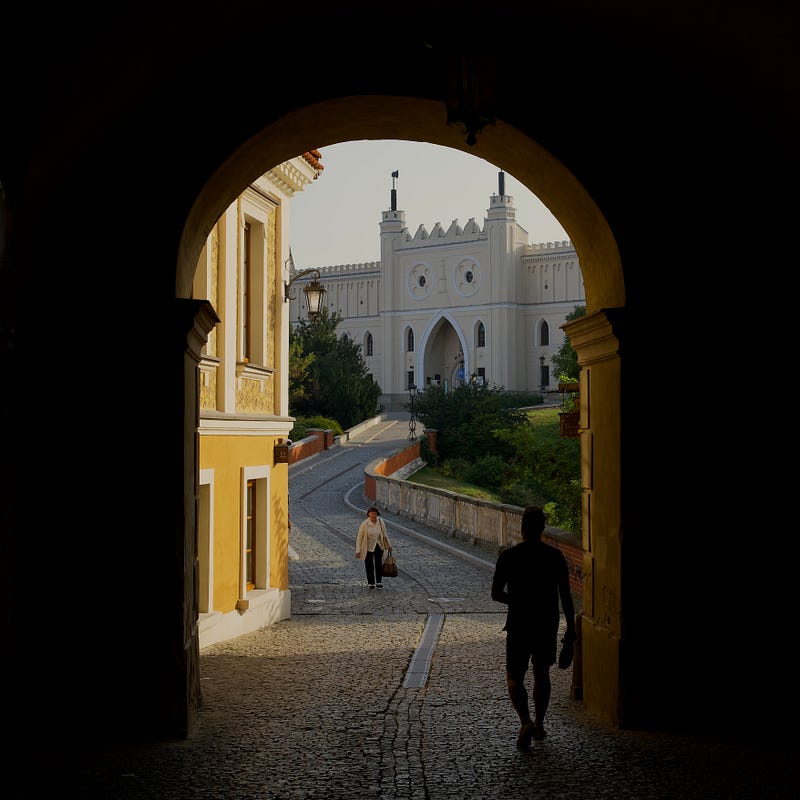
From the castle, a cobblestone road leads to the Grodzka Gate. Unchanged since the 18th century, it allows passage from the castle into the confines of the old town. A connection that has existed for centuries. Looking back from the gate I imagine a king with escorts making his way to the city center to mingle with his subjects.
As we move through the arched entrance, the transition from new to old is instantaneous. Stepping past the gate puts us on a narrow-crowded street lined with open-air restaurant, food stalls. A street that leads to the market square, the perfect place for the weary traveler looking for food and entertainment.
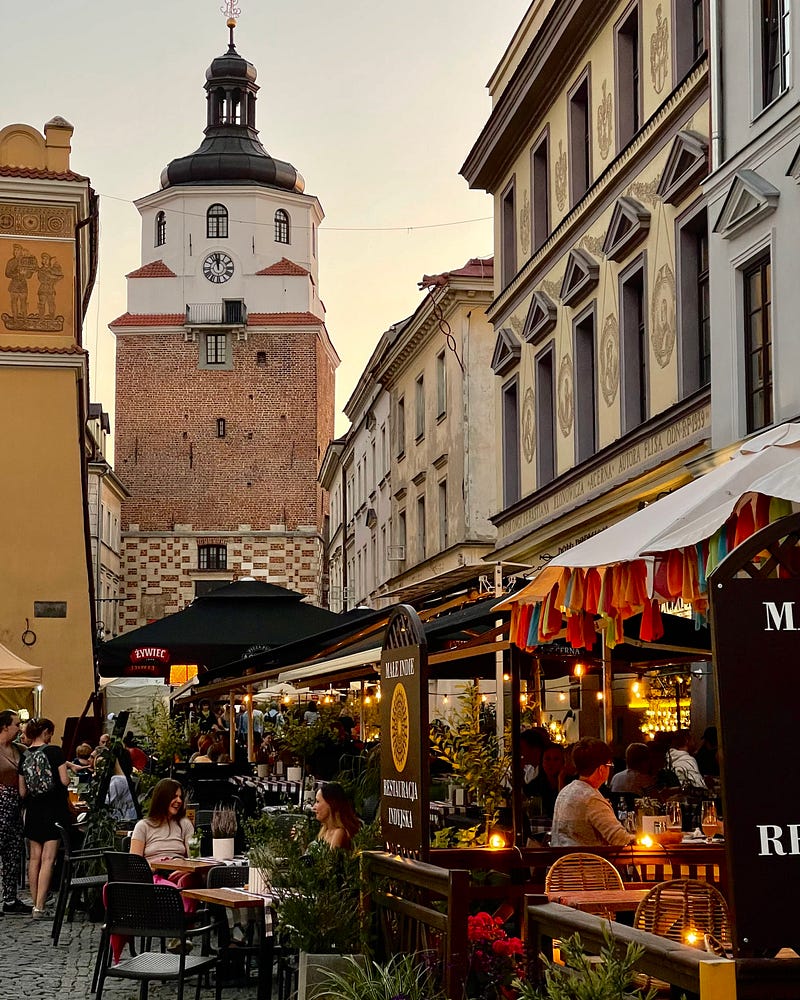
A soft summer breeze conveys the smell of pizza, bread and other tasty treats to the nose of the hungry visitor. Moving with the crowd my wife and I glide past outdoor diners sipping wine and beer. Local musicians, entertaining under colorful lights, complement the satisfying smell of good food. The ancient city walls resonated with a sense of peaceful joy.
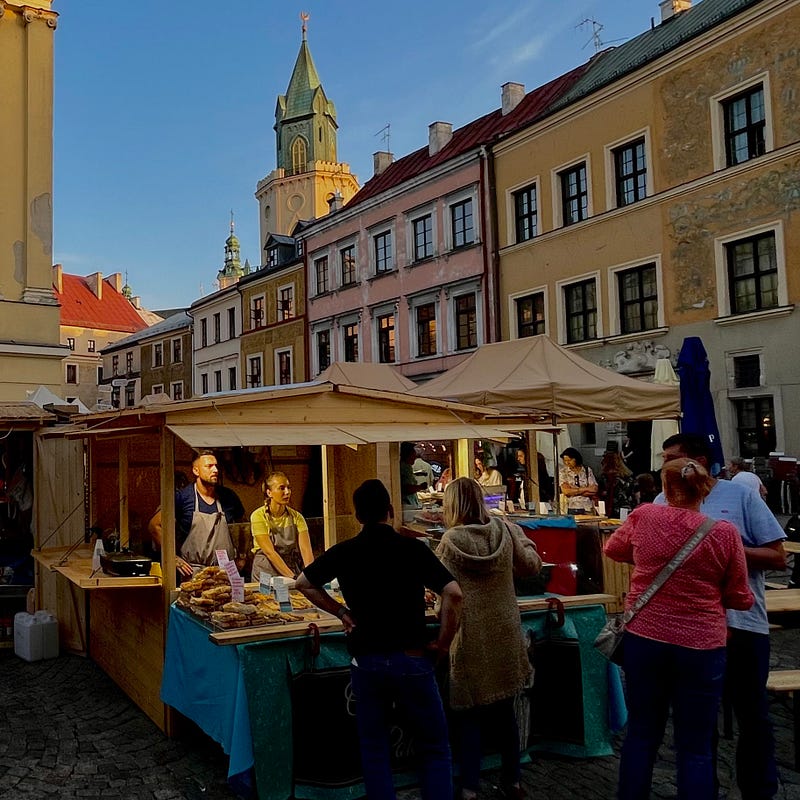
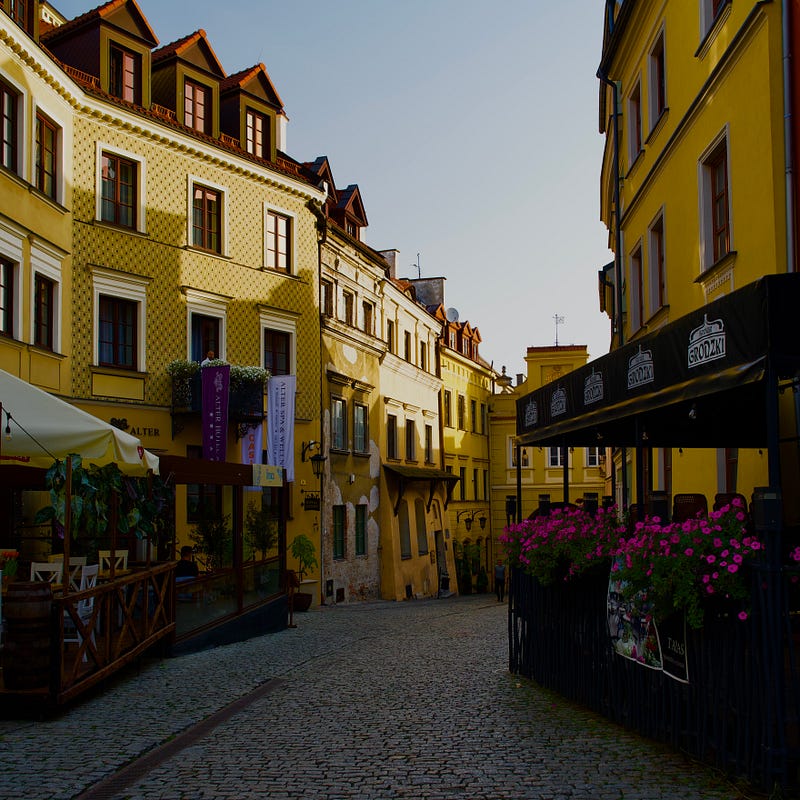
From old town center, side streets spider out to offer a refuge from the hustle of the market center. The narrow streets, lined by old buildings with slanting thick walls, were built to stymie assaults on the city. The restrictive geometry channeled attackers into defenders with sharpened swords.
No attackers now, only visitors strolling through the shaded canyon streets. Each twist and turn offering an offbeat pub or small gift shop tucked into a cave like niche.
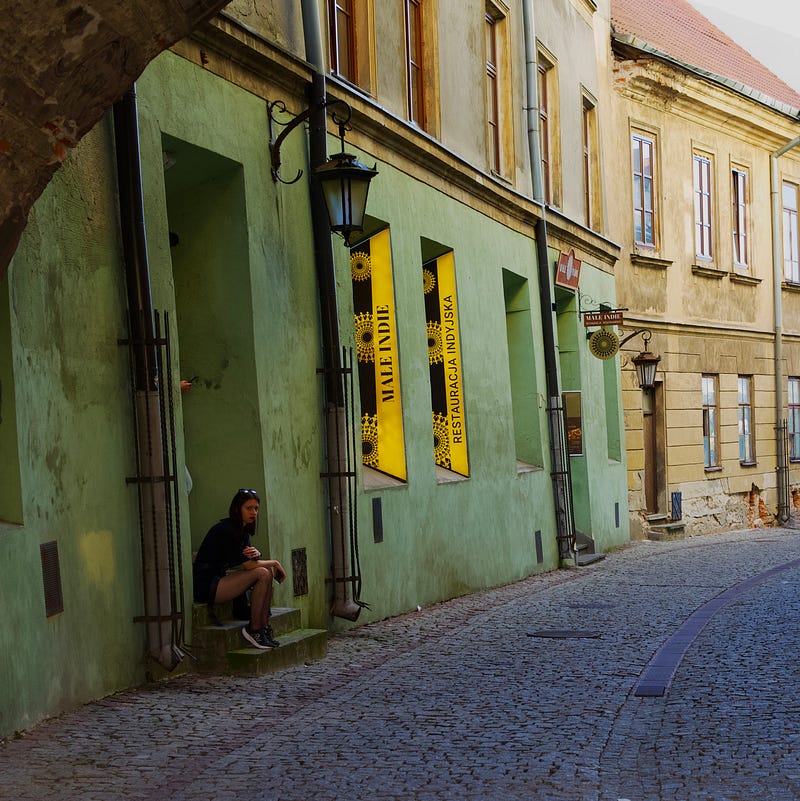
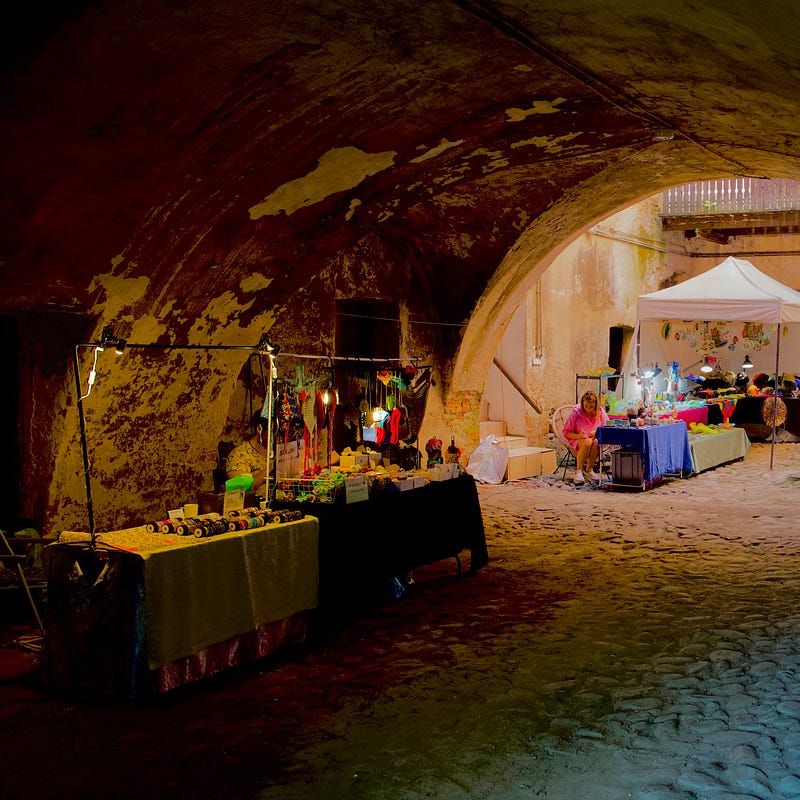
Lublin was a place for merchants and traders. Polish rulers valued the commercial role of the city. It was common to see festivals set throughout the year that would draw commerce from throughout the region.
Walking through old town today finds that not much has changed.
In the tradition of medieval times, young and old alike are hawking goods. My favorite are two kids with a very large box camera. They are offering to take photos that are featured in their flash newspaper.
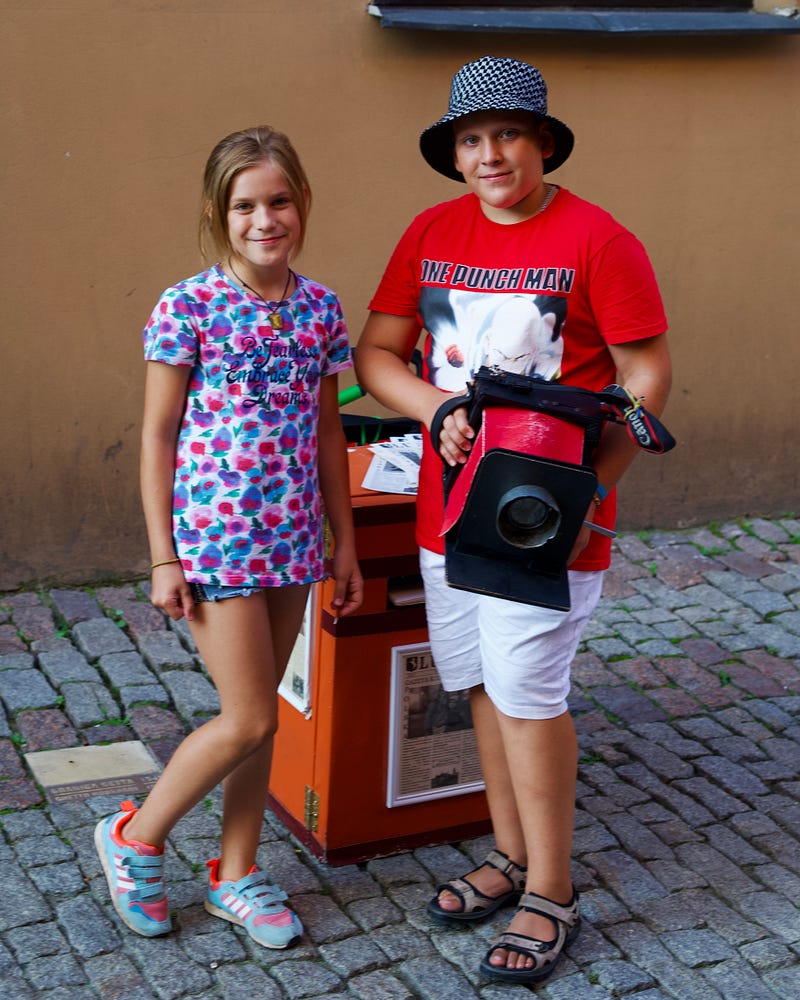
Who can resist? With a donation to their basket, we pose for the photo. Within seconds, they produce a flyer placing us in the front-page of the Lublin Happy People News!
Like all old cities, Lublin has many stories. My favorite is about the city mascot, a goat. Legend has it that Tartars attacked Lublin in the Middle Ages, sparing only the children. Orphaned and stranded without food, the children survived on milk from a lone goat until rescue came. These surviving children adopted the goat as a symbol of the town and depicted it in the city’s coat of arms.
The best part of the story is that the original artist drew the goat on the coat of arms as a decrepit gray creature. This did not sit well with the townspeople. Sometime later, someone changed the old goat, turning it into a ram with fine-looking horns.
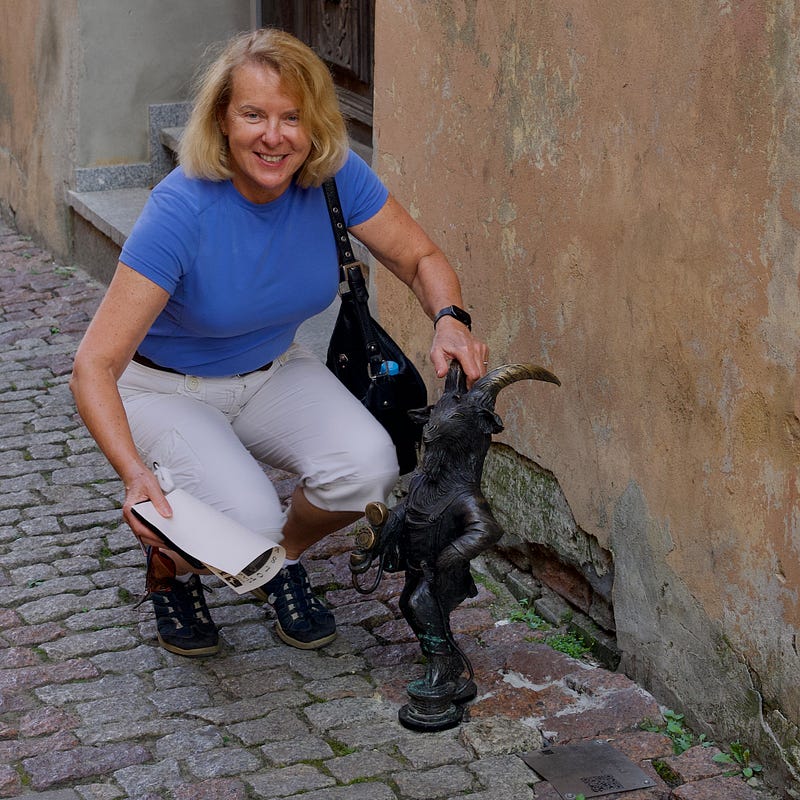
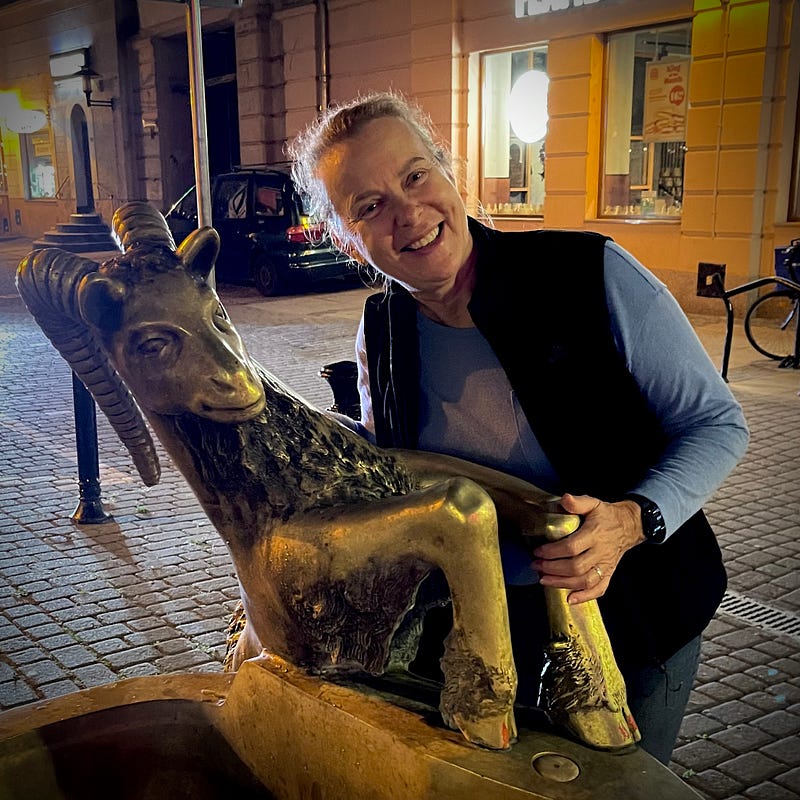
Today you see that ram on coffee cups and T-shirts in giftshops. But my wife found it more fun to walk around the old town, finding small bronze statues of the goat tucked into corners along the stone walls. Or in one case, cast as a bronze drinking fountain in the town square.
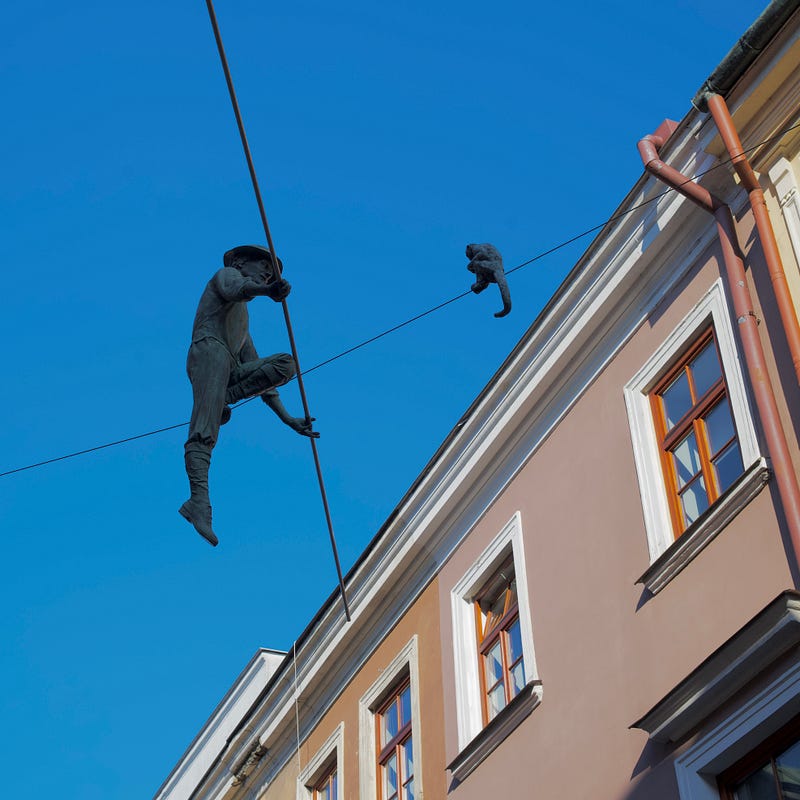
Goats are not the only object of artistic interest. Statues, sculptures and painted buildings make the old town a visual treat. My favorite is the sculpture of a tightrope walker and monkey. Suspended for all time above Grodzka street the reluctant monkey is perched on the wire eluding the wire walker's grasp. Or is he just taunting him?
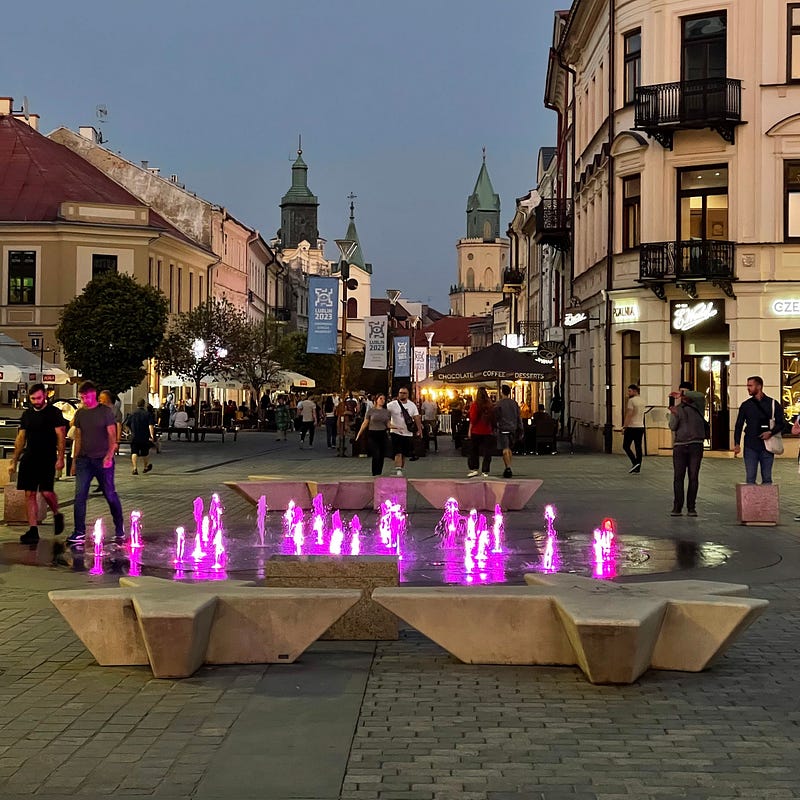
Reaching the west side of the old town, we pass through Krakow Gate. It leads the traveler to the modern plaza, past street vendors, into the newer part of the city. Here are open spaces of the main promenade, Krakowskie Przedmieście, leading down to Litewski Square.
It forms a wide plaza with fountains and statues, creating a modern open city space. In the warm summer evening, the city is alive with the energy of youth. Children are everywhere dancing through columns of water colored by lights of blue, red, and yellow. Not bad for a place that is over 900 years old.
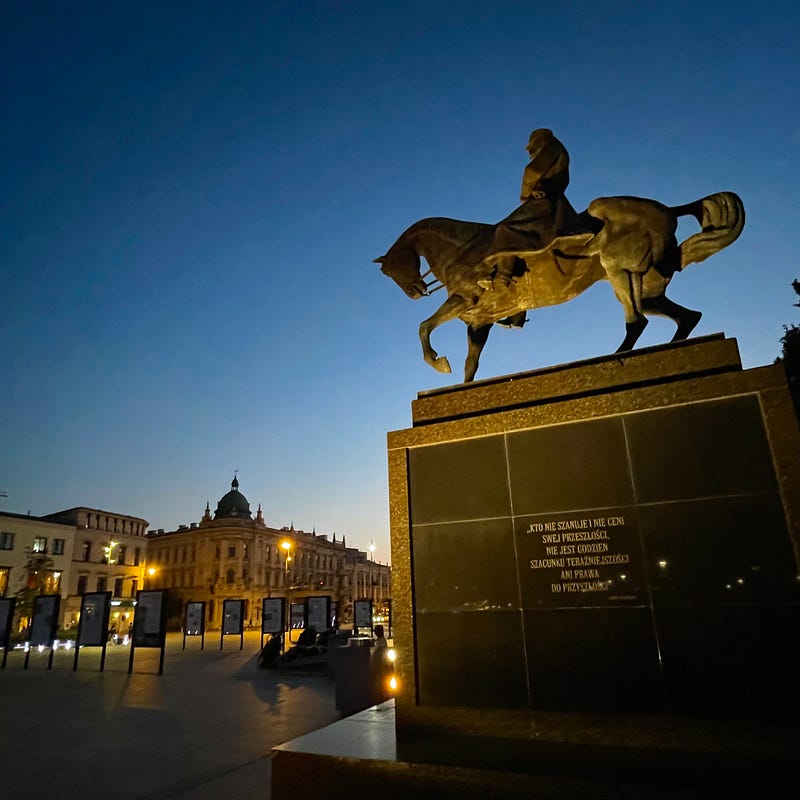
Dominating the western end of the plaza is the monument to Jozef Pilsudski, the First Marshal of Poland during WWI. He sits astride his bronze horse, looking over the Lithuanian Square in central Lublin. He is a key figure in modern Poland history.
In the distance sits IBB Grand Hotel Lublin. Light and shadows against the evening sky accent the details of the bronze statue commanding the expansive square. Rider and horse moving with purpose in defense of a nation.
The next day, on an early Sunday morning, I take a stroll with camera in hand. Retracing our steps through old town, I see the bones of the city. Without the crowds, food stalls and flood of visitors, the buildings have a silent echo of the past. The architecture dominates in the bright morning sun.
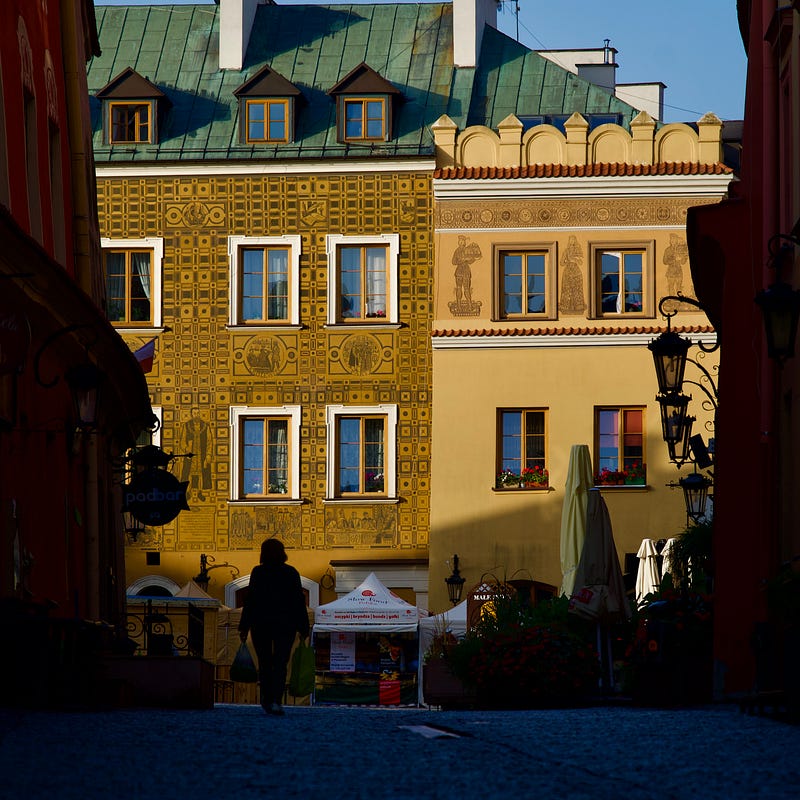
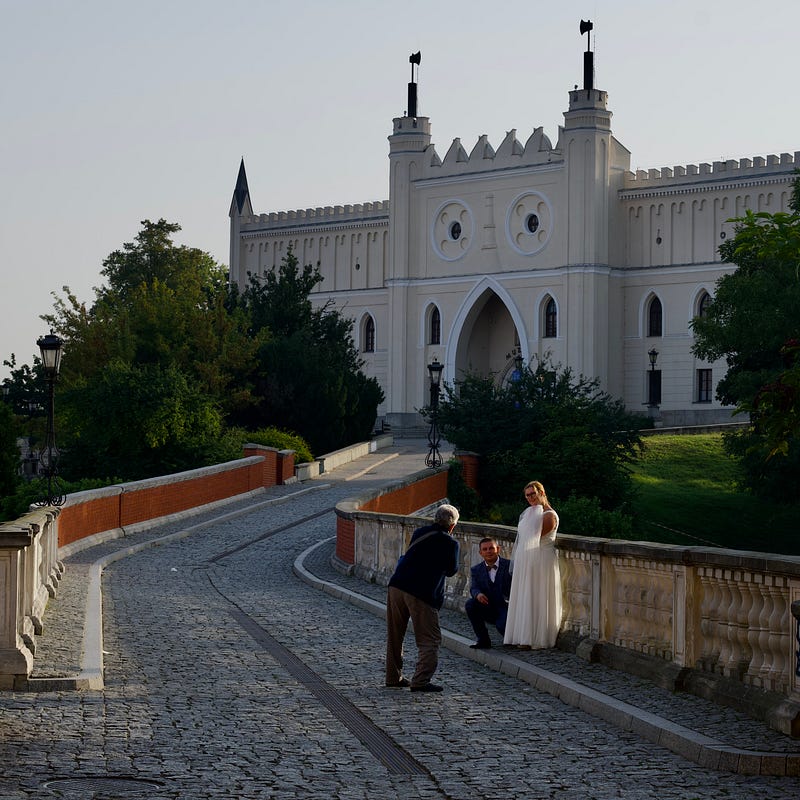
The streets are not completely deserted. A few early morning walkers, shoppers, and occasional local worker make their way through the quiet streets. Near the castle, a wedding photographer taking advantage of the soft morning light, gently shepherds his clients along the cobbled stone road to the castle. The old town and castle add dignity to the scene.
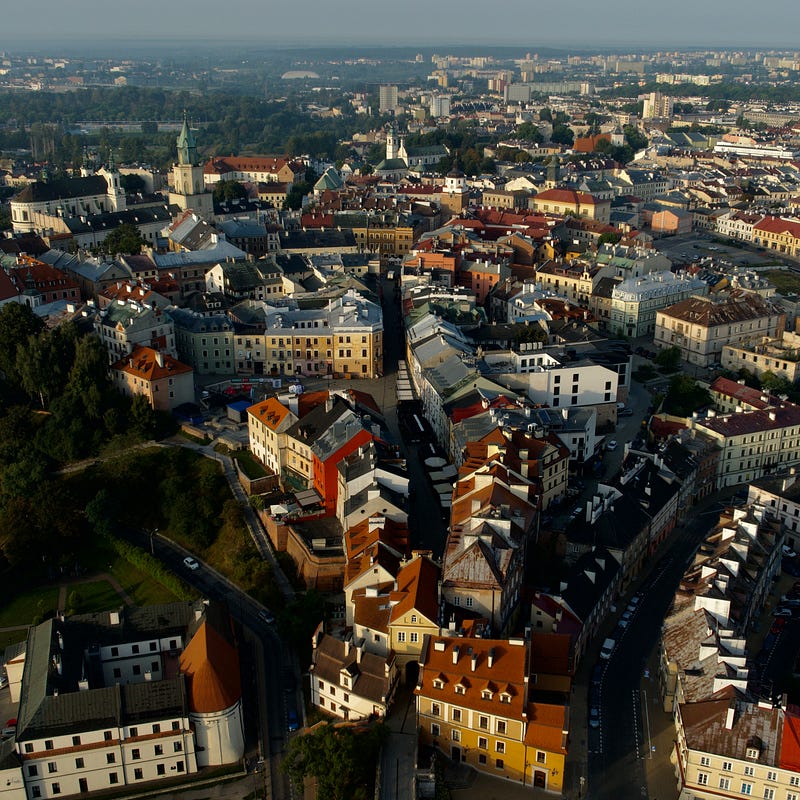
I launch my drone for a last photograph of Lublin. The view from the air exposes the coiled pattern of the old town in the early morning light. The circular pattern of stone and brick and tile contrast with the straight lines of concrete and steel belonging to the modern world beyond. It suggests that time is endless yet non-existent.
Before my wife and I leave Lublin, we return to the cemetery. In the shade of an old elm tree, I stand quietly to one side as my wife and her father’s old friend talked quietly in Polish. I would get the details from her later, but for now I could see the trip was a good thing. For both of us.
Our time in Lublin was a trip of discovery. My wife had a chance to reconnect to the past. I had the opportunity to learn more about the unique history of Poland and the Polish people.
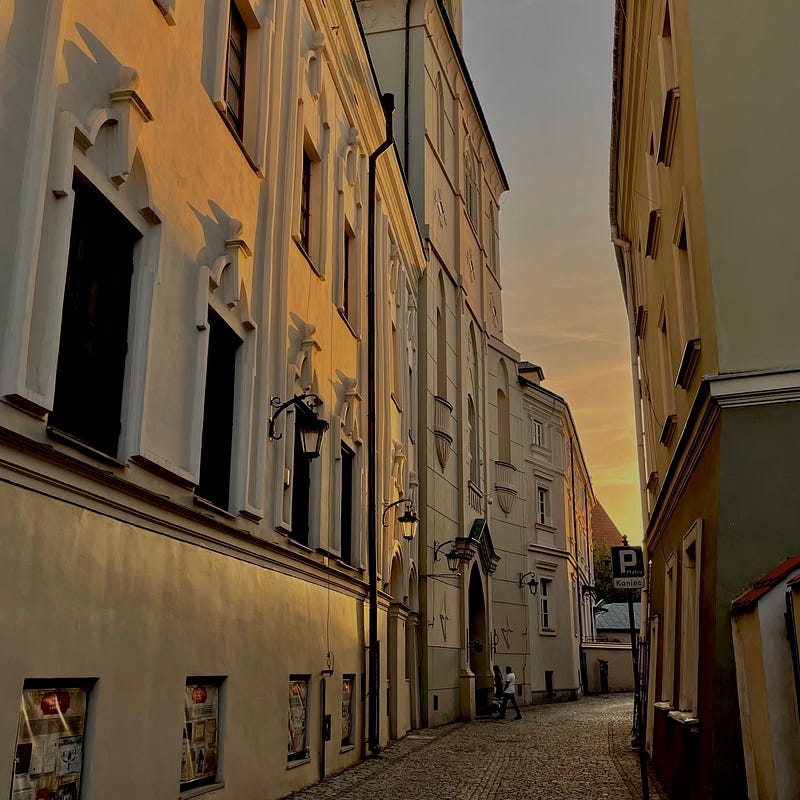
Lublin is a city unchanged yet very different. We cannot be expected to know all that the narrow streets have seen. The walls are silent on that matter. But walking through the softly lit streets at the evening set suggests that looking for the unseen can lead us to the truth.
Its past holds secrets, some we find, others we cannot see. My wife and I leave Lublin knowing more than when we arrived.
Thank you for reading.