
Weeds, Concrete, and Art — How They Can Improve Your Writing
Don’t overlook the obvious
Often, the most admired craft designs are those that aren’t practical, don’t make sense, reverse accepted processes, and disprove industry theory.
Why so?
Because those designs are bolder than we’re comfortable with. They shout, “look at me”. This is what most writers would like to say if we weren’t too afraid of being noticed.
Writing is a risky adventure and some of us are the safest creatives on the block. We know we need to inject more feeling, more personal insight, more opinions, more objections, etc., but how can we do that?
Let’s take a lesson from the creative expression of Mixed Media
Mixed Media design is a much-loved craft form and can be a fast track to building confidence and skills an artist normally wouldn’t pursue. As writers, we should also be looking for avenues to stretch our abilities.
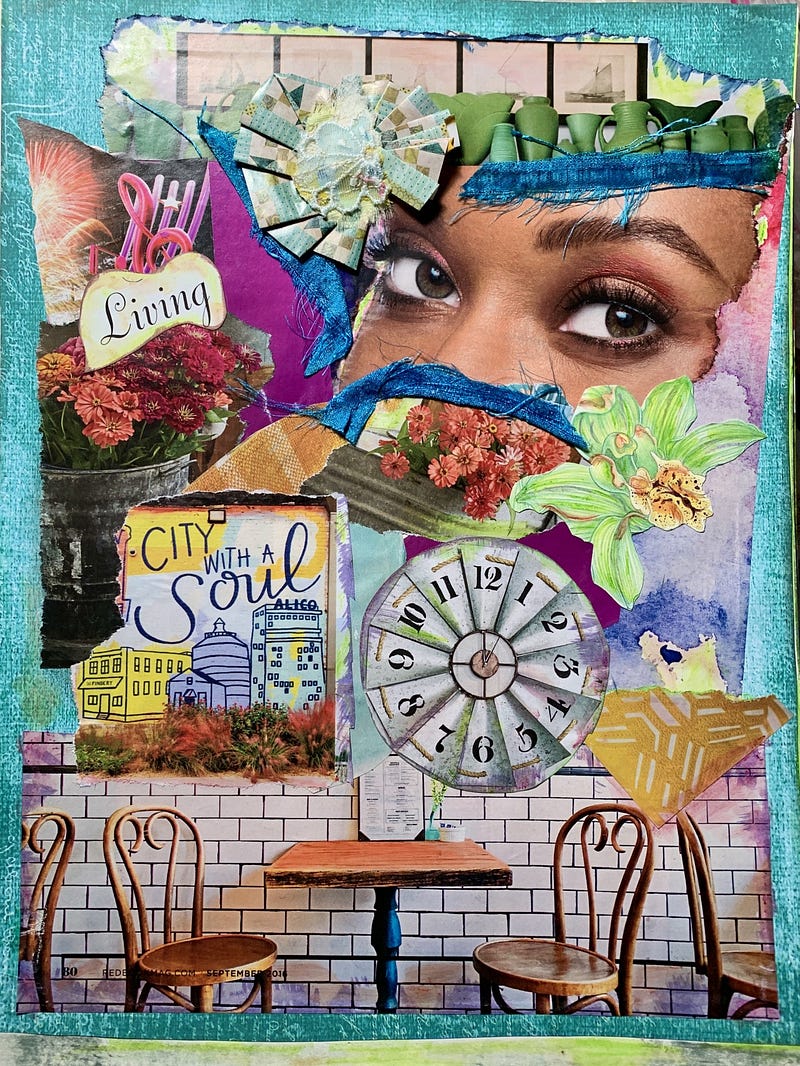
The above photo is a page in my art journal I created using watercolor, distress inks, paper, fabric, and torn magazine images. I used this page as an inspirational snapshot for a scene I was writing that took place at a sidewalk cafe. I often flip through the pages of my art journal and glue books for similar sparks when brainstorming a location or mood for a scene.
Mixed Media represents the combining of diverse mediums or elements to achieve an art or craft design.
There are no restrictions on what we can blend together or how many; and no rules controlling the finished product.
…Isn’t that the same with writing? I personally love blending almost anything with fabric. Some people mistakenly think that mixed media must begin with paint. Paint is a great medium with lots of application techniques, but it doesn’t necessarily have to be present in a project to classify it as mixed media.
…When writing, do we always have to start at the beginning. Can’t we write the ending first? Of course, we can. Once we throw out the window the restrictive habits and rules that get in our way, we can mix all kinds of elements, blending them to create an exciting narrative. I have to admit that when I first started crafting I was intimidated by the thought of working with Mixed Media. I didn’t know how or what media to mix to achieve the concept I could see in my head.
So, I started closely observing simple things around me.
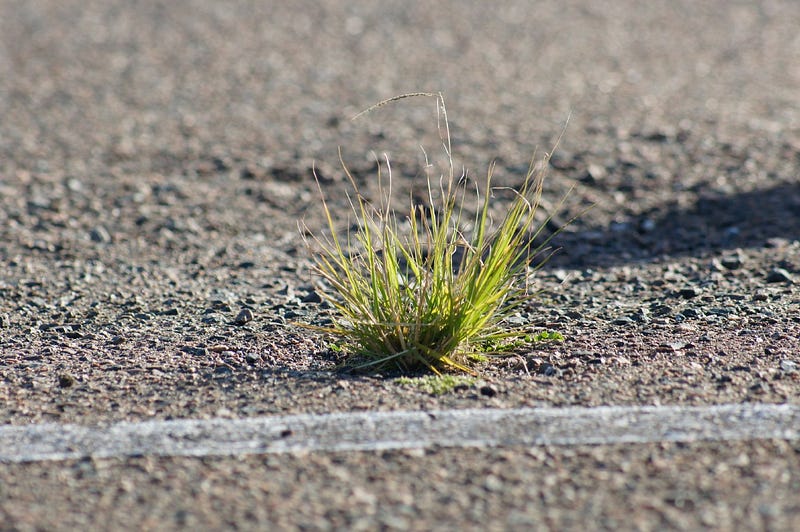
For instance, the weeds that unceasingly crop up in the groves of my concrete walkway taught me about contrasting elements. In theory, grass shouldn’t grow in areas where there is little or no soil base, yet it obviously does.
What Did I Learn from These Sprigs of Grass?
Emphasize the focal point by using contrast — What an awesome concept for fiction writers. If you want a villain to be more villainous, just pair him with the local kindergarten teacher as his best friend. A friend who is completely clueless about his evil side.
New paired with old, ends up accentuating both — Living things are enhanced by the inanimate things around them in nature. A fiction writer might emphasize the vulnerability of the very young and old by having an aged grandfather raising his seven-year-old grandson. The contrast of age accentuates the precarious situation of both. Non-fiction writers often contrast what isn’t working with better solution ideas.
Neutral tones placed next to color shades will make it more vibrant — Fiction writers are careful to diversity their characters, using this method to highlight their protagonist. A colorful secondary character can emphasize the dignity, shyness, aloofness, etc., of the protagonist’s personality or vice versa.
Non-fiction writers often present options as in, will work, might work, doesn’t work. These shades of possibilities help readers to sift through ideas and arrive at the best choice for them.
What Can You Take Away From This Article?
Use anything you want in any way you like for any writing project you have in mind. Don’t ask anyone else if this or that can be done, just do it your way!
Dare to be different, unique, and let your voice ring true in your written words. After all, writing is an art, and there is art in writing!
While you’re learning from teachers and other skilled writers, don’t forget to learn from the practical lessons that surround you each day. Those lessons are demonstrated in nature, people, art, etc.


