
‘We Writers Are Whores’
Or, the Accidental Writer…and how Frances got her groove back

I wasn’t meant to be a writer — or at least, not according to my parents. Or even by late 20th-century American society. My profession, at least, as intended by Mom and Dad was to be any of the below, in the exact order: 1) Doctor 2) Engineer 3) or anything related to STEM.
You see, apart from being obsessed with the idea of an Ivy-grad daughter earning big bucks in a lucrative career— an obsession shared by nearly all Taiwanese parents of their generation — they figured that I had none of the advantages shared by most writers.
After all, English was a fourth and fifth language for my mother and father, respectively, and in fact, they were still coming to grips with their new language when I was in kindergarten. And not least, I was an only child too — with no sibling to depend on if times got rough. Starving artist, in other words, was out of the question.
But the issue of prejudice was an important one too. As my father asked me over and over again, who’s going to take a writer with a Chinese name seriously? (Mind you, this was back in the 1970s.) The dearth of any names like Cheng, Ching, and Lin among any list of famous writers in the West seemed to offer an airtight argument — or so they thought.
At any rate, no one would have guessed I would become a writer when I was seven. I had only just learned to read a 100-page book silently that summer, determined that I would catch up with some of my peers who had already begun to read books cover to cover towards the end of first grade.
My parents and even teachers thought I could read–but I had only memorized the most famous children’s books after hearing them told to me nightly.
But by third grade, I discovered that I did enjoy writing — and even managed to get a short essay printed in the school yearbook (or whatever it was.) I wrote plays, stories, and poems whenever I was not doing my homework; my mother practically had to beg me to watch TV, fearing my spoken English would never improve. And as I derived more pleasure from reading books, book reports began to stir my imagination as I thought about why I enjoyed each book. They were quickly replacing math problems as my favorite type of homework.
By the time I reached high school, it was fairly evident that I was more than a passable critic and writer. To my parents’ shock, literature and history had actually become my best subjects. Neither Mom nor Dad expected this since they knew very little of either Western literature or history. They wondered why I won prizes for short stories but not for science projects. They wondered how I got the highest scores in my history classes. And they wondered how I became so preoccupied with Mozart and the Brontë sisters. Yet to me, learning about literature, music, and history was thrilling.
Indeed, I still recall those happy days of my freshman year when I eagerly went down to the freezing cold basement, blasting my Electric Light Orchestra, Fleetwood Mac, and Mozart as I immersed myself in my weekly history packets, which were a combination of short answers and essay questions. I sat there awed by Botticelli, Caravaggio, Donatello, Raphael— ooh, those were the paintings that intrigued me at the age of four when I leafed through Mom’s art books! I could easily spend my whole life doing this, I thought.
As three more years passed, I would write essays about Gauguin, Margaret Fuller, and of course, on the various works of literature that we studied in our four years of English. And even though I procrastinated on my senior AP thesis, I still managed to earn the following plaudit from the teacher, “Frances, this is the most brilliant essay I’ve read in over 15 years of teaching. This thesis weaves together literature, culture, and science with so much insight.”
Despite such heady praise and the constant reiteration from English teachers, “Your daughter really needs to go into English,” my parents were anything but thrilled about my pursuit of the humanities: let alone entering any kind of career that entailed a good deal of writing. They made this clear to me throughout college. This taboo was the Eastern equivalent of marrying a man from the wrong side of the tracks.
You see, whereas most parents would probably have been positively elated to learn that their daughter had beaten out at least eighteen other candidates for arts editor at her college newspaper, mine were anything but. Indeed, my father was downright disappointed. After a moment of silence, he asked, “How are you going to study for med school? Why aren’t you studying your organic chemistry instead of reviewing concerts? You’re not getting paid for your articles anyway.”
As for the day that I informed Dad that I was going to major in English, that was even worse. One would have thought I told him that I’d decided to become a hoodlum, hooker, and heroin dealer. Although, perhaps this may not be too far from the truth since Robert Louis Stevenson once compared prostitutes to writers, quipping “We writers are whores, some of us pretty whores, some of us not, but all whores of the mind, selling the public the amusements of our friends!”
Dad didn’t speak to me for an entire week before mustering out a “Have you considered law? Lots of English majors become lawyers.” In fact, he and I would have a number of conflicts over the years — conflicts I believe which wound up hindering my career in many ways, even if not absolutely.
So, for the longest time, I hated being Asian, resenting parental expectations and lack of support — at least, compared to my American friends whose parents didn’t seem to care what they did so long as they passed.
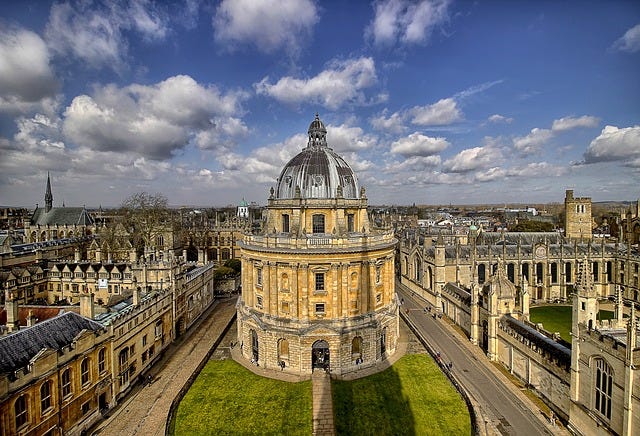
Never mind, however, that history also has its share of Westerners whose parents opposed their desires to become a writer — with the Scottish Stevenson himself being a notable example. He was expected to become an engineer. Or the Irish Sheridan Le Fanu, who was expected to join the ranks of other barristers but chose instead to become a novelist, ghost story writer extraordinaire, and journalist. Nonetheless, by 2000, I could finally say a la Jane Eyre, “Reader, I got my Ph.D. in English.” At Oxford University, no less.
But what about my actual writing? Truth be told, by the time I finished my doctorate, I felt my prose had become turgid, if not tired. It was as if the years of schooling from college through graduate study had sapped the strength out of me, even if I always managed to incorporate a pun or two into my academic writing.
As I tried to rewrite a chapter of my dissertation into a class lecture, I suddenly wondered to myself, why does this sound so long, so labored, and so…constipated? How do I become a more appealing writer? Or to use Stevenson’s metaphor, how does one become a “pretty whore…selling the public the amusements of our friends?”
Then, one day, when visiting home, I decided to dive into a box of my old high school papers. Truth be told, I was wondering what notes I had taken on the American Revolution during my junior year. But as I dug in, I began reading my class essays and even college application essays.
I was no child prodigy, but some of those essays were pretty sharp and clever for a teenager. I marveled at the way I wove long and short sentences together, using varied sentence structures. Dang, I could give some writers at The New Yorker and Atlantic a run for the money. (LOL, and here I am scrounging on Medium to get a few dozen views!)
What happened? Did I forget how to write succinctly in college and graduate school, where greater emphasis is placed on apparent erudition? Or perhaps I spent far too much time reading 18th- and 19th-century texts where paragraphs can go on and on and on in Proustian fashion. Using 80 words when 30 would suffice — or less. Sometimes one can have too much of a good thing.
It was time to…free Frances! It occurred to me that to do so, I needed to rejuvenate myself — get back to the old me, or rather, younger me: the me that was snappy, witty, readable, and even profound at times. The one who was cocky and didn’t need to impress anyone — because she enjoyed writing.
So, I made a point of studying my juvenilia once more. But I also decided to delve into more current writing (i.e., after 1900). I specialized in the Gothic novel and all things horror. I read Stephen King’s Shining, Salem’s Lot, as well as his guide, On Writing: A Memoir of the Craft — which were quite new to me in 2004. I also began to devour Zora Neale Hurston, Malcolm X, Cathy Park Hong, Meghan O’ Rourke, and Tracy K. Smith. And, of course, I studied Thomas Paine, the modern Prometheus, and best-selling author of the 18th century as I wrote my textbook on his Rights of Man.
In short, the lesson that less can be more truly began to sink in. After all, doesn’t every elegant woman learn at one point that the proper amount of jewelry to be worn at any one time is what she considers just perfect – minus one piece? Somehow, somewhere, I promised to indulge my younger side as the older, gentlemanly Jekyll did his wilder and younger seeming Hyde — sans any potions or elixirs. Not even an unconventional, accidental lover like Macon Leary’s Muriel or a younger man, like Stella’s Winston.
Yes, I feel my groove coming back!


