
We Were Outsiders, But We Had One Another — He Had No One
Remembering a boy who could use a friend. I wanted him to be part of us, but I didn’t know how to invite him in.
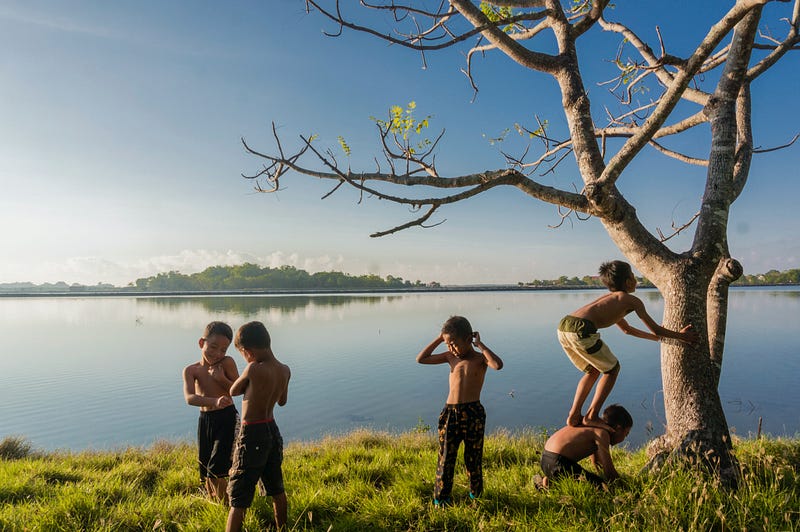
We were a bunch of Hmong refugee kids assigned to different schools across St. Paul, Minnesota, so that no single school would be burdened with all of us. Because we were scattered across the city, in school we felt like outsiders.
But in the sanctuary of our housing project, we had one another. Except for the one boy. He kept to himself. He had a name, I am sure. But I always remembered him as the orphan boy.
One day, to our astonishment, my brother Kou asked him, “Hey, you wanna pitch coins with us?”
There were many orphans living in Liberty Plaza, the name of the housing project where we lived. Some had no parents and were being raised by relatives; some had one parent, and some even had a parent and a stepparent. But with the death of one biological parent, they were all considered orphans.
Those of us with parents were just as poor, dusty, and raggedy as they were, but an air of pity and melancholy hung around them. This boy had a mom but no brothers and sisters. Maybe it was his long, stringy hair that covered his eyes or his quiet demeanor that cautioned: “Stay away. Misfortune is contagious.”
Whatever the reason, he kept apart from us. He seemed on the outside looking in. He never asked to join our games. We didn’t have enough awareness to invite him in.
We did not exclude him because he was an orphan. A people cannot go through a war without creating a generation of orphans. Many of our friends lost their parents in the war. Some lost their parents while fleeing Laos, and some lost their parents to diseases and depression in the refugee camps in Thailand.
So, no, we did not exclude him because his father died in the war. Actually, orphans are special in Hmong fairytales and myths. You are not supposed to make fun of them, for if you do, your parents might die, too, and leave you orphaned.
Also, orphans are supposedly protected and watched over by their deceased parents. Their parents would harm you if you teased their child. Of course, none of our orphan friends believed the stories. They had experienced too many hardships to believe that someone was watching over them.
No, we did not exclude him because he was an orphan. We excluded him because he always looked sad — too sad to possibly understand the fun and laughter of our games.
I had seen him sometimes helping his mother carry water at the garden or walking to the drug store to buy things for her. Sometimes I wanted to call out hello to him, but I was afraid he would not answer back. So, I pretended not to notice him.
But this time when my brother Kou invited him to pitch coins, the orphan boy’s eyes said yes even before he nodded and answered, “Sure.”
His faded black pants were small and so tight that they stretched like a second skin over his legs. He had to suck in his flat stomach to pull out the coins from his front pocket. His pants did not reach low enough to cover his dirty ankles. If any of our friends were wearing pants that short, we most likely would have teased, “Hey, where’s the flood?”
His hand-me-down white dress shirt was no longer white but dusty and had a faded stain in the front. The shirt was too large for him, and it bulged in a thick band around his waist where the shirt was tucked into the tight pants.
He had his coins now in his hands and counted them. His dark eyebrows slowly came together. He looked at the other boys standing around, and he looked at his coins again. He seemed to want to put his money back in his pocket and walk away.
Perhaps, he was not a gambler. Perhaps, he was content with what was already in his hand and did not want to risk losing it in the hopes of getting more. Or perhaps, he realized he did not have enough to lose in the first place.
He was wavering. His face did not show the same confidence and anticipation that were on the faces of the other boys. Yet, he probably thought those coins were necessary to earn friends. He didn’t know that our friendship was free.
Kou took out a quarter and pressed it halfway into the soft black dirt. He twisted the quarter a few times and made a little bowl-like hole in the ground. He moved back about three yards from the hole and drew a line in the ground.
“Does this seem like a fair distance to you guys?” he asked.
The other boys, including the orphan boy, agreed that the distance was fair.
“We are playing ten cents per game. If you don’t have a dime, you may use two nickels. But absolutely no pennies! And the slammer can only be a quarter. No half dollars!” Kou stated.
All the boys agreed. Kou continued, “Now, let’s pitch coins to see who goes first.”
One at a time, each boy stood behind the line and tried to pitch his coin into the little hole in the dirt. Kou and another boy pitched their coins right into the hole. They had to play rock-paper-scissors to see who got to go first.
Kou got to be first, and the other boy second. The rest of the other boys would go in the order of how close their coins were to the dirt hole. The orphan boy’s coin was the farthest from the hole, so he was last.
All the boys handed their dimes and nickels to Kou. He moved to stand behind the line. He bit the left corner of his lower lip as he studied the distance between him and the dirt hole.
With his fingers tightly sealed around the coins, he pulled his right hand back. Then suddenly his hand swept forward, his fingers opening up like a flower in bloom. All the coins flew out of his hand and shimmered as they sailed across the air to land in and around the dirt hole.
Kou took out a quarter from his pocket. He raised the quarter up in front of him and whipped his hand downward, slamming the quarter against a coin that was lying outside of the hole.
“Yes!” Kou exclaimed in delight. Since he hit a coin, it was still his turn. He continued slamming coin after coin with his quarter. Every coin he slammed became his plus the ones that were inside the hole from the initial toss.
When he finally missed, the other boys let out a collective sigh of relief, for a good player can win all the coins in one round.
Kou picked up the coins that were in the hole and the coins that he had slammed. He put them in his pocket. The next player picked up the remaining coins and moved to stand behind the line. It was his turn.
Because most of the players were good, it was not until the third round when the orphan boy finally got to play. He took the few remaining coins and tried to pitch them into the dirt hole. None went in.
He swallowed and looked around at the other boys. “I don’t have a quarter,” he said apologetically.
Kou held out his quarter to the orphan boy. “You may use mine if you like.”
The orphan boy accepted the quarter and muttered, “Thank you.”
With dirt-smeared fingers, the orphan boy swept aside his bangs, which were now damp and pointy like little toothpicks against his shiny forehead. He stared at the scattered coins on the ground. His chest heaved rhythmically. He bit his lower lip as he tried to decide which coin to slam.
He held his right hand out in front of him and made a few chopping motions as he slightly rocked back and forth, trying to get a feel for how he was going to throw down the quarter.
Then in one decided movement, he slammed the quarter. It landed close to a dime. The boy let out a low, involuntary groan. He had missed; his turn was now over.
By the end of the game, Kou’s pockets were bulging with his winnings. On any other day, I would have been ecstatic because he usually shared his winnings with me. And if the ice cream truck came by, he would willingly buy ice cream for the friends who didn’t have money. He was not a conceited winner.
But I also wanted the orphan boy to win something. This quiet, dusty boy who was older than me but seemed younger, this boy with the long bangs that hung thick over his sad eyes, this boy who usually walked with his head down.
I wanted to see him smile at a pile of coins in his hand. But that did not happen. The game was over, and he had lost all his coins. In his mind, he probably believed he no longer had an excuse, a reason, to be among us.
With his empty hands dangling beside his empty pockets, he walked away. And I . . . I wanted very much for him to stay.
© May Y. Yang 2022. All Rights Reserved.
I would like to give a shoutout to Alex P. and her submission about grief. She captures so well the pain and void of losing a loved one. Her rich imagery lingers long after I have finished reading her story.
Thank you for reading. To read my other stories, click here.
If you enjoyed my writing and would like to support me, please consider joining Medium using my link. The membership is $5 a month, and half of it will go directly to support my work. You will have unlimited access to articles and stories written by writers from across the world.
If you are interested in writing for Medium, you can monetize your writing after gaining 100 followers. You can learn more about this on Medium.


