
CULTURE
We Were Once Dragons and Phoenices
Much has been discussed about feminism that we’ve lost the plot
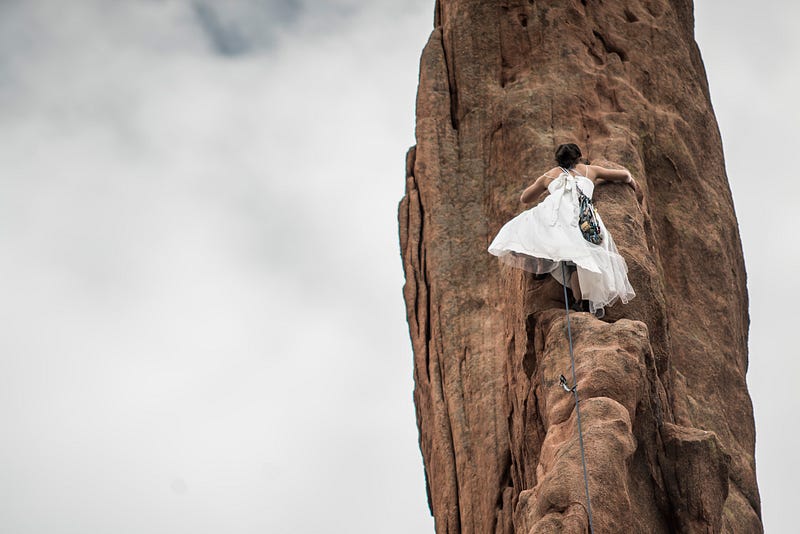
“I stepped out of the box because I’m a woman who breaks locks. I break glass ceilings too, the sky knows my flair, boo. Where you see the word ‘groundbreaking’, know it’s me being breathtaking. I’m a woman; I gave birth to all men.” ― Mitta Xinindlu
“I’m not a feminist,” I tell a dear friend, an intellectual I highly respect, over Hainanese fried noodles and iced Chinese tea. “I’m just a woman trying to figure my way through society in this lifetime.”
My friend smiled. “You should go back to school and study law.”
“You are aware of my age, right?”
“50?” She teased.
“Shut up. Turning 48.”
“Even better. Just 4 years and you’ll be up for glory. You’ve the blood and the brain. Go for it.”
My friend Angie is among my female friends who flow against the norms of society. She studied IT followed by Law and just finished her Bar exams. She flew to London alone for her graduation. She then took a few weeks off to travel. She plans to write a book on Artificial Intelligence and Criminal Law. She currently works on clandestine projects for the Malaysian government in those areas, a pioneer in her field for cybersecurity and data forensic. Her age is a mystery although she hints that it’s somewhere near mine. Does it even matter?
When people comment I’m an “empowered female” it’s because I have friends like Angie. Friends like her raise me up by reminding me what’s out there for women to be and to pursue. The sky has no limits for women like Angie, and no one, she frequently tells me, can or should stand in the way of pursuing greatness. And that, I feel, is the secret to a modern woman’s success and happiness in today’s world: find inspiring friends and cultivate those friendships.
Never once in all our conversations, do we mention the term feminism. In fact, in all our conversations, we never raise the issue of gender inequality.
In Oriental culture, women have been painted as dragons and phoenices. In the 13th century, a consort of the Chinese emperor Wu Ding named Lady Fu Hao, led 3,000 troops into battle during the Shang dynasty. In pre-modern feudal Japan, Onna-musha is a term referring to female warriors of the bushi (warrior) class who fought in battle alongside samurai men. They were trained in the use of weapons to protect their household, family, and honor in times of war. The history of the Mongols has had female warriors. One famous example is Khutulun, the great-great-granddaughter of Genghis Khan, who was known for her skill in combat and was a formidable warrior.
For these women, gender equality was a given. But it also meant they had to pull their weight, go to battle beside their men and face their enemies. And that, they did.
In the Middle Eastern collection of tales One Thousand and One Nights, Scheherazade the central female character and the storyteller to the monarch Shahryar, was so effective with her narrative skills (a skill needed to survive from his wrath) that the king brought her to war when he was called for duty, so she could continue with her nightly tales. Eventually, he fell in love with her and mended his awful ways.
Ancient tales from Asian literature and history have portrayed women known for their skills, enchantment and courage. There was never a fight for equality, but for love. An equal woman was a queen, and when the king was away, she stepped up to her role to manage the kingdom. What’s remarkable to note is that equality was already practiced and understood.
So where did it go wrong?
“There are some women who see nothing wrong with misogyny. In fact, they see a man as a higher being in the social hierarchy than themselves. Yet, they wonder why things don’t change in our society.”― Mitta Xinindlu
To other female friends, when I tell them I’m not a feminist, or avoid using the term, but merely a woman passing through life, it’s not funny. This is a downgrade for someone of my multiple degrees, a disappointment. To them, being a feminist is about female empowerment but merely because that is what all the posters and media say. The problem is, they’re not sure what that actually means. I asked them before and their answers narrowed down to this: whatever the men say to do in society, let’s go the opposite direction.
“That’s a shallow grave. That isn’t feminism,” I meekly reply to my circle of female friends, the so-called Barbie-bashing, champions of feminism. I continue, “We lost the plot a long time ago. Today it’s all noise and nonsense. All I see is anger, hate and retaliation. That’s not feminism, that’s being frustrated. It’s like being in a debate but your strategy is screaming. That’s not a flex.”
There’s a meme which makes me chuckle about feminism. It shows four stages of feminism waves. The first wave shows a woman saying Feminism is about women’s equality. The second wave says A woman doesn’t need a man. Third wave shows a woman with the words, I hate men. The fourth wave shows a man saying, I am a woman.
Some folks may take offense to the meme’s embedded dark humor but that seems to be the reality of what we’re faced with today.
The topic of divorce alone polarizes women.

By general definition, feminism is a political ideology no different to Marxism and Communism. It’s a term coined in modern societies as a result of revolution against the status quo. The terminology is written as “The advocacy of women’s rights on the basis of the equality of the sexes.” This framework alone has been made possible only in recent decades. The question of equality is a slippery slope. In a marriage is equality 50/50 or 100/100?
What’s often forgotten is how feminism and gender equality vary in different parts of the world. In some countries, to this day, these do not exist.
Sitting in a circle of female friends, each one of them has a different definition based on their upbringing, social classes and education exposure. Even among friends, it’s difficult to be part of the same fabric.
When I filed for a divorce, my decision raised ugly truths about feminism among my trusted female friends, some I’d known half my life.
Many of them disagreed with my divorce because according to their cultural stance, in Asian communities, once a woman is divorced, she loses value in society. That becomes a terrifying prospect to face. Who’d want to marry you? What becomes of you post-divorce?
Others disagreed with the divorce because a cheating man is nothing unusual in a society that condones polygamy. What man has not gone astray in his marriage?
Some women felt that a divorce was a showcase of arrogance and defiance when forgiveness can remedy what ails a problematic marriage.
I listened politely to my friends and accepted their point of view respectively. I pondered on those points out of respect and friendship. I then looked at my reflection in the mirror and asked myself the following questions for five months during my trial separation: What is my worth as a woman? What do I deserve as a woman? What are my principles in a marriage as a woman? What are my needs and wants in a marriage and in my future? What do I condone in a partnership? What are the boundaries?
I looked at my life, at how I was raised and the work I’d put in to where and who I’d become. I was a different person when I got married. The strain of our toxic relationship had brought out a different me, someone I didn’t like, someone I no longer recognized. I reflected on who and what I wanted to be moving forward.
After much calm and careful rumination, I told my female friends to fuck off.
“Unless you’re in my position, fighting the demons within, challenged by the forces around and ahead of me, do not offer me theoretical perspectives. I do not and will never condone a cheating partner.”
Despite the circumstances, I admitted to my own faults. We grew apart after our third year of blissful marriage, and I did little to remedy that occurring continental drift till we hit the fatal iceberg in our sixth year. All the while, I ignored the elephant in our bedroom. When my former husband needed me, I wasn’t emotionally available. When I needed a husband, he didn’t know what that meant.
We’d lost our way and language from being in love to being out of it. And by the time my husband found another in our seventh year of marriage, he spoke a love language I didn’t recognize. It took me years post-divorce to re-discover my own love language for another person.
Feminism and what I had studied ardently about it, was of no help when you’re locked in a room screaming divorce. You just want the pain, anger and loneliness to end.
Understanding the value of my worth, I chose to take my former husband to court, not to fight, but to be heard.
Instead of being a victim, I chose to be a warrior. I went to court alone standing beside the man my friends dubbed the enemy. I used the fact that he cheating on me meant I was the one who could sleep peacefully at night, guilt-free. I deserved the property we shared and he could keep the furniture and whatever assets that depreciated in value like the vehicles. Guilt-ridden, he agreed to all my terms and condition. There was no 50/50.
I didn’t fight for money. I did not seek alimony or for any form of support. I just wanted my freedom back. Freedom to be out of the shadows of an imbalance partnership. My girlfriends were not too pleased with this. I tell them, “No amount of wealth can compensate for the freedom I want and appease the value of who I am.”
“What about money for compensation and emotional distress?” They asked me to fight.
“When a man and a woman fall in love to get married, they say to each other, love conquers all and that we would build a life together. But it doesn’t mean I can only begin building a life with a partner. Prior to my marriage, I had built a life of my own and I will continue to do so. If my former husband had contributed anything to that life, it was he who slowed it down. I prefer to make my own money.”
I then tell my friends, “If feminism had anything to do with my freedom, it had nothing to do with fighting for equality. I wanted it all to myself. My life, my career, rebuilding my finance and sanity. The value of a woman cannot be halved or fought for splits and divisions. As a woman I’ve come a long way to be where I am. I refuse to be less of who and what I am from this point onwards.”
That was the divorce vow I made to myself, to have and to hold. That’s been my principle ever since.
I’m often asked if my divorce knocked me down and made me feel less marketable in society. My answer cannot be clearer and louder than this, “Divorce gave me superpowers. If a divorce is what it takes to remind a woman of her worth, then I recommend a dose of it, at least once in a lifetime.”
To women out there, contemplating or battling for a divorce, and worried how this would affect your future, know that for every difficult ending comes a rewarding beginning. It is worth the fight.
A woman’s worth is not to be battled or quartered in court. It is your own to nurture, celebrate and to be respected, 100 percent of it.
Cut and release the people who can’t see that. Find friends who raise you up, not knock you down, gaslight or make you drive in circles. Remember that women are, by natural design as history has proven, to be warriors, dragons and phoenices.
“Today I celebrate women who are: Vulnerable but strong. Sensitive but assertive. Always learning but intelligent. Scared but brave. Victims but survivors. Helpless but selfless. Heartbroken but healers.
Women who break glass-ceilings & barriers. I see you. I am with you. I am you.” ― Mitta Xinindlu