Nostalgia
We, The Children Of The 70’s
Playtime was a free and formative experience
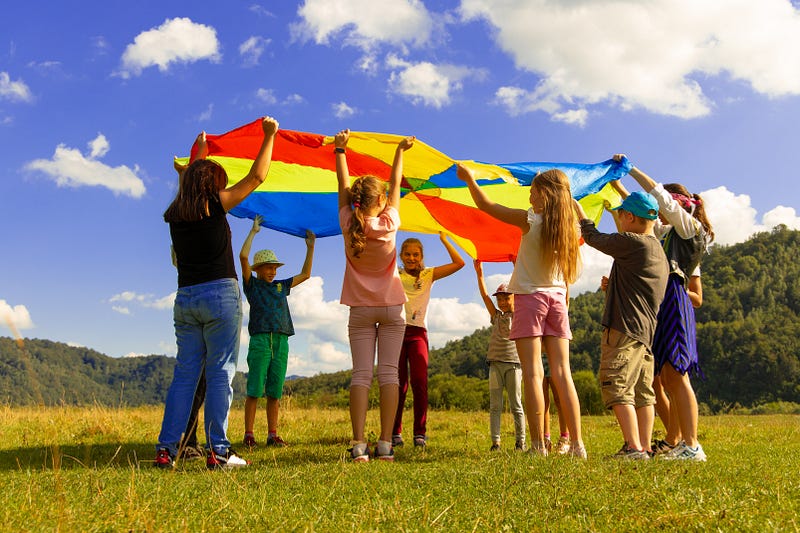
As kids growing up in a low, in-the-making middle-class family, my sisters and I hadn’t many objects to play with. We only received some new desired ones on special occasions, like birthdays and Christmas.
The real richness of those times we spent playing was not the type or the amount of toys we possessed. The three important ingredients were time, a place to play, and of course, us.
Toys
My shared toys included a ball, a few dolls with dresses and accessories, a wooden house my father himself had built, a bike, a skipping rope, an elastic for jumping, cards, some board games, and a pair of roller skates.
Nothing was technological.
We invented games. Our fantasy was huge. We had always something interesting we could come out with. Boring time? Inexistent!
When and where did we play?
Playtime was also present at school, where we spent only half a day. We were home for lunch, and the afternoon was free after finishing homework.
Thinking about it now, it was plenty of free time to play, but to us, it always seemed way too short.
We were lucky enough to live in a small town in the province. There were trees and little parks or spaces offered by the local parish.
I loved skating. There was a dedicated space, a small circle with cement in the little park behind my house, and I could spend hours there until my feet were bleeding.
Imagination ran free, and so did we.
Run, run, run. By dinner time, we were physically exhausted, and after a few advertisements created as cartoons, we were ready to go to sleep by nine o’clock. Color TV had just been invented.
Summer Time
Summertime was even more special on the “playing” side.
The load of homework for the summer was heavy, but nothing compared to today’s charges, though.
While my father kept working in town, we — my mother, three sisters, and I — resided in the mountains, one hour and a half distance from home. He came to visit us on weekends and during his twenty-something days of vacation. His presence was a joy. Beneath the usual multiple and diversified activities, he organized long walks in the forest and in the refugees in the mountains up to 2,000/3,000 meters of altitude.
During my adolescence, I started criticizing these walks. I also got lost once because I stayed behind the group and took a secondary path without knowing it. We found each other at the end of the day in the parking lot. A friendly father with his son had accompanied me all the way up and down. My father never insisted on having me join those walks after the episode. Poor dad, he didn’t deserve it! But I didn’t do it on purpose!
Comparisons
As an adult, I often compared my playtime with the one new generations have, including that of my son.
Let’s say there is no correspondence at all.
Play time should be free.
Nowadays, playtime is organized and structured into activities. These kids have it all planned. They go to swimming lessons, they play football in recognized teams, they are competitive in sports, and they take multiple extra-curricular classes. They never have time to spend on their own, with siblings or friends, exercising their imagination. At least, this is what I saw during my activity as a school educator.
Maybe times are changing again, and I’m wrong. I bet technology is a substitute for many real experiences, though.
Conclusion
The more I age, the more I appreciate those times I spent as a child, playing freely with my sisters, companions, and friends. And I thank my parents for what they gave me, without giving me much.
Thank you for reading.
This article contains links to external pages from which I may earn a commission on a purchase.


