
We Started at the Piggly Wiggly
After that we had no idea where we would go (Part I)
“A journey, after all, neither begins in the instant we set out nor ends when we have reached our doorstep once again. It starts much earlier and is really never over because the film of memory continues running on inside of us long after we have come to a physical standstill.” Ryszard Kapuściński (Polish writer and journalist)
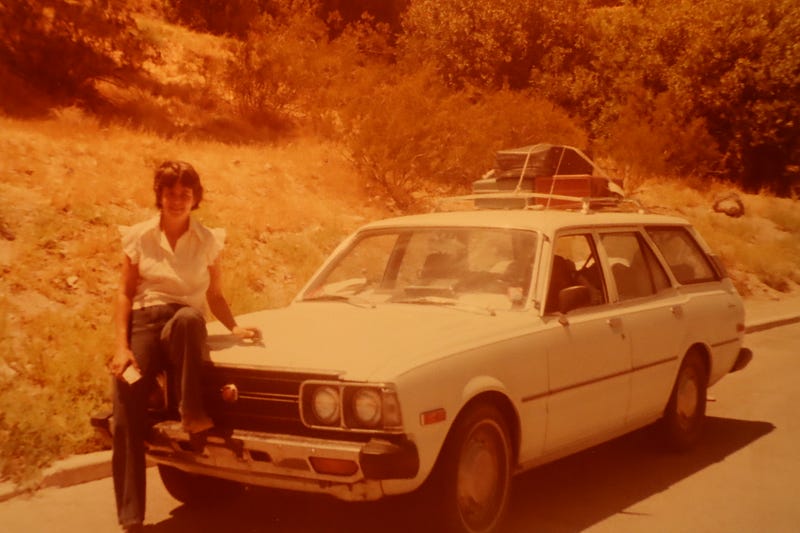
We started from the parking lot of the Piggly Wiggly grocery store near our house — had to stock the cooler! With the cooler stashed behind the seats, camping gear and clothing packed in behind that, stuff that didn’t fit tied to the roof, we were ready to go.
“Ok,” I said to my girlfriend, “Where to?” We had decided not to decide where to go until the car was packed, the motor was running, and we were ready to hit the road. As the ancient Chinese philosopher Lao Tzu said, “A good traveler has no fixed plans and is not intent on arriving.”
“I’ve never been to New Orleans,” she said. “Let’s go there.”
The decision to do this — get in the car, head west, and come back home in time for me to get back to my teaching job — was a spur of the moment, made on the last day of school. I had the time, the West always seemed like the freedom to me, and I thought, “If not now, when?” Lynn — now my wife — remembers it this way: “You had the summer off, you said you were going to go, you asked me to go with you. The only way I could do that was to quit my job, so I did. My dad was not happy, my boss said if I left there’d be no place saved when I returned, but it sounded like a big adventure, so I just quit.” And that’s how our 9,769 mile, 35-day road trip began. Looking back, it’s probably where our marriage began too. Lao Tzu again: “A journey of a thousand miles begins with a single step.” Lynn quitting her job was the step we couldn’t turn back from.
Lynn pulled our brand-new Rand McNally Deluxe Road Atlas — the most up-to-date routing technology available to the long-distance traveler in 1979 — from beside her seat, opened it on her lap, plotted our route from Columbus, Georgia, to New Orleans, and we were off.
We made it as far as Pascagoula, Mississippi, the first day. Since we had never camped before in our lives, we stopped early to make sure we had time to set up. The choice to camp was economic. We really had no money for such luxuries as motels. A double room at Motel 6 was $14.00. Campsites were rarely over $5.00, often less. We had purchased all our gear at Sears and the Army Surplus store, a sunk cost that paid for itself in two weeks.
It was in Pascagoula, I think, that our true relationship began. Over the next few weeks, we came to be more collaborative, more trusting, more practical, and more intimate. These were all new things — sleeping outdoors, cooking and cleaning outdoors, packing and unpacking our household on a daily basis. We visited lots of places and saw lots of things, but the place we saw the most was our little Toyota station wagon. For the next five weeks, we were together 24 hours a day, every day, sharing two front seats and a two-man tent.
New Orleans was nice. There were lots to do, lots to see, but in the end, we decided it was the getting there that we enjoyed most. Traveling through wetlands on elevated highways, then to the beach road, white sand rimming the blue Gulf waters that went on forever, salt air filling our lungs. It was the road itself we loved.
We sampled the French Quarter, took a carriage tour of the city, and learned a bit of the history, but the road beckoned. Also, it was ungodly hot and humid in New Orleans and we were camping. The heat sent us north.
“I lived in Grand Forks, North Dakota when I was a kid,” Lynn said. “Want to check that out?”
A look at the map showed Grand Forks due north of Graham, Texas. Lynn had an aunt and uncle in Graham, so we thought we’d see if they’d put us up for a night. We figured it would be the last bed for a while.
Now is it a good idea to call relatives you haven’t seen in years out of the blue to ask if you and your boyfriend can stay the night on their way to God knows where? No, probably not. Lynn called her dad from New Orleans to ask him to grease the wheels. Then Lynn made her call when we got to Dallas
“‘They said, sure, come on, you can stay with us,’” Lynn said. “But I don’t think they’re thrilled with this.” “What’s the problem?” I asked. Well, I knew the answer. It’s 1979, your niece you haven’t seen in 10 years is coming with her boyfriend you’ve never met, they’ll be here in 3 hours or so, they’re not married…But it’s family. What are you going to do?
We got there about four in the afternoon. Lynn got hugs, I got wary handshakes. Uncle Joe broke out a round of beers, Aunt Margaret got the peanuts. Lynn commented on the paintings on their walls — Uncle Joe painted birds, landscapes, trees, the sort of things Lynn painted — so the artists compared notes. We talked about our trip so far, they said they wished they had done something like that when they were younger and said they might still do it. The afternoon turned to evening, we grilled steaks and baked potatoes, had another beer or two, talked and listened to the night from their porch, and turned in around ten. In the same bedroom. We left for Grand Forks the next day with one of Uncle Joe’s paintings, which we still have on our wall. We both got hugs.
It took us four days to get to Grand Forks. We meandered. We listened to the radio. In 1979 music came from the radio. It was fun finding new radio stations as we crossed the plains. Most stations were independent then — it was in the days before one company might own 500 stations. There was more local flavor, a broader playlist of songs, and different kinds of programs. We came across a couple of stations where the DJ was just reading the newspaper. One was having an on-air garage sale. We got hourly farm reports, market updates, and cooking shows. That said, wherever we went we heard the strains of Donna Summer singing Bad Girls and Gloria Gaynor singing I Will Survive. We gravitated to stations playing the Eagles doing The Long Run, though, or Fleetwood Mac doing songs from the Tusk album, or Supertramp singing Goodbye Stranger. We weren’t big Disco fans. Nor garage sale fans.
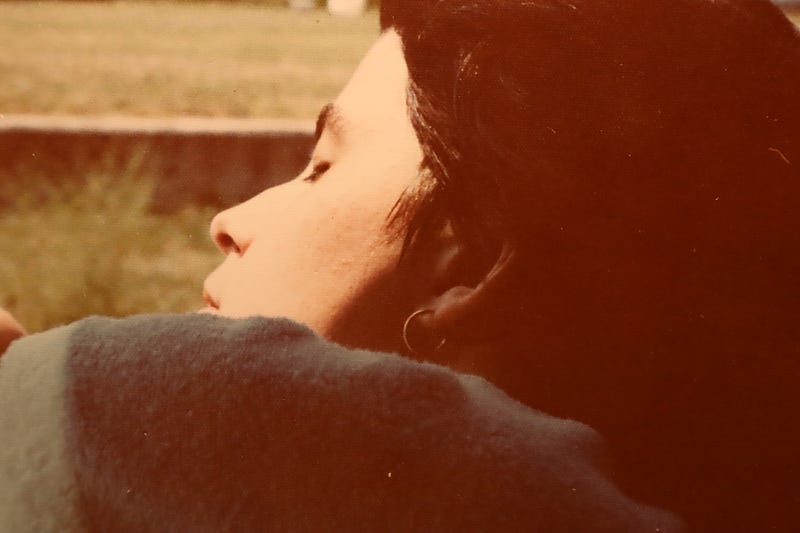
We camped all the way to Grand Forks, staying in Cheney, Kansas; Norfolk, Nebraska; and Waubau, South Dakota. By the time we arrived, we had a routine. I did the bulk of the driving because Lynn didn’t like the stick shift. She did most of the record-keeping because we were splitting expenses down the middle, and she was and is very tight-fisted with her money. I would generally set up the tent while she set up the rest of the campsite, but we switched off on that quite often. We went from bumbling idiots with no idea how to do it to practiced pros able to set up in the dead of night in whatever random place we happened to find ourselves. We made a lot of mistakes we could have argued about, but fortunately, we decided laughing about them was a better way to go.
When you say you took a trip out west, people expect to hear about the great parks, the big landmarks, their awesome beauty. We did see some of those places and enjoyed them. But they are not our memories.
It’s the thrill of starting each day with a blank slate that we remember. The (slightly nerve-wracking) fun of our daily afternoon map search, looking for the green tent marks along our route that would signify our place for the night. We remember the beauty hidden in places like Cheney, Kansas, where we camped on the edge of a beautiful river, our tent nestled under towering oak trees, a cooling summer breeze rustling the leaves overhead. Chatting with families out for short summer adventures, finding things to do nearby — the local diner, the odd county fair. And the Cheney campsite was $1.50/night.
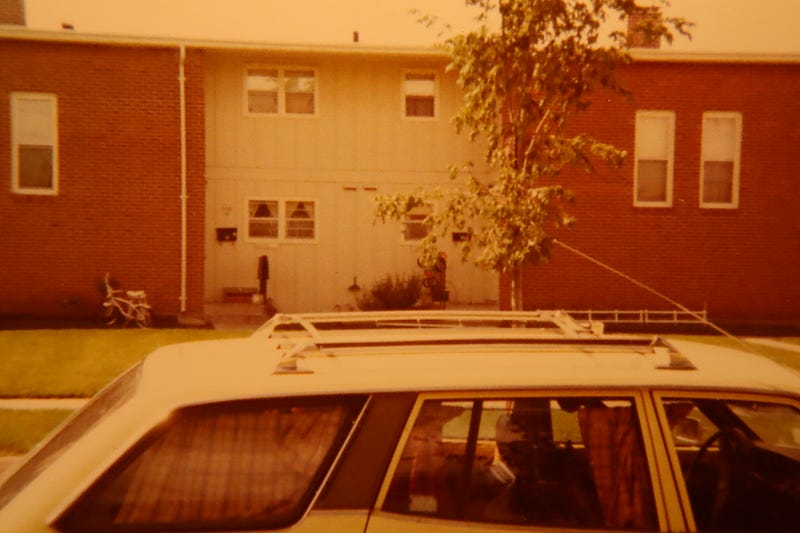
In Grand Forks, we found where Lynn lived as a kid. We found the place of her most vivid childhood memory — when she was seven, she lost a snow boot in a big drift on the way home from school and stood on one foot screaming until her sister got help from her mom. (They moved to Hawaii a few months later where her main memory is being hit by a hurricane, but that’s another story.)
Other memories of Grand Forks? Lynn’s first experience with a wooden outhouse. Splinters. She was not happy. Mosquitoes the size of hummingbirds. Fireworks on the Fourth of July. Wonderful.
Where next?
We had no plans to go to Winnipeg. We didn’t know anything about the place. After Grand Forks, it was either west or north. We had never been to Canada so we decided north, and Winnipeg was just a couple of hours away. We decided to make it an international trip.
Crossing the Canadian border in 1979 was pretty much like crossing from one U. S. state to another. We had no passports, just driver’s licenses. We were greeted by friendly Canadians who glanced over the station wagon packed with gear and wished us a pleasant stay, eh? That was it. Next stop, Winnipeg.
The road to Winnipeg is long and straight. Miles and miles of waving grain and grass as far as the eye can see, progress marked by occasional grain silos rising from the plains. We passed the time reading a Robert Ludlum novel to the driver and listening to Canadian radio.
Winnipeg rose from the prairie like Oz, a gleaming city under an intense blue sky. The place was vibrant, a city that knew winter and was good at summer. We found the city park, rolling hills with wide sidewalks carrying moms and baby strollers, men on benches taking in the day. We remember a domed aviary at the crest of a low hill. Even on this weekday people were everywhere.
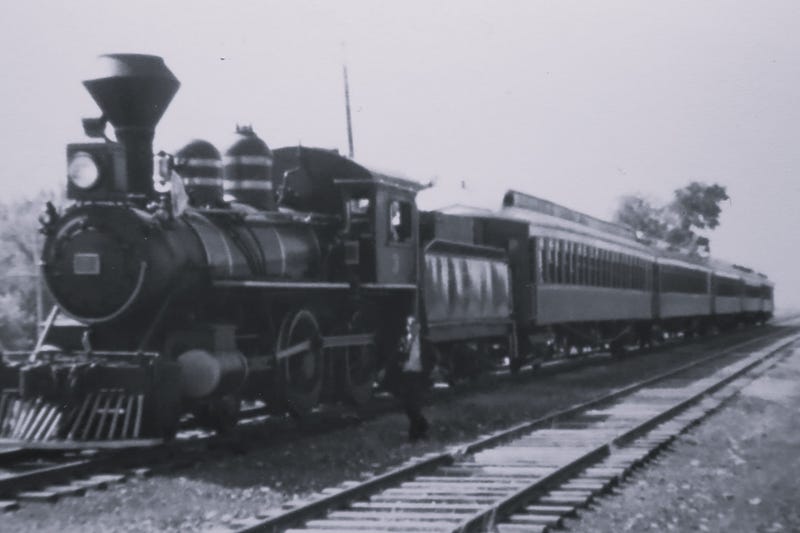
We stayed an extra day to ride the Prairie Dog Central Railway: rocking, creaking wooden cars pulled through the northern prairie by a hissing vintage steam locomotive; the smell of burning coal mixed with fresh summer air; old-world mahogany and oak paneling, polished brass fittings. Lots of families along for the ride and great fun for all.
We left Winnipeg on the Trans-Canada highway. By now we could break camp or set it up in less than ten minutes. We had abandoned our careful space-saving organizational plan for the cargo bay — now we followed the far simpler first-out-last-in plan. When we broke camp, we just tossed the stuff in the car and hit the road. In the afternoon, we took it out again. The car wasn’t as neat, but it was still organized. Everything was in there and we were on the road in record time.
This time we were truly headed west. The highway was like an arrow slicing the prairie, pointing to nothing but that blue sky.
Coming next, Part II: Across the Canadian prairie, south to L. A., through the West, home by the Southern route.


