We Spend a Lot of Time Destroying Dreams
Soul City, North Carolina
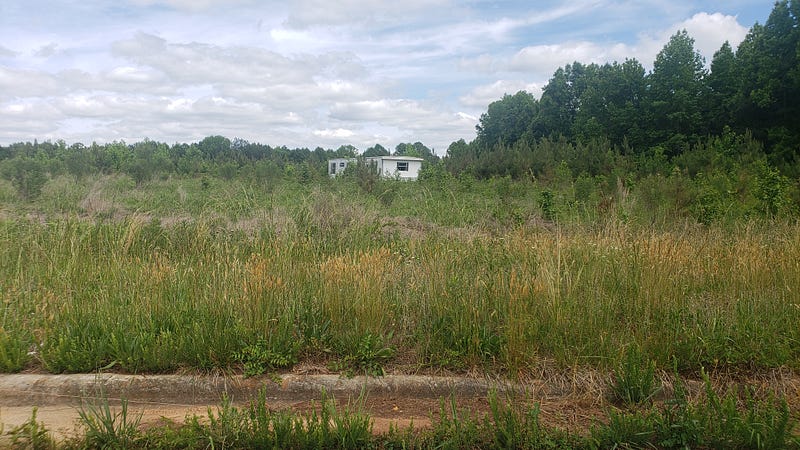
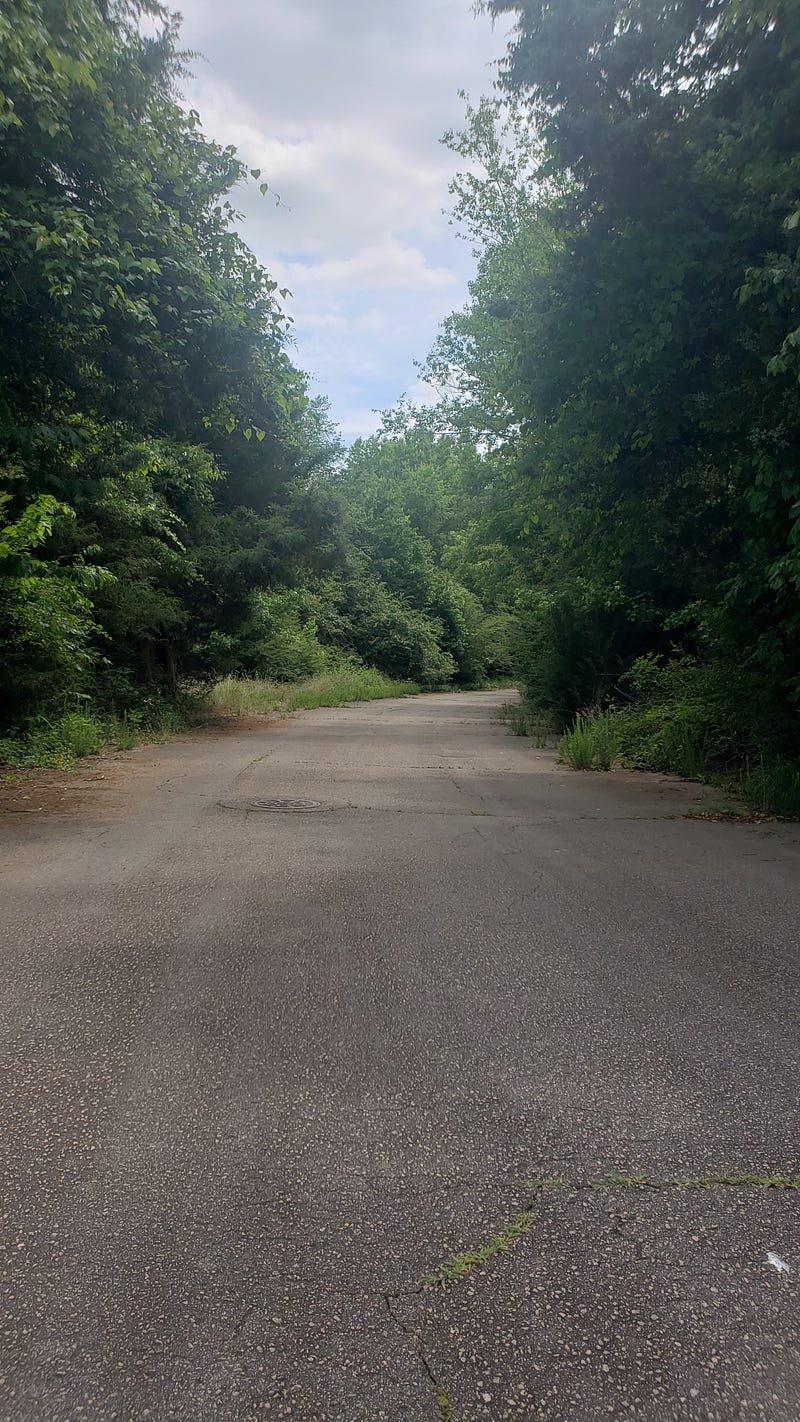
I felt a little silly making everyone ride with me 20 minutes off the highway to an overgrown cul-de-sac with a crumbling curb. “Where are the houses?” my buddy asked. The once-cleared lots were slowly being taken back over by scrub trees. “They were never built,” I say. We stand there a minute, someone points out a fire hydrant covered in kudzu, and we get back in the car to leave.
Soul City was the mecca of lawyer and civil rights activist Floyd McKissick’s mind. In the 1960s, Warren County, North Carolina was among the poorest places in a poor state with a median household income of $1,958 (far below the national average of $6,691). The county was 60 percent Black, but virtually all of the elected officials of the time were white.
Soul City would be multiracial, but with Black leadership, Black business owners, and Black opportunity at its center. The plan was bold, ambitious, and allegorical: The 5,000 acres McKissick secured for Soul City had been, just a few generations before, a plantation.
Soul City would offer security and unfettered opportunity, away from the entrenched patterns and power of the old South. McKissick wanted to reduce the out-migration of Southern Blacks from North Carolina by designing a city with family-supporting employment, quality housing, education, and social services that were accessible to everyone, from poor white folks to Black families that were being held back by entrenched racism. The plan was to build a city for the people most Southern cities were forever stacked against. For these reasons, it had to be made from scratch.
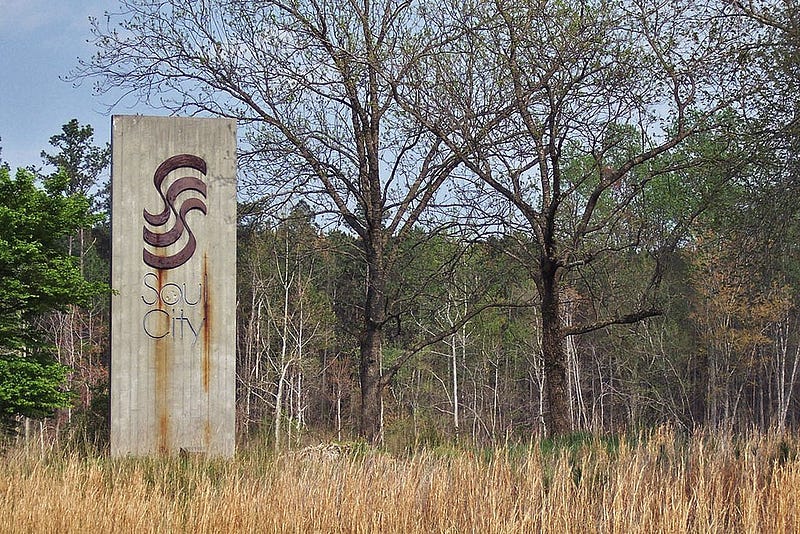
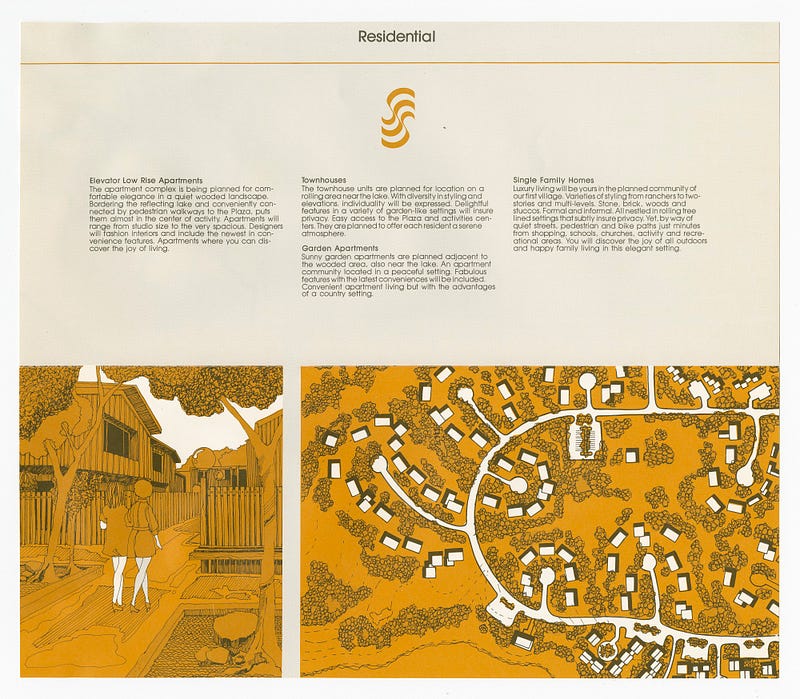
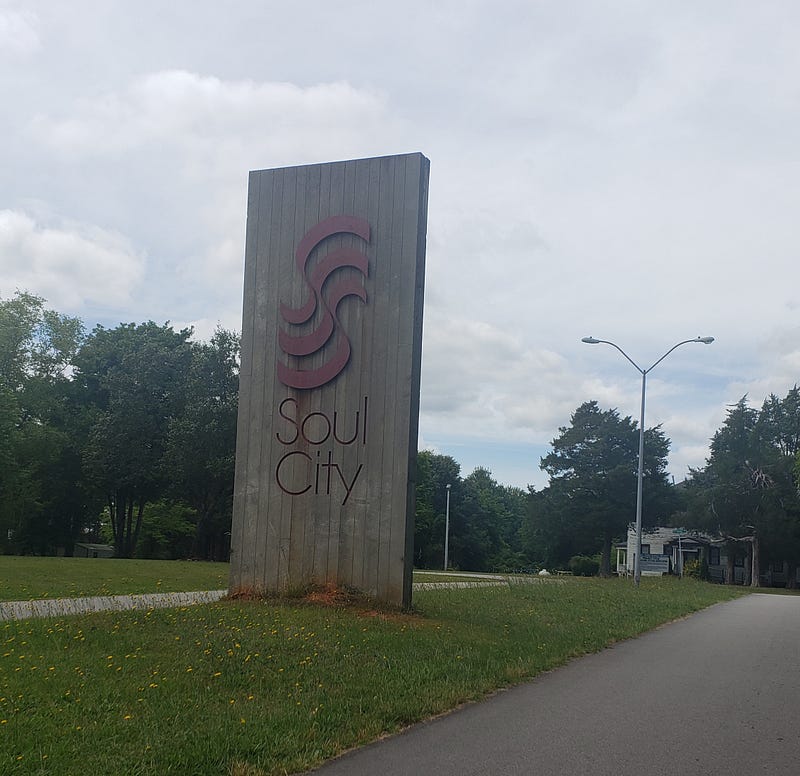
Today, Soul City is just a cluster of odd curbs on country roads; not a ghost town exactly because the town was never here. There are half a dozen unpopulated cul-de-sacs, overgrown lots and trees sprouting up through cracked pavement; the towering 70’s style cement “Soul City” sign feels big and awkward off the small in-the-middle-of-nowhere road. Several dozen modest family homes that were built for the pioneering families of Soul City do remain occupied — but it’s a far cry from the projected 24,000 jobs and 44,000 inhabitants McKissick’s 30 year plan projected.
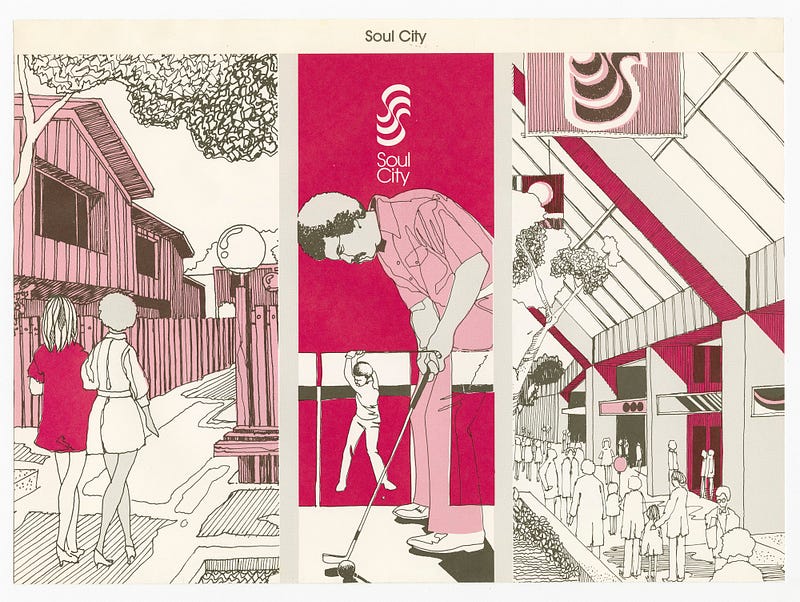
By all accounts people were very excited about Soul City. Early on McKissick secured a $14 million HUD investment as well as the backing of President Nixon (CORE leader turned Nixon ally might sound unlikely, but sometimes that’s how things go). Construction began in the early 1970s: Land was cleared, roads built, and water and sewer lines were put in. Along with the initial homes, a day care center, a health care center, and “Soul Tech I” (52,000 square feet of industrial space designed to attract industry) were all completed as well. Much of the infrastructure McKissick built — the medical facility, the business incubator, even the water and sewer lines — were firsts for Warren County and benefitted the neighboring towns and unincorporated communities that had never been invested in at the time — and haven’t have been invested in much since.
I can’t feign knowledge or even interest in business models, real estate, or entrepreneurship, but I do suspect there is something regular people like me can learn from Soul City and everything that happened between its inception and its demise. Maybe it’s not a lesson about Black capitalism or planned developments, but more a lesson about how carefully, deliberately, and intentionally promising projects, movements, and ideas are dismantled, destroyed.
It shouldn’t be a shock that the notoriously racist Senator Jesse Helms railed against Soul City — unsurprisingly, he couldn’t tolerate a focus on Black business and Black leadership or anything that put Black people outside of dependency on white people. Helms tried to equate the Black entrepreneurship of Soul City with the Black Power movement (at the same time that CORE and other Black activists dropped McKissick, saying his focus was too reformist, too assimilative). It might be more surprising to some that Democrat Representative L.H. Fountain and Claude Sitton, the liberal editor of the Raleigh News and Observer, railed against the project so heavily — but, if we are being fully honest, liberal white folks have always struggled when projects don’t involve them. Together, Helms, Fountain, and Sitton mocked the project, ridiculed McKissick, and backed inquiries, investigations, and lawsuits against Soul City for a decade. In the end, all the many investigations yielded no wrongdoing or misappropriation, but the result of a decade of attacks and inquiry was to bankrupt the project. By 1979 construction had mostly ceased, leaving the shell you barely can detect when driving through today.
It can be debated if Soul City was a good or even feasible idea, financially or real estate wise. We have no idea if it would have been successful without the one-two punch of the powers of the Left and the powers of the Right joining forces against it. The 70’s unfolded as a series of economic crises, having Nixon as an ally for the project obviously didn’t pan out, and it could even be that McKissick and his team really didn’t know what they were doing (as the News and Record continually alleged).
But what we do know is that after the Soul City project collapsed, the people of Warren County became the steady victims of bad policy, detrimental projects, and overt racism for the next 40 years. The very month that HUD pulled its backing of Soul City, the State of North Carolina selected Warren County to build a PCB landfill project to dispose of contaminated soil that was illegally dumped. The state considered 90 different locations for the dangerous landfill — but selected the majority Black, very poor Warren County over all the other sites. For years, local Warren County residents fought the landfill and its cancer-causing pollutants through lawsuits, organizing, and protests. In 1982, when the first trucks carrying the contaminants rolled up these country roads towards the landfill, local residents laid down in the road to prevent them from passing. Over six weeks of collective action, state troopers and National Guard were called in and nearly 550 people were arrested, including McKissick.
The landfill was put in just a few miles from Soul City. Even though every hurdle possible was thrown in its way and the project, as envisioned, never came to be, it doesn’t seem far fetched to say that the momentum, organizing, and idealism around Soul City likely contributed to the powerful resistance to the landfill and the birth of the environmental justice movement in the United States.
My friends and I pull out and head up Soul City Boulevard — a two lane country road lined with daylilies and buttonbush. Today, the Soul Tech 1 building is surrounded by barbed wire and tall fencing, cynically housing the Warren County Correctional Facility. Soul City was chalked up to be something between an extremist menace by the right and an idealistic pipe dream by the left. I’m no historian nor an economist; no one needs my take on Soul City. I just look at it all — the big, beautiful sign, the name, the people who moved here, the boarded up medical offices, First Baptist of Soul City that burnt to the ground and rebuilt again, the park and the pool, the prison — and I think, damn, we invest a lot of time — and money — disparaging dreams.
We drive towards Middleburg, past the few houses of Freedom Circle and down sparsely populated Liberation Road. The curbs give away again to gravel shoulders, empty manhole cul-de-sacs to double yellow lines and state roads. We pass immaculately maintained plantations, the white columns of Lake O’ The Woods, the shaped boxwoods of Cherry Hill — all plantations turned to thriving wedding venues and concert halls and I think about how little has to do with chance, how nothing has to do with luck, how everything has to do with power and plan.