
PERSONAL ESSAY
We Shouldn’t Let Others’ Labels Of Us Define Who We Are
Choose positive labels for yourself … or none at all
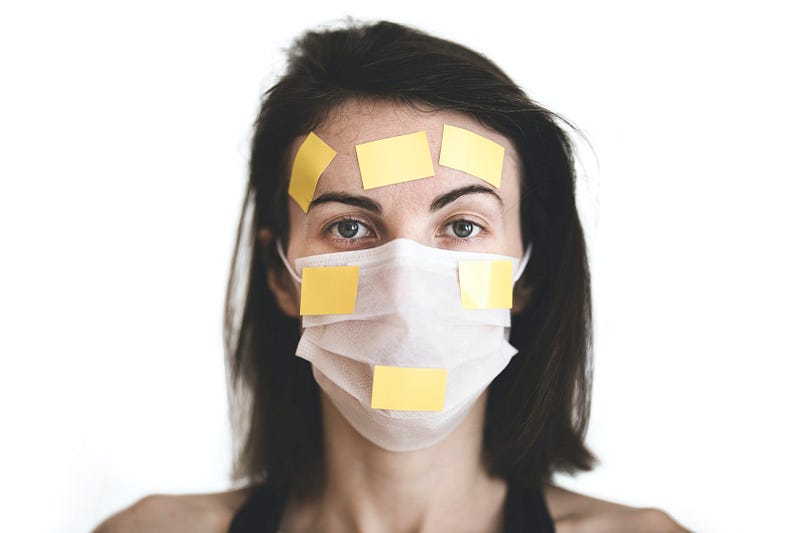
We’re born into a world of labels. They can define us if we let them.
Over the course of a lifetime, we’re bombarded with labels from others who critique, criticize, and condemn us. People have called me prissy, uptight, insecure, and many more negative labels.
Then, there are those positive people who’ve lifted me up with complimentary labels, such as strong, independent, and intelligent.
Childhood labels
The first label I recall came from a bully on the school bus. It was my first day of kindergarten. As he walked toward the back of the bus, he looked at me, laughed, and sang a children’s song that included the lyrics “kindergarten babies.”
I felt humiliation, anger, and shame. He labeled me as a baby. I wasn’t a baby! I was 5 years old and a big girl since I was going to school.
It wouldn’t be the last time someone labeled me in a negative way.
As a child, my mom labeled me as “daddy’s girl.” It seemed to fit because I followed my dad around like a shadow. I wanted to be close to him. I suppose my desire for his attention was due to the fact that he left our family when I was 7.
Dad drove me to the bus stop on my first day of third grade and told me he was leaving my mom and our home. I felt like it was my fault, like I’d done something wrong. I took the abandonment personally. Still, I loved my dad and wanted to be close to him when he picked me up on the weekends.
I did well in school. My best friend was athletic and I was a bookworm. Because I took my homework seriously, earned good grades, and didn’t cause trouble, teachers liked me. This earned me the label of teacher’s pet from some of my friends. Interestingly, the same friends who called me a teacher’s pet asked to copy my homework.
While I didn’t like being called a “teacher’s pet,” I enjoyed the mutual respect between teacher and student. My parents taught me to respect my elders so I did. Of course, I liked some teachers more than others. The ones who taught with enthusiasm, gave encouragement, or simply provided a listening ear were the best.
Junior high labels
In junior high school, my best friend and I were inseparable and the main thing we had in common was chasing boys.
“Do you think Mark is cute?”
“What would you rate Rick as on a scale from 1 to 10?”
“Who would you want to kiss in our class?”
We wrote notes back and forth about these important topics. Then, it happened! We got boyfriends, and our fantasies became realities. We had our first makeout sessions and it was great, but it wasn’t so great when jealous girls labeled us as sluts.
I’ll never forget the day when a friend told me she saw my name on the wall of the bathroom stall in the girl’s restroom. It said, “Chevie is a slut.” I was mortified. I was also angry and hurt. I wondered who would write such a nasty thing. I scribbled it out with a marker.
It was the worst thing anyone had ever called me, and I didn’t think it was justified since I was still a virgin. Besides, I surmised that a girl wrote it who was also friends with my best friend Tori. I think she did so, not because she was jealous of the boy I was dating, but rather because she was jealous of my friendship with Tori.
At 19, I was called this derogatory term again, but this time it might have been true according to the definition, which is “a woman who has many casual sexual partners.”
Define many. That summer I had three, so maybe I was a slut, maybe not. Three seems like several, but not many.
Then, parties and sex were my priorities. I left the shackles of my youth behind — going to school and listening to my parents’ rules — it was time to party and sow some wild oats. It was my Rumspringa. I was single and ready to mingle, and why not? It was fun!
So, when a few guys came to my house to party one night, Jake brought along his friend Doug. I didn’t know Doug well, but he felt he knew me well enough to tell me that his girlfriend thought I was a slut.
I’d never met Doug’s girlfriend, but living in a small town, people talk. I suppose one of the guys I had sex with bragged about it to someone and word got around.
The label made me feel dirty and ashamed, but I don’t recall if it stopped my promiscuity. I’m sure I found a new boyfriend after that wild summer and became monogamous again. Doug’s girlfriend could relax; I wasn’t after her man!
My harshest critic
While the label that Doug’s girlfriend gave me felt awful, the ones I gave myself were much worse.
After being sexually abused as a child, I grew into an adult, labeling myself as damaged and broken. No one would want me or love me. Initially, I was ashamed because I felt that somehow, just like my parent’s divorce, the abuse was my fault.
Over time, I learned that wasn’t true. I also learned that I was worthy of love just like everyone else.
There are many labels associated with sexual abuse, such as victim and survivor, but I don’t choose any of them.
It is something that happened to me, and surely it shaped me, but it does not define who I am. I’m much more than that.
I’m a college graduate. I’ve been a successful businesswoman. I’m a published author and many more positive, uplifting things.
If I had to choose one label for myself, it would be a kind human being and that’s the label that really counts.
Chevie Hanssler is a former newspaper editor. On Medium, she edits for The Narrative Arc, In for a Penny, The Windphone, and Beyond the Scoreboard.