
We Should Improve Humans The Way We Improve Technology!
The last century saw a boom in technological advancement.
We went from steam engines to electricity. We went from a computer being the size of a building to do a simple calculation to having a phone more powerful than what we used to send people to the moon.
Technological boom is everywhere and accelerating. We lean on it for a better future, to facilitate our everyday life. We pour most of our resources, as a society, to advance technology.
With the rise in AI and all the resources it’s pulling towards it, it’s legitimate to think that technology will replace us in the long run.
This topic is rich, and one can only speculate!
I think this fear comes from the disproportion between the resources we allocate to the advancement of technology and the resources we assign to the improvement of society, education and humans as a whole.
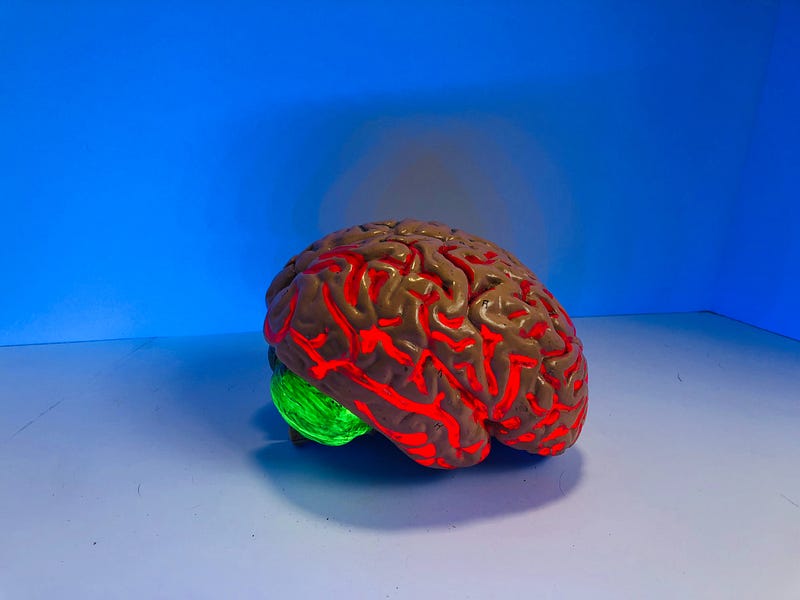
The brain, an under-explored machine!
There is so much we don’t understand about the human brain.
Once seen as a simple calculation machine swayed by chemicals, new (and not so new) studies explore the existence of the human consciousness.
What is it that makes us aware of our existence and that we are aware of that awareness?
In his book — Descartes’ Error, Reason, and the human brain — Antonio Damasio explores the human brain’s complexity and the interchange between the brain and the body.
Everyone knows that to make the best possible decision, one must be objective and put aside his emotions.
This couldn’t be farther from the truth. Studies highlighted in the book shows emotionless decision is not only sub-optimal but impossible! Our emotions, if used correctly, help us navigate our subconscious to tap into our vast experience so we can make better decisions.
People who lost the ability to feel emotion from trauma or physical accident also lost the ability to make decisions.
The human brain is misunderstood, under-explored and we have yet to unleash its full potential!
Society as a whole is a chaotic machine!
Growing inequalities are a symptom of how little effort we put into bettering our society.
Don’t get me wrong; society has improved if you compare it to 100s of years back.
However, we put way more energy into improving technology, war and preserving the status quo.
Justice, Education and Equity are far less sexy than Amazon Prime and Tesla. There is a massive difference between Equity and equality.
Equality is more related to communism (the way the USA views it), everyone being equal regardless of the effort everyone brings to the table.
Equity is a better option for giving everyone a chance to aspire for a better life.
If we take a race analogy:
Equality means everyone, regardless of talent or effort, race at the same speed and goes through the finish line at the same time, whereas Equity would mean everyone starts at the same time and have access to the same machine quality, but when the race begins, those willing to put more effort and/or have more talent, have the opportunity to get ahead.
Inequality is necessary to nurture innovations and the desire to surpass oneself, leading to the improvement of society.
However, too much inequality is bad for social cohesion and leads to the rise of crime and violence. It kills innovation, nurtures frustration, resentment and hate.
Society, right now, is heading towards more inequalities. Every year, the rich get richer, poor get poorer. Everyone knows it!
It is time we stop playing around and put our energy into creating, if not a different system, at least a more empathic capitalism.
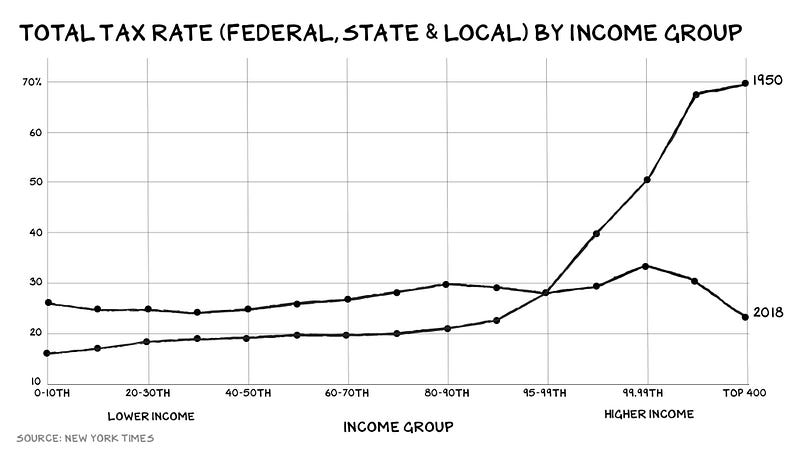
Right now, we externalize gains, as in companies get to keep most of their earnings (i.e. as shown in the tax rate comparison between 1950 and 2018), and we internalize lost, as in we bailout companies and give companies money instead of helping people directly in needs.
We know what’s wrong, and we have solutions. We lack the political will to act.
Also, disinformation is cancer; it’s not freedom of speech! (I’ll leave that for a later article).
The main takeaway, let’s invest in ourselves!
Humans are complex and sophisticated machines. Instead of trying to simplify our existence, let’s embrace the complexity and explore it. Let’s explore the depth of our minds and learn how to earnest its power.
Furthermore, let’s continuously reinvent our society as we keep on improving our technology.
Do you hear people say — Hey! You can’t create autonomous electric vehicles since that’s not how the first car’s inventor thought of it!
However, you do hear people protest about progress because it wasn’t mentioned this way by people more than 200 years ago (and more if you take into account religions); that’s insane, literally.
Should we discard what people thought in the past? No.
Should we blindly listen to what was written 100s of years ago? Hell No!
Learn from the past, build for the future; that’s the only way forward!


