
We Need To Talk About The Ocean
Aliens? Unexplored Dominions? Mermaids?
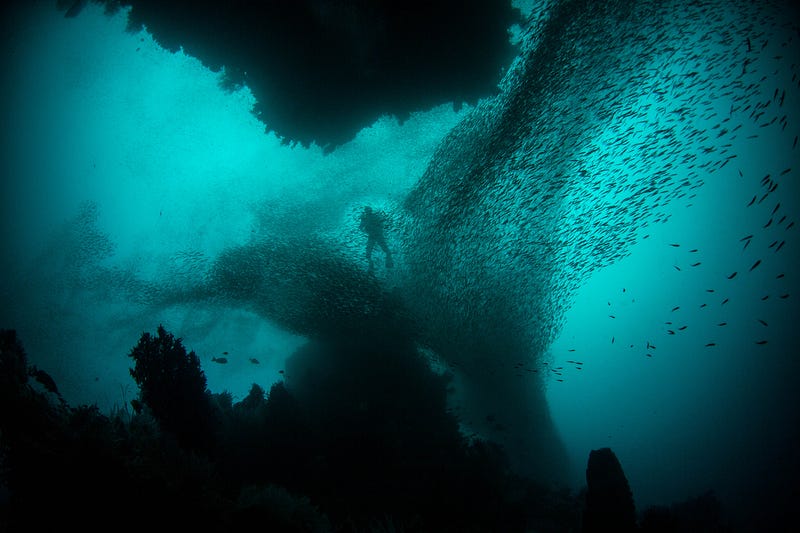
Welcome to my Deep Dive
Oceans are the most powerful beings on this planet; we have barely begun to explore them as a species and the majority of people will probably never go further than a safe distance from the beach (if that.)
You may have heard the statistic that only 5% of the ocean has been explored, but let’s really think about that.
The majority of our planet is water (71%) and the oceans are home to more life than we will ever discover. Less than 25% of the global sea floor has been mapped.
Because of the intense pressure in the depths, exploration beyond surface level is almost impossible.
More people have been to the moon than the deepest parts of the ocean.
The Challenger Deep in the Marianas Trench is the deepest known point on Earth at 35,853 feet below sea level; the first time a person was able to travel to that depth was in 2019.
The ocean life that has been studied is both fascinating and mysterious.
Sea creatures experience a completely different planet than we do on the small fraction of Earth that is land.
Have you been to an aquarium recently? If not, I would highly recommend making a trip. Seeing jellyfish, sea horses, and an octopus up close almost convinced me that aliens are indeed among us.
Even if they’re not, knowing that these creatures exist on our planet and have evolved to survive in the ocean is evidence that life forms evolve in environments that humans could never survive.
So how can we assume that there aren’t all kinds of species on different planets throughout the universe that have evolved to survive in their environments? Maybe they’re spending their time exploring their planet instead of trying to understand Space.
Anyway… Back to Earth.
I’ve never felt a desire to go scuba diving or swim with sharks, but I love documentaries about the multitude of life beneath the surface of a seemingly infinite body of water.
Scientists have been able to capture footage of everything from coral reefs to angler fish, it’s truly impressive. And this massive ecosystem is only 5% of the ocean?!
The life forms that scientists have been able to research in the darkest depths of the ocean are the most fascinating to me.
Some of these animals have what look like LED lights all over them, some can even spew luminescence at predators as a defense mechanism. Did you know it was possible for fish to spew luminescence?! I sure didn’t.
Natural fluorescence has been discovered in all kinds of fish, sharks, sting rays, coral, and other sea creatures.
Imagine the wonders that exist beyond what we’ve encountered.
The Octopus: Unusual Creature or Alien?
There’s a fantastic documentary on Netflix called “My Octopus Teacher” about a diver who visits the same octopus every day.
He observes a significant amount of her life cycle, including the regrowth of a limb after a shark attack and the birth of thousands of tiny octopi.
These extraordinary creatures are often described as “from another planet.” They are very intelligent and solitary animals who have evolved to survive despite having a life span of only a few years.
The oceans are a different world from the one we know.
This doesn’t necessarily mean that unique creatures who live under water came from outer space, but if aliens were able to make a home for themselves in the ocean, would we ever know about it?
The Largest (Known) Creatures
The blue whale is the largest mammal on Earth that we know of. Can you imagine being in the open ocean and seeing something larger than a semi-truck swimming towards you?
Lion’s mane jellyfish can grow tentacles up to 120 feet in length, making it the largest jelly species in the world, as far as we know.
The largest turtles on Earth live most of their lives in the sea; they can grow up to 2,000 pounds and live to be over 100 years old (if they’re lucky).
What’s terrifying is that these are surface level creatures; the phenomenon of abyssal gigantism suggests that enormous size could be an adaptation of creatures that live in the deepest parts of the ocean.
Colossal squids are the largest known invertebrate at up to 46 feet. They are not only legendary deep sea creatures, but remain mysterious because of the challenges that come with studying them in their natural environment.
Megalodon sharks may or may not be extinct, but there is definite evidence of a species of shark that’s more than three times the size of a great white.
What else exists in the over 90% of the ocean that remains unexplored?
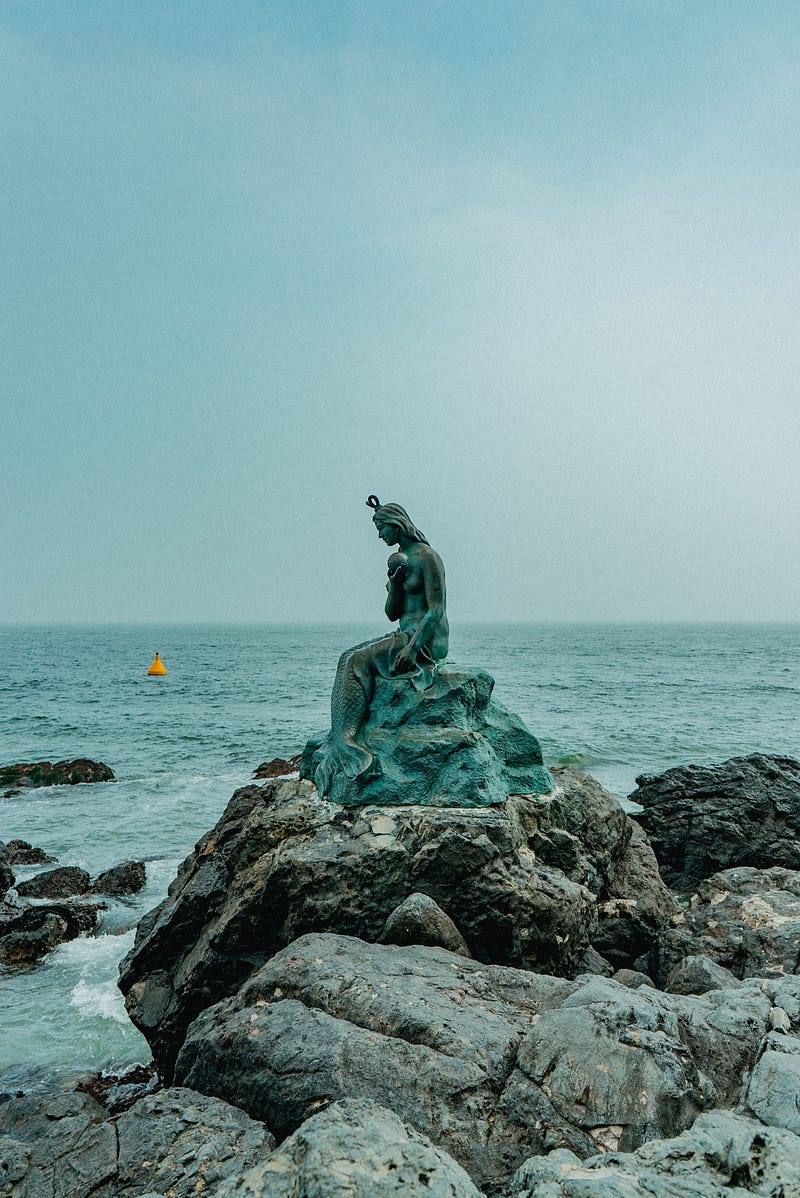
The Mermaid: Icon, Legend, Myth?
It’s easy to assume that most of the folklore about mermaids came from sailors who had been on the water so long they were hallucinating.
There are many interpretations and legends of mermaids and sirens in different cultures, including monkey-fish hybrids known as ningyo in Japan. The body of a mummified ningyo was being re-examined in February 2022, the results have not been released.
While there is no recorded evidence of these humanoid creatures, the idea of an imaginary species under the sea is relevant. What if some of the reported sightings were legitimate? What if they saw aliens from another water planet who were just visiting?
If they were real, would these creatures want to be discovered?
The Bermuda Triangle: Infamous and Unexplained
Between rogue waves, toxic seaweed, Bermuda’s magnetite, and potentially exploding natural gas, there are many threats to travelers in the area of the Atlantic Ocean known as the Bermuda Triangle. Yet many of the disappearances that have occurred there remain inexplicable.
Multiple planes and ships (including US Navy) have vanished without a trace while traveling through the area.
Pilots flying through the Bermuda Triangle have encountered clouds that seem to teleport them, attaching to their aircraft with electromagnetism and propelling them through the area faster than they can normally travel while using less fuel.
There are stories of abandoned boats near the area that were found in-tact with supplies and belongings on board and no explanation for why the crew and passengers were missing.
Did everyone really jump into the water and drown?
The Sargasso Sea is full of seaweed that’s toxic enough to induce psychosis if inhaled for a long period of time, could this explain multiple mass suicides?
Is this place home to sea monsters?
Is there something extraterrestrial going on?
The unpredictable environment makes it difficult to explore in order to learn more about what’s causing these disappearances. There are many theories and conspiracies about this place, it’s one of a few “Triangle” anomalies that remain a dangerous mystery.
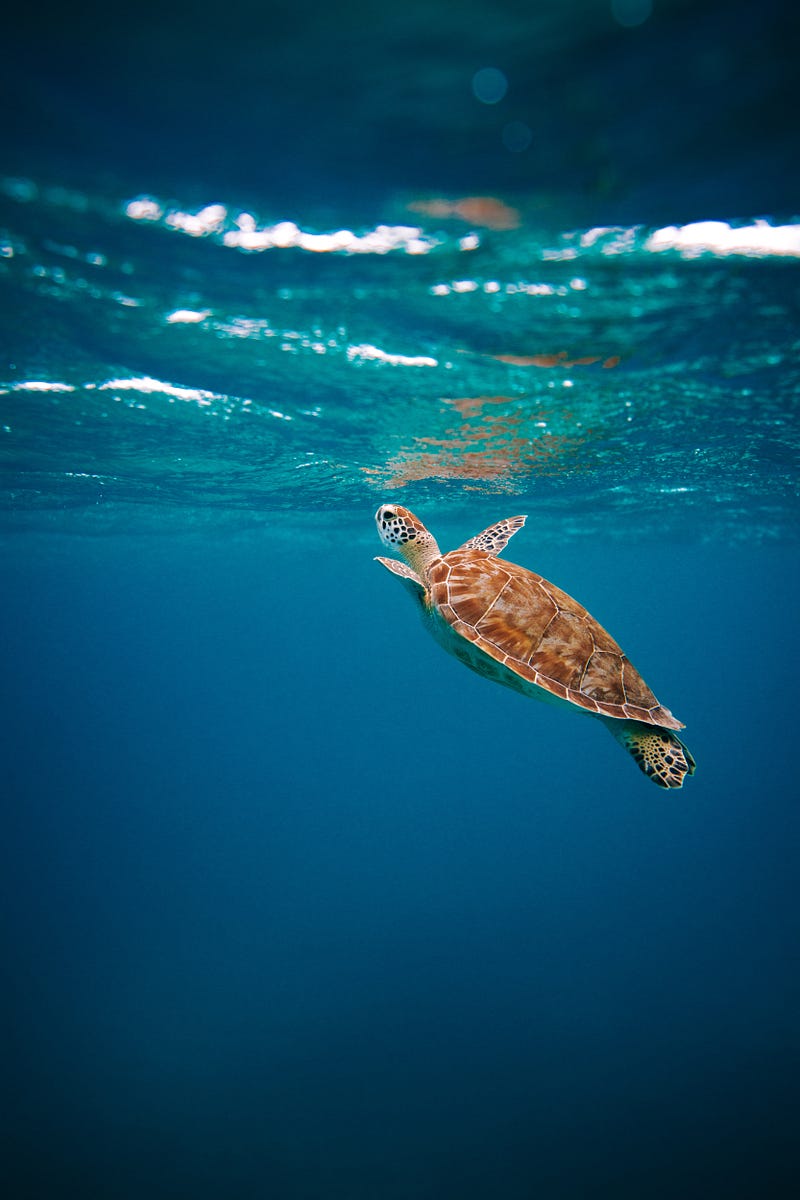
Save the Turtles!
One of the things discovered in the deepest reached point of the Pacific Ocean was pollution.
Hopefully we are all aware at this point that oceans and marine life are suffering severe damage because of all the chemicals, trash, and other unnatural materials that are being disposed of in the ocean with no regard for the negative impact on the environment.
I can’t write about the ocean without acknowledging this issue.
There are millions of undiscovered species that we will never be able to observe if we continue destroying their home.
The Exploration: Risky and Expensive
I couldn’t find a statistic about how many people have died exploring the ocean. (Morbid, I know. I was curious.) Between sunken ships, diving excursions gone wrong, and submersibles that meet tragic endings, it is evident that thousands of people have been lost at sea throughout history.
Will we ever be able to investigate the unknown realms of the ocean?
Maybe one day we’ll send robots into the depths rather than endangering the lives of scientists who want to expand our knowledge, although it seems to me that going on the journey is a huge part of the appeal to researchers.
Oceanic research vessels cost tens of thousands of dollars per day to operate. Submarine trips are equally as expensive if not more, and now have a negative connotation thanks to the Ocean’s Gate incident.
Is this research worth the risk?
The ocean is stunningly beautiful and elusive in a strange way. It has the power to obliterate islands and coastal cities while simultaneously providing life for millions of creatures that most of us rarely interact with.
Next time you’re on a beach looking out over the vastness of the water that makes up most of the Earth, consider the fact that we live on a planet that is incomprehensible even to its own inhabitants.
It’s humbling to be reminded of our insignificance in comparison.
Remember that life itself is an anomaly that we don’t really understand, and we as a species still have so much to learn.
Thank you for reading!
Follow me for more rants like this :)
Also follow @Illumination, @Real, & @ThoughtThinkers for a variety of stories from myself and fellow creatives ❤


