
We Need To Stop With The Arts Vs Science Narrative
Three true stories that show all the beauty, passion and drama of the arts are also found in science
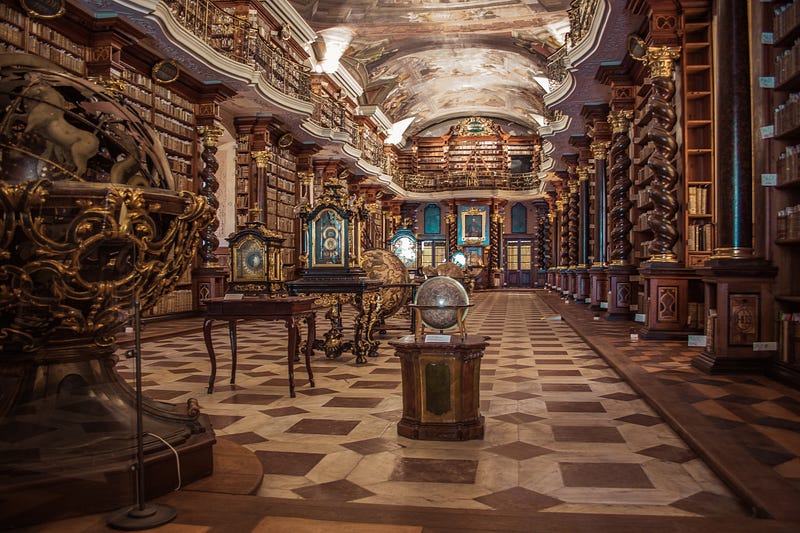
I may be particularly well-suited to starting this conversation because it encompasses two of my great passions: arts and science. I studied literature for my undergraduate degree because literature has always been my deepest love. I obtained a masters degree in publishing and editing because I wanted to help people make their bookish dreams a reality. I loved every minute I spent studying these subjects and I would do it all again in a heartbeat. Yet… Something inside burned and yearned and after a few years I could resist no more; I enrolled myself in another masters degree. Specifically, Astronomy.
I was nervous making the transition from arts to a science, but a passion is a passion and it cannot be denied. Turns out, I took to it like a duck to water. I finished my degree with high distinction. The interesting thing? Studying astronomy is really not that different to studying literature.
You are presented with something beautiful, curious, that needs to be picked apart to be understood. You take all the background knowledge you have about the universe in which that thing exists, whether it be Jane Eyre or Pluto, and apply it. You make a guess. You see what evidence you have to support that guess. You test it. You come up with an understanding.
That is the study of art of course, not the creation of it, but the creation of art is fuelled by the same passion, drive , bravery and romance that fuels scientific advancement.
I can’t tell you how often I hear the phrase, “I don’t understand science, I’m a creative” as though the two were seperate, as though science is not a creative endeavour every part as inspirational and exciting as any of the arts.
Below I have compiled three true stories of amazing scientists whose lives were every part as compelling as any novel you will read; whose strength of character and unerring belief in the truth changed the way we live today; whose legacy is as important as any statue, painting or book we still celebrate hundreds of years after its inception.
Giordano Bruno
The man was a genius, painfully ahead of his time. He was an astronomer and mathematician who believed we must question everything around us. His downfall was his bravery, his honesty, his inability to lie to maintain the status quo. Never was there a literary hero more defiant in the face of certain death, willing to face any punishment for what they believed in. Sounds like a great synopsis for your bestselling novel. Sadly, it’s all true.
Giordano Bruno is believed to be the first recorded person to look at the stars and come to the conclusion that our Sun is just another star in the universe. He posited, among other things, that each star had its own system of planets rotating around it and therefore the Earth was nothing particularly special. It was just one of an endless array of worlds probably all inhabited by people just like us. Of course this goes against religious teachings and Bruno eventually got in big trouble.
In his youth he lived in a monastery in Naples and became a priest. When he was discovered reading and recommending banned books he had to go on the run. He travelled through Italy, France, Switzerland, England and Germany. He lectured as he travelled, published numerous books, rubbed shoulders with royalty, and absolutely would not shut up and let something go if he thought someone was incorrect. This made him a lot of enemies.
After sixteen years spent on the run he was requested in Venice to teach his theories of memory, which he was by this time famous for. He returned, thinking by now he would perhaps be safe to live in Venice, however his employer denounced him to the inquisition who transferred him to Rome to face trial for saying thing the church didn’t like.
During seven years kept prisoner in Rome, Bruno was asked again and again to recant his beliefs. Specifically, he was asked to deny his belief in pluralism, to deny there could be other planets, other suns shining down on other worlds than our own. This was something he could not do.
His powerful final words to the court that condemned him for heresy were “perhaps you pronounce this sentence against me with greater fear than I receive it”.
The church gave Bruno 40 more days in prison to decide whether he would denounce the truth to save his own life. He refused to do so.
Bruno was taken to the Campo de’ Fiori in Rome where he was stripped naked, hung upside down for seven hours, then burned alive.
Today a powerful statue of the man stands in the place he was murdered, brooding over the square, reminding all who pass of the sacrifice one scientist made for all mankind. It was erected in 1889, with much protest from the church, and is one of my all time favourite works of art. Every year on the date of Giordano Bruno’s death a memorial is held there to celebrate and remember the importance of free thinking. We should never forget his intensity, his bravery, his passion. Today, Giordano Bruno is symbolic of the dangerous road we walk when we deny the truth of scientific study and even 400 years after his death people still take inspiration and power from his sacrifice.
The Catholic church to this day have not apologised for what they did, saying in 2000 it wasn’t pleasant but the church did what they had to do to preserve the truth. Some truth, eh?
Sophia Louisa Jex-Blake
If you are looking for heroism, strength, courage and integrity then look no further than Sophia Louisa Jex-Blake. Jex-Blake started out as a mathematics teacher who was not allowed to be paid for her work because her father would not sign the necessary documentation to allow her to earn her own money. She developed a deep interest in women’s education and travelled to the United States to research a book she later published on the subject. There she met one of the first female medical doctors in America, Dr Lucy Ellen Sewall, who graduated from the New England Female Medical College in 1862. The college was the first to train women in medicine and had opened in 1848. Working with Sewall, Jex-Blake made the decision to become a medical doctor.
She applied to study medicine at Harvard and was told, sorry, no, you’re a woman. Knowing she had next to no chance of being accepted into a university in her native England, she decided instead to apply to the University of Edinburgh. This time she was given the wishy-washy answer that, yeah, they would like to let her study, but they simply could not make all the necessary changes for just one woman so she would have to miss out.
Undaunted, Jex-Blake advertised in a newspaper to find more women who would like to become medical doctors. Several women replied to her advertisement and when the “Edinburgh Seven” (as they became known) applied to the University of Edinburgh, they were accepted.
Naturally, certain types of men hate stuff like that so when the women started to show that actually they could do just as well as men, a bunch of fragile male egos started acting out. The women received death threats, were stalked, called names, were harassed, had mud thrown at them. Even from their lecturers and other students they received abuse, were called whores, were laughed at, were given no room to sit in lecture theatres. They continued to turn up for their study and exams regardless. For safety reasons they went everywhere together, escorting one another to all appointments and always staying in main thoroughfares, where they hoped they were less likely to be attacked.
Eventually tensions boiled over into what became known as the Surgeons Hall Riot. 200 sad men turned up and rioted to stop these women taking an exam in the Surgeon’s Hall of the university. They hurled garbage, mud and abuse at the women, surrounded them and locked them out of the university so they would be unable to sit their exams.
Surrounded by an angry mob, unable to enter or leave, things looked bleak, until a male medical student, disgusted with what he saw, literally and metaphorically unlocked the gate so women could study medicine at university in Great Britain.
Even after their harrowing experience the Edinburgh Seven went into the Surgeon’s Hall, they completed their exams and they all passed with flying colours. Other male students rallied around the women from that time and formed a group to escort them to and from lectures and exams.
They completed their exams and qualified to earn their degrees. So what did the University of Edinburgh do? After all that they said, well in case you didn’t notice you’re actually chicks so you’re ineligible to get the degree you earned and also you shouldn’t have been allowed to study here in the first place so no more women, thanks. So the would-be graduates all went home and gave up.
Like hell they did!
Jex-Blake set up her own goddamn medical schools and started training other women to be doctors. Meanwhile the national attention that was garnered around the world by the abuse of these women doing nothing more than seeking an education resulted in a change in the law: women were allowed to study and obtain degrees at universities in Britain from 1876. That is “allowed” not “compelled to”. Some universities in Europe also allowed women to study and Jex-Blake sat her exams at a different university and of course she passed all her exams and was eventually awarded her degree.
Jex-Blake went on to open a medical practice and the first hospital for women run by women.
The University of Edinburgh did eventually agree the Edinburgh Seven had earned their degrees. In 2019.
Ignaz Semmelweis
For a tale of tragedy, madness and injustice you may enjoy Les Misérables or any number of novels by Émile Zola, but few will come close to the horrifying true story of one doctor’s fight to convince medical professionals they were killing their own patients.
When Ignaz Semmelweis began a new position at Vienna General Hospital in 1846 he discovered something disturbing. The hospital contained two maternity wards. One had a mortality rate of 4%; the other 10%. This fact was well known in the community and pregnant women would beg doctors to not send them to the second ward. Semmelweis set about comparing every possible detail on the running of each ward and eventually found one major difference.
Doctors employed in the second ward performed autopsies and handled corpses of women who had died from puerperal fever then delivered babies on the maternity ward without washing their hands in between. Meanwhile, the first ward was run by students and midwives who were not allowed access to corpses. This being the case, Semmelweis deduced there must be some sort of “cadaveric particles” being transferred from the corpses to the new mothers, infecting them and their babies and causing death. Nowadays we would just call them germs but this seemed an outrageous claim at the time.
To test his theory Semmelweis had all the doctors on the ward wash their hands constantly in a chlorine solution, which was known to remove the smell of corpses, so was thereby assumed to remove any cadaverous particles too.
By 1847 when he instituted this change, the mortality rate had reached 18.3%. Within a month rates slipped to below 2%.
Semmelweis reported his findings not to applause, but to ridicule. The idea of magical cadaverous particles was laughable, and having no evidence these particles existed, he was ridiculed by the medical community.
Again, we also see the fragile ego at play. Doctors were outraged this man would suggest their incompetence was the cause of their own patients’ deaths so continued killing their patients with abandon, refusing to even test Semmelweis’s findings for themselves.
Semmelweis lost his post for political reasons and moved to Budapest where he took a role as head physician on the obstetric ward of another hospital with a high maternal mortality rate. Again he instituted hand-washing with a chlorine solution and again death rates fell to almost zero.
Several of Semmelweis’s students published papers showing his findings and he too published papers and books. These were variously ignored or ridiculed and Semmelweis eventually ran out of patience.
Semmelweis is said to have become obsessed trying to convince the medical profession to understand the importance of cleanliness in a hospital setting. He became depressed, desperate, angry. He wrote a series of open letters calling high-profile obstetricians murderers and ignoramuses and this was not met with a friendly response.
In 1865 one of Semmelweis’s colleagues referred him to a medical institution without his knowledge. Another colleague invited him to visit the “new institute” as a medical professional. Shortly after arrival Semmelweis realised it was a ruse to have him committed. He attempted to leave and was promptly beaten by guards and placed in a straight jacket. He died fourteen days later from blood poisoning, believed to be caused by injuries he received from having been beaten.
Only twenty years later Louis Pasteur’s findings supported everything Semmelweis had been saying. One cannot help but wonder how many people lost their lives due to the unwillingness of the medical community to accept his findings.
Unbeknownst to Semmelweis at the time of his death, word of his research was actually spreading in other parts of Europe and his ideas were slowly implemented in many hospitals saving the lives of countless women and children.
Today Ignaz Semmelweis is remembered as “the father of infection control” due to his relentless perseverance in the face of ridicule. His work and tragic downfall exemplify all the creativity, passion and search for truth that any great artist has ever been inspired by.
Truth and beauty
Art and science interact all the time, whether that be mindfully baking a perfect loaf of bread, creating a gorgeous building which probably shouldn’t fall on people, getting exactly the right tint for your paint to create the perfect experience — the two are inextricably linked.
It is of course the case that portions of the science world are cold and sterile but can we not say the same of the art world? It’s not all walking moors with a fountain pen and screaming passionately into the void. Sometimes an artist has to spend hour upon hour plodding away doing calculations, making endless tiny etchings in a work of art, going over their novel for the thousandth time to see every apostrophe is in the correct spot.
The thing that links science and art is the eternal human search for truth and beauty. Both fields thrive on creativity and both work best in unison. Both require bravery and honesty and vulnerability. And both, in my opinion, showcase the finest attributes humanity has to offer.
Does the arts sector need more funding? Yes. Does science need more funding? Also yes! Arts and science have common enemies in this world. The last thing we need is infighting.
So next time you hear someone say, “I’m not interested in science, I’m a creative”, feel free to refer to these stories, and many others, that show science is in fact a creative and passionate realm, fit for the most powerful and inspiring souls humanity has to offer.


