
We Need To Stop Being Afraid of Using The Word “Narcissism”
We’re not inventing or imagining their behavior.
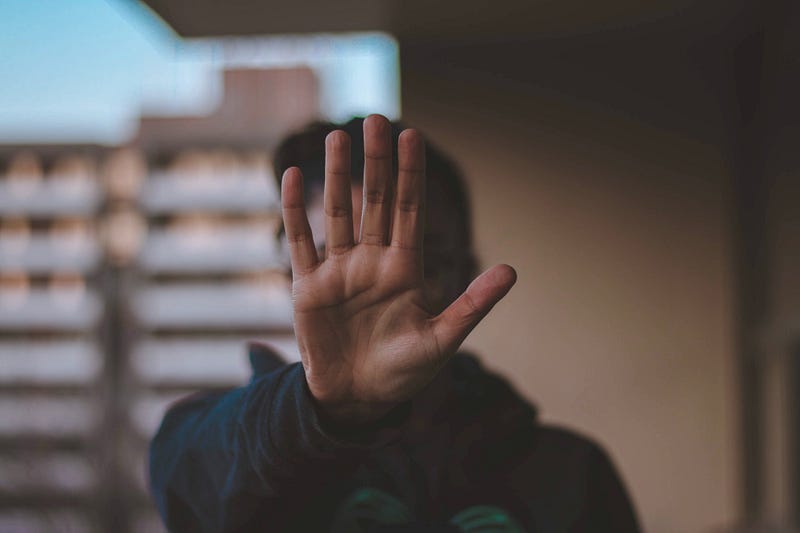
Those of us who’ve been through narcissistic abuse and are now able to call it by its name know what it feels like to mention narcissism when talking to other people.
We want our friends and relatives to understand us. We want them to see the narcissistic person as clearly as we do now. Yet, more often than not, we’re told “you can’t diagnose them” or “you shouldn’t label them like that”.
Once again, our pain is downplayed and our experience is minimized.
The reason why this happens is simple: people who are not aware of such toxic, unhealthy patterns, have the tendency to assume everybody comes from a good place. They simply can’t understand that, sometimes, people are too messed up and unable to change.
Honestly, we can’t judge them. A year ago, if you had told me that my father was narcissistic, I’d have told you that you were out of your mind. Now, after listening to my therapist and reading many psychology books, it’s undeniable: my father is indeed a narcissist.
We live in a society that doesn’t stimulate our awareness when it comes to trauma, family dynamics, and dysfunctional patterns. As a consequence, we’re not ready to see things as they actually are.
But we have to be.
Narcissism Is A Descriptive Term, Not A Diagnostic
One of the reasons why people don’t like the term narcissism is that it feels too clinical or too labeling.
Narcissism is not a clinical term. It can be, but it doesn’t have to. According to Dr. Ramani, a clinical psychologist who focuses on narcissism and unhealthy relationships:
“The word narcissist, or narcissism, or narcissistic… They’re not diagnostic, they’re descriptive. This is something that I’ve said countless times. The term reflects a cluster of patterns and behaviors that hang together: entitlement, lack of empathy, arrogance, dysregulation, anger, a need for control, a need for validation, superficiality, sensitivity to criticism, egocentricity, insecurity… It all hangs together.”
So, as we can see, we do have the right to describe someone as narcissistic if they exhibit most of these patterns. We’re not diagnosing them or labeling them: we’re describing them, according to their own behavior.
Just as we say someone is ambitious when they’re very determined to achieve their goals, we say someone is narcissistic when we finally realize they’re always manipulating us, gaslighting us, having emotional outbursts, or criticizing every thing we do and every word we say.
We’re not inventing or imagining their behavior. Their behavior was always there, we’re just calling it by its name now.
It’s true that using a term or a label may feel like we’re reducing the complexity of a person to a single word. But the term “narcissism” itself is complex. We’re not denying its complexity — actually, we’re acknowledging this person is complex. The difference is that now we know it’s not our responsibility to deal with it.
Having a term to describe such a painful experience is incredibly validating, and it reassures us that we’re not crazy. We never were.
Not Calling It By Its Name Prevents Us From Healing
I still remember the day when I told my best friend that my father was a narcissist. She was in silence. She didn’t say a word — and she didn’t have to, because her facial expression said everything.
Her eyes were saying “how do you even feel entitled to make that judgment? How do you think you have the right to call him that?”.
It had been a few months since I became aware of my father’s narcissistic traits. Becoming aware of it was painful enough: I didn’t want to believe my father was that broken. I wanted to believe he had the ability to change, find some help, and get better.
Still, gaining awareness and sharing this new awareness with others are two entirely different things. I needed to process everything first. Besides, something inside me knew that pointing out someone is a narcissist would not be easily accepted by those around me, especially if the narcissist is one of my parents.
This is a very common problem when we’re victims of narcissistic abuse. It takes years to realize we’re victims, and when we finally realize, most of our loved ones don’t believe us.
The main problem is that if we really want to heal, the first step is to accept reality as it is. We need to accept the most difficult, painful truths in order to move on and find a different way of being — away from people who constantly minimize our feelings and make us feel like we’re never good enough.
The worst thing we can do is ignore our intuition and listen to those who make up excuses for toxic, unhealthy behavior. At the end of the day, nobody will be better than you at judging who’s good for you and who’s not.
“Calling this phenomenon that is narcissism by its proper name becomes really important so that we don’t soft pedal on it. Enablers and those eternally positive people will sometimes label it as “well, they’re just difficult” or “they’re just going through a tough time” or “they’re just how they are”… Yes, it is how they are, so that’s call it what it is.”
Dr. Ramani, in The Wisdom That Comes From Calling Narcissism By Its Name
There will always be people who don’t understand where you’re coming from, and it is fine. They’re not ready to accept the truth, and they don’t have to. This doesn’t mean you’re better than them — it simply means you’re on different paths.
No, you’re not crazy.
No, you’re not overreacting.
No, you’re not too sensitive.
Yes, you deserve to be respected. You deserve to express your feelings and you deserve people who validate your emotions.
That’s all you need to know.
It can be incredibly difficult to become aware and accept that someone we love is actually unhealthy and/or unable to change.
However, what really matters is what you do with that knowledge. Do you ignore it, or do you decide to set boundaries? Do you pretend everything’s fine or do you use this awareness to transform your life?
The choice is yours. Choose wisely.
Thank you for reading!
- Get FULL ACCESS to every story on Medium and support my writing
- Follow my publication The Conscious Way for similar articles


