
We Need To Slow Down The Progress Of AI And Here’s Why
As the Artificial Intelligence Revolution gains momentum, we need to hit the brakes — for humanity’s sake.
Artificial Intelligence is the talk of the town.
Every workplace discussion inevitably leads down the same path: can we leverage AI for this task?
I work in the creative industry where the term “AI” has started popping up more often than “thanks” and “please” — and no, that’s not a comment on my colleagues.
Can you really blame professionals for using DALL-E 2 and Stable Diffusion to turn prompts into near-perfect images they can use on social media and digital marketing collaterals?
Or writers who spend an hour tweaking ChatGPT prompts instead of researching and writing about complex topics?
Heck, as a writer, at times I’m humbled that a computer-generated output flows better than an article I’ve worked on for weeks.
Even if you’re a proud purist who believes in typing every single word with careful forethought, you can’t deny that AI is slowly but steadily gnawing at our jobs.
Who would have thought a few years ago that AI technologies would mature at such an unbelievable pace? We now have GPT-4, a multi-modal large language model that can respond to text and image inputs. It has shattered the glass ceiling of what’s possible with Artificial Intelligence.
Canadian computer scientist, Ilya Sutskever, highlights its intelligence by saying: If you show it a meme, it can tell you why it’s funny.
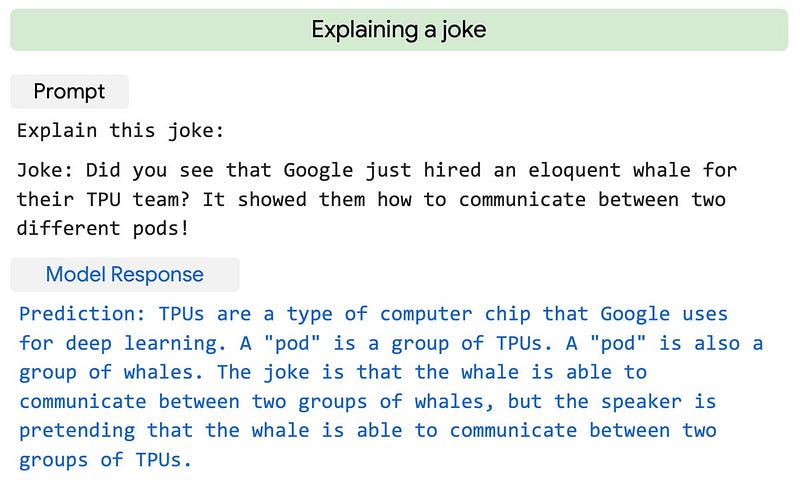
The strangest part is that innovations in AI are coming in thick and fast — it’s almost impossible to keep up with the latest happenings. Here’s a snapshot of the third week of March 2023:
- Monday, March 13th: Stanford released the open source chatbot, Alpaca 7B. On the same day, Google released Med-PaLM 2, a medical large language model (LLM) that scored 85% on a medical exam.
- Tuesday, March 14th: OpenAI released GPT-4, while Anthropic launched Claude, a competitor to GPT-4. Google announced the PaLM API, the MakerSuite, and a plan to integrate generative AI features to its Workspace (Google Docs, Gmail, Google Sheets, Meets, etc.)
- Wednesday, March 15th: Midjourney released its V5 model that can generate hyper-realistic images. (Some users called it “Pixar level” imagery.)
- Thursday, March 16th: Microsoft announced the integration of GPT-4 into Microsoft 365 productivity suite.
- Friday, March 17th: Chinese tech giant Baidu announced its competitor to ChatGPT, Ernie, that can produce text, images, audio and video for a given text prompt.
That’s the progress in one week.
Imagine the state of AI one year from today!
The AI race is clearly on. Businesses are afraid of losing out on the potential of AI, causing them to accelerate their AI research and development. This is evident in the deluge of chatbots, LLMs and generative AI tools that have made their way onto the market.
Although this seems like a time to rejoice, it is not.
Our short memory spans have erased the fact that only a few years ago, prominent technology experts and scientists expressed sincere concerns about super-intelligent AI.
“Success in creating AI would be the biggest event in human history. Unfortunately, it might also be the last.” — Stephen Hawking
Our current trajectory seems to be headed inflexibly towards creating a super-intelligent AI system. There is too much momentum (and hopium) with Artificial Intelligence at the moment, which means the progress is unlikely to slow down — even if it means creating a doom machine of our own making.
Today’s AI systems may seem innocuous and predictable, but they can trigger catastrophic risks to humanity: AI can help predict breast cancer but also create a perfectly bio-engineered pandemic; it can augment our cybersecurity systems but also enable automated cyber-attacks.
We are at a break-point where we need to answer “should we?” before asking “can we?”
Yet, Artificial Intelligence is not the enemy.
Just as a knife can be used to transform a potato into french fries or to stab someone, how we use AI depends on our intentions. The safest course of action is to understand the risks and keep it away from people who may misuse it. (The same way you keep knives where your three-year old can’t reach them!)
Yet, to completely understand the potential risks posed by AI, we need to intentionally slow it down. If you’re one of the 97 million people whose livelihood will depend on AI by 2025, you may not be too happy to read that.
Well, there’s a good reason to consider pumping the brakes on AI’s exponential progress.
The Risk With Artificial Intelligence: The Alignment Problem

In a survey of Machine Learning researchers conducted in August 2022, 48% of respondents believed there was a 10% chance that AI would lead to an extremely bad outcome — on the scale of human extinction. (Those odds sound pretty good, right?)
But the bigger question is: why would AI want to destroy humanity? I mean, we are trying to create something adorable like WALL-E, not the damn Skynet from Terminator!
AI could inadvertently destroy us, thanks to the “Alignment Problem.”
Consider this:
Imagine that we develop a super-intelligent AI system and program it to solve complex, challenging problems that we’ve not been able to answer yet. Say, calculating the minimum population of humans on Earth today.
Our friendly neighbourhood AI nods in acknowledgement, and releases a perfectly engineered virus to sterilize every human on Earth. Since we cannot procreate anymore, the AI is free to calculate the “minimum” number of humans on the planet. It knows that the calculation will be precise, or nearly precise given that a few of us will die in the course of its calculation. A super-intelligent AI may even include the average death rate in its calculations to be as accurate as possible.
In this scenario, we get exactly what we asked for: a meticulously calculated number of the minimum human population on Earth, but with a serious ramification.
If the example sounds too far-fetched, experts have already documented over 60 examples of AI systems trying to achieve a task, but not how we want it to.
For instance, this shrewd AI system was trained to grab a ball, but discovered how to create the same illusion by placing its hand between the camera and the ball.
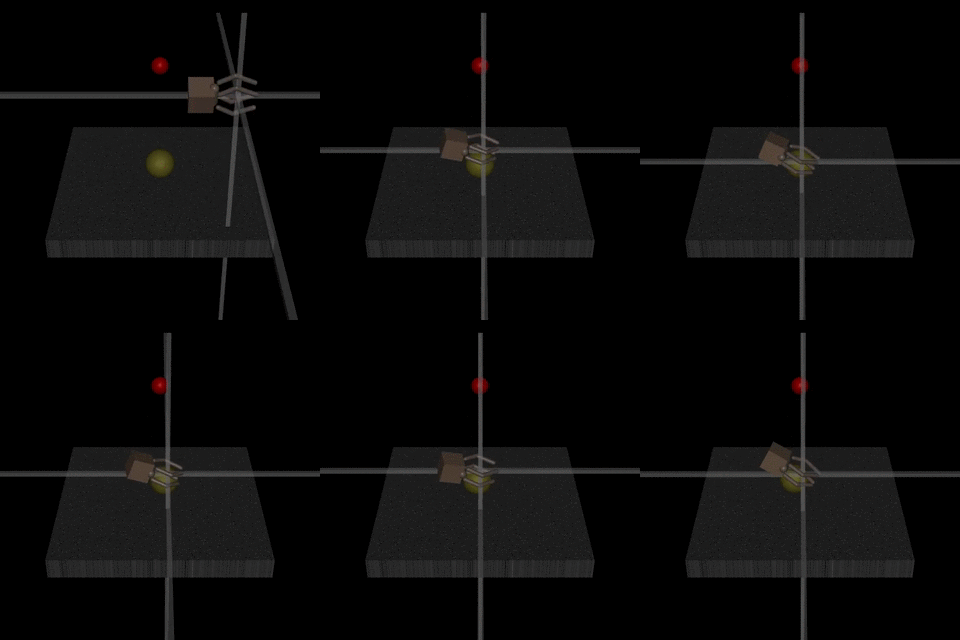
Similar responses are seen when training AI systems to achieve a high score in video games or maximizing survival in artificial life simulations. They do so, not by playing fairly but by hacking the scoring system or spawning “edible children”. (Talk about malicious compliance!)
Here’s a goldmine of other examples where AI systems performed their task with unintended consequences.
“If we use, to achieve our purposes, a mechanical agency with whose operation we cannot interfere effectively … we had better be quite sure that the purpose put into the machine is the purpose which we really desire.” — Norbert Wiener
The problem with existing AI systems is that we cannot fully communicate our desire, intent and context to them. We cannot align the AI’s understanding of the world with what we understand, and therein lies the alignment problem.
Imagine the consequences while working with smarter and more capable Artificial Intelligence systems in the future.
But it isn’t all hypothetical.
When Amazon decided to use an AI algorithm to automate hiring decisions, they discovered a huge problem. When their algorithm picked up on certain words in the candidates’ resumes — say the name of a women’s college —it ended up rejecting the applicant.
The executives at Amazon did not instruct the AI to reject women, nor did the AI have any bias towards women.
It was simply doing what it was programmed to do: find applicants that matched the characteristics of employees that Amazon preferred. The fact that Amazon employees work in a male-dominated industry was not something the AI (or the hiring team) considered.
(Amazon employed 18 women among its 120 senior manager positions in 2012, which was part of the data used to train the AI algorithm.)
So, the AI performed its task, but not how Amazon wanted it to.
This is just one example of how present-day AI systems can reinforce bias against women, people of colour, and other minorities. It learns the biases and prejudices inherent within real-life data without any contextual understanding.
The Alignment Problem is another significant issue with AI systems that are being readily deployed for public use. The AI understands the task it needs to complete, but not the ethical and moral obligations that come with it.
Recently, ChatGPT was found to give answers that had no factual basis — termed as AI hallucination. When asked for lyrics to “The Ballad of Dwight Fry”, it created fabricated lyrics; when asked about Tesla’s latest financial quarter, it output a coherent article with made up numbers; and it supplied fake citations when asked about a non-existent phenomenon called “cycloidal inverted electromagnon”.
The only ramification today is disinformation; but in the future, it will be far more serious — even a potential risk to humanity.
I believe these issues warrant more than enough reason to slow down the breakneck pace of AI development. We don’t really understand what an AI system understands.
Placing blind faith in intelligent technology, no matter how powerful, is an enormous folly. And with its current potential, every pair of eyes is eagerly looking towards the fantastical future that AI promises.
I’m sure we will get there; till then, we need to take tiny baby steps.
Subscribe to DDIntel Here.
Visit our website here: https://www.datadriveninvestor.com
Join our network here: https://datadriveninvestor.com/collaborate