
We Need to Have More Conversations about Period Fatigue
Why are we told to just deal with this?
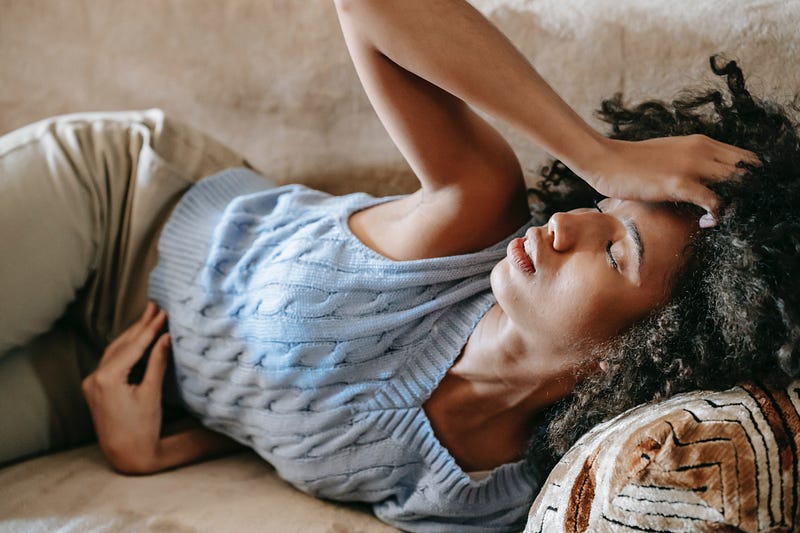
Today I’m exhausted, but I’ve been exhausted for a week. But it makes no sense; I regularly clock 8 hours of sleep or more every night, I try and be active every day, and I have my usual caffeine hit. But the same unrelenting sluggishness hits me at every point in the month and knocks me flat. So much so that usually I can’t stomach the energy to think, write or read. It can be so hard to pull myself out of that spell. And sometimes, I just let myself sink into it.
It seems I’m not alone — despite the unrelenting silence that still surrounds menstrual health. This article from The Guardian article captured my attention, just as I hit day 30 of my cycle, and I felt like collapsing from the heaviness of having no energy, combined with killer cramps. It explores how the pandemic could have impacted menstrual cycles and peoples’ experience of PMS (premenstrual syndrome). The prolonged isolation, sense of normality disrupting, combined with increased levels of stress and anxiety — have caused some peoples’ periods to change for the worse.
Now, I don’t know if the pandemic has directly impacted how I’ve been experiencing my period. Still, all I know for sure is that this aspect of menstrual health needs to be taken seriously in wider society and especially workplaces. We may be slightly over the taboo of mentioning the word ‘period’ or ‘tampon around the kitchen table, but we need to start having serious conversations about how it can detrimentally impact peoples’ lives.
Feeling physically exhausted can stop you in your tracks
Feeling a bit tired here and there in the two weeks I’m not affected by my menstrual cycle is something I can usually brush off and get over. But the tiredness and ‘period fatigue’ associated with PMS is something I can’t. Maybe the experience of a lockdown year and the suspension of normal life is playing into it, but I’ve never felt so exhausted by having a period in my life.
As the week before creeps in, I lose my natural sense of motivation and momentum and struggle to do even the most simple tasks. And then, god forbid, it gets even worse during the days before, as it feels like a physical force pulling me under and back into bed.
Period fatigue is a symptom of PMS and is due to hormonal changes that occur around menstruation. When we approach our periods, levels of serotonin decline and estrogen, which can lead to low mood and decreased energy levels — despite how much coffee you drink or how much fresh air you take in.
Science is literally leaving some of us who menstruate exhausted for a good proportion of the month — and this needs to be taken seriously.
Managing the exhaustion is easy in lockdown, but what happens when 9–5’s return?
Maybe I’m sitting here (on day 1 of my period, conveniently) worrying about nothing and need to deal with the tiredness like everybody else. But the reason I’m writing this is that when I experience period fatigue — it's unlike any form of tiredness I’ve experienced. It’s debilitating, and I find doing the easiest things (like putting on a wash) completely draining.
At the moment, I can write the day off and retreat to doing something that requires no energy, but when I return to my 9–5 retail job, I know it will be yet another thing to manage. But I know it’s not an issue that is taken seriously. Because it impacts me for a week and a half nearly every month, it’s not exactly something I can take time off for — but I think more awareness about this is needed. The physical side effects are only the tip of the iceberg, too.
Being emotionally flat can make it hard to maintain everyday life
My emotions are almost completely correspondent to my menstrual cycle, and I know this because I’ve been tracking it obsessively for around a year. I typically get sad, weepy, and clingy during the week before my period, and then as my period starts, I get incredibly down and what I like to call ‘flat.’ It isn’t necessarily sadness, but just the feeling of not really being anything. No emotions sweep over me during those first few days, but a sense of emptiness and exhaustion.
Anxiety, depression, irritability, and mood swings are just a few of the mental side effects of somebody who menstruates. It’s great, isn’t it? Our bodies literally have to go through this every single month until we stop menstruating altogether. And then some other fun stuff happens, so I hear.
Having to keep up appearances
This isn’t a problem for me now, as I’m still safely cocooned in my own little home and don’t have to go out and face the world. But when I inevitably go back to working in retail, I’ll have to put on this act, which is already exhausting — made even worse when I’m due on. I have to pretend that every little thing that people do isn’t driving me up the wall, and I’d rather be in a cave somewhere near the sea with no human interaction insight.
People who menstruate have to deal with so much daily, and I feel like this mental health side isn’t talked about. And if it is, it will be in the context of stigma designed to undermine the real struggle it can be for a person who menstruates. This could be jokes about losing our rag, it being that time of the month, or something even worse. But the more we talk about it and air our experiences, hopefully, the better the conversations we can have.
This is a part personal rant, part trying to open up about a genuine problem that many people who menstruate face. Not everyone experiences PMS and the same degree, but it can be mentally and physically debilitating. Although, on the whole, we’re more comfortable as a Western society talking about periods in general, the mental and physical implications are still brushed under the carpet, especially in the workplace.
But we should never be ashamed of our symptoms or try and ignore them and carry on with our day-to-day lives if they have a real, negative impact. Listen to your body and your mind, and be kind to yourself. I know this is easier said than done when you are trying to keep up appearances, but it’s important to cut yourself some slack.
If you are struggling with what you think is PMS-related mental health problems, please speak to your doctor or GP.